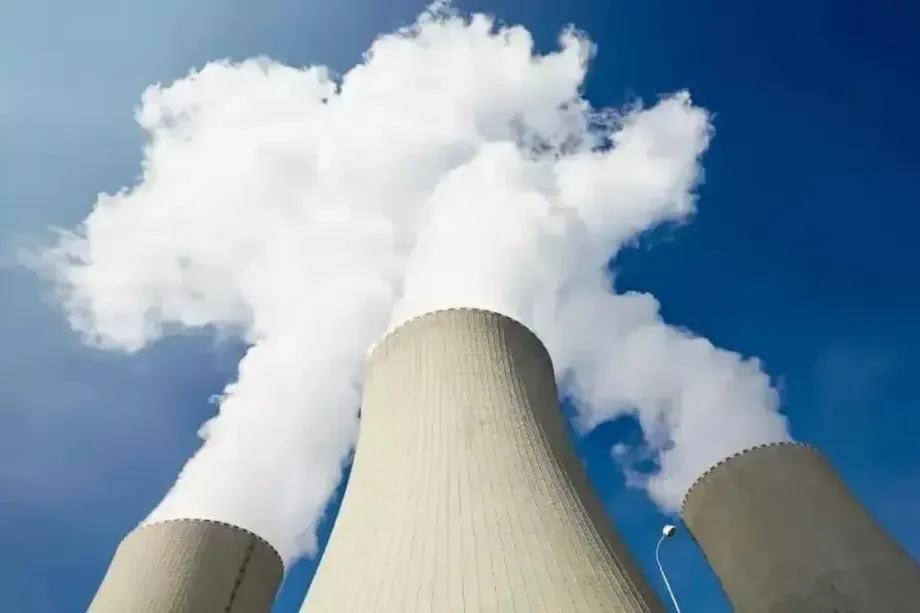
Two nuclear projects move toward different milestones
Kazakhstan could begin building its first nuclear power plant, Balkhash, in 2027, President Kassym-Jomart Tokayev said in his October 28, 2026 state of the nation address. He also called for a comprehensive cooperation agreement to accelerate preparations for Moiynkum, the proposed second station near Lake Balkhash.
Contents
- Two nuclear projects move toward different milestones
- What is planned at Lake Balkhash?
- How the program reached this point
- Who would build and finance the plants?
- Financing pressure adds a delivery risk
- Why the electricity shortage needs an earlier answer
- Other power projects carry the 2029 deadline
- A uranium reserve looking a century ahead
- Training and manufacturing are part of the bargain
- Key Points
The announcement puts two different tasks on the government's agenda: moving Balkhash from surveys and contracts into construction, and negotiating the agreement needed to advance Moiynkum. Tokayev proposed a 2027 construction start for Balkhash while seeking the earliest possible start for the second plant.
Tokayev, Kazakhstan's president, described the proposed timetable in his address:
I believe it is possible and perhaps necessary to begin construction of the Balkhash nuclear power plant next year and sign a comprehensive cooperation agreement to start construction of the Moyinkum plant as soon as possible. Naturally, all negotiating positions must be carefully worked out and agreed upon with Kazakhstan's national interests in mind.
The nuclear push sits alongside a more immediate promise: achieving a sustained electricity surplus by 2029. Kazakhstan generated 123.1 billion kilowatt-hours in 2025 but consumed 124.6 billion, according to figures attributed to national grid operator KEGOC. Net imports covered the resulting shortfall of about 1.5 billion kilowatt-hours.
Balkhash's first reactor is expected to begin operating in 2034 under one published schedule, while completion of the station is projected for 2035–2036. Kazakhstan therefore needs other electricity projects to deliver the extra power required before its nuclear fleet is ready.
What is planned at Lake Balkhash?
Russia's state nuclear corporation Rosatom leads the international consortium developing Balkhash. A roadmap signed in 2025 covers two VVER-1200 reactor units. Each is designed to produce about 1,200 megawatts, giving the station a planned combined capacity of 2,400 megawatts.
VVER is the name of a Russian reactor design that uses pressurized water to carry heat from the reactor. That heat is used to make steam, which turns turbines to generate electricity. Megawatts measure how much power a plant can deliver at a particular moment; kilowatt-hours measure electricity produced or used over time.
Engineering surveys began near the settlement of Ulken on August 8, 2025. These investigations help engineers choose the precise site and prepare design documents. Government Resolution No. 1137, dated December 30, 2024, designated Zhambyl District in Almaty Region as the construction area.
Moiynkum, the working name of the second station, is also planned near Lake Balkhash in Zhambyl District. Its proposed configuration is two units of 1,200 megawatts each. Together, the two stations would have 4,800 megawatts of planned capacity if all four units are built as described.
How the program reached this point
Kazakhstan's nuclear plans have progressed through a public vote, government decisions, engineering work and a construction contract. In the October 6, 2024 referendum, 71.12 percent of participating voters supported building a nuclear power plant.
The main milestones show how the first project has advanced while preparations for additional stations have expanded:
- October 6, 2024: A national referendum supported nuclear plant construction.
- December 30, 2024: Resolution No. 1137 designated Zhambyl District as the area for the first station.
- August 8, 2025: Initial engineering surveys began near Ulken.
- February 2, 2026: Prime Minister Olzhas Bektenov signed a government resolution concerning the second nuclear plant.
- April 17, 2026: Tokayev approved the Nuclear Industry Development Strategy through 2050.
- September 3, 2026: Kazakhstan Nuclear Power Plants and Rosatom subsidiary Atomstroyexport signed a design and construction contract for Balkhash.
- October 28, 2026: Tokayev proposed starting Balkhash construction in 2027 and accelerating an agreement for Moiynkum.
The next proposed milestone is the 2027 start at Balkhash. Moiynkum's construction date, the final identity and contractual status of its Chinese partner, and the detailed arrangements for the uranium reserve remain unresolved in the announcements.
Who would build and finance the plants?
Rosatom's role at Balkhash is established through the consortium and the contract signed by Atomstroyexport. The project is estimated to cost about $16.5 billion. Its proposed financing structure assigns approximately 85 percent to a Russian state export loan and 15 percent to Kazakhstan.
Using that estimate, the Russian loan would amount to roughly $14 billion, while Kazakhstan's share would be about $2.5 billion. An export loan allows the buyer to pay for construction using money lent by the supplier's country, with repayment extending beyond the initial building work.
The Chinese partner for Moiynkum is identified inconsistently: China National Nuclear Corporation is described as the selected lead contractor, while CNPC is named as the priority candidate in another description of the project. CNNC and CNPC are different companies, making the contractor's precise identity an important point for the cooperation agreement to settle.
Tokayev said Russian and Chinese companies had submitted proposals covering domestic manufacturing, nuclear expertise and training. He also required negotiating positions to be carefully prepared around Kazakhstan's national interests. The agreements will shape both construction and the technical relationships needed to support the stations over many decades.
Financing pressure adds a delivery risk
Rosatom's financial commitments matter because the proposed Russian loan would cover most of Balkhash's cost. Director General Alexei Likhachev said in July that the corporation was reducing its 2026 investment program, postponing or abandoning some projects and cutting operating expenses.
Ilya Rebrov, Rosatom's deputy director general for economics and finance, said requests for investment in 2025 exceeded available financing by a factor of four. Those pressures make the timing of funding, equipment orders and construction payments central to delivering Kazakhstan's project.
Balkhash's construction period has been estimated at about 11 years, with completion possible in 2035–2036. A separate projection places the first reactor's operation in 2034. A station containing two reactors can begin producing electricity from one unit before work on the entire facility is finished.
Kazakhstan must manage the schedule across design, financing, equipment supply and construction. Delays in any of those stages could push electricity production further beyond the country's nearer target of a surplus in 2029.
Why the electricity shortage needs an earlier answer
KEGOC's figures put Kazakhstan's 2025 electricity deficit at about 1.2 percent of consumption: 1.5 billion kilowatt-hours out of 124.6 billion. Tokayev used a rounded generation figure of 123 billion kilowatt-hours and said production was insufficient for the economy's growing needs.
Winter demand creates particular pressure. Tokayev said Kazakhstan buys expensive electricity from neighboring countries during winter peaks and sells electricity in summer at much lower prices. Annual totals can hide this seasonal problem because electricity must be available at the time people and businesses need it.
Factories, construction, agriculture and the planned expansion of digital services will require more electricity. Tokayev also singled out artificial intelligence and data centers, the buildings that house computers used to store information and run digital services.
The president's 2029 target requires generation to stay above domestic consumption as demand grows. Closing the 2025 gap alone would leave little room for new industrial activity or higher use during periods of heavy demand.
Other power projects carry the 2029 deadline
Tokayev instructed the government to build new power stations and transmission lines, modernize existing infrastructure, develop coal generation using cleaner technologies and expand renewable energy, particularly solar power.
Transmission lines are part of the same task because electricity must travel from generating stations to homes, farms and factories. New generating capacity needs a network capable of moving the additional power to where it is required.
Tokayev criticized delays in bringing new generation into service in Turkistan, Kyzylorda, Almaty and Ekibastuz. He also referred to the previously halted Balkhash thermal power plant, a separate project from the planned nuclear station.
The government must update Kazakhstan's unified energy balance through 2035. This planning framework brings expected demand together with generation and electricity flows. Its timetable will need to connect the projects intended to meet the 2029 surplus target with nuclear units expected to arrive during the following decade.
A uranium reserve looking a century ahead
Tokayev proposed serious consideration of a state strategic uranium reserve that could cover the needs of Kazakhstan's nuclear power plants for the next century. He asked the government to look beyond construction and consider fuel supplies over the full lives of the stations.
The president explained the timescale he wanted planners to consider:
"We need to start thinking now about how we will supply them with uranium, say, 50 years from now and beyond," he said.
Kazakhstan is the world's largest producer of natural uranium. A strategic reserve would set aside material for domestic needs, giving the planned fleet a dedicated supply cushion over many decades.
Natural uranium must pass through industrial processing before it becomes reactor fuel. For reactors such as the VVER-1200, that includes conversion, enrichment and manufacture into fuel assemblies. Kazakhstan's fuel planning therefore connects its uranium resources with the technology and services needed to turn those resources into usable fuel.
Training and manufacturing are part of the bargain
Tokayev wants foreign partners to establish advanced production facilities in Kazakhstan, share nuclear expertise and train Kazakh specialists. He said companies from Russia and China had already submitted proposals in those areas.
Kazakhstan faces a shortage of qualified energy specialists, a problem the president raised while discussing the wider electricity sector. Nuclear development will require engineers and technicians able to support construction and operate and maintain the plants over decades.
The Nuclear Industry Development Strategy through 2050 sets a broader ambition: at least three operating nuclear plants by 2050, alongside a fourth plant project. Sites for two additional stations are being studied, with western Kazakhstan, Kurchatov and Kostanay identified as possible locations for future development.
The strategy also considers small modular reactors, which generate less power per unit than the large reactors proposed for Balkhash. Training and domestic manufacturing decisions made for the first stations could therefore support a program extending well beyond the two projects now closest to construction.
Key Points
- Tokayev proposed beginning construction of the first nuclear station, Balkhash, in 2027.
- He called for a cooperation agreement to accelerate the second station, Moiynkum, without specifying its construction date.
- Balkhash and Moiynkum are each planned with two reactors producing 1,200 megawatts apiece.
- Rosatom leads Balkhash, whose estimated $16.5 billion cost would be financed mainly through a Russian state loan.
- Kazakhstan's 2029 electricity surplus target comes before Balkhash's expected first generation in 2034.
- A proposed uranium reserve would seek to cover a century of domestic nuclear fuel needs.
- The national strategy envisages at least three operating nuclear plants by 2050 and development of a fourth project.