A Rs 10,000 Crore Push to Build Containers in India
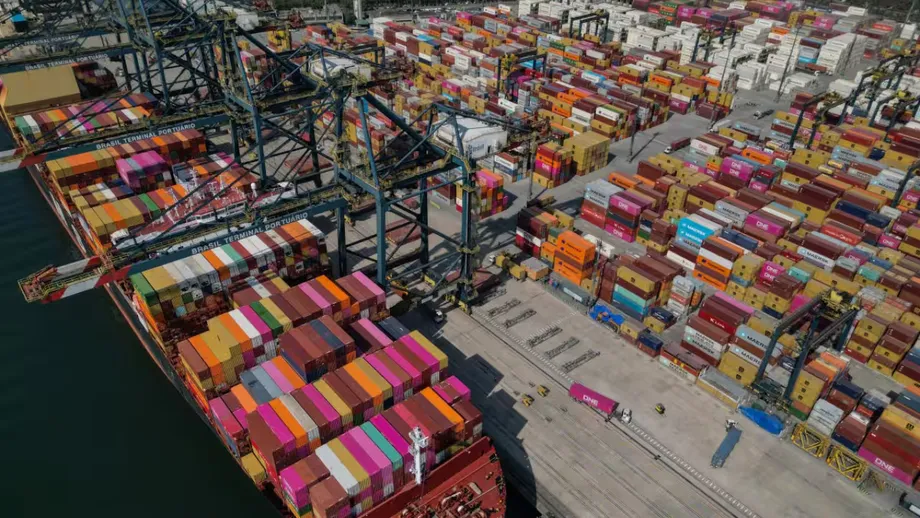
India's Union Cabinet approved a Rs 10,000 crore Container Manufacturing Promotion Scheme on October 28, 2026, aiming to lift annual domestic manufacturing capacity to 750,000 twenty-foot equivalent units, or TEUs. That is roughly ten times the country's current capacity of 75,000 TEUs.
Contents
- A Rs 10,000 Crore Push to Build Containers in India
- Why the Capacity Target Matters
- Almost 89% of Funding Goes to Operating Support
- Cheaper Loans and Port Land for Manufacturers
- New Factories Must Meet Minimum Size Rules
- Local Content Requirements Rise to 90%
- Testing Is Part of the Export Ambition
- Jobs and Shipping Supply Are the Main Stakes
- The Dates That Shape Implementation
- Key Points
The programme will run until the financial year 2039-40 and support both new factories and expansions of existing plants. Prime Minister Narendra Modi chaired the Cabinet meeting, and Information and Broadcasting Minister Ashwini Vaishnaw announced the decision.
The largest allocation, Rs 8,891 crore, will help eligible manufacturers cover operating costs. Another Rs 859 crore will subsidise interest on loans for factory investment, while Rs 150 crore will support testing and certification. Manufacturers may also receive concessional leases on land at major ports.
The decision comes as conflicts disrupt maritime trade, push ships onto longer routes and put pressure on container availability. India wants a larger domestic manufacturing base to reduce dependence on imports and make its shipping supply chain more resilient.
The government estimates that the programme will create about 3,000 direct jobs and more than 50,000 indirect jobs. Its ambitions extend beyond the factories assembling containers to suppliers making specialised steel, corner castings, wooden frames and paints.
Why the Capacity Target Matters
India currently has manufacturing capacity of about 75,000 TEUs a year, but actual production is estimated at roughly half that level, or 37,500 TEUs. The proposed capacity of 750,000 TEUs would therefore be ten times existing capacity and about 20 times current production.
A TEU is a standard measure of container capacity based on a container 20 feet long. A standard container 40 feet long counts as two TEUs. This allows factories, shipping companies and ports to compare capacity even when they handle containers of different sizes.
India imports more than 2 million empty containers annually, with about 80% coming from China. China produces around 3 million containers a year, illustrating the scale of the manufacturing industry India is seeking to compete with.
The import figures count individual containers, while the Indian capacity target uses TEUs. Container lengths therefore matter when comparing the two. A shipment of containers 40 feet long represents twice as many TEUs as the same number of containers 20 feet long.
The gap between India's existing factory capacity and actual output also matters. Building more production lines is one part of the task; attracting orders and producing containers at a competitive cost will determine how much of that capacity gets used.
Almost 89% of Funding Goes to Operating Support
The operational expenditure allocation of Rs 8,891 crore accounts for 88.91% of the total programme budget. Interest assistance represents 8.59%, and testing and certification account for the remaining 1.5%. Together, those three allocations total Rs 10,000 crore.
Operational expenditure means the recurring costs of running a business and making its products, rather than the initial expense of constructing a factory. Under the scheme, assistance will apply to eligible containers manufactured in India, meeting global shipping standards and sold by participating manufacturers.
The announced assistance is Rs 49,500 for a standard container 20 feet long and Rs 86,625 for one 40 feet long. Support for specialised containers 20 feet long ranges from Rs 37,125 to Rs 74,250.
A standard container 40 feet long therefore receives 1.75 times the assistance available for one 20 feet long, although it represents twice the TEU capacity. The payment schedule distinguishes between container types rather than applying one uniform amount for each TEU.
Cheaper Loans and Port Land for Manufacturers
The Rs 859 crore interest assistance component will provide a 3% annual interest subsidy on eligible term loans used for capital expenditure. Capital expenditure covers investment in assets such as factories, machinery and production equipment.
The support applies to loans for establishing new container manufacturing facilities and expanding existing capacity. An interest subsidy reduces part of the borrowing cost manufacturers face while investing in production.
Major Port Authorities may also lease land to container manufacturers at 25% of the applicable rate. For an eligible lease, that would reduce the land charge by three quarters compared with the full applicable rate.
The government is relaxing its Policy Guidelines for Land Management to allow this concession. Port land support sits alongside the three funded assistance categories, giving the programme four forms of support described by Vaishnaw: interest assistance, operating assistance, testing and certification, and land leasing.
New Factories Must Meet Minimum Size Rules
New manufacturing projects must have annual capacity of at least 100,000 TEUs. Expansions of existing factories must add at least 25,000 TEUs annually. These thresholds direct assistance towards projects capable of making a substantial contribution to national capacity.
A new facility meeting the minimum size would have capacity equal to about 13.3% of the national target of 750,000 TEUs. The minimum expansion of 25,000 TEUs would equal about 3.3% of that target.
The scheme uses the terms greenfield and brownfield for these two investment routes. A greenfield project means building a new facility, while a brownfield expansion adds capacity at an existing operation.
Facilities must be commissioned within three years of receiving approval in principle. That gives each approved project a deadline for becoming operational, while allowing time for construction, equipment installation and preparation for production. The announcement did not give a calendar date for applications to open.
Local Content Requirements Rise to 90%
Eligible manufacturers must meet a local content requirement of at least 70% through the financial year 2031-32. That threshold rises to 90% from 2032-33.
Local content is the share of a product's value that comes from domestic inputs and activity. The requirement is intended to draw more of the production process into India, including the supply of components and materials used to make containers.
The increase is 20 percentage points. At the first threshold, up to 30% of qualifying content could come from outside India; at the later threshold, that share falls to 10%.
Suppliers of specialised steel, corner castings, wooden frames and paints are among the industries expected to benefit. Corner castings are the strong fittings at container corners that allow boxes to be lifted and secured during transport.
The staged requirement gives manufacturers an initial period to establish production before meeting a higher domestic content standard. It also makes the development of Indian suppliers part of the programme's manufacturing goal.
Testing Is Part of the Export Ambition
The government has allocated Rs 150 crore for testing and certification support, including common facilities for dynamic longitudinal impact testing. Such testing examines how a container responds to forces acting along its length during an impact.
Containers must withstand demanding conditions as they move through ports and between ships, trains and trucks. Testing and certification help manufacturers demonstrate that their products meet the standards required for international shipping.
Shared facilities would give manufacturers access to testing infrastructure without each company having to establish every facility itself. Compliance with global shipping standards is also a condition for the scheme's operational assistance.
The government's stated ambition is to develop an internationally competitive manufacturing base and position India as a potential container export hub. Meeting shipping standards and competing on cost are both central to that aim.
Jobs and Shipping Supply Are the Main Stakes
The government projects about 3,000 direct jobs and more than 50,000 indirect jobs from the scheme. The indirect employment estimate is more than 16 times the direct estimate, reflecting the expected activity beyond container assembly plants.
Direct jobs would be associated with manufacturing operations, while the broader employment benefits are expected across related industries and supply chains. These are government estimates tied to the programme's development, rather than jobs already created.
For exporters and shipping businesses, a stronger domestic container industry could provide a larger local source of equipment when international supply becomes tight. Longer shipping detours keep containers travelling for more time before they return for another load, putting pressure on the pool available to carry goods.
Domestic manufacturing addresses the supply of new containers. Ships and ports still need to move those containers to where exporters need them. The programme's practical value will depend on factories producing suitable equipment at prices that attract buyers, alongside the wider operation of maritime transport networks.
The Dates That Shape Implementation
The scheme combines a long spending horizon with earlier deadlines for individual projects and domestic sourcing. Manufacturers planning investments will need to account for both.
- Union Budget 2026-27: The container manufacturing scheme was announced.
- October 28, 2026: The Union Cabinet approved the Rs 10,000 crore programme.
- Within three years of approval in principle: Supported manufacturing facilities must be commissioned.
- Through financial year 2031-32: The minimum local content requirement is 70%.
- From financial year 2032-33: The minimum local content requirement rises to 90%.
- Financial year 2039-40: The programme reaches its announced end year.
The immediate task is to turn approval into factory investment, production and sales. The design places most financial support on manufacturing and selling eligible containers, while using cheaper finance, land concessions and shared testing infrastructure to support that activity.
Key Points
- India approved Rs 10,000 crore for container manufacturing support through financial year 2039-40.
- The annual capacity target is 750,000 TEUs, compared with existing capacity of about 75,000 TEUs.
- Operating assistance receives Rs 8,891 crore, almost 89% of the budget.
- Eligible investment loans qualify for a 3% annual interest subsidy.
- Local content requirements rise from 70% to 90% in financial year 2032-33.
- The government estimates about 3,000 direct jobs and more than 50,000 indirect jobs.