Protests connect household hardship with a widening fire crisis
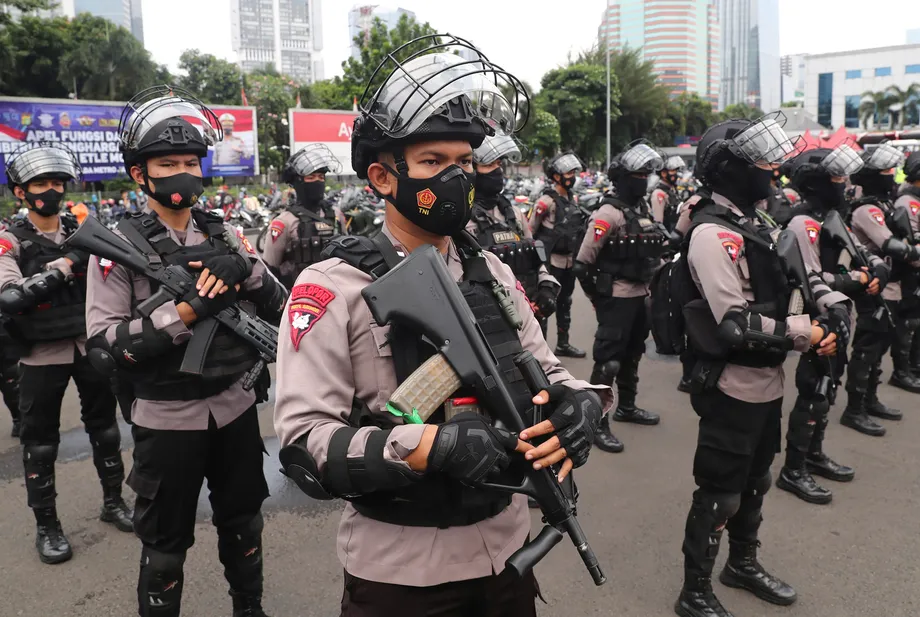
Students demonstrated across Indonesia on October 20, 2026, as President Prabowo Subianto marked two years in office, demanding cheaper essentials, more jobs and stronger action against forest fires. Police deployed more than 9,000 security personnel across Jakarta, where authorities said 26 protest actions were scheduled.
Contents
- Protests connect household hardship with a widening fire crisis
- What students demanded across the cities
- Haze is cutting incomes as well as harming health
- How much land has burned?
- A week of warnings, investigations and demonstrations
- Firefighting orders meet practical limits
- Investigators identify companies and individual suspects
- Jakarta and provincial officials dispute responsibility
- Regional assistance faces conflicting messages
- Greenpeace activists released after monument protest
- Key Points
The demonstrations came a day after the wildfire monitor Nusantara Atlas estimated that 1,916,588 hectares had burned between January and September. More than 283,000 cases of acute respiratory illness had been recorded across seven affected provinces by October 13, bringing a public health emergency into protests already driven by economic frustration.
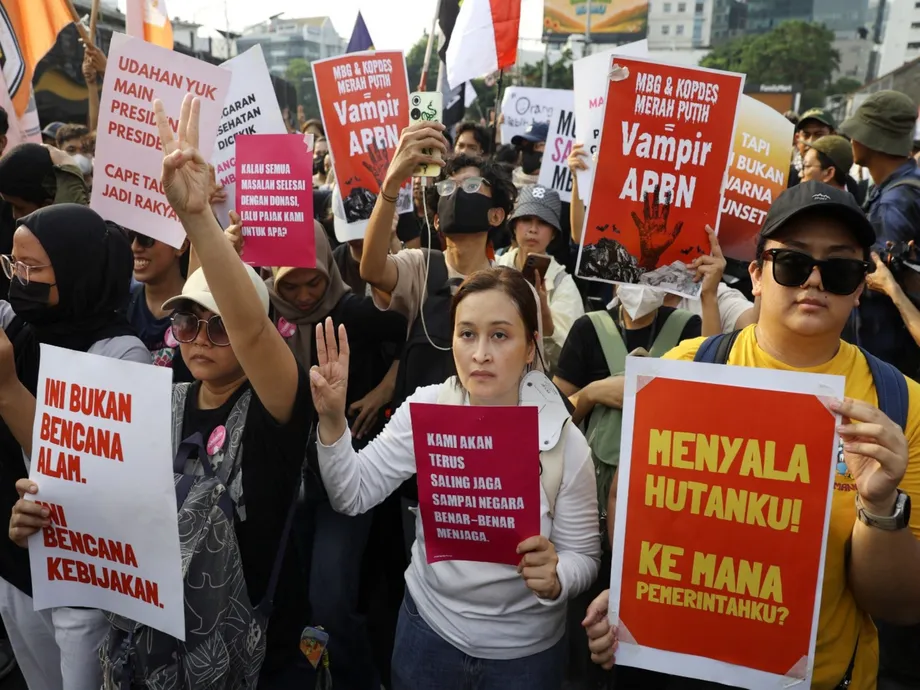
Rallies took place in Jakarta, Bandung, Yogyakarta, Pekanbaru and Makassar. Students demanded that the fires be declared a national disaster, companies responsible for burning face prosecution, and education and healthcare become more affordable. Protesters also called for action against corruption and stronger protection for freedom of expression.
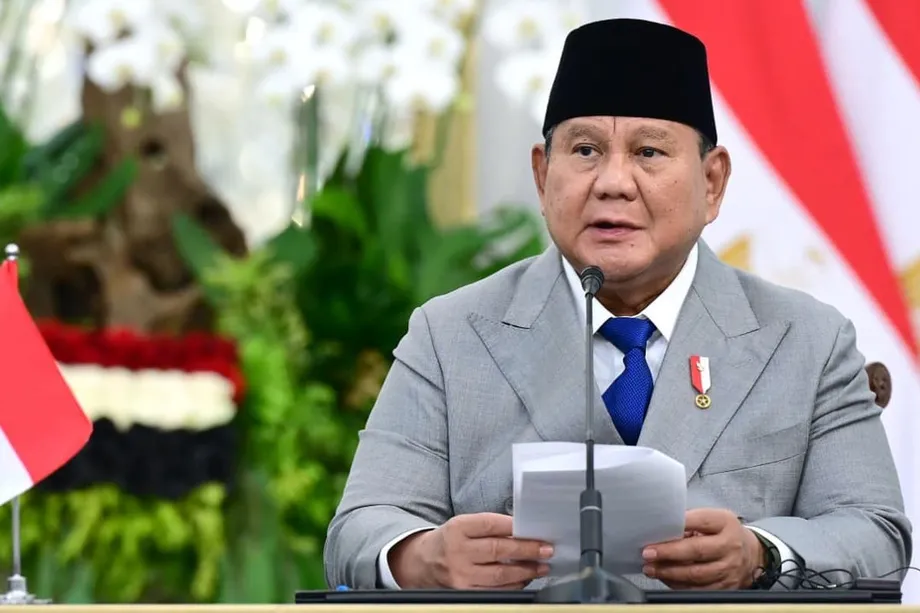
Prabowo, who took office alongside Vice President Gibran Rakabuming Raka on October 20, 2024, had summoned senior officials to Merdeka Palace on October 19 to discuss the fires. Presidential Chief of Staff Listyo Sigit Prabowo said the president ordered stronger aerial operations, better coordination and faster investigations into 98 cases involving suspected corporate links.
The anniversary brought several pressures together: graduates struggling to find work, families facing higher prices, and communities where smoke has disrupted schools, transport and daily earnings. Residents in affected areas described the fires as both a health crisis and a threat to their ability to make a living.
What students demanded across the cities
Hundreds of university students assembled around Jakarta's Tugu Tani monument. Dozens also protested near the Arjuna Wijaya Statue in Central Jakarta, calling for a national disaster declaration and criticising the administration's handling of the emergency.
A coalition called Sadar, representing nine universities, held an opening demonstration at the Proclamation Monument before a further rally planned at Tugu Tani at 3 p.m. Western Indonesian Time. Participants included representatives from the University of Indonesia, Bandung Institute of Technology, Padjadjaran University, Diponegoro University, Gadjah Mada University, Airlangga University and Brawijaya University.
Hafidz Hernanda, social and political coordinator of the University of Indonesia's Student Executive Board, explained why the coalition chose a landmark associated with Indonesian independence.
We chose the Proclamation Monument as a reminder of the founding fathers who established Indonesia, but ultimately, Indonesia is far from what they envisioned.
Students in Bandung demanded more jobs and steadier prices. Speakers in Jakarta also raised unequal educational facilities in remote areas and the difficulties graduates face when looking for employment. Those demands extended concerns expressed during earlier student protests over education and public service cuts amid debate about the government's free meals program in 2025.
Septia Linasari, chairperson of Semarang State University's Student Alliance, described economic inequality as a central grievance. The demonstrations linked complaints about the distribution of public spending with immediate demands for work, affordable services and relief from rising household expenses.
Haze is cutting incomes as well as harming health
Palangkaraya, in Central Kalimantan, illustrates why environmental and economic demands have converged. Residents described persistent coughing, smoke entering homes and businesses losing customers while prices continued to rise.
Melsi, a 40-year-old vendor selling drinks by the roadside, described the squeeze on her household income.
This haze is really bad. Sales are quiet. Prices keep going up, but there's no income.
Sifra, a 29-year-old homemaker, said her husband and two children had been coughing for a month. She described smoke entering the house and suffering aches, coughs and colds herself.
More than 11,000 acute respiratory illness cases had been recorded in Palangkaraya by October 13. Greenpeace estimated that about 40 million people across Indonesian Borneo and Sumatra had been exposed to smoke haze during the preceding two months.
Flights have been disrupted and schools closed in affected areas. For families, the consequences overlap: illness adds expenses and care responsibilities, while reduced trade leaves less money to pay for food and other essentials.
How much land has burned?
Nusantara Atlas estimated that fires burned 1,916,588 hectares in the first nine months of 2026, an area 38% larger than its estimate for the same period in 2019. The monitor's founder, landscape ecologist David Gaveau, said the true total could be higher because heavy haze sometimes obscured satellite images.
The government's published figure was 202,000 hectares through the end of July. Forestry Ministry spokesman Ristianto Pribadi said officials were still calculating the total burned area and that the Atlas estimate "cannot be readily confirmed". The government and monitor figures cover different periods.
A smaller number had already become a focus of criticism. On October 12, Prabowo cited 639 hectares under active firefighting while describing progress against the emergency. On October 14, the National Disaster Management Agency, known as BNPB, and the Forestry Ministry clarified that the figure covered locations where firefighters were working. A current national total for land still burning had not been disclosed.
Fires have affected Sumatra, Kalimantan and Papua during a severe dry season associated with El Niño, a climate pattern that can bring unusually dry conditions to Indonesia. Environmental campaigners also pointed to forest clearance and peatland drainage. Peat is ground made from partly decomposed plant material; when drained and dried, it can burn below the surface and remain difficult to extinguish.
The damage extends to wildlife. By October 9, authorities and conservationists had rescued 46 orangutans threatened by fires in West Kalimantan. Another 47 orangutans at a rehabilitation centre in Palangkaraya were reported ill from haze.
A week of warnings, investigations and demonstrations
The anniversary protests followed a series of official statements, enforcement announcements and local demonstrations. The sequence shows how demands for emergency action grew alongside disputes over the scale and management of the fires.
- October 12: Prabowo cited 639 hectares under active firefighting while discussing the response.
- October 13: Nine people had been named suspects in cases involving corporate links, and respiratory illness cases across seven affected provinces exceeded 283,000.
- October 14: BNPB and the Forestry Ministry clarified the meaning of the 639-hectare figure. Anticorruption investigators also raided BNPB offices in an emergency relief funds case.
- October 15: BNPB chief Suharyanto was dismissed. Foreign Minister Arrmanatha Nasir said Prabowo had approved foreign assistance.
- October 19: Students protested in Palangkaraya, and Prabowo held a palace meeting on the wildfire response.
- October 20: Demonstrations spread across major cities, while Greenpeace activists climbed Jakarta's Welcome Monument.
Five people were charged in connection with alleged embezzlement of emergency relief funds, including Suharyanto's brother, who worked as his adviser. The investigation added a corruption case to the public debate over whether resources were reaching communities facing the emergency.
Firefighting orders meet practical limits
Listyo said Prabowo instructed the armed forces, police, BNPB, local governments and communities to improve coordination and intensify aerial firefighting. The chief of staff's office would oversee the response and ensure that enforcement followed evidence and applicable regulations.
Coordinating Minister for Political and Security Affairs Dudung Abdurachman attended the October 19 discussions, alongside senior officials involved in disaster management and government coordination. Before entering the palace, Dudung said he would brief the president on an earlier meeting with ministries about wildfire mitigation.
BNPB spokesman Berton Panjaitan said more than 60,000 firefighters, including volunteers, were deployed nationwide. He said 49 aircraft were available for dropping water and cloud seeding, although haze had intermittently grounded many of them. Cloud seeding attempts to encourage rain from suitable clouds.
The work has also been deadly. A volunteer firefighter died in hospital after being injured when a team was overwhelmed by flames at Bromo Tengger Semeru National Park in East Java. Park officials said he was the fifth member of that team to die.
Satria Bina Agatha, head of Lambung Mangkurat University's Student Executive Board, brought concerns from Kalimantan to the Jakarta demonstration. He criticised coordination and described the persistence of the burning.
Every hour, whether morning or night, it keeps burning.
Investigators identify companies and individual suspects
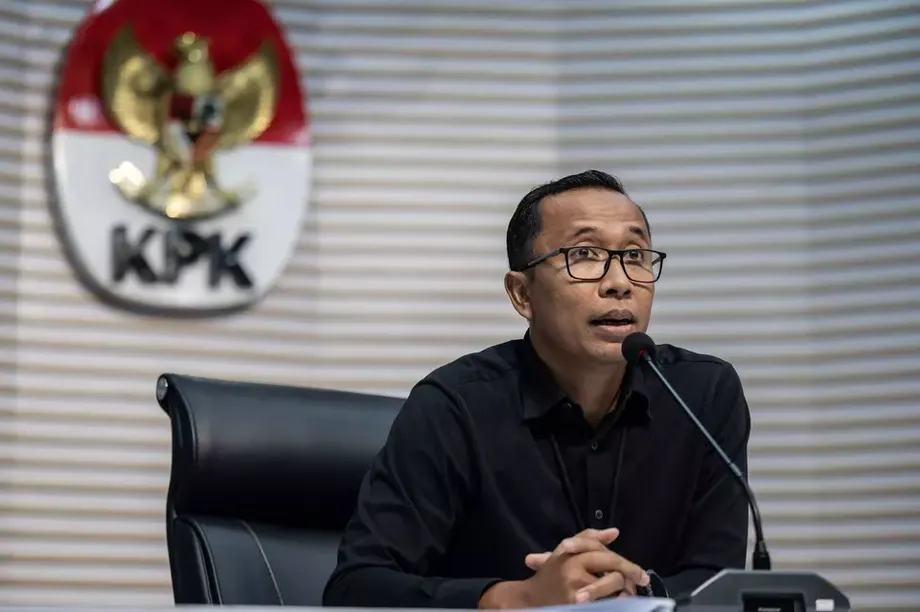
Dudung said police had identified 97 companies suspected of violations connected to forest and land fires. Police separately recorded 98 reports involving corporate fire cases, handled by the Criminal Investigation Agency, known as Bareskrim, and 10 regional police offices.
Senior Commissioner Pipit Subiyanto, a Bareskrim official, said nine individuals had been named suspects in cases involving corporate links as of October 13. Seven were in West Kalimantan, with the other two in Central and South Kalimantan.
West Kalimantan accounted for 33 of the 98 corporate case reports, roughly one third. South Sumatra followed with 17 and Central Kalimantan with 14. Police also named 223 suspects in 273 case reports concerning individual perpetrators, handled by 12 regional police offices.
The Forestry Ministry said it revoked five companies' permits in September, covering concessions totalling 92,464 hectares. On October 20, it announced administrative sanctions against 32 companies over 12,926 hectares of burned land across seven provinces, alongside suspected criminal cases involving 125 individuals and corporations.
Permit sanctions and criminal investigations follow different procedures. Revoking a permit removes permission to operate, while a criminal case can lead to prosecution and sentencing. Subiyanto said people convicted of violating wildfire laws face prison sentences of 10 to 12 years and urged the public to stop clearing land by burning.
Jakarta and provincial officials dispute responsibility
Central Kalimantan officials argued that the central government should bear greater responsibility because it controls much of the licensing for business activities in forest areas following the 2020 Job Creation Law.
Joni Harta, head of the province's environment agency, said the provincial government had issued none of the forest area permits at issue. He also called for Jakarta to release money owed under a reforestation revenue sharing scheme, saying local resources were insufficient.
Forestry Ministry spokesman Ristianto Pribadi said fire control was shared among central and regional governments, law enforcement, businesses and communities. Responsibility depends on the location, land status, business activity and permits involved.
Putra Saptian, a senior campaigner with the peatland organisation Pantau Gambut, said provinces retain authority over land designation and can halt companies' operations when they break the law. Students outside the Central Kalimantan governor's office on October 19 demanded stronger provincial action and a national disaster declaration.
Governor Agustiar Sabran listened to protesters and said he would return after praying, but did not reappear to answer them. Residents elsewhere also urged Prabowo to hold local police and military leaders accountable when fires spread beyond control, arguing that their personnel have the reach to detect and stop small fires early.
Regional assistance faces conflicting messages
Malaysia and Singapore offered assistance as haze crossed their borders. Foreign Minister Arrmanatha said on October 15 that Prabowo had approved foreign help and BNPB was handling technical discussions. Dudung said on October 19 that assistance remained on hold pending a national disaster declaration, while also announcing that Malaysia would provide three aircraft and 52 personnel. The timing of their deployment remained unclear.
Malaysian Deputy Prime Minister Ahmad Zahid Hamidi had described a proposed package comprising a Bombardier CL-415MP firefighting aircraft, three helicopters and about 50 personnel. Prime Minister Anwar Ibrahim also proposed a regional cooperation mechanism through the Association of Southeast Asian Nations to improve haze preparedness and coordination.
Singapore's National Environment Agency said the number of consecutive days with unhealthy air had exceeded the count during the 2015 haze crisis. Under its system, a day falls into that category if the Pollutant Standards Index rises above 100 at any point.
The agency issued warnings to three companies after sending notices to seven Indonesian companies directing them to deploy firefighting teams, stop burning and submit action plans. Singapore Senior Minister K. Shanmugam welcomed Indonesia's approval of assistance while warning that companies responsible for fires would face scrutiny.
Greenpeace activists released after monument protest
Greenpeace activists climbed the Welcome Monument at Jakarta's Hotel Indonesia traffic circle on October 20 and displayed banners connecting the climate crisis with living costs. Police and military personnel urged them to descend, citing safety concerns, and some officers crossed the surrounding pool to speak to them.
Police said six activists were removed from the monument, including a woman who needed medical attention. Initial reporting put the number taken for questioning at at least eight; later reporting counted 11 people detained at the site, comprising six Greenpeace activists and five rescue team members and journalists.
Alif Fauzi Nurwidiastomo, head of advocacy at the Jakarta Legal Aid Institute, said the six activists were allowed to leave at about 8:30 p.m. Greenpeace said they were released because no criminal elements had been found in their peaceful protest. Legal representative Daniel Winarta questioned the basis for their detention.
Greenpeace climate justice campaigner Jeanny Sirait said ecological disasters threaten livelihoods, constrain incomes and drive up food prices. Her explanation echoed the demands voiced by students and the experiences described by residents in Kalimantan.
Elsewhere, clashes near Yogyakarta's regional legislative council building led to several protester detentions. A police truck was also reported set on fire during the unrest. In Jakarta, transport authorities prepared four traffic management zones and advised travellers, including passengers heading to Gambir railway station, to allow for diversions and congestion.
Key Points
- Students protested across major Indonesian cities on October 20, demanding jobs, affordable essentials, action against fires and protection for civil liberties.
- Nusantara Atlas estimated 1,916,588 hectares burned from January through September, 38% more than during the same period in 2019.
- More than 283,000 acute respiratory illness cases were recorded across seven affected provinces by October 13.
- Authorities identified 97 companies and recorded 98 corporate fire case reports, while the Forestry Ministry announced permit revocations and other sanctions.
- More than 60,000 firefighters were deployed, but haze intermittently grounded aircraft needed for aerial operations.
- Six Greenpeace activists were released on the evening of October 20 after their Jakarta monument protest.
- Malaysia and Singapore offered help, while Indonesian officials gave conflicting accounts of when foreign assistance could proceed.