Four overseas payment apps connect to Octopus merchants
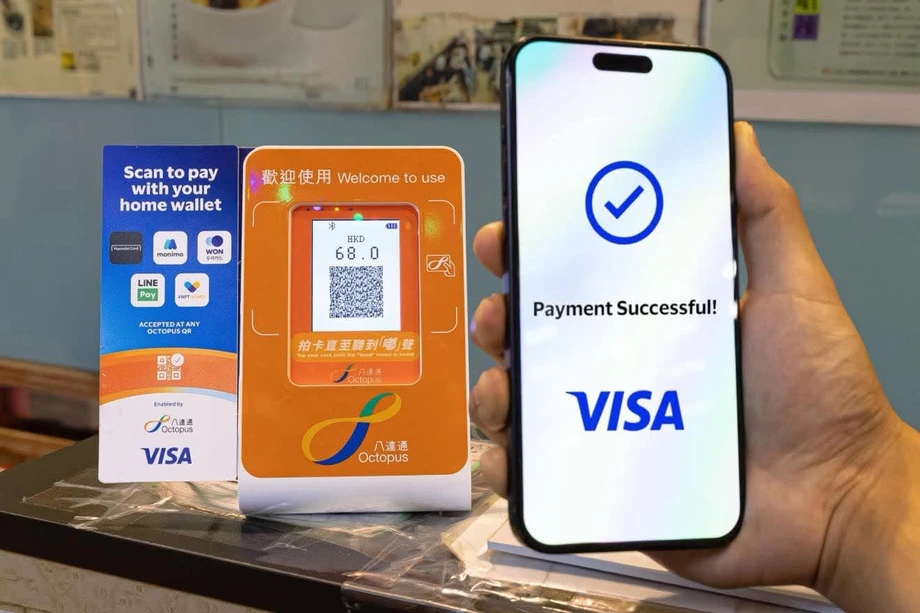
Visitors from South Korea and Vietnam can use four supported payment apps to scan Octopus QR codes at participating Hong Kong merchants under an expanded partnership between Visa and Octopus Cards Limited. The service connects Hyundai Card, Woori Card, Samsung Card and VNPT Money to an existing merchant payment network, giving eligible travellers another way to pay without downloading a Hong Kong wallet.
Contents
- Four overseas payment apps connect to Octopus merchants
- What changes at the checkout?
- Which apps and customers are eligible?
- Small merchants can use their existing setup
- What Visa's traveller survey found
- What is planned for Octopus Wallet in 2027?
- Japan provides an earlier chapter
- How the expansion has developed
- Key Points
The expansion, announced on November 9, 2026, brings Visa Scan to Pay to businesses accepting the relevant Octopus QR payments. Small businesses using the Octopus App for Business can receive these payments through their existing setup, without installing extra hardware or updating their systems.
LINE Pay and Shinhan Card are expected to join, while Visa plans to connect more international payment apps. Eligibility currently depends on the supported app and the participating merchant. The programme excludes Visa cards issued in Hong Kong.
The companies also plan to expand their partnership in 2027 so Octopus Wallet users can use Scan to Pay in multiple destinations across the Asia-Pacific region. That would extend this particular connection in the other direction, from overseas visitors spending in Hong Kong to Hong Kong wallet users spending abroad.
What changes at the checkout?
A visitor with a supported app can scan a participating merchant's Octopus QR code and make the payment through an app they already use at home. Visa Scan to Pay is part of Visa Pay, which connects wallet and banking apps to Visa's payment infrastructure.
A QR code is a square pattern that a phone camera can read. In this service, it provides the information needed to start a payment to the merchant. The customer uses the supported app to complete the purchase, while Visa's global payment network processes the transaction.
The relevant wallet issuer manages payment authentication, meaning the checks used to confirm that the customer has authorised the purchase. The exact approval process therefore depends on the app being used.
For visitors, the practical benefit is familiarity: they can keep using an eligible payment app rather than setting up a local one for a short trip. For merchants, the same Octopus QR arrangement becomes a way to accept payments from more customers arriving from overseas.
Which apps and customers are eligible?
Three of the four apps currently supported are from South Korea: Hyundai Card, Woori Card and Samsung Card. The fourth, VNPT Money, is from Vietnam. The initial selection gives the partnership a concrete starting point in two Asian travel markets.
LINE Pay and Shinhan Card are listed as upcoming additions. Visa has also said that more international payment apps will join as it expands its QR network. Customers should distinguish between the four apps already supported and those planned for a later stage.
The exclusion of Visa cards issued in Hong Kong is relevant to local residents who might otherwise expect their existing card to qualify. The current service centres on supported overseas apps connecting to Hong Kong merchants. The proposed service for Octopus Wallet users travelling abroad is scheduled for 2027.
Participation also matters at the shop counter. Visitors need a merchant accepting the relevant Octopus QR payment service, rather than simply a business displaying any kind of payment code. The combination of an eligible app and a participating merchant determines where the new connection can be used.
Small merchants can use their existing setup
Businesses already using the Octopus App for Business can accept these cross-border payments without additional hardware or system updates. A shop with the required Octopus QR setup can therefore reach supported overseas wallet users through equipment and software it already has.
That is a practical advantage for smaller businesses, where adding a payment option can otherwise involve arranging equipment or changing checkout procedures. Here, the companies are using an existing acceptance network to connect another group of customers.
The merchant and visitor approach the same purchase from different sides. The merchant uses its Octopus collection arrangement, while the traveller uses a supported overseas app. Visa processes the transaction between those services through its global network.
Visa Hong Kong and Macau managing director Leung Po-ning said travellers want easy payments using methods they know and trust. He said the partnership would help local merchants serve more customers and capture sales opportunities linked to Hong Kong's tourism economy.
The stated commitment concerns avoiding new hardware and system updates. Transaction fees, currency conversion charges, exchange rates and settlement schedules for this expanded service were not detailed in the announcement.
What Visa's traveller survey found
Visa cited its Consumer Payment Attitudes Study 5.0 to explain the demand behind the expansion. Nearly two-thirds of surveyed travellers said they preferred contactless or mobile payments when travelling abroad.
The study was conducted online in October and November 2025. It covered 1,050 consumers aged 18 to 55 with middle or higher household incomes, including people travelling to and from Hong Kong, within the Greater Bay Area and from overseas markets.
The finding groups together contactless and mobile payments. Contactless payment can involve tapping a card or phone on a reader, while this Octopus partnership uses a QR code scanned through a supported app. Both allow customers to make purchases electronically, but the checkout actions are different.
The survey gives Visa a reason to connect familiar apps across borders: many respondents preferred electronic payment methods while abroad. Its stated age and income range also helps readers understand whose preferences the research measured.
The Hong Kong Tourism Board welcomed the partnership, saying a wider choice of electronic payments and easier checkout could improve visitors' shopping experience. Its response focused on convenience for travellers and Hong Kong's appeal as a visitor destination.
What is planned for Octopus Wallet in 2027?
Octopus consumer business and product director Yip Kin-sang said the company hopes to extend the service to overseas payment settings. The companies plan to let Octopus Wallet users use Scan to Pay in several Asia-Pacific destinations during 2027.
The planned expansion would give the partnership two directions. Supported overseas apps would connect visitors to Hong Kong merchants, while Octopus Wallet would connect its users to participating merchants abroad.
For a Hong Kong resident, the attraction would be using a familiar wallet while travelling rather than arranging a different local payment app in each destination. The actual places where that will work depend on the network and merchant connections introduced under the expansion.
The companies have not named the destinations, given specific launch dates or published a complete list of participating overseas merchants. The next stated milestone is 2027, with those operational details still to come.
Japan provides an earlier chapter
Octopus already has experience connecting Hong Kong users to an overseas QR network. Its PayPay launch in Japan began on October 2, 2025, allowing customers to use the Octopus App at participating Japanese merchants and review the Hong Kong dollar cost before confirming a purchase.
That service uses a Mobile Octopus or Octopus Wallet balance. Depending on the checkout, customers can scan a merchant's PayPay code or display a code for the cashier to scan. Octopus said at launch that it charged no transaction fees for those payments.
Some travellers subsequently encountered failed checkouts, incorrect charges and duplicate deductions. Following those payment problems in Japan, Octopus said settlement issues had been fixed and refunds were expected to be completed. By October 10, 2025, it had not disclosed the technical cause or the number of users affected.
The Japan experience shows why payment status matters to customers as much as convenience. A successful purchase requires the wallet's deduction and the merchant's payment record to match. Settlement is the process that gets the money to the merchant, while reconciliation checks that the records agree.
How the expansion has developed
The sequence runs from an earlier Octopus connection in Japan to the current Visa partnership in Hong Kong and a planned regional expansion. Each stage involves its own participating apps, merchants and operating arrangements.
- October 2, 2025: Octopus activated payments at participating PayPay merchants in Japan.
- October 2025: Travellers reported payment failures and incorrect deductions in Japan; Octopus said settlement issues had been fixed and announced an expected refund timetable.
- October to November 2025: Visa conducted the consumer survey cited in support of the new expansion.
- November 9, 2026: Visa announced the expanded Hong Kong QR connection with Octopus, supporting four overseas payment apps.
- 2027: Visa and Octopus plan to extend Scan to Pay to Octopus Wallet users in multiple Asia-Pacific destinations.
The immediate change is at participating Hong Kong counters: eligible visitors gain another payment route, and merchants using the required Octopus business setup gain access to those customers without new hardware. The next stage depends on the destinations and launch arrangements the companies announce for 2027.
Key Points
- Hyundai Card, Woori Card, Samsung Card and VNPT Money are currently supported at participating Octopus QR merchants in Hong Kong.
- LINE Pay and Shinhan Card are expected to join later.
- Businesses using the Octopus App for Business need no additional hardware or system updates.
- Visa processes transactions through its global network; the relevant wallet issuer manages authentication.
- The programme excludes Visa cards issued in Hong Kong.
- An expansion for Octopus Wallet users travelling in Asia-Pacific is planned for 2027. Destinations and specific launch dates have not been announced.