Police prepare facial searches across a growing camera network
Hong Kong police plan to introduce artificial intelligence facial recognition to their SmartView surveillance network this month and connect cameras from at least four shopping malls by the end of the year, saying the arrangements comply with local privacy law. By October 31, police said the network had helped solve 2,192 criminal cases and led to 2,831 arrests since its launch in 2024.
Contents
- Police prepare facial searches across a growing camera network
- How the facial recognition searches would work
- What happened during the pilot searches?
- Which shopping malls would join?
- Who would approve a search?
- What information would remain after video is deleted?
- How police say the network is protected
- From the current network to 60,000 cameras
- The rollout and the results so far
- Key Points
The expansion would let officers search for a face across selected recordings or receive an alert when a suspect or missing person appears on a connected camera. Police say the technology has already helped locate a man in his 80s with dementia within about 90 minutes of his disappearance being reported, and helped officers arrest a robbery suspect.
Senior Superintendent Leung Ming-leung of the Operations Bureau said facial recognition would require approval from an officer ranked inspector or above. Police described checks before and after use, restrictions on the cameras and time periods searched, and separate storage periods for video and facial recognition records.
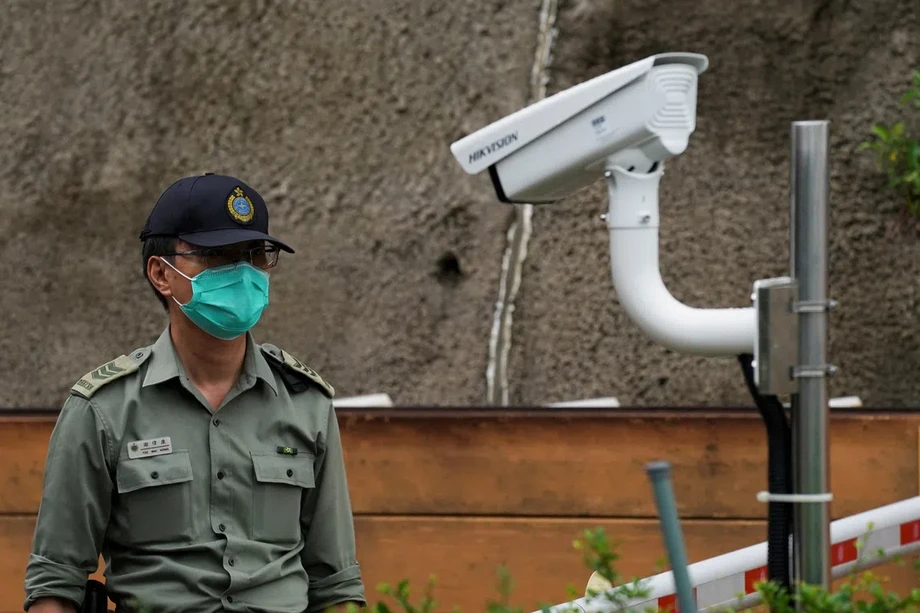
The change reaches beyond cameras installed by police. Around 10,000 police cameras are already in place, alongside connections to approximately 10,000 cameras operated by government departments and public organisations. Shopping mall connections would extend that shared network into privately managed premises, allowing officers to retrieve footage from their offices rather than visit each location.
Police aim to bring approximately 60,000 cameras into SmartView by 2028. For shoppers, residents and commuters, the immediate change is how quickly police can search recordings from different places, including footage originally collected by another organisation.
How the facial recognition searches would work
Leung described two ways officers could use the technology. In a retrospective search, police would enter a person's facial features and ask the system to look for that person in particular recordings, on selected cameras or during a defined period. This could help reconstruct where a suspect went after a crime.
A live search would instead watch selected camera feeds for a person whose image had been entered into the system. For a missing elderly person, police said a family could authorise use of a recent photograph. The system would issue an alert if it detected the person on a connected camera.
Facial recognition software compares features in an image with those in a reference photograph. It can reduce the amount of footage officers need to examine manually. Police would then use the location and time attached to a possible match to direct their search.
Superintendent Raymond Cheng said the feature could be activated on police cameras and integrated feeds from other organisations. Computing capacity would limit how many cameras could run facial recognition simultaneously. Selected cameras could nevertheless be assigned continuous analysis when an operation required it.
SmartView's cameras can therefore operate around the clock while facial recognition is deployed for particular searches. Police said the feature would be triggered during active criminal searches or efforts to locate missing people considered at high risk, rather than run continuously across every camera.
What happened during the pilot searches?
A man in his 80s with dementia was found during testing after leaving his care home. Chief Inspector Leung Yin-man of the Operations Bureau said the man had neither a phone nor an Octopus card with him, making it difficult to establish his location through those routes.
After police entered his photograph into SmartView, the system identified his location within about 20 minutes, according to the chief inspector. The full period from the family's report to finding him was approximately an hour and a half. The two figures describe different stages of the same search.
Police also described a robbery investigation in which a suspect changed clothes several times and switched vehicles. Officers said SmartView helped trace his escape route and that he was arrested about 10 kilometres from the crime scene in a little over an hour.
Another recent operation involved tracking a driver towards Tuen Mun after a vehicle crashed into an inspection booth at the Hong Kong-Zhuhai-Macao Bridge. SmartView also has automatic number plate recognition, which police said had helped identify a vehicle using false plates.
Which shopping malls would join?
At least four malls are expected to make the first connections: Olympian City in Tai Kok Tsui, Tuen Mun Town Plaza, Kwai Chung Shopping Centre and Sierra Life in Fanling. The first feeds are expected to be linked by year end.
Connecting existing cameras would give police a more direct route to footage. Officers who previously had to visit numerous premises and arrange access to recordings could instead review connected feeds through SmartView. Police said facial recognition would also be available for mall cameras brought into the system.
Leung said the malls already operated security cameras for public safety purposes. He said police legal advisers and the Privacy Commissioner for Personal Data had assessed the proposed connections and considered them consistent with privacy requirements.
Malls would still display their existing notices that CCTV recording was taking place. Police said the Department of Justice advised that disclosing a connection to SmartView should be voluntary. Officers would encourage malls to display SmartView notices, without requiring a label beneath every camera.
For a visitor, a notice saying that recording is underway and a notice explaining that footage is connected to the police network provide different information. Under the arrangement described by police, the additional SmartView notice would remain the mall operator's choice.
Who would approve a search?
Leung said officers would have to justify why SmartView was needed, identify the cameras and recording periods involved, and obtain approval from an inspector or a more senior officer. Trained staff in designated posts would submit applications.
The senior superintendent described the questions that would guide approval:
"We first ask whether using SmartView is essential to solving the crime. How many cameras and how much footage must be reviewed? Does that scope align with the investigation's objectives? These points must be settled before any application is approved," Leung said.
Police said a review after use would check whether the actual search matched the permission granted, including the number of cameras examined. Officers would also have to pass two internal tests before accessing footage.
Leung said SmartView was restricted to four statutory purposes: safeguarding national security, preventing and detecting crime, ensuring public safety, and maintaining public order. He said cameras covered public places and that operating procedures followed an independent privacy impact assessment and consultation with the Privacy Commissioner.
No precise launch date, published accuracy rate or detailed procedure for handling an incorrect facial match was given. Those details matter to understanding how a computer alert becomes an investigative lead and how officers check it before taking action.
What information would remain after video is deleted?
Police described different retention periods for ordinary video and information produced through facial recognition. Leung said footage would be deleted automatically after 30 days, while other descriptions of the arrangements put the maximum at 31 days.
Facial photographs and associated information could remain for up to 180 days. Police identified that information as including location, date, time and facial characteristics. Metadata is information attached to a record, such as where and when an image was captured.
A facial recognition record could therefore remain searchable after the underlying video had been routinely deleted. Using the stated 30 day video period, the 180 day limit is six times as long. The difference gives police a longer window to examine a person's recorded appearances.
Police said the storage arrangements balanced investigation needs, cost and legal requirements. Their description also allowed for footage to be retained beyond the usual period where keeping it served the public interest.
How police say the network is protected
Leung said SmartView uses a dedicated fibre network laid for exclusive police use. Police also described firewall separation between their system and cameras connected from outside organisations, regular checks for vulnerabilities and compliance with government security standards.
A firewall controls traffic between networks. In this arrangement, it is intended to regulate the connection between an outside camera system and the police network. Dedicated fibre gives police a transmission route reserved for their use.
Police said these measures made hacking or information theft a low risk. Bringing in mall systems would still add more connections to manage, alongside those already established with government departments and public organisations. The security arrangements would cover both the central system and the routes through which outside feeds enter it.
From the current network to 60,000 cameras
SmartView began in 2024 with a focus on places where crime rates and pedestrian traffic were high. Police now describe a broader second phase intended to fill gaps across transport facilities, housing areas and other public locations.
Locations covered or identified for expansion include MTR facilities, Hong Kong International Airport, Kai Tak Sports Park, tunnels, major roads, public housing estates, recreation venues and boundary control points. Police describe adding approximately 20,000 cameras annually during the second phase, through new installations and connections to existing systems.
The approximately 20,000 cameras currently installed or connected amount to about one third of the 60,000 target for 2028. A third phase would add another 6,500 cameras between 2028 and 2031, including in the developing Northern Metropolis, bringing the planned total to around 66,500.
The earlier HK$4.07 billion expansion proposal set out the spending plan for new equipment and integration work through March 2031. It also projected annual operating expenditure rising from HK$72.926 million in the 2026-27 financial year to HK$243.119 million from 2036-37 onward.
The latest announcement moves the focus from the size of the network to what officers can do with it. More cameras provide more locations to search; facial recognition provides a way to find a particular person within selected feeds.
The rollout and the results so far
Police attributed 2,192 solved cases and 2,831 arrests to SmartView assistance by October 31, including investigations into murder, robbery and arson. Those totals cover the network's work since launch, while facial recognition was still being tested ahead of its planned introduction.
The timetable described by police is:
- 2024: SmartView began operating, initially targeting places with high crime rates and heavy pedestrian traffic.
- October 31: Police recorded 2,192 cases solved with the network's assistance and 2,831 arrests.
- This month: Police plan to introduce facial recognition formally.
- By year end: The first shopping mall camera connections are expected.
- By 2028: The network is intended to reach approximately 60,000 cameras.
- Between 2028 and 2031: A further 6,500 cameras are planned, including coverage in the Northern Metropolis.
For families searching for a vulnerable missing person, the pilot offers a concrete example of a faster search. For people moving through malls and transport facilities, the expansion means more recordings can be reached through one police system, with facial search records potentially retained for much longer than routine video.
Key Points
- Police plan to introduce SmartView facial recognition this month, with the first mall camera connections expected by year end.
- Searches would require approval from an inspector or above and a review after use.
- Selected cameras could run continuous facial analysis, but computing limits prevent simultaneous use across the entire network.
- Video would generally remain for 30 to 31 days; facial photographs and related information could remain for up to 180 days.
- Police say mall connections comply with privacy law, while additional SmartView notices would be voluntary.
- The network is intended to grow to about 60,000 cameras by 2028 and 66,500 by 2031.