Failed checkouts test a new payment service
Hong Kong travelers using the new Octopus payment feature in Japan have reported failed checkouts, incorrect charges and duplicate deductions at shops accepting PayPay, Japan's largest QR code payment network. The problems emerged within a week of launch, prompting complaints on social platforms and demands for refunds.
Contents
- Failed checkouts test a new payment service
- What happened during the rollout
- How an Octopus purchase in Japan works
- Why a failed payment can still produce a debit
- Receipts and records matter when screens disagree
- Why scanning a code differs from tapping a card
- The savings depend on the exchange rate
- Why the feature appealed to Hong Kong visitors
- What to do about an incorrect charge
- Japan's payment choices and the next steps
- Key Points
Octopus said payment settlement issues were fixed on Tuesday night and that refunds were expected to be completed by Wednesday. As of October 10, 2025, its response had not disclosed the technical cause, the number of users affected or how exchange rates would be handled when money was returned.
The service was promoted as a way to spend a familiar Octopus balance at Japanese merchants without transaction fees. Octopus said its exchange rate could save travelers about 2 to 3 percent compared with credit card payments and 1 to 1.5 percent compared with other digital wallets.
For shoppers, the immediate concern was more basic: whether a payment had succeeded and whether money deducted after a failed checkout would come back. Some travelers described an error on the shop's payment system while their Octopus app showed that their balance had fallen.
Other users reported smooth payments in one store followed by repeated failures in another nearby shop. The uneven experience made it difficult for travelers to know when they could rely on the feature and when they would need cash or a different card.
What happened during the rollout
Social posts accumulated quickly after the launch, with many users calling the rollout a failure. Complaints included double charges that took hours to reverse and shop staff who were unsure how to resolve a dispute involving a wallet from outside Japan.
The sequence described by travelers and Octopus was:
- Within a week of launch, travelers reported payment failures and incorrect or duplicate charges at PayPay merchants.
- On Tuesday night, Octopus said the payment settlement issues had been fixed.
- By Wednesday, the company expected refunds linked to the problem to be completed.
The refund timetable was the company's stated expectation. Travelers still waiting for money to return needed to check their transaction histories and contact Octopus with details of the affected purchases.
How an Octopus purchase in Japan works
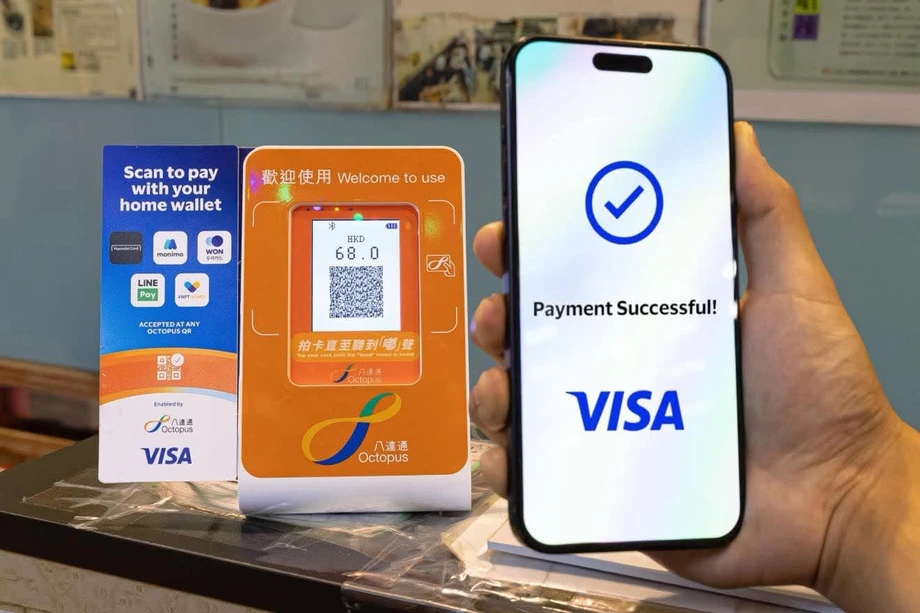
An Octopus user opens the app, selects payment in Japan and displays a QR code. The cashier scans that code with a PayPay reader. Octopus deducts money from the user's balance in Hong Kong dollars, using the company's posted exchange rate, while PayPay settles the merchant's payment in Japanese yen.
The promise is straightforward: a visitor can use a Hong Kong wallet in a Japanese shop without paying a separate foreign transaction fee. Behind that simple checkout, however, the two payment systems have to exchange information and agree on the payment's status.
The systems verify the account balance and apply risk checks before creating a transaction record for reconciliation. Reconciliation means comparing the records held by the different parties so that the customer's deduction and the merchant's payment match.
Settlement is the movement of money behind the scenes after a purchase appears to have completed at the counter. A shopper may see a result in the app before every part of that process has finished. If the records fall out of step, the customer and cashier can see different outcomes for the same attempted purchase.
Why a failed payment can still produce a debit
A delay or mismatch during processing can leave the Octopus app showing a deduction while the merchant sees a failure. A second attempt can make the situation more confusing if the first request is still being processed.
Duplicate charges often occur when a terminal times out and the cashier scans the code again, only for both requests to receive approval later. A timeout means the system has waited too long for a response; the payment request may still be moving through the network.
Reconciliation usually identifies such duplicates so that they can be reversed, but the reversal takes time. Octopus described this incident as a settlement problem without identifying which stage had failed.
A refund can also raise a currency question. If the exchange rate changes between the purchase and the reversal, the amount credited in Hong Kong dollars can be slightly different unless the wallet restores the original rate. Customers therefore have reason to compare the refund with the original deduction.
Receipts and records matter when screens disagree
Some QR code payment systems provide only a brief success tone rather than a printed receipt. When the app and the shop's terminal show different results, the absence of a clear receipt can make it harder to explain what happened.
Screenshots of the receipt in the app and, where available, the cashier's payment screen can help support staff match the attempted purchase to the relevant records. A printed shop receipt is useful too, particularly when the customer paid again with cash or another method after the first attempt appeared to fail.
Travelers described situations in which store employees were unfamiliar with disputes involving a foreign wallet. A clear record of the shop, amount and time gives both the customer and support staff something concrete to work from, even when the cashier cannot resolve the issue immediately.
Why scanning a code differs from tapping a card
Contactless cards and transit passes send payment tokens through a quick tap. A token is a piece of digital information used to process a payment. These systems can sometimes complete a transaction despite slow network links, and some can operate offline for a short period.
A QR code payment requires the cashier to scan a code on the customer's screen and usually needs live connections from both the wallet and the terminal. More steps and network requests create more opportunities for a timeout or a mismatch between the two systems.
A foreign resident in Japan, commenting on Reddit, criticized the checkout process associated with QR code apps. The resident argued that incentives helped keep them popular despite the extra steps, and compared them with Japan's established contactless payments:
You don't need to open an app, type in the amount, and try to get the reader to read a QR code off your screen. Japan had an awesome contactless system since the early 2000s with Mobile Suica. There are better ways of doing cashless payments.
The Octopus process described for this service involves showing a code for the cashier to scan. The wider debate reflects travelers' expectations of a payment experience as quick and dependable as tapping Octopus on Hong Kong trains and buses.
The savings depend on the exchange rate
Octopus put price at the center of its Japan launch. Alongside the absence of transaction fees, it promoted an exchange rate that it said could save about 2 to 3 percent against credit card payments and around 1 to 1.5 percent against other digital wallet methods.
Credit cards often add a foreign transaction surcharge, while banks can also include a margin in the currency conversion. Many wallets use a similar exchange rate spread. The spread is the difference between the underlying currency rate and the rate offered to the customer.
A service can therefore charge no separate transaction fee while still earning money through its exchange rate. Octopus may earn a small margin within its rate while remaining cheaper than common card costs, although it did not disclose that margin in its response.
For travelers, the advertised savings depend on predictable conversions and prompt refunds when something goes wrong. A lower cost is less useful at the checkout if a shopper has to pay again and wait for the first deduction to be returned.
Why the feature appealed to Hong Kong visitors
Japan is a favorite destination for Hong Kong travelers, with food, shopping, theme parks and onsen towns among its attractions. Onsen are Japanese hot springs. A familiar wallet offers an appealing way to pay without carrying large amounts of cash or encountering unexpected card fees.
PayPay's reach strengthens that appeal. Its network includes a wide range of merchants, from convenience stores and ramen counters to drugstores and electronics chains. For a visitor moving between small purchases and larger shopping bills, broad acceptance makes a payment method more useful.
The early failures disrupted that expectation. Some travelers carried backup cash or returned to cards at the till when Octopus payments did not work. Newer posts on X also described frequent malfunctions and double charges as travelers headed to Japan during the autumn travel period.
The complaints show how a payment problem can affect a trip in practical terms: a shopper must find another way to settle the bill, keep evidence of the failed attempt and spend time checking whether the deducted balance has been restored.
What to do about an incorrect charge
Octopus said refunds associated with the settlement issue would be processed by Wednesday. Customers whose money had not returned should document the transaction and contact the company through its official support channels.
Useful records and checks include:
- Review pending and completed entries in the Octopus app for the relevant shop and time.
- Save screenshots of the Octopus receipt, the PayPay screen at the counter if available, and any printed shop receipts.
- Record the store's name and location, the exact time in Japan local time, and the cashier's identification number if visible.
- Submit a refund request through help in the app or the customer service email, attaching images and a short description of the problem.
- If the balance was topped up with a bank card around the same time, check the card statement for temporary holds.
- Compare the refunded sum with the original Hong Kong dollar deduction to identify any exchange rate difference.
Refund times vary across payment systems. Many reversals appear within one to three working days, while more complicated disputes can take longer. That general window is separate from Octopus's Wednesday timetable for this incident.
Customers whose cases stall can use the formal complaint channels available for stored value facility providers in Hong Kong. A stored value facility holds money that a customer has loaded in advance for later spending, as an Octopus balance does.
Japan's payment choices and the next steps
Japan's cashless payment system includes both QR code wallets and contactless services built on FeliCa technology. PayPay, dBarai and Rakuten Pay expanded during government campaigns that rewarded shoppers with rebates for cashless purchases.
Suica and PASMO transit cards, along with iD and QUICPay, offer quick contactless payments used by riders and shoppers. Many stores also accept Visa and Mastercard contactless payments alongside QR code options.
Small shops sometimes favor QR codes because the hardware is inexpensive and setup is simple. The trade off can be slower checkout and greater sensitivity to poor network connections. Tourists often combine methods, using Suica for trains and quick snacks and a card or QR wallet for shopping.
Octopus's immediate response focused on fixing settlement and returning money. Practical changes that could help rebuild confidence include clearer payment status messages, protection against duplicate deductions after another scan, and a unique reference code that a traveler and cashier can both match.
A short guide within the app could also help visitors and shop staff follow the same payment steps. Those measures would address the confusion described at counters, where an apparent failure on one screen could coexist with a debit on another.
Travelers heading to Japan in the coming weeks should bring another way to pay. A contactless card without a foreign transaction fee, a Suica balance on a phone and some yen banknotes together cover most situations. The Octopus PayPay feature can serve as an extra option as reliability improves.
Key Points
- Travelers reported failed checkouts and incorrect or duplicate Octopus charges at PayPay merchants in Japan within a week of launch.
- Octopus said settlement issues were fixed on Tuesday night and refunds were expected to be completed by Wednesday.
- The company did not disclose the technical cause, the number of affected users or its handling of exchange rates on refunds.
- The feature uses a QR code in the Octopus app, deducting Hong Kong dollars while PayPay settles merchants in yen.
- Octopus advertised no transaction fees and savings of about 2 to 3 percent against cards and 1 to 1.5 percent against other wallets.
- Customers awaiting refunds should preserve receipts and screenshots, contact support and compare the returned amount with the original deduction.
- Japan offers QR wallets and contactless alternatives, including Suica, PASMO, iD, QUICPay, Visa and Mastercard.
- Backup payment methods, clearer status messages and protection against duplicate deductions would address the practical problems travelers described.