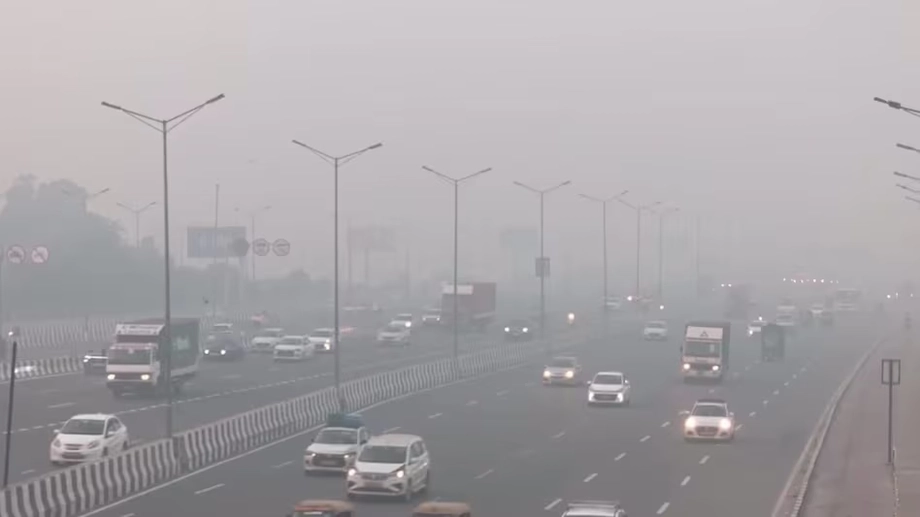
Factory closures and unfinished roads drive winter crackdown
Union Environment Minister Bhupender Yadav has directed the Central Pollution Control Board (CPCB) to immediately seal 191 polluting industries in Delhi and the National Capital Region, while ordering faster repairs to 2,259 kilometres of unfinished roads and action at 233 traffic congestion points.
Contents
- Factory closures and unfinished roads drive winter crackdown
- Why the industries face sealing
- Road repairs have more than 2,000 kilometres to go
- Traffic action reaches border crossings and fuel stations
- Waste processing and open burning face closer checks
- Construction checks and local pollution plans
- Weekly reports put officials under scrutiny
- Pollution estimates explain the broad response
- Deadlines that shape the next steps
- Key Points
The directions followed a review on November 14, 2026, covering Delhi, Haryana, Uttar Pradesh and Rajasthan. Authorities were also told to install automatic number plate recognition cameras by November 30 and complete traffic systems designed to let vehicles move through 154 Delhi border entry points without stopping by December 31, 2026.
The review identified unfinished work across several fronts: road redevelopment had reached about 59% of its target, municipal waste processing capacity was short by 6,747 tonnes a day, and more than 3,000 active construction and demolition sites were marked for physical inspection.
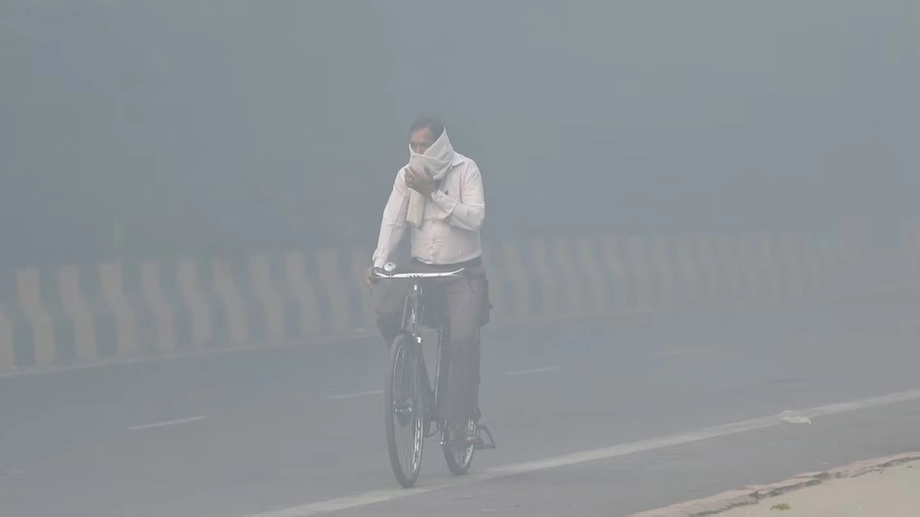
Delhi's air quality index stood at 348 at 9 am that Saturday, according to CPCB data, within the very poor category. Seven of the city's 59 monitoring stations recorded severe pollution. The Air Quality Early Warning System for Delhi forecast possible deterioration over the following days.
CPCB data also put the overall AQI at 348 at 7:05 am. Station readings at 7 am were 421 at North Campus, 419 at IIT Delhi, 415 at ITO and 410 at Burari Crossing, all in the severe category. Chandni Chowk recorded 392, Jawaharlal Nehru University 390, Anand Vihar 379, Chhawla 352, Connaught Place's inner and outer circles 326, and Maidan Garhi 300. PM10 and PM2.5 were the major pollutants.
Yadav, the Union minister responsible for environment, forests and climate change, called for coordinated enforcement across state boundaries:
"NCR states must move beyond planning and ensure strict, time-bound and coordinated action on the ground," he said.
Delhi Environment Minister Manjinder Singh Sirsa, Haryana Environment Minister Rao Narbir Singh and Uttar Pradesh Environment Minister Arun Kumar Saxena joined virtually. More than 30 review meetings had taken place over the preceding year. This round placed particular weight on field inspections, weekly reporting and consequences for officials who fail to act.
Why the industries face sealing
The 191 industries identified for immediate action had failed even to place orders for air pollution control devices despite repeated directions. A figure of 91 also circulated for the closure instruction; the final number requires confirmation from the ministry or CPCB.
Air pollution control devices remove or capture pollutants before factory exhaust reaches the atmosphere. Yadav directed authorities to enforce a particulate matter limit of 50 milligrams per normal cubic metre, written as 50 mg/Nm³. The unit measures the mass of particles in a volume of exhaust gas adjusted to standard conditions.
Industries that breach requirements face closure, electricity disconnection and sealing where necessary. Sealing prevents a unit from continuing to operate while enforcement action is in place.
The ministry said 2,298 of 2,345 targeted industries had been connected to Online Continuous Emission Monitoring Systems (OCEMS), about 98% of the total. The remaining 47 were closed or sealed. OCEMS instruments track emissions continuously, allowing regulators to receive readings rather than depend entirely on occasional inspections.
Pollution control boards were also asked to help micro, small and medium enterprises obtain financial assistance under the Swachh Pawan Neel Gagan, Swasth NCR scheme to install pollution control equipment. The direction combines enforcement with help for smaller businesses facing installation costs.
CPCB's winter enforcement procedure runs from October 1, 2026, to February 28, 2027. Monitoring cells and alerts generated from continuous emissions data are intended to support inspections during that period.
Road repairs have more than 2,000 kilometres to go
Road agencies had completed redevelopment of 3,221 kilometres against a target of 5,480 kilometres. That leaves 2,259 kilometres, or about 41% of the planned length, unfinished.
Yadav instructed agencies to prioritise potholes, damaged footpaths, central verges and paving along the full length of roads. Loose material on damaged surfaces and road edges can be lifted into the air by passing vehicles, so the work extends beyond repairing the driving surface.
Mechanical sweepers must operate in two shifts, with digital tracking and monitoring through Integrated Command and Control Centres. Agencies were also directed to use video surveys supported by artificial intelligence to identify road conditions and check work.
States were told to step up deep cleaning and remove silt, construction debris and municipal waste. For residents and road users, the practical change is meant to be more frequent cleaning backed by repairs that reduce the amount of loose dust returning to the road.
Traffic action reaches border crossings and fuel stations
Authorities were directed to act immediately at 233 identified congestion points across NCR and carry out fresh assessments. The Municipal Corporation of Delhi was asked to complete Multi-Lane Free Flow systems at 154 border entry points by December 31, 2026.
These systems are designed to process vehicles as they pass through lanes rather than require each vehicle to stop. The border project sits alongside local congestion measures intended to reduce queues and prolonged idling.
States must also install Automatic Number Plate Recognition (ANPR) cameras, including at fuel stations. The cameras read vehicle registration plates and are to be connected with VAHAN, the vehicle registration database, and PUCC records for pollution under control certificates.
Linking the systems would allow officials to check a vehicle's identity and recorded pollution certification when its plate is detected. Yadav warned that the Commission for Air Quality Management (CAQM) could initiate criminal prosecution against delinquent transport department officials after November 30 if the camera installation requirement was not met.
Under the PARIVARTAN scheme, states were told to accelerate replacement of trucks and buses built to standards older than Bharat Stage VI with BS-VI, compressed natural gas or electric vehicles by 2028. Bharat Stage standards set limits on vehicle exhaust emissions. Uttar Pradesh, Rajasthan and Haryana were specifically asked to increase beneficiary registrations, including through state registration events.
Waste processing and open burning face closer checks
Municipal bodies were instructed to close a waste processing capacity gap of 6,747 tonnes every day. The direction covers the ability to handle waste after collection, alongside orders to prevent open dumping and burning.
Yadav also called for faster clearance and treatment of accumulated waste at Okhla, Ghazipur, Bhalswa and Bandhwari. This older material, often called legacy waste, requires work separate from the daily handling of newly collected rubbish.
Authorities were told to collect waste promptly from secondary collection points, keep recycling plants functional and track waste digitally from collection through processing. Those steps connect street cleaning with the facilities that must receive the material.
Municipal bodies, resident welfare associations and private establishments were also asked to provide heating alternatives that do not pollute for security and sanitation staff. Ward officials and sanitation inspectors were assigned responsibility for surveillance and prevention of open burning.
The instruction addresses a concrete winter problem: workers outdoors need warmth, while burning waste or other material creates smoke close to streets, homes and workplaces. Providing another heat source is part of the enforcement plan.
Construction checks and local pollution plans
More than 3,000 active construction and demolition sites are to receive physical inspections. States were also instructed to remove construction waste and ensure that recycling facilities operate.
Yadav called for strict implementation of the Graded Response Action Plan (GRAP), the set of emergency measures activated as air quality worsens. Depending on the applicable stage, the response can include restrictions affecting construction, transport and other activities.
NCR states were asked to adopt Delhi's approach of concentrating winter action on pollution hotspots. The measures discussed included traffic management, working from home, construction restrictions and prevention of open burning.
Each state must identify hotspots in major cities and prepare local plans, particularly around markets, schools, hospitals, railway stations and bus terminals. These locations bring together large numbers of people and vehicles, making specific inspections and traffic arrangements more useful than a single instruction applied everywhere.
The review also called for public information campaigns involving residents, welfare associations, transport associations and the construction industry. These groups are directly involved in waste handling, vehicle operation and building activity covered by the orders.
Weekly reports put officials under scrutiny
State governments were directed to nominate officials at secretary level for seven cities in Haryana, four in Uttar Pradesh and four in Rajasthan. Together, the arrangement covers 15 cities outside Delhi.
Those officials must visit the field, oversee implementation and report to CAQM every week. The commission was asked to issue notices to officials whose performance falls short. Senior central officials will also regularly review individual state hotspot plans.
Delhi's Integrated Command and Control Centre, launched on October 5, 2026, and CAQM's PAVAN platform will support monitoring. PAVAN brings together air quality, emissions, weather, satellite and compliance data.
Yadav directed agencies to combine information from sensors, cameras and satellites with physical inspections. In practice, a digital alert should lead officials to check the location, establish the violation and take the required action.
The review follows earlier instructions with different scopes and deadlines. An earlier meeting required 2,254 pollution intensive industrial units to install monitoring and pollution control equipment by December 31, 2025, and examined 62 traffic hotspots. The November review covers 2,345 targeted industries and 233 congestion points across NCR.
That earlier meeting also called for weekly and monthly targets, closer monitoring of equipment prices, better public transport connections and a planting plan covering five years. About 3,400 electric buses were operating at that time, with more than 5,000 expected by March 2026. The November figures do not give an updated bus total.
Pollution estimates explain the broad response
Delhi's Saturday morning AQI of 348 was lower than Friday's average of 373 over 24 hours, although both were in the very poor category. Under CPCB classifications, 301 to 400 is very poor, while values above 400 fall in the severe category.
The Decision Support System for Delhi estimated transport's contribution at 16% on Thursday, with projections of 18.5% on Friday and 20.5% on Saturday. Its forecast contribution from stubble burning moved from 8.9% on Thursday to 5.3% on Friday and 13.29% on Saturday.
Indian Institute of Tropical Meteorology estimates for Wednesday put secondary organic aerosols at 22.7%, domestic solid biofuel burning at 22.3% and vehicle emissions at 19.3%. Secondary organic aerosols are tiny particles formed in the air when gases react. Their ingredients can come from sources including industry, vehicles and burning plant material.
The estimated firecracker contribution fell from 71.1% on Monday to 29.8% on Tuesday and 7.4% on Wednesday. The changing daily shares help explain why the response covers several sources at once: vehicle exhaust, industrial emissions, road dust, waste burning and construction.
For people living across NCR, the immediate measures are therefore spread across ordinary daily surroundings, from the road outside a home to nearby building sites, factories and rubbish collection points. The weekly reporting requirement provides a recurring check on whether those orders turn into completed work.
Deadlines that shape the next steps
The enforcement programme combines immediate inspections and closures with deadlines extending into 2028. The main dates are:
- October 1, 2026: CPCB's winter enforcement procedure began.
- October 5, 2026: Delhi's Integrated Command and Control Centre was launched.
- November 14, 2026: Yadav reviewed pollution measures across Delhi and the NCR states.
- November 30, 2026: Deadline for ANPR camera installation, followed by the warning of prosecution against delinquent transport officials.
- December 31, 2026: Deadline for Multi-Lane Free Flow systems at 154 Delhi border entry points.
- February 28, 2027: End of the stated winter enforcement period.
- 2028: Target year for replacing older trucks and buses under PARIVARTAN.
Road repairs, waste processing and hotspot action also require weekly follow through. Their scale makes them central tests of the review: 2,259 kilometres of roads remain unfinished, and municipalities need capacity to process another 6,747 tonnes of waste each day.
Key Points
- CPCB was directed to immediately seal 191 industries that had failed to order pollution control equipment.
- Continuous emissions monitoring covers 2,298 of 2,345 targeted industries; the remaining 47 are closed or sealed.
- Road redevelopment is about 59% complete, with 2,259 kilometres still to finish.
- Authorities must address 233 congestion points and install free flow systems at 154 Delhi border entry points by December 31, 2026.
- Municipalities face a waste processing capacity gap of 6,747 tonnes a day.
- Officials overseeing 15 cities in Haryana, Uttar Pradesh and Rajasthan must submit weekly reports to CAQM.
- Delhi's AQI was 348 on Saturday morning, with seven monitoring stations recording severe pollution.