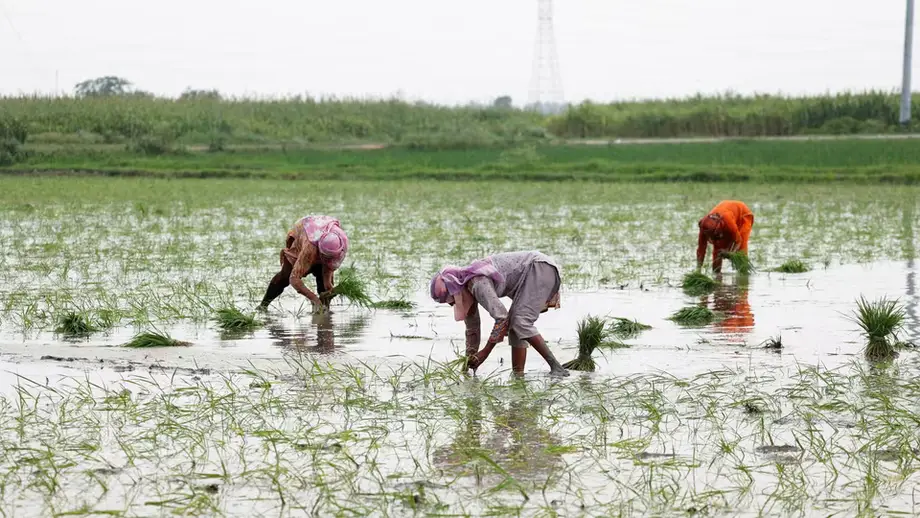
Heat losses reach the market stall and the kitchen
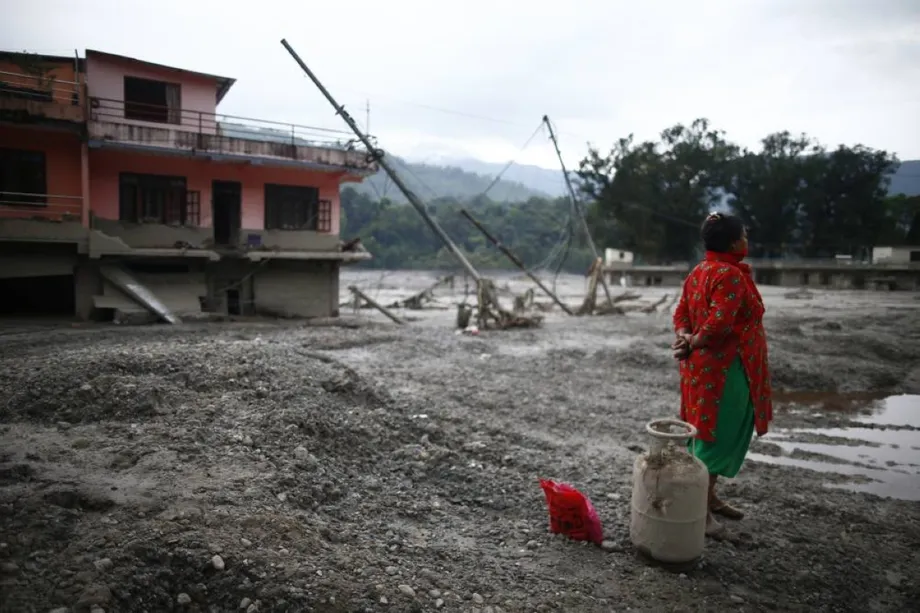
A fruit seller at Delhi's Azadpur Mandi lost more than Rs 100,000 when mangoes spoiled during the heat of 2024, India's hottest year on record. Fruit that would usually survive about two days in the market deteriorated within one. The loss captures a widening threat to India's food security: hotter conditions damage food both before and after it leaves the farm.
Contents
- Heat losses reach the market stall and the kitchen
- Why a bigger harvest does not guarantee a better diet
- What heat and irregular rainfall do to crops
- Cold storage gaps turn heat into food waste
- Milk, floods and household prices widen the damage
- Soil and groundwater are losing their buffer
- Bihar and Odisha show where delivery breaks down
- Financing a transition farmers can afford
- Technology and local knowledge need the same support
- Key Points
Annual food losses associated with inadequate storage and transport are estimated at $13 billion. Heat stress also costs India an estimated 1.8 million tonnes of milk a year, valued at Rs 2,661 crore. Farmers lose produce and income, traders lose stock, and households face less reliable supplies and higher prices.
Two institutional studies describe how these pressures connect. The Observer Research Foundation's food security paper, published on March 6, 2026, examines threats to production, affordability and nutrition. A Council on Energy, Environment and Water study of state capacity, published on June 26, 2025, identifies practical weaknesses in delivering agricultural support in Bihar and Odisha.
Together, their findings point to a problem that extends from depleted groundwater and damaged soils to overstretched advisory services and missing market connections. Protecting food supplies requires crops that survive difficult weather, places to keep harvested food safe, and support that reaches farming families in time.
Why a bigger harvest does not guarantee a better diet
India has made substantial gains in food production. Shoba Suri and Nilanjan Ghosh, authors of ORF Occasional Paper No. 527, record an increase in food grain production from 184.3 million tonnes in 1993–94 to 332.3 million tonnes in 2023–24. That is an increase of about 80 percent, calculated from the two figures.
Food security also depends on whether people can afford food, obtain the nutrients they need and maintain access throughout the year. A household may have enough rice or wheat while struggling to buy vegetables, pulses, fruit or milk.
The ORF paper cites National Family Health Survey findings that anaemia affects 57 percent of women and 67 percent of children. Anaemia means the blood cannot carry oxygen as effectively as it should; inadequate nutrition is one of its causes. Climate pressures enter an already difficult nutritional situation.
Higher concentrations of carbon dioxide can also reduce protein and micronutrient concentrations in some staple crops, according to research discussed by ORF. A field can therefore produce grain while the food itself supplies fewer nutrients per unit of harvest.
The paper cites a projection that climate change could leave 17 million more Indians facing starvation by 2030. This is a projected risk under the research assumptions, with outcomes depending on emissions, adaptation and access to food.
What heat and irregular rainfall do to crops
Research compiled in the agricultural assessment estimates that a temperature rise of 1°C over five decades reduced average yields across Indian crops by about 8 percent. Estimated maize losses reached 16 percent. Heat can speed up plant development, leaving less time for grain to fill before harvest.
ORF describes wheat growing seasons shortening by 10 to 20 days as temperatures rise. Its paper also discusses estimated rice yield declines ranging from 10 to 40 percent across different studies and conditions. CEEW cites an estimated 9 percent reduction in yields of rice and wheat grown without irrigation.
Rainfall creates another route to loss. Research cited in the agricultural assessment estimates that a 20 percent decline in rainfall could reduce paddy yields by 12 percent. Too much rain can flood fields, strip away soil and obstruct harvesting or transport; too little can leave crops without enough moisture during critical growth stages.
Wheat output fell from 109.59 million tonnes in 2020–21 to 106.83 million tonnes in 2021–22, a decline of 2.76 million tonnes, or about 2.5 percent. Heat stress contributed to the shortfall, which prompted restrictions on exports to protect domestic supplies.
Longer term projections cited in the assessment include a possible 23 percent decline in wheat production and a 10 to 17 percent decline in fish catches by 2050. Estimated losses in paddy, wheat and maize could reach between 0.28 and 1.02 percent of gross domestic product by that year.
Cold storage gaps turn heat into food waste
Only about 4 percent of fresh produce is estimated to have access to cold chain facilities. A cold chain keeps food at suitable temperatures during storage, transport and distribution. When a refrigerated warehouse is followed by a hot truck or an exposed market stall, produce can still spoil before someone buys it.
Estimates of fruit and vegetable losses range from roughly one third to 40 percent, while grain losses are put at 5 to 6 percent because of inadequate storage and transport. Perishable foods are especially exposed because heat rapidly shortens the time available to sell them.
Dr Palak Balyan, research lead at Climate Trends, described the breadth of the problem in a statement:
What this paper clarifies is that India's food losses are not just a farming problem. They are a systems problem.
The Azadpur mango losses show why a successful harvest can still end in financial damage. Retailers who buy stock before a hot day bear the cost when it becomes unsaleable. Farmers may also receive lower prices when buyers expect a greater risk of spoilage.
Decentralised storage and processing are among the proposed responses. Facilities closer to production areas can give farmers more time to sell and help preserve food when transport is disrupted. Their usefulness depends on dependable operation, maintenance and links to buyers.
Milk, floods and household prices widen the damage
About 40 percent of India's livestock population is estimated to be vulnerable to extreme weather. Heat affects how much animals eat and how much energy they spend keeping cool, reducing milk production and putting pressure on household earnings.
The estimated annual milk loss of 1.8 million tonnes matters particularly for families that combine crop farming with livestock rearing. A bad growing season and lower milk income can arrive together, reducing the financial cushion that might otherwise help pay for food, seed or repairs.
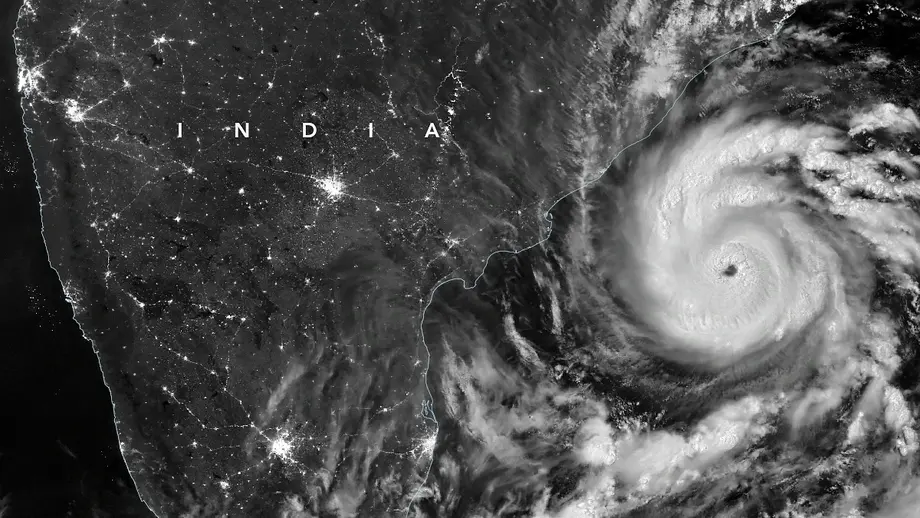
Flood exposure is also extensive: an estimated 45 percent of land producing crops lies in areas exposed to substantial flood risk. CEEW cites an assessment placing 27 of India's 36 states and Union territories at high risk from weather and water disasters, including floods and droughts.
Consumers feel the damage through prices. Research covering April 2014 to March 2024, attributed to the Reserve Bank of India, found that a one unit increase in its measure of temperature deviation raised vegetable inflation by about 1.3 percentage points. The measure concerns temperature departures used in the study.
Heatwaves affecting onion production in 2024 were associated with price increases of 80 percent. ORF also cites food inflation rising from an average of 2.9 percent during 2016–2020 to 6.3 percent in the 2020s. For households with limited money, dearer food can mean buying smaller quantities or reducing dietary variety.
Soil and groundwater are losing their buffer
Groundwater levels in parts of Punjab, Haryana and western Uttar Pradesh are falling by an estimated 1 to 3 metres a year, according to research discussed by ORF. Heavy pumping combines with hotter conditions that increase evaporation and crop water demand.
Farmers in these regions depend heavily on groundwater irrigation. Falling water tables make it harder to maintain that protection against unreliable rain, particularly where families have limited money for deeper wells or additional pumping.
Chemical fertiliser consumption rose from 73.5 kilograms per hectare in 1990 to 199 kilograms in 2023, about 2.7 times the earlier level. The agricultural assessment links intensive input use, repeated paddy and wheat cultivation, and groundwater extraction with weakening soils and water stress.
Soil in good condition helps store water and support roots. Degraded soil leaves crops more exposed when rainfall fails, while intense rain can wash away valuable topsoil. Dr G. V. Ramanjaneyulu of the Centre for Sustainable Agriculture has also pointed out that drought severity can vary within a single state and that its effects can persist.
ORF cites the 2018 Economic Survey's estimate of annual climate damage at $9 billion to $10 billion. That estimate concerns climate losses, while the $13 billion figure concerns food lost through inadequate storage and transport. Their different coverage and reference periods leave no reliable combined total.
Bihar and Odisha show where delivery breaks down
CEEW's study, by Shashwat Shukla, Sijo Abraham and Saahil Parekh, examined how state institutions turn climate policy into help on farms. Agriculture is primarily a state responsibility in India, making staffing, coordination and local budgets central to implementation.
A district Krishi Vigyan Kendra, an agricultural science and advisory centre, may have only four to six specialists serving an area covering thousands of square kilometres. Those specialists also conduct research and training. CEEW found gaps in local climate data, business skills, machinery maintenance and the delivery of timely advice.
Bihar has piloted its Climate Resilient Agriculture programme since 2019. CEEW recommends a formal structure within the agriculture department, chaired by the chief secretary, to coordinate work across departments. For Odisha, it recommends making the Climate Resilience Cell established in 2023 the central coordinator of related programmes.
The sequence of programmes and assessments shows how the response has developed:
- 2016: Andhra Pradesh launched its community managed natural farming programme.
- 2019: Bihar began piloting its Climate Resilient Agriculture programme.
- 2023: Odisha established its Climate Resilience Cell.
- 2024: Extreme heat damaged perishable food and affected onion supplies.
- June 26, 2025: CEEW published its assessment of institutional capacity in Bihar and Odisha.
- March 6, 2026: ORF published its paper on food and nutritional security.
CEEW also calls for support to reach families rather than landowners alone. Women who care for livestock or perform other agricultural work can miss training and benefits when eligibility centres on ownership of land.
Financing a transition farmers can afford
Small farmers in South Asia cultivating 10 hectares or less needed an estimated $150.3 billion in climate adaptation finance in 2021. Only $210 million was available, approximately 0.14 percent of that requirement when calculated from the stated amounts.
Adaptation finance pays for measures that help people cope with a changing climate, such as water conservation, suitable seeds, storage and better advice. Farmers also need protection during a transition if new practices initially produce lower or stagnant yields.
Andhra Pradesh offers one example of an alternative approach. Its natural farming programme has reached more than 1.77 million farmers across over 920,000 hectares. Reported outcomes include income increases of 38 to 66 percent over four years, water use reductions of up to 50 percent and greenhouse gas emissions per acre falling by up to 46 percent.
CEEW's findings explain why market support matters alongside changes in cultivation. Farmer producer organisations, which help farmers organise and sell collectively, often lack financial and technical skills. The study recommends stronger connections with organisations that can provide business support and help secure buyers.
Technology and local knowledge need the same support
ORF argues for agricultural biotechnology, digital platforms and precision farming, which uses field information to target water and other inputs more carefully. Its paper cites digital agricultural platforms associated with income gains of 25 to 35 percent among participating farmers.
Access is central to that approach. Rules governing seeds, biotechnology and traditional knowledge influence who can develop innovations and who can use them. ORF calls for intellectual property arrangements that encourage research while protecting farmer rights and keeping useful technologies accessible.
CEEW identifies a practical constraint: equipment needs people who can repair it. The study found that breakdowns and delayed replacement of imported machinery could undermine adoption. Local technicians and usable field data therefore belong in the same investment plan as new equipment.
Traditional practices also have a place. CEEW recommends documenting Odisha's Paira relay cropping, in which legumes are sown into a standing crop before it is harvested, and supporting innovations developed by farmers. Its examples include growing mushrooms using crop residues rather than burning those residues.
The combined policy task is concrete: preserve more food after harvest, conserve soil and water, make advice locally useful, and finance changes without leaving families to carry the costs alone. Forecasts become more valuable when a farmer has the resources to act on them and a dependable route to market afterward.
Key Points
- India's annual food losses associated with inadequate storage and transport are estimated at $13 billion.
- Heat stress causes an estimated 1.8 million tonnes of lost milk production each year, worth Rs 2,661 crore.
- Only about 4 percent of fresh produce is estimated to have cold chain access.
- Climate pressures affect crop output, food prices, farm earnings and the nutritional quality of diets.
- CEEW identifies gaps in advisory staffing, local data, market skills and machinery maintenance in Bihar and Odisha.
- ORF and CEEW call for accessible innovation, stronger institutions and support that reaches vulnerable farming families.