Sixteen Days of Curbs Across the Winter Pollution Peak
Dust-generating outdoor construction and demolition will face restrictions across the National Capital Region from November 5 to 20, 2026, while state government and private offices in Delhi and five adjoining districts must limit physical attendance to 50%. The Commission for Air Quality Management (CAQM) issued the directions on October 30, ahead of Diwali on November 8 and a period when crop residue burning and unfavourable weather have historically worsened pollution.
Contents
- Sixteen Days of Curbs Across the Winter Pollution Peak
- Which Offices Must Reduce Attendance?
- Roads and Flyovers Are Included, With Essential Projects Exempt
- Why November Makes Emissions Harder to Disperse
- How Delhi's Longer Winter Rules Fit In
- The Dates Employers and Contractors Need
- A Control Centre Links Monitoring With Enforcement
- What the Restrictions Change on the Ground
- Key Points
Union environment minister Bhupender Yadav announced the measures on Friday during a visit to CAQM's PAVAN Integrated Command and Control Centre in Delhi. The order directs Delhi and the NCR state governments to enforce the restrictions, with exemptions for essential services and specified infrastructure projects.
The construction curbs reach beyond private building sites. Highways, roads, flyovers, overbridges, power transmission lines, pipelines and telecommunications projects are included. The office attendance rule has a smaller geographical reach, covering Delhi, Gurugram, Faridabad, Sonipat, Ghaziabad and Gautam Buddha Nagar.
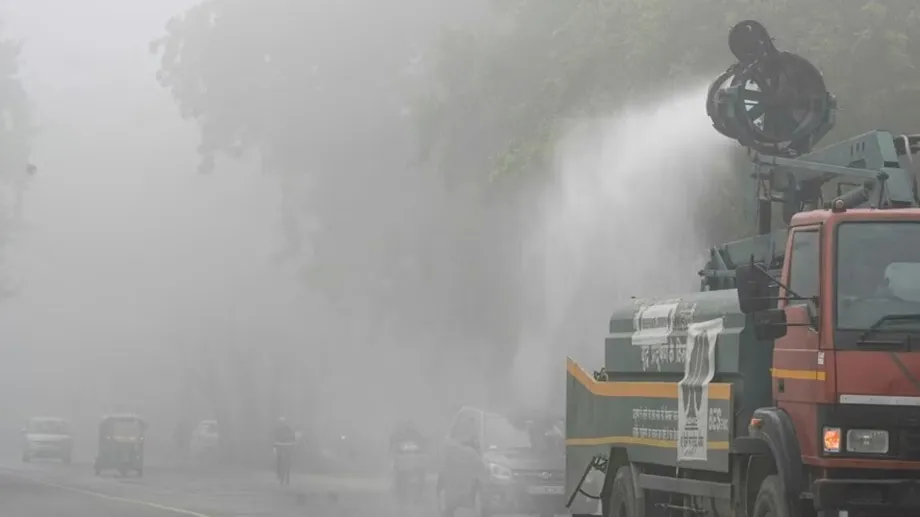
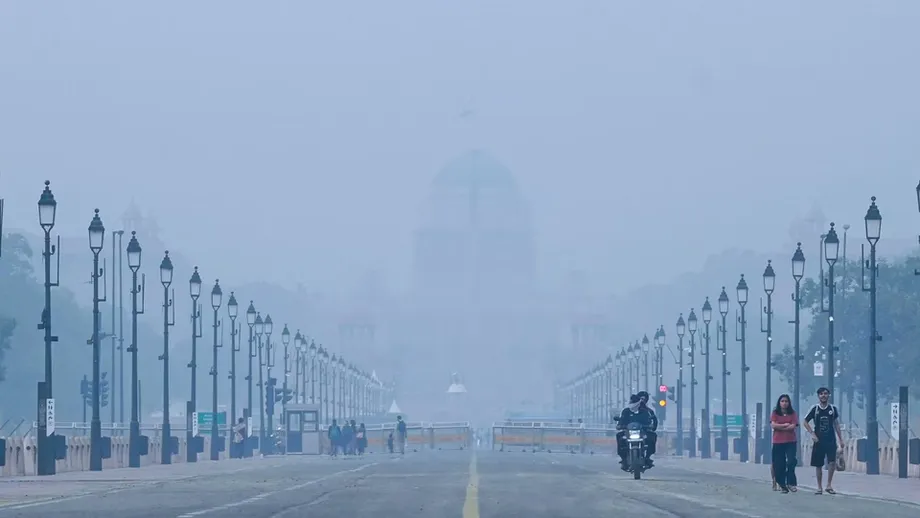
CAQM is acting before the expected pollution peak. Its review of daily November Air Quality Index readings from 2018 to 2025 found recurring deterioration during early and middle November, including days in the Severe and Severe+ categories. The commission attributed the seasonal problem to local emissions, crop residue and biomass burning, and weather that keeps pollution close to the ground.
Which Offices Must Reduce Attendance?
State government and private offices in the six specified areas must keep attendance at no more than half their staff during the November 5–20 period. The remaining employees must work from home. Gautam Buddha Nagar includes Noida and Greater Noida, bringing major office centres in both cities within the order's reach.
Industrial establishments and essential services are exempt where remote work is not feasible. The exemption recognises that a production line or an essential service requiring staff on site cannot operate through the same arrangements as an office whose employees can work remotely.
Delhi also has a separate winter framework requiring 50% work from home in government and private offices from November 1. For offices in the capital, that means the attendance requirement begins four days before the regional CAQM window. Employers need to account for both sets of directions when preparing staff schedules.
The attendance restriction targets workplace activity and associated journeys at the same time as construction dust. Fewer trips to offices could reduce traffic emissions during the restricted period, although the scale of the change will depend on commuting patterns and compliance.
Roads and Flyovers Are Included, With Essential Projects Exempt
CAQM's construction restrictions apply across the entire NCR, a broader area than the office attendance requirement. They cover outdoor construction and demolition that raise dust, including work on long infrastructure routes such as highways, pipelines and power transmission lines.
Road and flyover projects are specifically included. For contractors, the category of work matters: a public infrastructure project can fall within the restricted activities even when it is intended to improve transport or other services.
Exemptions cover projects associated with railways, metro services, airports, interstate bus terminals, hospitals, water supply and sanitation. National security, defence and other projects of national importance are also exempt. CAQM described the measures as preventive and limited to a specified period and area, with exceptions intended to keep critical services and essential infrastructure operating.
Delhi Metro Rail Corporation's Phase IV and Phase V-A works fall within the metro exemption. Several projects, including the Central Vista corridor and road, flyover and drainage works, are expected to continue under Delhi's separate construction framework. However, roads and flyovers are among the categories restricted by CAQM from November 5 to 20.
Construction can affect air quality in more than one way. Dust comes directly from site activity, while diversions and congestion around works can add vehicle emissions. That makes the treatment of transport projects relevant both at the construction site and on surrounding roads.
Why November Makes Emissions Harder to Disperse
CAQM examined November air quality over eight years, from 2018 through 2025, before choosing the restriction period. Yadav said the review showed that conditions are typically adverse during these weeks. The November 5–20 window spans Diwali and weeks when stubble burning and its effect on Delhi have historically peaked.
Crop residue burning adds smoke to pollution already produced by traffic, industries, construction and other local activities. Biomass burning, which includes burning plant material, is another contributor identified by the commission. The mixture can accumulate when weather conditions slow its movement away from populated areas.
Low wind speeds leave less moving air to carry pollutants away. A shallow atmospheric boundary layer also limits vertical mixing. This is the lowest part of the atmosphere where air near the ground mixes; when that layer is shallow, emissions become concentrated in a smaller space.
The Air Quality Index, or AQI, turns pollution measurements into a scale that helps people understand how unhealthy the air is. CAQM's historical review found days in the Severe and Severe+ categories, explaining why the commission selected a fixed period for preventive restrictions instead of waiting for another sharp deterioration.
How Delhi's Longer Winter Rules Fit In
Delhi's permanent winter anti-pollution framework was notified in July and takes effect annually from November 1 through February 28. It covers more activities and lasts longer than CAQM's 16-day regional measures.
The framework includes restrictions on the entry of vehicles registered outside Delhi that fall below BS-VI standards. BS-VI is an emissions standard limiting pollutants released by vehicles. It also requires valid pollution-under-control certificates when buying fuel, doubles parking charges at authorised sites and sets limits on construction that generates dust.
Delhi's separate construction restrictions run from November 1 to January 31, with a stricter ban on all construction and demolition activities from December 10, 2026, to January 20, 2027. The city framework also includes the 50% work from home requirement beginning November 1.
Residents and businesses therefore face overlapping calendars. November 20 is the scheduled final day of the temporary CAQM measures; Delhi's longer winter requirements continue according to their own dates. Any continuation or change to the regional measures beyond November 20 would require further directions.
The Dates Employers and Contractors Need
October's announcement gives offices and construction agencies time to arrange remote work, adjust site schedules and identify which activities fall within an exemption. The main dates are:
- October 30, 2026: CAQM issues the regional directions.
- November 1, 2026: Delhi's annual winter framework and separate construction restrictions take effect.
- November 5, 2026: CAQM's regional construction curbs and office attendance limits begin.
- November 8, 2026: Diwali falls within the restricted period.
- November 20, 2026: Scheduled final day of the temporary CAQM measures.
- December 10, 2026, to January 20, 2027: Delhi's stricter construction and demolition ban applies.
- January 31, 2027: Delhi's broader construction restriction period ends.
- February 28, 2027: Delhi's annual winter framework reaches its scheduled end.
CAQM issued its directions under Section 12 of the Commission for Air Quality Management in National Capital Region and Adjoining Areas Act, 2021. That provision gives the commission authority to direct measures for preventing and controlling air pollution.
A Control Centre Links Monitoring With Enforcement
CAQM's PAVAN Integrated Command and Control Centre is intended to help agencies track pollution sources and respond to breaches. Yadav announced the restrictions while visiting the platform, which operates on the principle of detecting a problem, analysing it and directing action.
The system draws information from 111 continuous ambient air quality monitoring stations across Delhi-NCR, more than 2,300 industries and over 3,200 active construction sites. Continuous stations measure outdoor air quality regularly, allowing agencies to follow changes rather than depend on occasional samples.
PAVAN combines air quality and emissions information with weather, satellite observations, traffic data, public complaints and compliance records. Deviations from standards or official directions trigger alerts and escalation to the relevant agencies.
Yadav said the system is intended to help authorities identify and act on farm fires, polluting industrial stacks and uncovered construction sites in real time. Linking these records gives enforcement teams information about both pollution conditions and potential sources requiring inspection.
What the Restrictions Change on the Ground
Offices in the affected areas must organise staffing around the attendance ceiling, while contractors must check their activities against both the regional order and any applicable Delhi restrictions. Exempt projects can continue, keeping some major construction sites active during the same period that other work pauses.
Sunil Dahiya, founder and lead analyst at Envirocatalysts, described the advance restrictions as a good start and said more sectors could be targeted. His assessment points to the breadth of the pollution problem identified by CAQM: construction dust and commuting are two contributors within a mixture that also includes industrial emissions, burning and adverse weather.
The practical test will be whether the directions are followed during the specified weeks and whether agencies act promptly on violations. Weather will also shape pollution levels, because low winds and limited vertical mixing can keep emissions near the ground even as some activities are reduced.
Key Points
- CAQM restricted dust-generating outdoor construction and demolition across NCR from November 5 to 20, 2026.
- State government and private offices in Delhi and five adjoining districts must limit physical attendance to 50%, with specified exemptions.
- Roads, highways and flyovers are covered; metro, railway, hospital and other specified essential projects are exempt.
- Delhi's separate winter rules begin November 1 and extend beyond the temporary regional restrictions.
- CAQM selected the period after reviewing November air quality readings from 2018 to 2025.
- PAVAN combines monitoring, emissions and compliance information to help agencies identify pollution sources and respond to breaches.