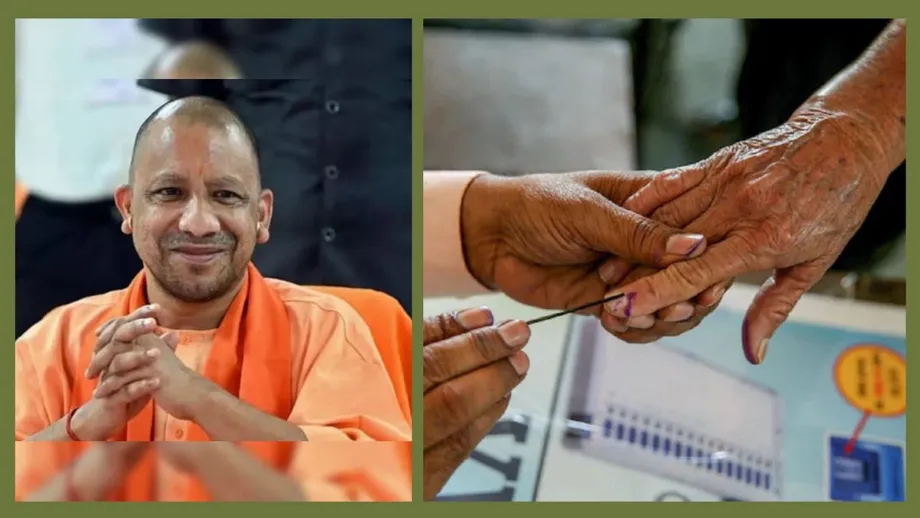
A claim involving 12.7 million voters
Uttar Pradesh Chief Minister Yogi Adityanath has claimed that 1.27 crore Hindu voters, or 12.7 million people, are missing from the state's electoral rolls, directing Bharatiya Janata Party workers to check voter lists and help eligible citizens register. Speaking at the BJP state executive committee meeting in Lucknow on Friday, he said the alleged omissions were weakening the party's position in 28 urban local body constituencies.
Contents
- A claim involving 12.7 million voters
- Who does Adityanath say is missing?
- What changed during the revision?
- Why urban voters and women matter here
- What the Supreme Court asked the commission to do
- The commission's account of bulk applications
- District officials told to review applications daily
- Which form serves which purpose?
- What BJP workers have been asked to do
- Key Points
The claim comes alongside two other developments: Election Commission of India figures showing extensive changes to Uttar Pradesh's electorate after the Special Intensive Revision, and a Supreme Court direction to examine allegations involving applications to remove voters. Together, they put attention on both sides of voter registration: getting eligible people onto the list and checking requests to take names off it.
According to figures released by the Election Commission, more than 2.04 crore voters were removed during the revision and more than 84 lakh were added. The final electorate stood at 13,39,84,792, or approximately 134 million people. Deletions were concentrated largely in urban areas, with women affected in a higher proportion.
Adityanath's figure of 1.27 crore missing Hindu voters is his allegation. The Election Commission figures describe additions, deletions and the final electorate, while the court proceedings concern alleged misuse of Form 7, which allows people to seek removal of an entry or object to its inclusion. Each concerns how accurately the rolls record eligible voters, but addresses a different part of that task.
Who does Adityanath say is missing?
Adityanath identified three groups whose names he said were absent from Assembly constituency electoral rolls: 66 lakh people listed on panchayat voter rolls, 55 lakh beneficiaries of government welfare schemes, and around 4.5 lakh young people aged 18 or 19.
In international numbering, those figures mean 6.6 million panchayat voters, 5.5 million welfare beneficiaries and 450,000 young adults. He also argued that Uttar Pradesh's population should produce an electorate exceeding 16 crore, or 160 million, compared with the approximately 13 crore voters he cited at the meeting.
The three categories he named add up to 1.255 crore entries before accounting for any overlap. A young adult could also receive welfare benefits or appear on a panchayat roll. The method used to identify the claimed 1.27 crore missing Hindu voters, including how overlapping categories were handled, was not explained.
Panchayat rolls cover village local government elections, while Assembly rolls cover elections for state legislators. Their inclusion rules and administrative processes can differ. Checking a name across the two lists therefore requires examining the person's eligibility and registration details for the relevant election. A welfare beneficiary list serves another purpose again: recording people covered by a government programme.
What changed during the revision?
The Special Intensive Revision, commonly called SIR, is an exercise to review electoral rolls. Its practical importance is straightforward: election officials must identify eligible voters who need registration and examine entries that may require correction or removal.
The Election Commission's figures show more than 2.04 crore removals against more than 84 lakh additions in Uttar Pradesh. Using those rounded figures, removals exceeded additions by roughly 1.20 crore, or 12 million. The final roll contained exactly 13,39,84,792 voters.
Adityanath also said that only four lakh voters had been added during the previous SIR exercise. The Election Commission figures cited for the completed revision put additions above 84 lakh. The period or category behind his four lakh figure was not specified, leaving the scope of that comparison unclear.
The chief minister's population argument points to another gap. Comparing his benchmark of more than 16 crore voters with the final total of about 13.40 crore produces a difference exceeding 2.60 crore. Assessing that estimate requires information about how many residents meet voting eligibility requirements, including age, citizenship and ordinary residence.
Why urban voters and women matter here
Urban areas sit at the centre of Adityanath's political concern. He linked the alleged omissions to the BJP's position in 28 urban local body constituencies. The revision figures also place a large concentration of deletions in urban areas, making those places a focus for checking individual entries.
Women were affected in a higher proportion by the removals. The figures cited do not include a detailed breakdown by sex or a constituency list for the 28 places Adityanath mentioned. Such details would help identify where registration checks and pending applications need the most attention.
For an eligible resident, the immediate issue is personal rather than statistical: whether their name appears correctly on the relevant electoral roll. A statewide total can describe the scale of a revision, but resolving an omission requires officials to examine a particular person's entry or application.
What the Supreme Court asked the commission to do
The Supreme Court has directed the Election Commission to examine allegations of irregularities involving bulk Form 7 applications in Uttar Pradesh, take necessary corrective steps and submit a compliance report. The bench comprised Chief Justice of India Surya Kant and Justices Joymalya Bagchi and V Mohana.
The petitioners were asked to give the commission's senior counsel a note setting out the unresolved irregularities. That gives the commission specific allegations to investigate and provides the court with a basis for reviewing the action taken.
The bench described how the concerns should be put before the Election Commission:
The irregularities which have been brought to the notice of the court shall be submitted to senior counsel appearing for the Election Commission of India by way of a note.
A petitioner's counsel alleged that 32 Form 7 applications had been submitted in a single constituency to target members of a particular community. The allegation places the checking of deletion requests at the centre of the court's inquiry, alongside the wider political argument about missing names.
The commission's account of bulk applications
Senior advocate D S Naidu, representing the Election Commission, acknowledged that bulk Form 7 applications had been submitted. He told the court that election officials had examined them, found them false and taken no action on them.
Naidu described the checks carried out by the commission's officers:
We found that bulk Form 7 applications had been submitted. Our officers checked and cross-checked them. They were false, and we have not acted upon them,
The commission's position is that its verification process stopped those applications from producing deletions. The Supreme Court nevertheless required examination of the allegations placed before it and a report on the response. No date for submission of that compliance report was given.
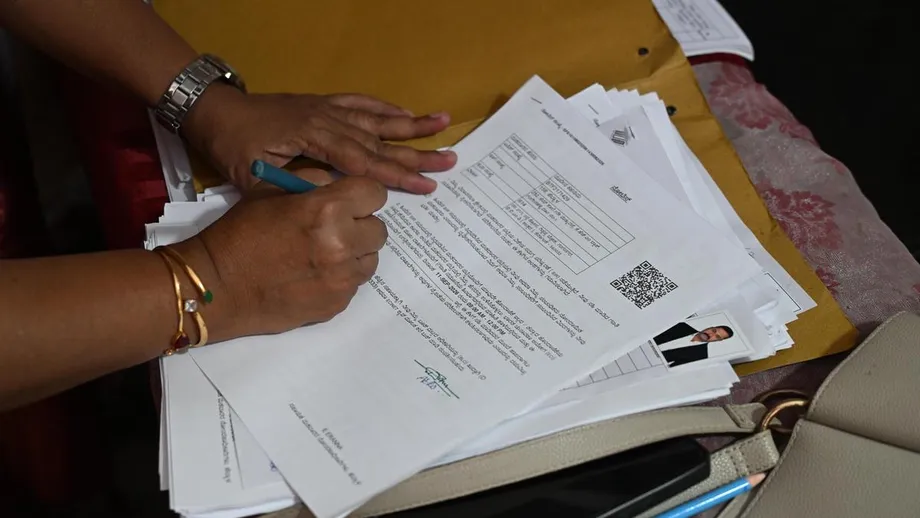
Form 7 is an application for official consideration. Election officials must examine the request and the facts behind it before deciding what to do. That checking process matters when several applications are submitted together, particularly when a petitioner alleges that a community has been targeted.
District officials told to review applications daily
Uttar Pradesh's Chief Electoral Officer's office has separately warned District Election Officers of action over errors in electoral rolls, unnecessary delays in deciding applications and failures of supervision. Its directions address the administration of registration work across the state.
The office cited Section 13AA of the Representation of the People Act, 1950, the Registration of Electors Rules, 1960, and Election Commission directions when setting out district officers' final administrative and supervisory responsibility for electoral roll work.
District Election Officers were instructed to log in to ECI-Net every day using their assigned credentials, review voter list work and use the platform's monitoring facilities. The direction makes daily oversight a responsibility of district leadership, rather than leaving application processing entirely to staff handling individual cases.
The review must cover both receipt and disposal of applications. In practical terms, officials must check how many requests have arrived, what decisions have been made and which cases remain pending. Delays matter because an eligible applicant needs a completed registration decision, not merely an acknowledgement that a form was received.
Which form serves which purpose?
The Chief Electoral Officer's directions identify four forms that district officials must monitor. Each addresses a different registration need, from adding a first entry to correcting information already recorded.
- Form 6 is used to apply for registration as a new voter.
- Form 6A is used for registration by eligible overseas electors.
- Form 7 is used to seek deletion of a name or object to an entry.
- Form 8 covers a change of residence, corrections, replacement of an Elector Photo Identity Card and identification of a voter as a person with a disability.
The form numbers explain why the administrative review extends beyond alleged deletions. A person missing from the roll may need a registration application examined, while someone whose details have changed may need an existing entry corrected or transferred.
The court proceedings focus on Form 7 because it concerns objections and removal requests. The district directions cover all four forms, making the wider task one of keeping registrations accurate while processing both additions and changes.
What BJP workers have been asked to do
Adityanath instructed BJP workers to check electoral rolls at every polling booth and coordinate with Booth Level Officers, the local election staff involved in voter verification and registration work. He also called for regular reviews of the campaign.
Members of Parliament, state legislators and party office bearers were assigned responsibilities alongside booth workers. The chief minister urged eligible citizens to check their own names and asked party workers to help people understand and complete the registration process.
The campaign gives the BJP a direct organisational task: identify people it says are missing and help them submit the appropriate applications. Election officials retain responsibility for examining those applications and deciding entries under the registration process.
Adityanath has raised concerns about alleged exclusion of Hindu voters before. This intervention brings detailed numerical claims into that campaign, while district administrators face instructions to monitor applications daily and the Election Commission must answer the Supreme Court on the Form 7 allegations.
Key Points
- Yogi Adityanath claimed that 1.27 crore Hindu voters were missing from Uttar Pradesh's electoral rolls.
- He cited 66 lakh panchayat voters, 55 lakh welfare beneficiaries and 4.5 lakh young adults as groups with missing names.
- Election Commission figures put the final electorate at 13,39,84,792 after more than 2.04 crore removals and more than 84 lakh additions.
- The Supreme Court directed the commission to examine alleged Form 7 irregularities, take corrective steps and submit a compliance report.
- The commission's lawyer said officials checked bulk deletion applications, found them false and did not act on them.
- District election chiefs have been told to review registration work daily, while BJP workers have been asked to help eligible voters apply.