10,470 approved changes put voter safeguards under scrutiny
Uttar Pradesh election authorities have identified 10,470 irregular changes to voter records in Pilibhit Sadar, where existing voter identification numbers displayed other people's names and family details. The discovery has prompted an order to scrutinise applications entered by computer assistants across all 403 Assembly constituencies since the Special Intensive Revision ended on April 10.
Contents
- 10,470 approved changes put voter safeguards under scrutiny
- How an existing voter became someone else
- Three weaknesses in the correction process
- Verification requests were overtaken by approvals
- Rapid changes left traces in the data
- The sequence from final rolls to police action
- Accountability extends beyond the computer operator
- What changes across Uttar Pradesh
- Fresh complaints and a dispute over restoration
- Public records leave a gap in tracing changes
- Key Points
The district inquiry found that a computer assistant entered 13,779 Form 8 applications, of which 10,470 were approved and 3,309 rejected. No application forms or supporting records for those entries were found in the electoral registration office, according to the chief electoral officer's office. Almost 76% of the applications examined had passed through approval.
A detailed investigation into 55 of Pilibhit's 419 polling booths identified 2,691 records in which both voter names and family details had been replaced. All affected voters identified in that examination were Muslim. Eight days after Uttar Pradesh Chief Electoral Officer Navdeep Rinwa acknowledged the irregularities on October 22, a further check found 2,638 of those altered entries still present, about 98% of the original sample.
The consequences reach beyond spelling mistakes. A genuine voter could arrive with an identity card but find a different person's name attached to their registration. An invented identity on the electoral roll could also create an opportunity for impersonation at a future election.
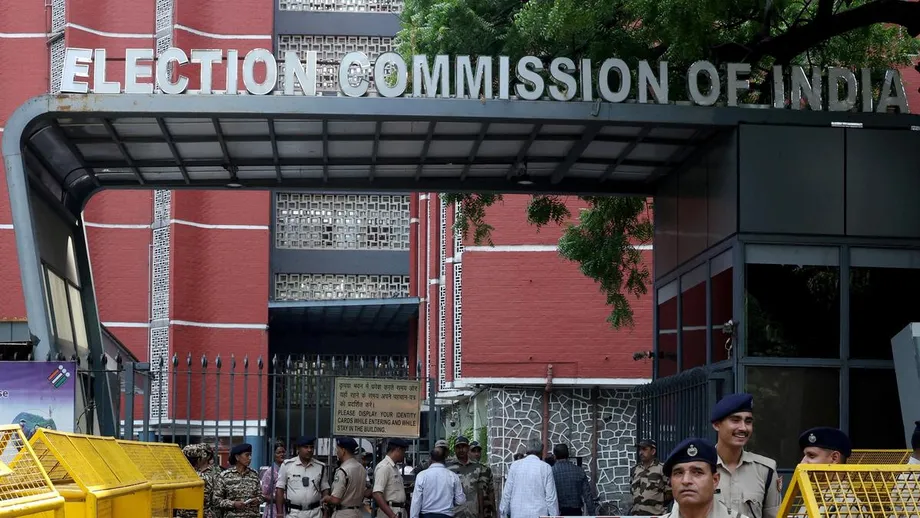
Rinwa described the conduct as deliberate rather than accidental. Police proceedings, demands for explanations from senior district officials and new restrictions on computer assistants have followed. The central issue is how thousands of unsupported changes could be entered and approved through the Election Commission of India's digital systems after a major exercise intended to clean up the rolls.
How an existing voter became someone else
Akhlaq, 33, discovered four months after the revision that his voter identification number was attached to the name Akil Ahmed. His father's name had also been replaced. Akhlaq said nobody named Akil Ahmed lived in his village.
The identification number, known as an EPIC number, is the reference attached to a voter's electoral record. Keeping that number while replacing the name and family details allows a record to remain in the database even as the identity it represents changes completely.
Another examined entry changed Nadeem Ahmed to Israr Ahamad and his father's name from Suraj Ahmed to Fayaz Khan. Investigators compared records using the unchanged EPIC numbers, looking for complete identity substitutions rather than minor spelling corrections.
The 2,691 manipulated records amounted to 5.7% of registered voters at the 55 booths examined. Investigators also checked 15 cases in person against two government identity documents for each voter. Those documents matched the original electoral entries, rather than the replacement identities.
Three weaknesses in the correction process
Form 8 is intended to correct an existing electoral record or update details such as a voter's address. Form 6 registers new voters, while Form 7 handles objections to inclusion or requests to remove names. In Pilibhit, the changes moved through the correction route.
An examination of ECINET and ERONET software, alongside the Election Commission's operating manual, identified three weaknesses: supporting documents were not mandatory at the relevant processing stages, electoral registration officers could bypass field verification, and public disclosures gave voters little ability to trace completed changes.
Electoral registration officers, or EROs, have final authority to approve changes within a constituency. The procedures allow an ERO to initiate a correction without an application from the voter, a power called suo motu, meaning action taken on the official's own initiative.
The investigation found that the same officer could initiate a change, skip a field check and approve it. Once approved, the amendment entered the central voter database. A correction process could therefore replace an identity without the voter supplying evidence or learning that a change was underway.
Verification requests were overtaken by approvals
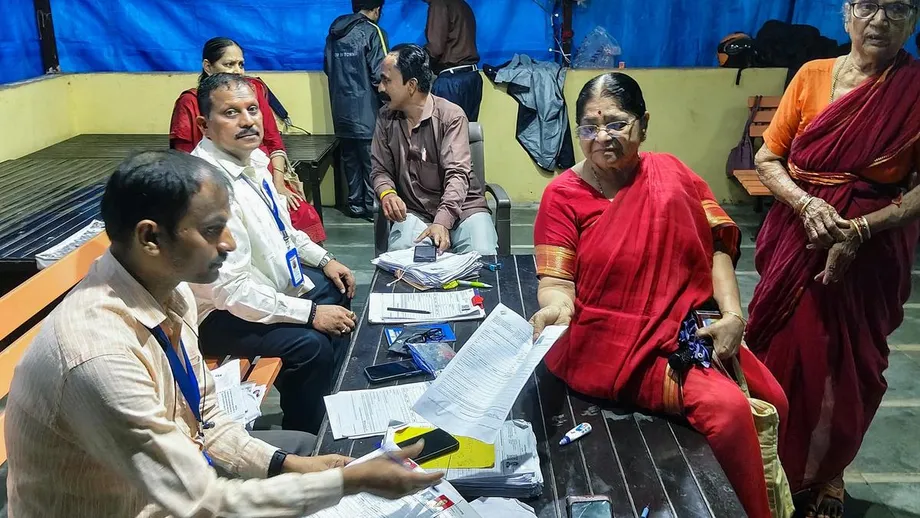
Booth level officers, or BLOs, normally carry out local checks, including whether an applicant lives at the stated address. Two BLOs in Pilibhit described receiving instructions from the tehsil office to verify groups of Form 8 applications, only to be told that the applications had already been resolved before verification began.
Both later found that existing identities at their booths had been replaced. One discovered that their spouse's entry had also been changed. Their accounts describe an approval process that moved ahead of the officials assigned to check the underlying facts.
Computer operators accessed the system using ERO credentials, according to the investigation. Earlier examination of electoral processing in West Bengal had also identified senior officials sharing access details with subordinates. Shared logins make it harder to establish who actually entered or approved a particular change.
The Election Commission headquarters and the Uttar Pradesh chief electoral officer had not answered detailed questions about the software and procedural findings by the investigation's publication. Rinwa's subsequent directions expressly prohibited sharing ERONET credentials and required officials to change their passwords.
Rapid changes left traces in the data
August accounted for 2,372 of the 2,691 substitutions identified in the 55 booths. On August 19, investigators found that 656 records changed within approximately 7.4 minutes, between about 6.26pm and 6.34pm. That works out to roughly 89 changes a minute.
The data examination identified another 523 changes on August 31, processed over 19.4 minutes. The chief electoral officer's inquiry placed the 13,779 applications it examined between May 31 and August 29, 2026, while the independently examined modification records included activity on August 31. The dates describe different stages of processing, and the inquiry's stated period ends before that later activity.
Uttar Pradesh maintains electoral data in English, Hindi and Urdu. Investigators found cases where English and Hindi entries had been changed but the original Urdu details remained. Arisa Bi, for example, appeared as Jannat in English and Hindi while retaining her original name in Urdu.
Those unchanged Urdu records provided another way to identify the original voter. Together with EPIC numbers, earlier rolls and identity documents, they helped trace substitutions that a simple count of registered voters would miss.
The sequence from final rolls to police action
Pilibhit's disputed changes occurred during continuous updating, the process that allows electoral records to change throughout the year. They followed the Special Intensive Revision, or SIR, rather than taking place during its preparation of the final list.
- April 10: Uttar Pradesh published its final electoral rolls following the SIR.
- May 31 to August 29, 2026: The official inquiry identified 13,779 irregular Form 8 applications entered during this period.
- August 19: The examination of 55 booths identified 656 identity substitutions processed within about 7.4 minutes.
- October 21: Uttar Pradesh Congress alleged that 13,150 Pilibhit Sadar voters had their names changed while EPIC and serial numbers remained unchanged.
- October 22: Chief Electoral Officer Navdeep Rinwa acknowledged irregularities in 10,470 entries.
- After the acknowledgement: Authorities ordered scrutiny across all 403 constituencies and sought explanations from current and former district election officers.
The official figure of 10,470 covers irregular approved entries identified by the inquiry; Congress alleged 13,150 altered voter identities. The inquiry also examined the larger total of 13,779 applications, including those rejected. These figures concern different groups within the processing and complaints records.
The scale matters in a constituency where BJP candidate Sanjay Gangwar won the 2022 Assembly election by fewer than 7,000 votes. The 10,470 irregular approvals exceed that earlier victory margin, making accurate restoration particularly consequential for the next contest.
Accountability extends beyond the computer operator
Police registered a first information report at Pilibhit's Kotwali police station against two officials who served as electoral registration officers and computer operator Anil Kumar. The officials were identified as Mayank Goswami and Hemant Kumar Chaudhary, whose name was also given as Hemant Kumar.
The case cites Section 32 of the Representation of the People Act, 1950, which concerns breaches of official duty in preparing and revising electoral rolls, and Section 201 of the Bharatiya Nyaya Sanhita, 2023.
Rinwa sought explanations from incumbent district election officer Alok Kumar and predecessor Gyanendra Singh about their supervision. District election officers carry responsibilities for coordination, oversight and quality control under electoral law and the Manual on Electoral Rolls, 2023.
The two former sub divisional magistrates were removed from Pilibhit and initially assigned positions in Lucknow. Those proposed postings, at the Uttar Pradesh State Disaster Management Authority and the Consolidation Headquarters, were subsequently cancelled, leaving both awaiting postings. The roles of five assistant electoral registration officers and other employees were also under examination.
What changes across Uttar Pradesh
Rinwa ordered scrutiny of Forms 6, 7 and 8 entered by computer assistants since April 10 across all 403 constituencies. The review therefore covers additions and deletions as well as corrections, extending the response beyond the form used in Pilibhit.
Computer assistants must no longer enter applications received on paper. BLOs must digitise those applications through the BLO App, while the physical originals must be preserved securely. EROs were instructed to review pending forms daily.
Rinwa stated the revised digitisation requirement directly:
All such forms must be digitised by booth-level officers (BLOs) through the BLO App.
Officials were also told to resolve requests made through the Book a Call With BLO facility within 48 hours. Action was threatened against BLOs who marked voters unavailable without attempting contact. Duplicate entries must be removed before draft rolls for the forthcoming Special Summary Revision are published.
The statewide review follows a substantial change in Uttar Pradesh's electorate. The roll fell from 15.44 crore voters on October 27, 2025, to 13.39 crore in the final list published on April 10, a net reduction of 2.05 crore, or about 20.5 million people. That makes reliable handling of subsequent applications especially important for voters seeking inclusion or corrections.
Fresh complaints and a dispute over restoration
Puranpur, constituency 129 in Pilibhit district, has produced another complaint. Robina, 23, found her name displayed as Ravindra Singh and her father Rais Ahmad's name replaced by Dhanpal Singh. Puranpur sub divisional magistrate Nagendra Pandey said the two identities appeared to share an EPIC number and that officials were investigating.
Other district residents, including Nuruddin Ahmad and Wahid Ahmad, alleged that family members were missing from the rolls. Congress leader Kumud Gangwar said the party was examining complaints across the district and sought a judicial inquiry or investigation by the Central Bureau of Investigation.
Congress also challenged how affected Pilibhit voters were being asked to restore their details. The party alleged that BLOs brought completed Form 8 applications to several booths during a special campaign and asked voters to sign them.
Gangwar, a former Uttar Pradesh Congress general secretary, described the alleged procedure:
These forms were pre-filled with correct details by the BLOs and the voters were called just to sign the form.
Anas Khan, the party's coordinator for Election Commission matters, alleged that some voters received no acknowledgement slips and that dates were missing from some documents. Congress argued that election officials should correct changes made by their own staff and preserve a clear record of the original misconduct.
Public records leave a gap in tracing changes
An examination of the Election Commission portal retrieved 12,082 correction forms submitted across Uttar Pradesh between April and September. The chief electoral officer's figures put accepted corrections during those months at 33.8 lakh, or 3.38 million. The retrieved forms represented about 0.36% of that accepted total.
The disclosed records included voter names and constituencies but omitted EPIC numbers. Without the common identification number, matching an approved correction to an earlier entry becomes difficult, particularly when names themselves have been replaced.
Congress general secretary Jairam Ramesh demanded complete voter data in a format computers can search and compare, an impartial inquiry into notice and hearing procedures, a halt to the SIR and Chief Election Commissioner Gyanesh Kumar's resignation. In his October 24, 2026 statement, he also cited unusual entries in Uttar Pradesh Legislative Council rolls as grounds for wider scrutiny.
For an affected voter, the immediate task is to restore the correct name and family details before polling. For election authorities, the review must also trace who initiated, entered and approved each unsupported amendment. Officials said corrections were underway, but gave no completion date for restoring all affected records or finishing the statewide scrutiny.
Pilibhit connects those two responsibilities. Moving data entry to BLOs and protecting passwords changes who can access the process. Requiring supporting records, completing verification before approval and retaining a traceable history determine whether a correction actually belongs to the voter whose identity number it carries.
Key Points
- Election authorities identified 10,470 irregular approved changes in Pilibhit Sadar and found no supporting application records in the office.
- An examination of 55 booths identified 2,691 identity substitutions, all involving Muslim voters in that sample.
- Uttar Pradesh ordered scrutiny of applications entered by computer assistants across all 403 Assembly constituencies since April 10.
- Police proceedings cover two former electoral registration officers and a computer operator; senior district officials were asked to explain their supervision.
- BLOs must now digitise physical applications, originals must be retained, and officials must protect their login credentials.
- Complaints have also emerged in Puranpur, while the timetable for completing restoration and statewide scrutiny remains unspecified.