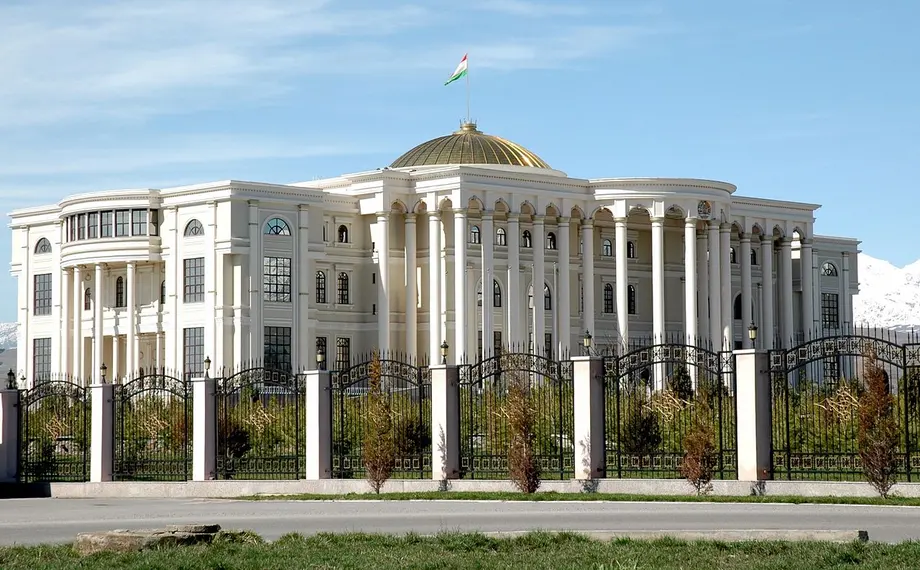
98 countries take part as detention concerns dominate
Tajikistan faced calls to release people held arbitrarily, protect journalists and investigate torture during its fourth United Nations human rights review in Geneva on November 5, 2026. Representatives of 98 UN member states took part as Justice Minister Muzaffar Ashuriyon presented reforms ranging from tougher torture penalties to a national human rights strategy running through 2038.
Contents
- 98 countries take part as detention concerns dominate
- How the review measures government promises
- Prison sentences reveal the pressure on journalism
- Closed trials and a call to release Mamadshoeva
- Britain seeks precise limits on security offences
- Torture penalties meet demands for independent checks
- Civil society describes closures and weak courts
- Women, children and disability rights also face scrutiny
- Refugees, military deaths and international justice
- Key Points
The sharpest test of those promises concerns people already behind bars. The Committee to Protect Journalists (CPJ) documented nine journalists serving sentences of seven to 20 years and assessed 55 recommendations relevant to press freedom from the previous review as unimplemented, with three partially implemented.
Norway's representative, Lykke Brend, urged an end to politically motivated persecution of journalists, lawyers, human rights defenders and government opponents. She also called for the release of people detained arbitrarily and an end to the persecution of Tajik citizens abroad.
Ashuriyon said citizens were free to express their opinions and pointed to more than 200 newspapers, television channels and news agencies. He cited an amnesty covering more than 18,000 people and the abolition of punishment for social media likes among the government's achievements.
The next formal step is scheduled for November 13, when the UN Human Rights Council's Universal Periodic Review Working Group is due to adopt the recommendations. Tajikistan will then have an opportunity to state its position on them. The immediate issue is how the government's legal changes will affect prisoners, journalists and organisations facing restrictions.
How the review measures government promises
The UN human rights office's review announcement explains that the Universal Periodic Review, or UPR, examines the rights record of every UN member state. Governments question one another and recommend changes. The Working Group consists of the Human Rights Council's 47 members, while other UN member and observer states may participate.
Tajikistan's assessment draws on three streams of information: its national report, findings from UN experts and treaty bodies, and submissions from civil society and other stakeholders. This gives the review a way to compare official accounts of progress with descriptions of what happens in courts, prisons and daily life.
Côte d'Ivoire, Estonia and Japan serve as the three rapporteurs, known as the troika, helping organise the review. Tajikistan is one of 14 countries examined during the Working Group's November 2–13 session.
The country's Foreign Ministry archive, dated December 3, 2020, lists its first UPR national report alongside earlier treaty reports and recommendations. The current cycle returns to a recurring task: explaining which previous commitments have been carried out.
- October 2011: Tajikistan underwent its first UPR examination.
- May 2016: The second review took place.
- November 2021: The third review established the recommendations assessed during the current cycle.
- November 5, 2026: Ashuriyon led the delegation at the fourth review in Geneva.
- November 13, 2026: The Working Group is scheduled to adopt recommendations between 14:30 and 18:00 Geneva time.
Prison sentences reveal the pressure on journalism
CPJ's April 2026 submission describes a steep deterioration in press freedom since the 2021 review. Eight of the nine imprisoned journalists it examined were convicted on extremism or terrorism charges. All nine received sentences of at least seven years.
The committee's comparison with the previous cycle is stark. It recorded one journalist imprisoned on extremism related charges and sentenced to one year during that earlier period. During the current cycle, it documented eight such convictions among journalists, alongside much longer prison terms.
At least seven journalists and bloggers were reported to remain imprisoned at the time of the review; CPJ's submission examined nine imprisoned journalists, while seven Tajik civil society organisations counted 12 journalists and bloggers behind bars at the end of 2025. CPJ's case information provides the clearest detail about the charges, sentences and trial conditions in the cases it examined.
CPJ linked the deterioration to the government crackdown on protests involving the Pamiri minority in the eastern Gorno-Badakhshan Autonomous Region, as well as efforts to consolidate power ahead of an expected succession from President Emomali Rahmon to his son. It also described increasing pressure on Tajik journalists living abroad.
Closed trials and a call to release Mamadshoeva
Ulfatkhonim Mamadshoeva's case gives the review a specific unresolved demand. The UN Working Group on Arbitrary Detention concluded in March 2024 that her detention was arbitrary and urged her release. CPJ said Tajik authorities had taken no measures to comply.
Arbitrary detention means imprisonment that fails to meet the legal standards protecting a person's freedom, including basic requirements for a fair process. For Mamadshoeva, the UN working group's conclusion led to a direct request that the authorities free her.
CPJ said all nine journalists in its submission were tried behind closed doors and their lawyers were required to sign confidentiality agreements. Proceedings against Mamadshoeva, Jumayev, Bobiev and Hakimova were classified as secret.
The committee urged transparent reviews of the nine cases, the release of those wrongly detained and an end to secret trials and pressure on lawyers and relatives. Norway's broader call covered journalists, lawyers, rights defenders and opposition figures, tying freedom of expression to the ability to obtain legal help and challenge imprisonment.
Britain seeks precise limits on security offences
The United Kingdom's Geneva mission statement, published on November 6, called for protection of journalists working both online and offline. It urged Tajikistan to bring its Criminal Code into line with Articles 19 and 20 of the International Covenant on Civil and Political Rights.
Article 19 protects freedom of opinion and expression, while allowing restrictions under defined conditions. Article 20 requires prohibitions on war propaganda and certain forms of incitement to hatred. Britain's recommendation focused on making security offences precise enough to protect peaceful criticism.
The UK Mission in Geneva, representing the British government at the review, set out the requested changes to the Criminal Code:
including by incorporating precise definitions of crimes relating to extremism, terrorism and national security to ensure that peaceful expressions of dissent and exercising media freedom are not punished.
Ashuriyon cited a draft new Criminal Code and the removal of punishment for social media likes. Britain's recommendation and CPJ's findings direct attention to the wider wording of criminal offences, especially the provisions used to prosecute journalists.
Torture penalties meet demands for independent checks
Ashuriyon said Tajikistan had increased the maximum punishment for torture to 15 years in prison. Norway called for investigations into torture allegations, while Britain recommended ratifying the Optional Protocol to the Convention against Torture and establishing an independent national preventive mechanism.
Such a mechanism is a body that independently visits places where people are detained to identify risks of torture and abuse. Its preventive role complements criminal investigations, which examine allegations after abuse has been reported.
CPJ said allegations of torture or ill treatment featured in most of the journalist cases it examined. The committee described pressure on journalists to avoid filing complaints or to withdraw them, and said there was no functioning system for investigating abuse claims.
The committee also cited the UN Working Group on Enforced or Involuntary Disappearances, which described short periods of enforced disappearance after arrest as widespread. During such periods, a detained person's whereabouts or fate are concealed, leaving relatives unable to locate them.
The government's higher maximum sentence addresses punishment for perpetrators. The recommendations on independent visits, complaints and investigations address how abuse can be detected and brought before the courts.
Civil society describes closures and weak courts
Seven Tajik civil society organisations, led by the Bureau for Human Rights and Rule of Law, prepared a submission of 65 pages covering 2021–2025. They said more than 900 public associations had been forcibly dissolved, with many organisations pressured to close themselves.
Organisations still operating faced financial difficulties, increased state fees and repeated inspections, according to the submission. Norway called for registration to be restored to closed civil society groups. Registration matters because it gives an organisation the legal standing needed to operate openly.
The civil society submission also said acquittals accounted for just 0.1% of court verdicts, equivalent to one in every 1,000. Its authors described courts as heavily dependent on the executive and prosecution.
Ashuriyon presented a different assessment at a separate event organised by Tajikistan's permanent mission in Geneva on November 5. He spoke about stronger legislation and state institutions, improved access to justice and the strategy through 2038.
For people seeking to challenge detention or organisational closure, the practical questions are concrete: whether a lawyer can work freely, whether a court can assess the government's case independently and whether a complaint produces an investigation.
Women, children and disability rights also face scrutiny
Tajikistan's national report cited the Law on Equality and the Elimination of All Forms of Discrimination and the Law on the Rights and Social Protection of Persons with Disabilities. Britain welcomed recent equality legislation and ratification of the Convention on the Rights of Persons with Disabilities, while calling for full implementation.
The government also listed a ban on corporal punishment of children in all settings, measures to expand inclusive education and the State Program on Reproductive Health for 2023–2027. Inclusive education aims to make schooling accessible to children with disabilities alongside other children.
Ashuriyon cited the introduction of liability for domestic violence. Britain asked Tajikistan to criminalise all forms of domestic and intimate partner violence and amend the Family Code to prohibit child marriage without exception. Other recommendations also called for ending exemptions that permit marriage before 18.
The British statement urged protection of women, children, LGBT people, religious communities and minority groups. Recommendations during the review also addressed drinking water, conditions for older people and people with disabilities, and support for private business, particularly women's entrepreneurship.
Refugees, military deaths and international justice
The civil society submission extended scrutiny beyond courts and the media. Its authors recorded the forced expulsion of 1,452 Afghan refugees during the first 10 months of 2025 and said children of stateless parents often remained undocumented and stateless from birth.
For those children, lack of recognised nationality and identity documents can make it harder to secure the official records needed for everyday life. The organisations presented the issue alongside their concerns about refugees and access to legal protection.
The same submission recorded 40 soldier deaths in 2023 and raised concerns about violence within the armed forces. These findings widened the review's focus to people whose safety depends heavily on state institutions, including soldiers, detainees and refugees.
Belgium's representative, Gino Brunswijk, urged Tajikistan to reconsider initiatives concerning withdrawal from the Rome Statute, the treaty establishing the International Criminal Court. His recommendation added international criminal justice commitments to a discussion largely focused on domestic rights protections.
The November 13 adoption is the next scheduled decision point. Tajikistan's position on each recommendation has yet to be set out. The central demands already have practical targets: release people held arbitrarily, review journalist cases transparently, investigate torture and make the protections described in national laws work in everyday life.
Key Points
- Representatives of 98 UN member states participated in Tajikistan's fourth human rights review on November 5, 2026.
- Justice Minister Muzaffar Ashuriyon presented legal reforms and a national human rights strategy through 2038.
- CPJ documented nine journalists serving seven to 20 years and assessed 55 previous recommendations relevant to press freedom as unimplemented.
- Norway called for an end to political persecution, the release of people held arbitrarily and investigations into torture.
- Britain sought clearer security offences, independent detention monitoring and a ban on child marriage without exceptions.
- The Working Group is scheduled to adopt recommendations on November 13, after which Tajikistan can state its position.