A busy October at Russia's coal terminals
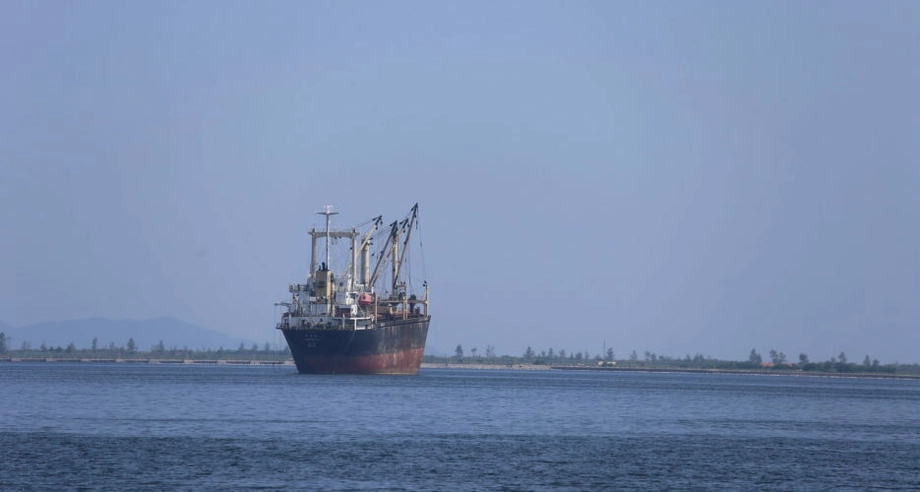
At least 13 North Korean vessels were detected making 14 visits to Russia's Nakhodka port in October, with at least nine appearing near coal terminals. The concentration has renewed scrutiny of a route previously used to move North Korean coal through Russia despite United Nations sanctions.
Contents
An analysis of MarineTraffic vessel tracking data counted 17 North Korean ships making 20 visits to Nakhodka from the beginning of the reporting year through early November. October therefore accounted for 70% of those visits. The annual total was still below the previous year's 33 visits, making the concentration in October, rather than a rise across the entire year, the immediate development.
The ships were also much larger. Their combined recorded carrying capacity reached 204,065 tonnes, described in the analysis as 49 times the previous year's figure. Average vessel length increased from 56 metres to 123 metres, more than doubling as large cargo ships replaced the smaller fishing and refrigerated vessels previously seen on the route.
Nakhodka, in Russia's Pacific region of Primorye, handles coal exports. Its appearance in North Korean shipping activity has prompted several possible explanations: disguising North Korean coal as Russian, transporting Russian coal in exchange for goods, or carrying other cargo as trade between the countries expands.
The cargoes, payment arrangements and any connection between these particular visits and weapons shipments remain unknown. The central issue is what the ships carried and who arranged the trade, especially where vessels already subject to sanctions were involved.
Which ships were detected?
The vessels detected around Nakhodka included the UN sanctioned Puk Dae Bong, the South Korean sanctioned Tok Song and the US Treasury sanctioned Kum Song 7. Un Bong 2 and Myong Sin, previously identified by the United States in connection with illicit coal trading and transfers between ships, also transmitted location signals there.
Those sanctions come from different authorities. A UN designation operates within the Security Council sanctions framework, while South Korean and US designations arise from their respective national measures. The presence of vessels identified by these authorities adds to the need to examine the port activity.
At least nine of the 13 North Korean vessels detected in October were near coal terminals, placing roughly seven in ten close to facilities used to handle the commodity. That concentration helps explain why coal trading is a leading concern.
Some vessels may also have manipulated their Automatic Identification System signals. AIS is a system through which ships broadcast information such as identity, position, speed and direction. Port authorities and commercial tracking services use those messages to follow vessel movements.
Manipulated signals can make a ship appear somewhere other than its actual location. Establishing a route can therefore require checks against port records and other evidence, particularly when investigators suspect deliberate concealment.
What the UN coal ban actually says
The UN Security Council adopted Resolution 2371 on August 5, 2017, replacing an earlier system of limits with a prohibition on North Korean coal exports. The council's coal procurement record sets out both the prohibition and the reported trade figures from the earlier system.
The Security Council's description of paragraph 8 states that North Korea:
shall not supply, sell or transfer, directly or indirectly, from its territory or by its nationals or using its flag vessels or aircraft, coal
The provision also requires states to prohibit procurement from North Korea by their nationals or through their vessels or aircraft, whether or not the coal originated in North Korean territory. Its wording reaches beyond a simple shipment travelling directly from a North Korean mine to a foreign buyer.
For readers following the suspected Nakhodka trade, the practical point is that changing ports or relabelling cargo does not remove the restrictions on North Korean coal. The provision's references to nationals, vessels and indirect transfers also make the identity of the seller, carrier and buyer relevant.
From export limits to a prohibition
Before the August 2017 ban, Resolution 2321 of 2016 limited North Korean coal exports for 2017 to $400,870,018 or 7.5 million metric tonnes, whichever threshold was reached first. A country could therefore reach the permitted financial ceiling while still shipping substantially less than the maximum tonnage.
The Security Council's record lists reported procurement for 2017 at $413,555,897.24 and 4,828,327.60 metric tonnes. Those amounts represented 103.16% of the value cap and 64.38% of the volume cap. The reported value exceeded the financial ceiling by about $12.69 million, even though the tonnage was below two thirds of its limit.
For 2016, the same UN record lists reported procurement of 2,001,634.43 metric tonnes worth $183,890,154.99. These figures show the substantial revenue attached to the trade that sanctions sought to restrict.
The sequence matters because the earlier Russian port shipments took place around the change from limits to a ban:
- November 30, 2016: Resolution 2321 established coal procurement limits, including the ceilings for 2017.
- August 5, 2017: Resolution 2371 prohibited North Korean coal exports and procurement by member states.
- August and September 2017: Shipping and port records placed North Korean coal cargoes at Nakhodka and Kholmsk.
- October 2017: A Western shipping source said some cargoes routed through Russia reached South Korea and Japan.
- January 2018: Detailed accounts of the routes became public, alongside Russian denials that its ports served as transit points.
The earlier Nakhodka route
Three Western European intelligence sources described at least three occasions after the August 2017 ban when North Korean coal moved through Nakhodka or Kholmsk before reaching South Korea or Japan. Their accounts gave the current concern a specific historical setting: Russian docks had previously been identified as places where cargo could change ships before continuing abroad.
At Nakhodka, Russian port control documents recorded the Palau flagged Jian Fu delivering 17,415 tonnes of coal after leaving Nampo, North Korea, on August 3, 2017. It used berth No. 4, operated by LLC Port Livadiya, and departed on August 18. Its departure from North Korea preceded the August 5 ban.
Another vessel arrived at the same berth on August 16, loaded 20,500 tonnes of coal and departed for Ulsan, South Korea, on August 24, according to the port documents. Intelligence sources described the Russian port route as a way for North Korean coal to reach buyers abroad.
The Jian Fu had also stopped broadcasting tracking signals between July 24 and August 2 while at sea. Captains can switch off transmitters in some circumstances, but the resulting gap removed that period of its voyage from public tracking.
Russia rejected the allegations at the time. An official at Russia's embassy in North Korea, who was not identified by name, said in January 2018:
Russia does not buy coal from North Korea and is not a transit point for coal deliveries to third countries.
Russia's UN mission had also told the Security Council sanctions committee on November 3, 2017, that Moscow was complying with sanctions. Those statements addressed the trade alleged in 2017.
Kholmsk shows how cargo could change ships
Kholmsk, on Russia's Sakhalin island north of Japan, featured in a second route. Russian port control and vessel tracking data recorded coal arriving aboard North Korean ships and later leaving aboard vessels operated by Chinese companies.
The Rung Ra 2 made three calls between August 1 and September 12, 2017, unloading 15,542 tonnes. The Ul Ji Bong 6 unloaded another 10,068 tonnes during two calls, one on August 3 and another between September 1 and September 8. Their combined cargo total was 25,610 tonnes. These movements spanned dates before and after the August 5 prohibition.
A source in Sakhalin's port administration said the coal was subsequently loaded onto vessels whose port documents listed North Korea as their destination. Tracking data instead showed those ships sailing to Pohang and Incheon in South Korea.
The US Treasury later sanctioned the owner of the Ul Ji Bong 6 for delivering North Korean coal to Kholmsk on September 5, after the ban took effect. The episode illustrates why investigators examine more than the final vessel's departure port: cargo can pass through several ships and documents before reaching a buyer.
Why the larger ships matter
The shift at Nakhodka from smaller fishing and refrigerated vessels to larger cargo ships changes the scale of goods that can move on the route. Average length rose by 67 metres, from 56 metres to 123 metres, while the recorded cumulative deadweight tonnage reached 204,065 tonnes.
Deadweight tonnage, usually shortened to DWT, measures the maximum weight a vessel can carry, including cargo, fuel, water and supplies. The Nakhodka figure describes carrying capacity associated with the recorded vessels; the weight and type of cargo actually moved would require loading records.
Neil Watts, a former member of the UN panel of experts on North Korea sanctions, identified two possible coal arrangements. North Korea could be sending its own coal through Russia under a Russian label, or its ships could be transporting Russian coal in exchange for grain or weapons.
Watts also pointed to earlier North Korean use of Russian ports to disguise coal origins or obtain fuel for longer voyages. Peter Ward, a research fellow at the Sejong Institute, likewise considered disguising North Korean coal's origin a plausible explanation.
These possibilities involve different commercial arrangements. In the first, the purpose would be to conceal where coal came from. In the second, North Korean operators would provide transport and receive compensation, potentially in goods rather than money. Identifying the cargo owner and the payment would help determine which arrangement, if either, was involved.
Where the weapons concern fits
Chris Monday, a Russia specialist at Dongseo University, said larger vessels could carry a range of cargoes, including oil, grain and weapons used in the war in Ukraine. Increased ship size creates room for different kinds of trade, which is why the change has drawn attention beyond the coal terminals.
The possible weapons arrangements also run in different directions. Watts raised weapons as potential payment to North Korea for transport services, while concern about concealed cargoes includes weapons moving toward Russia for use in Ukraine. Cargo inspections and shipment documents would be needed to identify any such movements.
Nakhodka's October concentration brings together three concrete developments: repeated visits in a short period, vessels appearing close to coal terminals, and a much larger recorded carrying capacity. Several ships' sanctions histories add another reason for authorities to scrutinise the activity.
The historical routes show the practical stakes for ports and buyers in the region. Coal unloaded in Russia can be placed aboard another vessel before travelling onward, making accurate origin declarations and cargo records central to enforcing the ban. For North Korea, the suspected arrangements could provide export income or goods; for Russia, they place its Pacific ports under renewed scrutiny.
Key Points
- At least 13 North Korean vessels made 14 detected visits to Nakhodka in October, accounting for 70% of the 20 visits recorded through early November.
- At least nine October vessels appeared near coal terminals, and several detected ships were already subject to sanctions.
- Recorded cumulative carrying capacity reached 204,065 tonnes, while average ship length increased from 56 metres to 123 metres.
- UN Security Council Resolution 2371 prohibited North Korean coal exports and member state procurement on August 5, 2017.
- Earlier allegations traced North Korean coal through Nakhodka and Kholmsk toward South Korea and Japan. Russia denied acting as a transit point.
- Disguised coal origins, transport services and weapons cargoes are possible explanations under discussion; the cargoes on the newly detected visits remain unidentified.