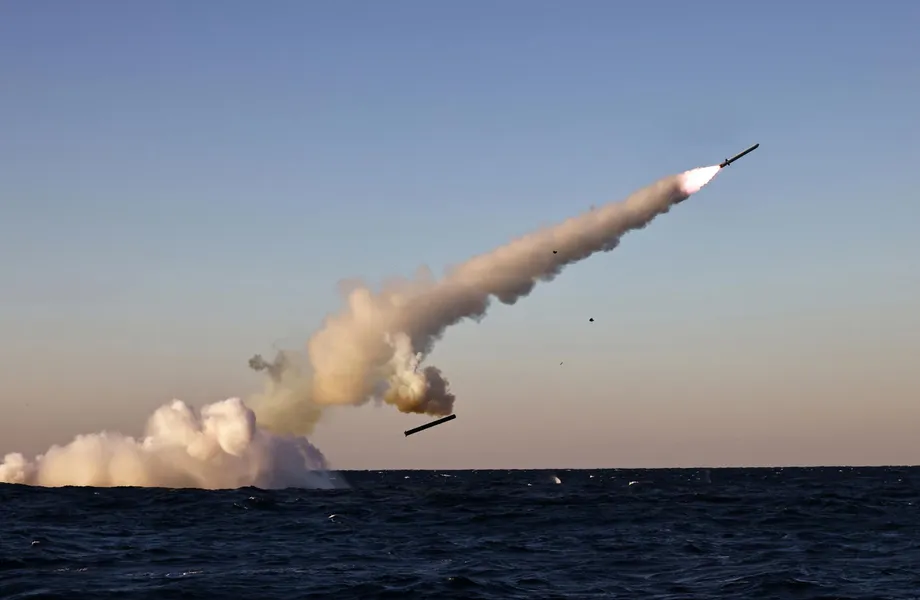
Missiles launched from Wonsan as border tensions rise
North Korea fired more than 10 short-range ballistic missiles from the Wonsan area toward the East Sea at about 12:30 p.m. on October 29, 2026, South Korea's Joint Chiefs of Staff said. The launches came six days after Seoul proposed military talks aimed at preventing accidental clashes along the border.
Contents
- Missiles launched from Wonsan as border tensions rise
- What the military detected
- Japan checks shipping and possible damage
- Seoul's talks proposal remains unanswered
- Other military pressure along the border
- A UN vote adds to the diplomatic dispute
- How the October 12 tests compare
- The sequence through October 29
- Key Points
South Korea increased surveillance and readiness for further launches, while its military shared information with the United States and Japan. Japanese authorities said a suspected ballistic missile appeared to have fallen outside Japan's exclusive economic zone. The Japan Coast Guard said no damage to vessels had been confirmed as of 12:55 p.m.
The launches were North Korea's first ballistic missile firings in 17 days. On October 12, missiles launched from the Pyongyang area also flew toward the East Sea, with some traveling more than 900 kilometers, according to South Korea's military.
North Korea had not responded to the October 23 talks proposal. Seoul sought discussions on confirming the location of the land Military Demarcation Line, restoring military communication lines and preventing unintended confrontations in border areas. The proposal followed a landmine explosion south of the line that seriously injured a South Korean soldier.
What the military detected
South Korea's Joint Chiefs of Staff initially announced an unidentified projectile launch before describing the objects as short-range ballistic missiles. Its subsequent assessment placed the launch site around Wonsan, on North Korea's eastern coast, and the number of missiles at more than 10.
South Korean and United States intelligence authorities were still analyzing the missiles' flight distances, altitude, speed and other technical details. A ballistic missile is powered during the early part of its flight and then follows an arcing path toward its destination. Its flight data help military authorities assess its capabilities and possible targets.
The annual count stood at 17 ballistic missile launch events in most tallies, while another initial tally put the figure at 18. Those totals count launch events rather than individual missiles, so the more than 10 missiles detected on October 29 belong to a single event.
Japan checks shipping and possible damage
Japan's Defense Ministry said North Korea had launched an object that could be a ballistic missile and assessed that it had already fallen. It later indicated that the apparent landing point was outside Japan's exclusive economic zone, or EEZ.
An EEZ is a maritime area where a country has particular rights over resources such as fish and offshore energy. Japan's assessment gave an initial indication of where the object landed while authorities checked for effects on the country and nearby shipping.
The Japan Coast Guard urged vessels to watch for further information. Its statement that no vessel damage had been confirmed by 12:55 p.m. provided an early safety update, about 25 minutes after the launch time given by South Korea.
Japan's government also assembled an emergency response team at the Prime Minister's Office crisis management center. Officials from the relevant ministries gathered information and checked for damage as military authorities continued their analysis.
Seoul's talks proposal remains unanswered
South Korea's Defense Ministry formally proposed military talks on October 23, seeking practical agreements about the border. The Military Demarcation Line is the boundary running through the Demilitarized Zone, the buffer separating the two Koreas.
The ministry wanted both sides to confirm the line's precise location on land. It also proposed restoring military communication lines and discussing ways to prevent accidental clashes. Direct communication would give military personnel a way to contact the other side when an incident occurs.
The request followed the explosion of a North Korean landmine south of the Military Demarcation Line, which seriously injured a South Korean soldier. That injury gave the proposed discussions an immediate purpose: reducing the danger facing troops operating near the boundary.
North Korea had given no response to the invitation by the time of the missile launches. No meeting date had been announced. The proposed agenda therefore remained unresolved as South Korea raised its readiness for further military activity.
Other military pressure along the border
Kim Yo Jong, head of the General Affairs Department of North Korea's ruling Workers' Party, had signaled on October 21 that loudspeaker broadcasts directed toward South Korea would resume. Her announcement came two days before Seoul's invitation to military talks.
Loudspeakers allow messages to be broadcast across parts of the border. Their planned return added another point of friction alongside the landmine incident and the unanswered request for military contact.
North Korea was also reported to have deployed 122 mm self-propelled artillery near the front line in the western sector. These are guns mounted on vehicles, allowing them to move between firing positions. The deployment concerned the land border, while the October 29 missile launches took place around Wonsan and were directed toward the sea.
A UN vote adds to the diplomatic dispute
The launches followed an October 27 vote at the United Nations General Assembly's First Committee in New York. The committee adopted a nuclear disarmament resolution led by Japan with 150 votes in favor, seven against and 25 abstentions.
The resolution stated that North Korea should not be recognized as a nuclear weapons state and called for implementation of UN Security Council resolutions concerning the country. It also addressed transparency over nuclear forces, reducing nuclear risks and dialogue among countries possessing nuclear weapons.
Japan has submitted the resolution annually, and this was its 33rd consecutive year of adoption. The First Committee handles disarmament and international security matters within the General Assembly.
North Korea rejected the resolution's position on its nuclear status, saying denuclearization was an issue on which a final and irreversible conclusion had already been reached. Its response placed the vote within a continuing dispute over whether Pyongyang would give up its nuclear arsenal.
How the October 12 tests compare
North Korea's preceding ballistic missile launch occurred on October 12 from the Pyongyang area. South Korea detected several missiles heading toward the East Sea, including some that traveled more than 900 kilometers.
North Korean state media subsequently described those launches as tests of tactical ballistic missiles. Pyongyang said the tests were intended to improve a key weapons component. The account did not identify that component in the information released here.
The two launch events were separated by 17 days and took place in different areas: Pyongyang on October 12 and Wonsan on October 29. The earlier flight distance provides a concrete measure of that test, while authorities were still calculating the distances covered in the latest launches.
South Korea, the United States and Japan were sharing information about the October 29 missiles while maintaining readiness for additional launches. The immediate military response therefore combined technical analysis of the flights with surveillance for further activity.
The sequence through October 29
October's developments brought missile testing, border security concerns and a nuclear diplomacy dispute into the same period. The sequence shows how quickly those issues accumulated:
- October 12: North Korea launched ballistic missiles from the Pyongyang area. Some traveled more than 900 kilometers.
- October 21: Kim Yo Jong signaled the resumption of loudspeaker broadcasts directed toward South Korea.
- October 23: South Korea proposed military talks on the border line, communication channels and preventing accidental clashes.
- October 27: The UN General Assembly's First Committee adopted the nuclear disarmament resolution by 150 votes to seven, with 25 abstentions.
- October 29, about 12:30 p.m.: South Korea detected more than 10 short-range ballistic missiles launched from the Wonsan area.
- October 29, 12:55 p.m.: Japan's Coast Guard said no damage to vessels had been confirmed.
For troops near the border, the immediate concerns include mines, artillery and the ability to contact the other side during an incident. For vessels at sea, the immediate task was to follow safety information while Japanese authorities checked the missiles' effects.
Key Points
- South Korea detected more than 10 short-range ballistic missiles launched from Wonsan toward the East Sea on October 29.
- The launches came 17 days after the previous ballistic missile tests and six days after Seoul proposed military talks.
- North Korea had not answered the proposal to clarify the border line, restore military communications and prevent accidental clashes.
- Japan assessed that a suspected missile fell outside its EEZ. No vessel damage had been confirmed as of 12:55 p.m.
- South Korea increased surveillance and shared launch information with the United States and Japan.