More Families Excluded Than Approved in First Update
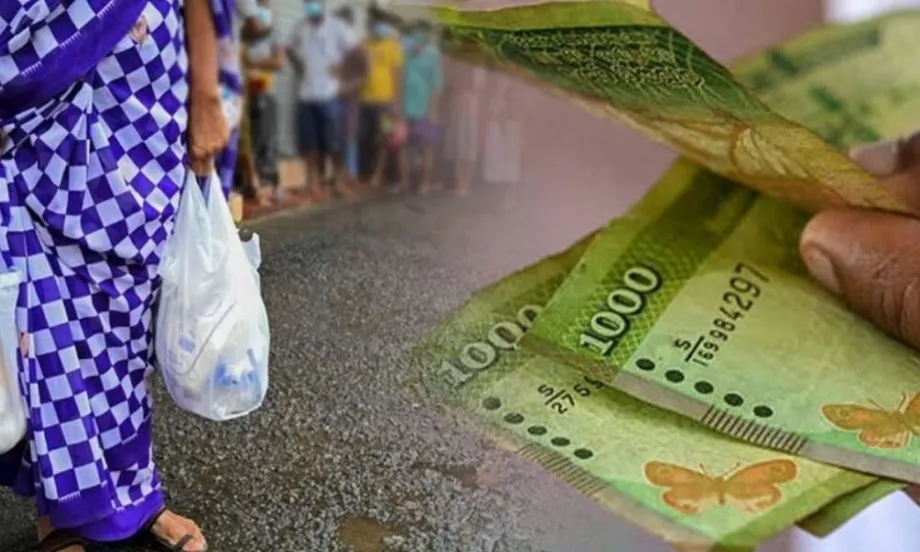
Sri Lanka's Welfare Benefits Board says 1,391,830 families have failed to qualify for Aswesuma welfare payments in its first updated beneficiary list, while 991,800 families have been approved. The figures cover 2,383,630 families that completed an update of their information by October 27, 2026.
Contents
- More Families Excluded Than Approved in First Update
- Who Qualifies Under the Revised Rules?
- What the Monthly Allowances Add Up To
- Where Families Can Check Their Status
- How Appeals and Public Objections Work
- The Dates Families Need to Know
- What the December List Could Change
- What Changes for Affected Households?
- Key Points
The approved households fall into two categories: 363,142 families classified as Extremely Poor, who will receive Rs. 17,500 a month, and 628,658 classified as Poor, who will receive Rs. 10,000 a month. Payments to newly eligible families on the first list are scheduled for November 27.
The result leaves about 58.4% of families in the completed update outside the approved list, compared with 41.6% who qualified. In practical terms, roughly six out of every 10 families whose information was processed did not qualify at this stage.
The Board has also described the exercise as removing 1,391,830 beneficiaries under a revised selection process. Its detailed update gives that figure in families, making the household the unit used for the totals and payment calculations in this article.
Families can challenge the published decisions during an appeals period running from October 29 to November 11, 2026. A second list is expected in December, following further information updates involving another 740,127 families.
Who Qualifies Under the Revised Rules?
Aswesuma assistance under the revised framework is restricted to the Poor and Extremely Poor categories. The eligibility change is attributed to Government Gazette No. 2497/03, dated December 15, 2025. A government gazette is an official publication used to announce rules and government decisions.
The two categories determine the size of the monthly payment. A family placed in the Extremely Poor category receives Rs. 7,500 more each month than a family in the Poor category, a difference of 75% compared with the Rs. 10,000 payment.
The Board's announcement gives the category totals and allowance amounts, but does not explain the detailed scoring thresholds or the individual reasons families failed to qualify. For an affected household, checking its own entry and using the appeal process is therefore the immediate route to seeking a review.
What the Monthly Allowances Add Up To
The 363,142 families in the Extremely Poor category account for about 36.6% of the first approved list. The remaining 63.4%, or 628,658 families, fall into the Poor category. The larger group receives the smaller monthly allowance.
Applying the announced rates to every approved family gives a combined monthly payment of Rs. 12,641,565,000, or about Rs. 12.64 billion. That comprises Rs. 6,354,985,000 for families in the Extremely Poor category and Rs. 6,286,580,000 for those in the Poor category.
Those calculations show how the two payment rates distribute assistance. Although the Extremely Poor category contains 265,516 fewer families, its higher allowance means its combined monthly payments would be slightly larger than those for the Poor category.
The Rs. 12.64 billion figure is a calculation from the first list and the stated monthly rates. The December list and any changes following appeals would affect the amount required for subsequent payments. The Board has scheduled the November 27 payment specifically for newly eligible beneficiaries on the first list.
Where Families Can Check Their Status
The updated beneficiary list is displayed at Divisional Secretariat offices and Grama Niladhari offices. Divisional Secretariats provide government services at the local administrative level, while Grama Niladhari officers serve smaller local areas.
The Board has also published the list on its website. These channels give families a way to check the published result either online or through a nearby government office.
A family's entry matters for two separate reasons: whether it has qualified and which payment category it has been assigned. The difference between the two categories is Rs. 7,500 every month, so the classification directly affects the assistance a household is scheduled to receive.
The first list is also tied to a specific processing point. It covers families whose information updates were completed by October 27, while a further group is being considered for the December list. Families seeking clarification can use the published list and the relevant Divisional Secretariat as the starting points for checking their position.
How Appeals and Public Objections Work
Appeals and public objections can be submitted from October 29 through November 11, 2026. The Board has provided an electronic services channel, along with application forms available through its website and relevant Divisional Secretariat offices.
An appeal allows an affected family to ask for its eligibility decision to be reviewed. A public objection allows someone to challenge an entry in the published list. The Board says public objections may be submitted anonymously, allowing a person to raise a concern without giving their name.
The November 11 deadline is the key date for families seeking a review of the first list. The period for challenges comes before the scheduled issue of bank account letters on November 12 and the planned payment on November 27.
The announced timetable does not give a date by which every appeal will be decided or explain whether a successful appeal would be reflected in the November payment. Families awaiting a decision will need confirmation of their individual payment arrangements from the Board or the relevant local office.
The Dates Families Need to Know
The selection process stretches from the publication of revised rules to a further beneficiary list expected in December. The main dates announced for the current update are:
- December 15, 2025: Date of Government Gazette No. 2497/03, cited for the revised eligibility categories.
- October 27, 2026: Information updates completed for 2,383,630 families included in the first updated assessment.
- October 29 to November 11, 2026: Period for submitting appeals and public objections.
- November 12, 2026: Letters to help newly eligible beneficiaries open bank accounts are scheduled to begin being issued.
- November 27, 2026: Payments to newly eligible beneficiaries on the first list are scheduled to reach their Aswesuma bank accounts.
- December 2026: The second updated beneficiary list is expected.
The bank account stage is particularly relevant for newly approved families. The Board says the November payment will be credited to Aswesuma bank accounts, and the letters issued from November 12 are intended to help beneficiaries open those accounts.
What the December List Could Change
The Board expects the second list to follow the completion of information updates for a further 740,127 families. Its announcements also describe approximately that number as expected to be selected. A final approval total and an exact publication date in December have not been announced.
The scale of this remaining group is substantial. Adding 740,127 families to the 2,383,630 already processed brings the combined number involved across the two stages to 3,123,757. The further group represents about 23.7% of that combined total.
The first list therefore gives a large part of the picture, while December's decisions will determine assistance for another sizeable group. The number assigned to each category will matter as much as the number approved, because the monthly rates differ by Rs. 7,500.
What Changes for Affected Households?
For the 991,800 approved families, the first list sets out a category and a monthly allowance. Newly eligible households also have a scheduled payment date and a bank account preparation stage. Those are concrete steps toward receiving assistance.
For the 1,391,830 families outside the approved list, the immediate opportunity is the appeal window. The large exclusion total makes access to the published decisions, application forms and local offices central to the next stage of the process.
The revised framework concentrates Aswesuma payments in two poverty categories. Its effect on individual families will now depend on the published classifications, the handling of appeals and the completion of the December list. For households planning their spending, the most pressing details are their own eligibility result, the applicable allowance and confirmation of when payment will reach their account.
Key Points
- The Board says 1,391,830 families failed to qualify in the first updated Aswesuma list, while 991,800 qualified.
- Monthly allowances are Rs. 17,500 for 363,142 Extremely Poor families and Rs. 10,000 for 628,658 Poor families.
- Lists are available at Divisional Secretariat and Grama Niladhari offices and on the Board's website.
- Appeals and public objections run from October 29 to November 11, 2026. Public objections may be anonymous.
- Bank account letters are scheduled from November 12, with payments to newly eligible families planned for November 27.
- A second list involving a further 740,127 families is expected in December.