A five volume launch is planned for December 2026
Vietnamese publisher Dong A has secured the rights to publish all 15 martial arts works by Kim Dung, the Chinese novelist known internationally as Jin Yong, with a new translation of Thien long bat bo scheduled to open the project in December 2026. The first release will comprise five volumes, beginning a publication programme announced for the company's 22nd anniversary.
Contents
- A five volume launch is planned for December 2026
- What the agreement covers
- New translations of the author's revised texts
- Three editions and covers that join together
- A decade of ambition, with modest sales expectations
- Vietnam's licensing history began before this deal
- How the publication story developed
- Why these stories reached so many readers
- From familiar screen stories back to the page
- Key Points
The agreement is with Ming Ho Publications Corporation Limited, which holds the rights to the works. Dong A director Tran Dai Thang said the contract was completed the previous year after about a year of negotiations, following a decade in which he had wanted to bring the project to readers.
Dong A announced the agreement on November 5, 2026. Its plans combine new Vietnamese translations with three physical editions: one standard edition and two limited editions with more elaborate production for collectors. The publisher says it will invest in editing, design and printing as well as the text itself.
The project brings together two parts of Jin Yong's history in Vietnam: a readership built over decades through newspapers, books and screen adaptations, and the continuing effort to publish his work through formal licensing agreements. Phuong Nam had already purchased Vietnamese publication rights in 1999, with new translations appearing from 2001.
What the agreement covers
Dong A's programme covers the complete collection of 15 martial arts works that Jin Yong wrote between 1955 and 1972. Although the announcement describes the acquisition as covering all his works, the detailed publication plan concerns this collection of martial arts fiction.
Five titles are planned for the initial phase, representing one third of the 15 works. They are Anh hung xa dieu, known in English as The Legend of the Condor Heroes; Than dieu hiep lu, or The Return of the Condor Heroes; Y thien do long ky, or The Heaven Sword and Dragon Saber; Thien long bat bo, or Demi-Gods and Semi-Devils; and Tieu ngao giang ho, or The Smiling, Proud Wanderer.
Dong A will release the books in stages. The December 2026 target applies to the five volumes of Thien long bat bo, rather than to all five opening titles or the entire collection. The publication schedule for the remaining works, retail prices, print quantities and the cost of the rights agreement have not been disclosed.
New translations of the author's revised texts
Dong A says the works will receive entirely new Vietnamese translations. Nguyen Duy Chinh is translating Thien long bat bo, while the publisher is seeking translators with a strong command of Chinese and a familiarity with martial arts fiction.
The editions will use texts that Jin Yong revised during his lifetime, with revisions completed in 2003, 2005 and 2006. A revised text is a version in which an author returns to an earlier work and changes it. For readers who already own older Vietnamese editions, the project therefore involves both a new translation and the author's later versions of the stories.
Vietnam has an established history of translating Jin Yong. Earlier publication efforts involved Cao Tu Thanh, Le Khanh Truong, Dong Hai, Hoang Ngoc, also known as Huynh Ngoc Chien, Vu Duc Sao Bien and collaborators, Ngoc Thach, Huu Nung and Pham Tu Chau. Their work helped carry these long stories across generations before Dong A's new programme.
Three editions and covers that join together
Dong A's three edition formats address readers seeking a standard reading copy as well as collectors interested in book production. Alongside the standard edition, the company plans two limited editions using more elaborate finishing.
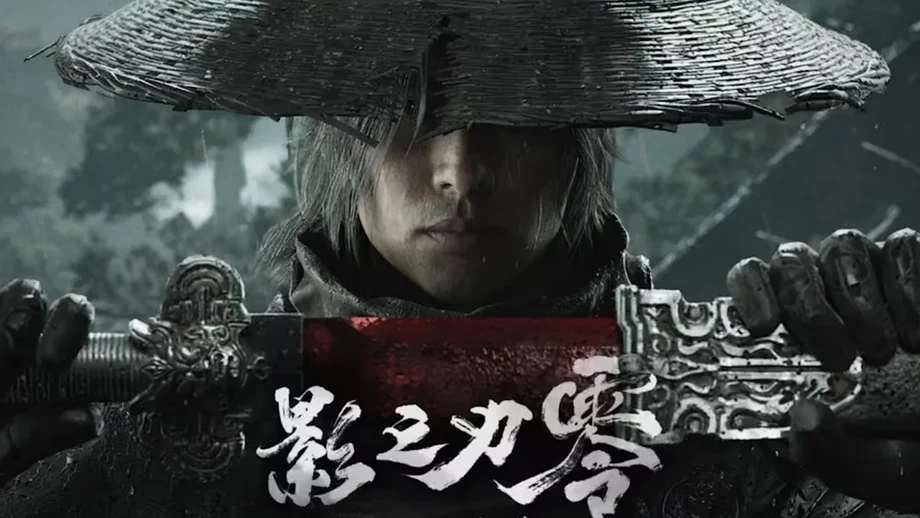
The publisher revealed the standard paperback cover artwork on November 6. Ta Quoc Ky Nam developed the concept and design, Dinh Diep supplied the illustrations, and calligrapher Nguyen Tuan created the lettering that connects the five volumes.
When the covers are placed beside one another, the calligraphic strokes join to form the four characters of the title Thien long bat bo. The design treats the five books as a single visual composition, giving the opening release a shared identity on the shelf.
Dong A has promised attention to content, editing and print quality across the programme. The standard edition is an important part of that plan: readers will have an option outside the two collector formats, even as the company gives the books a strong visual identity.
A decade of ambition, with modest sales expectations
Tran Dai Thang, an artist as well as Dong A's director, describes the project as a personal ambition held for 10 years. His account places the year of negotiations near the end of a much longer period of preparation and interest.
Thang said he did not have high expectations for revenue. Explaining his motivation, he said, in translation:
I do it because I love it. As for how the market turns out, I cannot decide that.
The commercial plan brings a substantial editorial task together with a range of physical formats. Fifteen works require sustained translation and editing, while the three editions give readers different ways to buy the books. Thang's comments put his personal commitment at the centre of the decision to undertake that work.
Dong A's attention to collectors also has an international parallel. Japan's Tokuma Shoten acquired Japanese translation rights to Jin Yong's complete novels in the 1990s and invested in carefully produced hardback editions. Dong A's announced combination of new translations and elaborate editions follows a comparable interest in the book as both a story and a physical object.
Vietnam's licensing history began before this deal
Jin Yong's fiction had already reached Vietnamese readers in substantial numbers during the 1960s and 1970s. In his study Kim Dung giua doi toi, writer Vu Duc Sao Bien recorded that about 12 of the author's works were printed in Vietnam during that period.
Many readers encountered the stories through newspaper serials and unofficial editions, including translations associated with Han Giang Nhan. Jin Yong recalled that 21 newspapers in Saigon, publishing in Chinese, Vietnamese and French, carried unauthorised instalments of Tieu ngao giang ho at the same time.
Phuong Nam's agreement in 1999 marked a move towards licensed publication. The company worked with Literature Publishing House, and its representatives approached the author's side directly to negotiate Vietnamese publication rights. New translations, editing and releases followed from 2001.
Nguyen Huu Hoat, deputy chairman of Phuong Nam's board, recalled that seeking permission was a relatively unfamiliar business decision in Vietnam at the time and prompted debate within the company. Negotiations with Jin Yong's copyright operation in Hong Kong were also difficult because Vietnam was a new market for it. An initial temporary licence for one set preceded the broader publication effort.
Dong A's agreement adds a new publishing programme to that history. A licence gives a publisher permission from the rights holder to produce an edition; dealing with unauthorised copies also requires action against their production and sale. The practical change for readers is another formally licensed route to the books, this time with new translations and several production formats.
How the publication story developed
Jin Yong's writing career, the arrival of his stories in Vietnam and successive licensing agreements stretch across more than seven decades. The principal dates show how Dong A's planned release fits into that longer history.
- 1955: Jin Yong began writing martial arts fiction with Thu kiem an cuu luc, known in English as The Book and the Sword.
- 1955 to 1972: He produced the 15 martial arts works covered by Dong A's programme.
- The 1960s and 1970s: About 12 works appeared in Vietnam, according to Vu Duc Sao Bien's study.
- 1999: Phuong Nam purchased Vietnamese publication rights.
- 2001: Phuong Nam began releasing newly translated and edited editions.
- 2003, 2005 and 2006: Jin Yong completed revisions used for Dong A's planned editions.
- November 5 and 6, 2026: Dong A announced the agreement and then revealed cover artwork.
- December 2026: The five volumes of Thien long bat bo are scheduled for release.
The chronology also explains why older readers may know different Vietnamese translations of the same work. Jin Yong's fiction has passed through several publication periods, while the author himself returned to revise his writing.
Why these stories reached so many readers
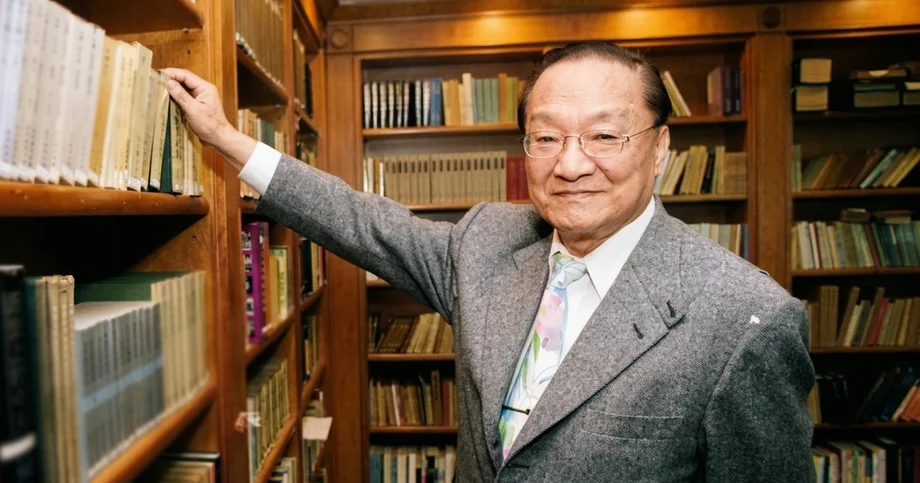
Jin Yong was born in Zhejiang in 1924 and died in 2018. His name is rendered in Vietnamese as Tra Luong Dung. His fiction has sold more than 300 million copies worldwide, and repeated film and television adaptations have carried his characters far beyond the original books.
His genre is often called wuxia, or martial arts fiction. It follows fighters moving through a world of rival schools, personal loyalties, debts and disputes. Combat drives much of the action, but the stories also ask characters to choose between love, duty, friendship and power.
Figures such as Quach Tinh, Hoang Dung, Duong Qua, Tieu Long Nu and Lenh Ho Xung became familiar to generations of Vietnamese readers. Their appeal rests partly on the personal decisions inside the adventures: whom to trust, which promises to keep and what loyalty demands when relationships come into conflict.
Poet Le Minh Quoc has praised Jin Yong's distinctive martial world, the construction of his plots and their unexpected developments. Literary critic Pham Xuan Nguyen has described his contribution as moving sword fighting stories towards tales of honour, morality and the struggle for good. Those themes help explain why readers return even when they already know the plot.
From familiar screen stories back to the page
Film and television versions have given Jin Yong's fiction another long life. Anh hung xa dieu, Than dieu dai hiep, Y thien do long ky and Tieu ngao giang ho have each appeared in multiple screen adaptations, introducing audiences to characters they may later meet in print.
Jin Yong himself cared about how closely those adaptations followed his stories. Discussing changes by screenwriters, the author said, in translation:
If adapting my original work, the fewer changes the better; ideally, do not change the plot.
Dong A's project centres the written works again, using the author's revised texts rather than a screen retelling. For readers arriving through television or film, the new editions will offer the longer narratives in Vietnamese. For those who already own the stories, the decision will be about the translation, the version of the text and the physical edition.
Key Points
- Dong A has secured Vietnamese publication rights to Jin Yong's complete collection of 15 martial arts works.
- The first release, Thien long bat bo in five volumes, is scheduled for December 2026.
- Five works are planned for the opening phase, all with new Vietnamese translations using the author's revised texts.
- Readers will have a standard edition and two limited editions to choose from.
- Phuong Nam previously acquired publication rights in 1999 and began issuing new translations in 2001.
- Prices and the timetable for completing the collection have not been announced.