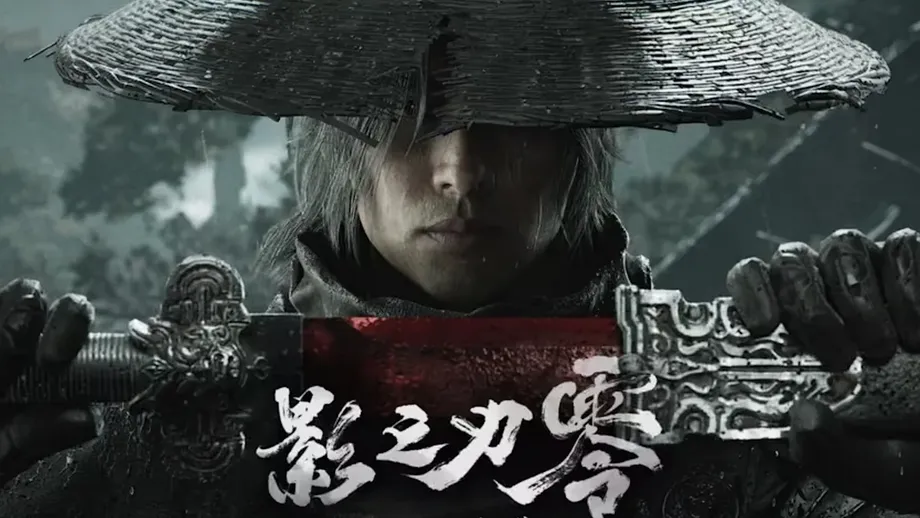
A huge opening for S-GAME, with technical problems to fix
Phantom Blade Zero reached 723,876 simultaneous players on Steam on October 29, 2026, as the Chinese studio S-GAME's martial arts adventure climbed to the top of the platform's global sales chart. Its opening brought praise for elaborate sword fights and weapon variety, alongside complaints about stuttering, lengthy startup preparations and graphics driver instability.
Contents
- A huge opening for S-GAME, with technical problems to fix
- How the launch grew through the day
- What the sales estimates show
- Players and critics agree on combat, less on the rest
- Why the sword fighting stands out
- The patch and driver advice matter on PC
- The people and production behind the spectacle
- How much game buyers are getting
- Key Points
The game launched worldwide at 02:00 UTC on October 29, equivalent to 10 a.m. in China and 11 a.m. in South Korea. In the United States, the same release fell on the evening of October 28. It arrived on PlayStation 5 and PC, including Steam and the Epic Games Store, with Tencent's WeGame also serving players in China.
SteamDB tracked the Steam peak as it rose past 430,000 within three hours and eventually exceeded 723,000. During the opening hours, Phantom Blade Zero ranked behind only Counter-Strike 2 among Steam's most played games, while its sales revenue put it ahead of Call of Duty: Modern Warfare 4.
S-GAME had not announced an official sales total or a combined player count across platforms. Steam's simultaneous player figure counts people playing at the same moment, while sales count copies purchased. PlayStation and other PC storefronts therefore sit outside the Steam peak.
The immediate challenge for the studio is concrete: keep the excitement around its combat while addressing problems that can delay or interrupt play. S-GAME announced an approximately 5 GB launch patch and recommended a particular NVIDIA driver after identifying instability during testing.
How the launch grew through the day
Phantom Blade Zero's Steam audience expanded quickly rather than arriving at its eventual peak immediately. Early measurements passed 431,541 and 448,000 players, followed by 595,711 about 10 hours after release, then more than 690,000 and finally 723,876.
The opening hour figures were less consistent. Initial accounts put Steam participation above 285,000 or around 325,000 during that hour, while another early measurement recorded 187,426 shortly after release. A claim of roughly 400,000 across platforms also circulated, without a published combined count from S-GAME. The later Steam peak provides the clearest measure of the launch's scale.
Valve's public player API showed 577,275 people still playing at about 10:50 a.m. US Central Time on October 29, close to midnight in China. A live count measures attendance at that particular moment; the daily peak records the busiest moment reached earlier or later.
The release followed several years of public development and a delay of 50 days:
- May 2023: S-GAME revealed Phantom Blade Zero at the PlayStation Showcase.
- December 2025: A trailer announced a September 9, 2026 release.
- June 2026: Creative director Soulframe Liang announced a delay to October 29, with additional work on character models, environments and visuals without ray tracing.
- August 12, 2026: Preorders opened.
- October 22, 2026: The launch trailer was released.
- October 29, 2026: The game launched worldwide and reached 723,876 simultaneous Steam players.
What the sales estimates show
Alinea Analytics analyst Rhys Elliott estimated roughly 850,000 purchases across Steam and PlayStation 5 before release, generating about $43 million in revenue. Including purchases through Tencent's WeGame, he estimated the total was well above one million copies.
Steam accounted for an estimated 73.8% of the 850,000 purchases, compared with 26.2% on PlayStation 5. Greater China represented 62.5% of early purchases, making the region responsible for almost two out of every three sales in that estimate.
Elliott had previously estimated 500,000 Steam purchases and later identified about 80,000 additional purchases after reviews were published. S-GAME said preorders exceeded its expectations during their first week in August. The game also accumulated more than three million wishlists across platforms before launch, reflecting substantial interest before people could play.
Steam's global top sellers chart ranks games by revenue. Phantom Blade Zero's position therefore adds a commercial measure to its large playing audience, although the studio's eventual sales announcement will be needed for an official total.
Black Myth: Wukong remains a much larger comparison. Its Steam peak reached 2,415,714 players, against Phantom Blade Zero's 723,876, putting S-GAME's opening peak at about 30% of Wukong's record. Wukong's lifetime sales have been estimated above 30 million copies.
Another Chinese martial arts release, Wuchang: Fallen Feathers, reached 131,500 simultaneous Steam players. Phantom Blade Zero's peak was about 5.5 times that figure. Together, these comparisons place the launch well above another substantial release while still far below Wukong's exceptional audience.
Players and critics agree on combat, less on the rest
Steam's first wave of roughly 240 reviews produced a recommendation rate of about 74%, placing Phantom Blade Zero in the Mostly Positive category. Other launch snapshots showed about 78% to 79% positive feedback as the review pool grew.
Language also affected the headline rating readers saw. At 10:49 a.m. US Central Time on October 29, English reviews were 86% positive across 978 entries, earning a Very Positive label. Simplified Chinese reviews were 79% positive across 7,888 entries, leaving that group at Mostly Positive.
Simplified Chinese reviewers outnumbered English reviewers by roughly eight to one in that snapshot. Their recommendation rate was seven percentage points lower, but the reason for that gap had not been established.
Professional reviews were generally enthusiastic. Metacritic scores were around 88 to 89, including an early score of 89 for PC and 88 for PlayStation 5. OpenCritic averages were around 89 to 90. At one October 29 snapshot, 43 of 45 PC reviews and 36 of 38 PlayStation 5 reviews were classified as positive.
Many Steam reviewers were still in the prologue or tutorial when they posted. One player gave a positive recommendation after two smooth hours while planning to reassess after reaching later sections. Longer experiences will add information about progression, difficulty and technical stability beyond the opening.
Why the sword fighting stands out
Phantom Blade Zero follows Soul, an assassin accused of murdering his mentor. A fatal heart injury leaves him with 66 days to uncover a conspiracy and clear his name. Its fictional world combines Chinese martial arts storytelling, machinery and occult elements in a style the developer calls kung fu punk.
Wuxia, the tradition behind much of that setting, centres on martial artists, personal loyalties and conflicts over honour and justice. Here, those ideas support fast swordplay, dramatic encounters and a protagonist racing against limited time.
Players praised the fluid animations, rapid combinations and variety of fighting styles. Reviews described more than 30 weapon types, with individual weapons offering different moves and upgrade choices. Switching weapons can also shorten the recovery after an attack, helping players connect actions into longer sequences.
Some players compared the intensity to Sekiro and the visual ambition to Black Myth: Wukong. Others said the game moved more freely than its resemblance to a Souls game had led them to expect. Boss encounters drew particular praise for their choreography and spectacle.
Difficulty produced conflicting reactions. Experienced players who had completed lengthy advance sessions described even the highest setting as relatively easy, while another player reported spending an hour trying to defeat a single boss. Ordinary enemies were sometimes criticised for offering too little resistance.
Boss battles preserve progress between certain phases, reducing how much players must repeat after losing. Other reported design choices make preparation more restrictive: resting does not bring defeated enemies back, and resources within one playthrough are limited. Players accustomed to repeatedly fighting the same enemies to gain strength may find that approach unfamiliar.
Criticism also extended to frequent cutscenes, quick reaction prompts, limited control customisation and attacks that felt too light. Reviewer Emma Kent praised the swordplay but found a lack of polish and boss fights that interrupted the pace. Several players said the experience improved after the tutorial.
The patch and driver advice matter on PC
S-GAME's approximately 5 GB launch patch targets ray tracing, path tracing and several bugs. Both graphics techniques simulate the movement of light to create more realistic reflections, shadows and illumination. Path tracing applies that approach more extensively and can place a heavy demand on graphics hardware.
The studio said NVIDIA driver 621.01 caused instability during its testing and recommended version 617.42, with a clean installation. That recommendation is specific: installing the newest available driver was not the studio's advice for this launch.
Players who downloaded the game before release were told to install the patch before starting. Fresh downloads already included the update. Those instructions address two separate parts of the PC setup: the game files themselves and the software that lets the graphics card work with them.
Shader compilation was another frequent complaint. Shaders are small programs used to draw surfaces, lighting and other visual effects. Preparing them in advance can reduce interruptions later, but some players reported waiting more than 15 minutes at first startup, with their computers becoming sluggish during the process.
Other complaints included failure to launch, Steam API initialisation errors, stuttering and unusually high graphics card load. Players also described unstable textures and simplified character or environment models briefly appearing before more detailed versions loaded.
Some users with powerful hardware reported smooth play, including one account of a laptop with an RTX 4070 running at 4K with image reconstruction and generated frames. Those features reduce the rendering workload and insert additional frames to make movement appear smoother. Performance remained uneven across the launch experiences described by players.
The people and production behind the spectacle
S-GAME chief executive and creative director Soulframe Liang traced the project back to Rainblood: Town of Death, a game he created as a student using RPG Maker. His launch letter, titled Reason and Madness, described how a small personal project grew into a production requiring major commitments across the studio.
Liang described the role game development first played in his life:
Making games had simply been a source of comfort while I studied abroad, but before I knew it, it had become one of the most important parts of my life.
The response to the 2023 reveal encouraged S-GAME to cancel other projects and expand Phantom Blade Zero. The team travelled across China to scan villages in three dimensions, recorded thousands of hours of motion capture and studied martial arts at Shaolin temples and with sword masters.
Art director Michael Chang drew concepts for every character and environment, according to Liang. Martial arts star Donnie Yen served as a creative and martial arts consultant, with his team contributing to motion capture. Yen also portrays Soul's father, Mó Yuan, through facial capture, voice and movement.
The English release features Roger Craig Smith as Soul, replacing Jay Maksenuk, who voiced the character in earlier trailers. Maggie Robertson voices Mu Xiaokui. S-GAME had not explained the casting change.
Liang's account also described repeated revisions, including the removal of work that had already taken considerable time. He thanked the team for accepting decisions to rebuild or abandon completed material as the project developed.
How much game buyers are getting
Liang put a complete playthrough at around 25 to 30 hours before release. An advance player reported approximately 33 hours for a thorough completion on the highest difficulty, while another review described a single playthrough lasting more than 40 hours. Exploration, optional content and repeated attempts at difficult encounters can change the time required.
Steam's mainland China prices were 268 yuan for the standard edition and 328 yuan for the deluxe edition. For buyers, the practical choice depends partly on what they want from the combat: a broad selection of weapons and elaborate martial arts encounters are the most consistently praised features, while difficulty, pacing and the sensation of hitting enemies have drawn more divided reactions.
The opening day established a large audience and strong commercial momentum. Players now have a launch patch and a specific graphics driver recommendation to act on, while later reviews will cover more of the campaign than the first hours of feedback could describe.
Key Points
- Phantom Blade Zero launched on October 29, 2026, reaching 723,876 simultaneous Steam players and topping Steam's global sales chart.
- Alinea Analytics estimated 850,000 purchases across Steam and PS5 before launch, with WeGame taking the estimated total above one million.
- Steam feedback was Mostly Positive, with praise focused on combat, weapons and martial arts choreography.
- English reviews were 86% positive and Simplified Chinese reviews 79% positive in one launch day snapshot.
- S-GAME released an approximately 5 GB patch and recommended NVIDIA driver 617.42 after testing instability with version 621.01.
- Players reported long shader preparation, stuttering, startup failures and other technical problems.
- S-GAME had not published an official sales total or combined player count across platforms.