A raid must lead to an inquiry, not automatic detention
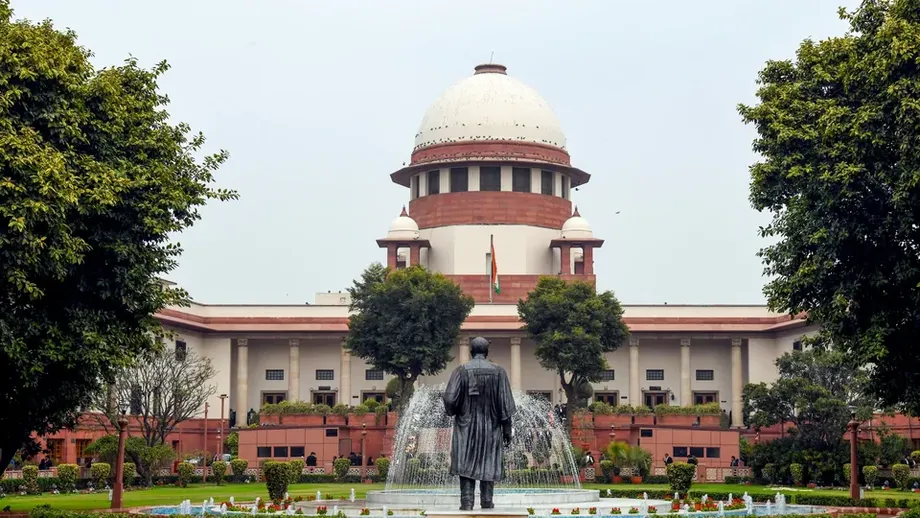
India's Supreme Court has directed the National Judicial Academy to prepare guidelines helping magistrates distinguish adults forced into sexual exploitation from women engaged in sex work voluntarily. A later review of its May 29, 2026 judgment found that several states and Union territories had still not carried out four additional directions supporting its nationwide Victim Protection Plan.
Contents
- A raid must lead to an inquiry, not automatic detention
- Why the existing process needed to change
- What magistrates must examine
- Consent also governs custody and return to family
- Rehabilitation becomes a constitutional obligation
- Specialist police units need formal authority
- The court is now checking whether its orders work
- Counting rescues is only the beginning
- Whose choices shape the new framework?
- Parliament and states have different jobs to finish
- Key Points
The bench of Justices J. B. Pardiwala and R. Mahadevan has also directed states and Union territories to formally notify Anti-Human Trafficking Units as police stations. The Union government must obtain detailed compliance information and submit a fresh status report before the December 14 hearing.
The central protection concerns what happens after a raid. A magistrate must conduct a preliminary assessment, called a threshold inquiry, before putting an adult woman through the deeper custody and rehabilitation process intended for trafficking victims. Her wishes, the possibility of coercion and immediate safety risks must all be examined.
For an adult who says she chose sex work, that assessment can determine whether she returns to her life or enters a protective home. For someone being threatened by a trafficker, it can help identify pressure concealed behind an apparent statement of consent.
The directions build on Prajwala v Union of India, a petition filed in 2004. More than two decades later, the case has produced both a framework for protecting trafficking survivors and a demand that authorities stop treating every adult found during a brothel raid as someone who must be detained or rehabilitated.
Why the existing process needed to change
The Immoral Traffic (Prevention) Act, 1956, known as the ITPA, provides procedures for searches, rescue, custody and rehabilitation. Sections 15, 16 and 17 can bring women with very different experiences before the same magistrate: someone trafficked through force or deception, someone trafficked years earlier who remains in sex work, and someone who entered it voluntarily.
The court's concern is that a single process can obscure those differences. A detailed inquiry into a woman's age, background, family circumstances and personal history can keep her away from her home and livelihood even when she says she wants no institutional intervention.
The May judgment drew on the Law Commission's 64th report and Budhadev Karmaskar v State of West Bengal, the Supreme Court's 2022 ruling protecting sex workers' dignity. The Law Commission had reasoned that rescuing a woman does not arise in the same way when she engages in prostitution voluntarily.
The court reiterated that sex work itself is not an offence. An adult voluntarily engaged in it must not be arrested, penalised, harassed or victimised during a raid merely because she is found in a brothel. The present directions focus on ensuring that this protection shapes what police and magistrates actually do.
What magistrates must examine
A magistrate conducting the threshold inquiry must consider the adult woman's account of whether her work was voluntary, her expressed wishes, a social worker's assessment, and evidence of threats, force, coercion or undue influence. The assessment must also address immediate danger and the risk of being trafficked again after release.
The inquiry remains mandatory when a woman says she is working voluntarily. The court recognised that traffickers may threaten or coach victims to make that statement, or to refuse rehabilitation, so they can regain control over them.
Consent therefore has to be assessed alongside the circumstances in which it is expressed. A magistrate must take a woman's words seriously while examining whether someone else is controlling what she can safely say.
The National Judicial Academy has been asked to develop a uniform protocol for this work, with Prajwala permitted to assist. Consistent guidance matters because the same statement or safety concern should receive a comparable assessment regardless of which district handles the case.
Consent also governs custody and return to family
The May judgment made a victim's consent the primary consideration when deciding on extended custody in a protective home or restoration to her family. Rehabilitation must not routinely be imposed against her will.
A magistrate can depart from her wishes only in exceptional circumstances, including a threat to her safety or a finding that coercion, coaching or undue influence has shaped her decision. The magistrate must record the reasons in writing.
Written reasons make the decision more accountable. They require an official to explain why an adult's stated preference is being overridden, rather than treating confinement or return to relatives as the automatic result of a rescue operation.
The adult procedure applies to trafficking for commercial sexual exploitation. Children follow the separate process under the Juvenile Justice Act, 2015, through child welfare committees. Their protection therefore remains within the legal system designed for children.
Rehabilitation becomes a constitutional obligation
The Victim Protection Plan covers intervention from rescue through prosecution and reintegration into community life. Its principles include privacy, informed consent, care suited to each person and protection from criminal treatment of victims. It also bars punitive practices inside protective homes.
The Supreme Court grounded rehabilitation in Articles 21 and 23 of the Constitution. Article 21 protects life and personal liberty; Article 23 prohibits trafficking and forced labour. Together, they provide the constitutional basis for treating support after trafficking as an enforceable right.
A survivor seeking shelter, counselling, skills training or other rehabilitation support can therefore approach a court to enforce that entitlement. Government responsibility extends beyond removing someone from an exploitative situation to helping that person recover and rebuild a life.
Justice Pardiwala's reasoning connected exploitation with the conditions that can precede it, including poverty, homelessness, limited education and economic insecurity. Those conditions help explain why a rescue without practical support can leave a survivor exposed to exploitation again.
Specialist police units need formal authority
States and Union territories have been directed to notify Anti-Human Trafficking Units as police stations through the appropriate legal process. The Centre must take up the matter with them and seek the notifications at the earliest.
Formal police station status gives specialist trafficking units a clearer legal basis for their investigative work. The direction seeks to close gaps between assigning a unit responsibility for trafficking cases and giving it the recognised status needed to carry out that role.
The protection framework also strengthens access to legal assistance through District Legal Services Authorities. For someone facing a decision about custody, rehabilitation or return to family, legal help can be crucial to explaining her wishes and challenging an order that restricts her liberty.
The compliance requirements extend beyond police. They include notifying recognised welfare institutions, preparing lists of social workers across each state, and designating police and government nodal officers. These arrangements identify the institutions and people responsible for turning judicial directions into daily practice.
The court is now checking whether its orders work
Senior advocate Aparna Bhat, representing Prajwala, submitted a compliance table identifying the responsibilities assigned to different authorities under the May judgment. Additional Solicitor General Aishwarya Bhati presented the Centre's status note on action taken.
The bench welcomed the table as a tool for monitoring compliance. Its review found that several states and Union territories had yet to implement four additional directions, making follow through a central part of the continuing proceedings.
Justices Pardiwala and Mahadevan described the problem of issuing an extensive judgment without a reliable way to assess what happens afterward:
Once these directions are committed to the paper in the form of a judgment, the matter marks its abrupt end,
The court asked the petitioner and the Centre to suggest concrete ways to track the plan's progress and effectiveness. The following milestones explain how a petition about trafficking developed into an ongoing review of protection, consent and implementation:
- 2004: Prajwala filed the public interest litigation that led to the present framework.
- 2022: Budhadev Karmaskar v State of West Bengal upheld protections for sex workers' dignity under Article 21.
- May 29, 2026: Justices Pardiwala and Mahadevan delivered the Prajwala judgment and its Victim Protection Plan.
- Later compliance review: The court sought magistrate guidelines and further action on specialist police units and other implementation duties.
- December 14: The next hearing is scheduled, with a fresh Centre status report required beforehand.
Counting rescues is only the beginning
A government report recorded 2,135 human trafficking cases and roughly 5,800 identified victims in India in 2024. Those figures amount to about 2.7 identified victims for every recorded case, illustrating that a single investigation can involve several people.
The harder assessment concerns what happens after people enter the protection system. The framework's practical results depend on whether survivors obtain stable housing, education, employment, counselling and protection from being trafficked again.
The court's request for mechanisms to track effectiveness brings these outcomes into the compliance discussion. A notified institution or designated officer is an administrative step; a survivor receiving appropriate support is the concrete result the plan seeks.
District officials, magistrates, police and shelter managers will deliver most of these protections. Training, staffing, legal assistance and suitable accommodation are therefore central to whether the distinction between coercion and choice survives beyond the courtroom.
Whose choices shape the new framework?
Sex workers' organisations have practical experience of the pressures involved. Women work from streets, brothels and their own homes, while unions and other groups seek access to medical treatment, preventive supplies such as condoms, and government childcare.
Raid procedures can disrupt those arrangements through detention, medical examinations and return to a home state. Some women undergo ossification tests, which use bone development to estimate age. These interventions can affect a person's income, family relationships and access to care.
Law academics Shashank Shekhar of Lloyd Law College and Divya Sridhar of Jindal Global Law School have noted that sex workers' collectives were not heard in open court. Their criticism points to a practical gap: people whose choices the framework is designed to assess have experience that could inform its procedures and monitoring.
The judgment protects dignity, liberty and freedom from arbitrary intervention while leaving broader legal recognition of consensual adult sex work unresolved. Its immediate task is narrower and concrete: authorities must distinguish an adult making a choice from a person whose apparent choice is controlled by someone else.
Parliament and states have different jobs to finish
The Supreme Court used Article 142, its constitutional power to make orders necessary to deliver complete justice, to establish a nationwide framework pending legislation. It also called for a comprehensive law against trafficking.
Legislative reform could bring the ITPA, the trafficking provisions of the Bharatiya Nyaya Sanhita and child protection laws into a more coherent scheme. Parliament can define how those laws work together, while governments must provide the institutions, personnel and funding required to carry out protection duties.
The immediate work is already assigned: states must complete notifications and other compliance measures, the National Judicial Academy must prepare guidance for magistrates, and the Centre must report on progress. For adults encountered during raids, the most consequential change is a requirement to hear and assess their wishes before deciding what happens to them.
Key Points
- Magistrates must conduct a threshold inquiry to distinguish trafficking from voluntary adult sex work.
- An adult's consent is the primary consideration for extended protective custody or return to family.
- Departures from expressed wishes require exceptional circumstances and written reasons.
- States and Union territories must formally notify Anti-Human Trafficking Units as police stations.
- The Victim Protection Plan treats rehabilitation as a constitutional right and prohibits punitive practices in protective homes.
- Children follow separate procedures under the Juvenile Justice Act, 2015.
- The Centre must submit a fresh status report before the December 14 hearing.