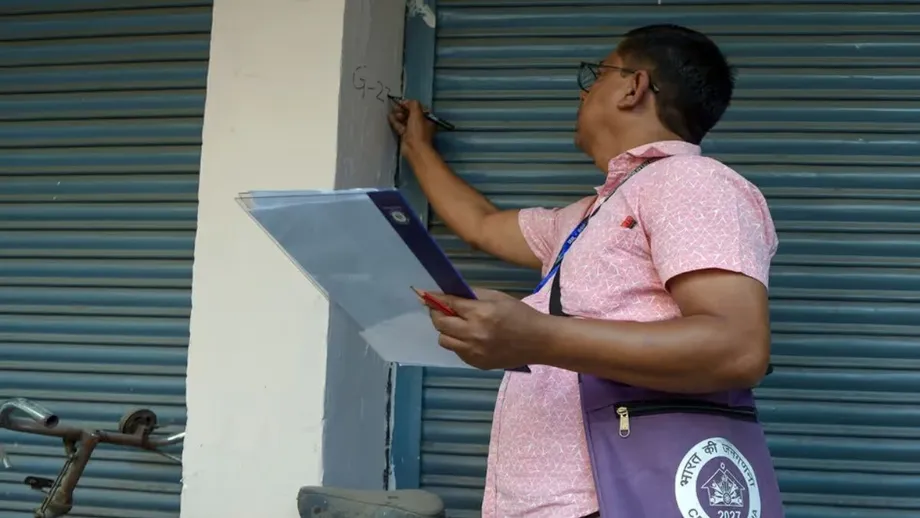
Delhi prepares for a 15-day window to count residents
Delhi residents are expected to be able to submit their own census details from January 10 to 24, 2027, before enumerators begin visiting homes on January 25, according to senior officials. The proposed population enumeration will cover 40 questions, including caste, migration, employment and parents' birth details.
Contents
- Delhi prepares for a 15-day window to count residents
- What happens on each date?
- Official guidance for self-enumeration
- What the first phase recorded
- Which personal and caste details are proposed?
- Education and work receive separate attention
- Migration questions look beyond birthplace
- Aadhaar is voluntary, officials say
- How fieldwork will cover homes and people without housing
- Key Points
The schedule follows a first phase that officials said covered nearly 7.6 million houses and around 5.5 million households, recording more than 23 million people ordinarily residing in Delhi. That exercise, which focused on listing houses and housing conditions, concluded on June 14.
Field enumeration is scheduled to continue until February 28, followed by a revision round from March 1 to 5. Residents would therefore have an initial opportunity to provide their information themselves, followed by a period in which census workers collect details through visits.
A senior census official said a meeting chaired by Delhi's chief secretary, involving census officials, was scheduled for October 22, 2026, to discuss the second phase. The January start and the questionnaire were described as part of preparations; a final notification confirming the arrangements was not identified in the announcement.
What happens on each date?
Delhi's proposed timetable divides population enumeration into three consecutive stages. Self-enumeration means residents enter their own census information, while field enumeration involves census workers collecting information through visits.
- June 14, 2026: Delhi's first phase, covering house listing and the housing census, concluded.
- October 22, 2026: A meeting on the second phase was scheduled under the Delhi chief secretary.
- January 10 to 24, 2027: The proposed self-enumeration window runs for 15 days.
- January 25 to February 28, 2027: Enumerators are scheduled to carry out field operations.
- March 1 to 5, 2027: A revision round is scheduled.
The field period lasts 35 days, compared with 15 days for self-enumeration and five days for revision. Taken together, the proposed stages run for 55 consecutive days, from January 10 through March 5.
Official guidance for self-enumeration
The official User Guide for Self-Enumeration gives the portal address as https://se.census.gov.in. The guide covers the Houselisting and Housing Census, rather than the proposed population enumeration described above. It says the portal will remain open for 15 days before house-to-house houselisting operations, during the period notified by each State or Union Territory. The opening date and active period will be displayed on the portal; this guidance does not confirm Delhi's proposed January population enumeration dates.
Residents begin by selecting their State or Union Territory and entering the Captcha. Registration requires the name of the head of the household, which cannot be changed once registered, and the mobile number of a household member. Only one mobile number may be registered per household, and it cannot be reused for another household. An email address is optional.
Residents then select their preferred language and verify their mobile number using a one-time password. The selected language cannot be changed afterwards. To locate their residence, they select their district, optionally enter a PIN, and enter their village or town, locality and a nearby landmark. They then search, drag the map's red marker onto their residence and click "Save & Next" to confirm the location. The guide recommends a laptop or desktop for better visibility when marking the house on the map.
The online Houselisting and Housing Census questionnaire is identical to the one used by enumerators, the guide says. Building number, census house number, use of census house and household number are recorded separately by the enumerator during the field visit. Residents can consult notes, tooltips and FAQs while answering. Each screen must be completed before moving forward, but earlier entries can be revisited and edited before final submission.
The process typically takes 15–20 minutes. Residents can review their answers on the Preview screen and save a draft to complete before the closing date. Clicking "Final Submit" locks the entries against further changes by the resident; only the enumerator can then make changes. The submission deadline appears on every page, and a draft that is not finally submitted before the State or Union Territory's closing date does not count as completed self-enumeration.
Successful submission generates a unique 11-digit Self-Enumeration ID, prefixed with "H", which is displayed on screen and sent by SMS and, if provided, email. Residents should note it down or take a screenshot. The ID can also be retrieved later through the portal using the registered mobile number.
Residents must share their Self-Enumeration ID when the enumerator visits. If it matches an ID on the enumerator's mobile, the online data is confirmed, accepted and submitted. If it does not match, the enumerator collects the household's information afresh.
What the first phase recorded
Officials put Delhi's first phase coverage at nearly 76 lakh houses, around 55 lakh households and more than 2.3 crore usual residents. In international numbering, those figures are approximately 7.6 million houses, 5.5 million households and more than 23 million people.
A house and a household describe different things. A house is a physical space recorded during listing; a household is the person or group of people living together under the census definition. The two totals therefore measure different parts of the exercise.
The first phase house count exceeded the household count by approximately 2.1 million, using the rounded figures given by officials. Information about how the listed spaces were used would be needed to explain that gap in detail.
The next phase shifts attention from places to people. House listing establishes where enumeration needs to happen, while population enumeration records the characteristics of the people who live there, including their ages, languages, education and work.
Which personal and caste details are proposed?
The proposed questionnaire contains 40 questions covering personal, social, educational, economic and family information. Basic particulars include name, sex, date of birth, age, marital status and relationship to the head of the household.
Questions also cover nationality, religion, disability, mother tongue and other languages known. Recording mother tongue separately from other languages allows the census to capture both a person's first language and the additional languages they know.
Caste is among the most consequential additions described by officials, who said it would be recorded for the first time since the 1931 census. The questionnaire also includes Scheduled Caste or Scheduled Tribe status. These are constitutionally recognised categories, while the broader caste question seeks a more detailed account of caste identity.
The precise wording and response categories will shape how residents provide that information. The description released by officials lists the subjects to be covered, including both caste and Scheduled Caste or Scheduled Tribe status, without setting out the full text of each question.
Education and work receive separate attention
Residents will be asked about educational qualifications and employment status, alongside occupation, industry and class of worker. These questions examine different aspects of a person's education and working life.
Occupation describes the kind of work someone does. Industry describes the activity of the business or organisation where that work takes place. For example, an accountant working for a transport company has an accounting occupation but works in the transport industry.
Class of worker concerns the person's position in their work arrangement. It helps distinguish the nature of employment beyond a job title. The exact categories will depend on the questionnaire used for enumeration.
Collecting these details separately gives the population count more depth than a single question about whether someone works. Education, employment status and the kind of work performed can describe different circumstances within the same household.
Migration questions look beyond birthplace
The migration section will ask where a person was born, where they lived before their current address, why they moved and how long they have stayed at their present location.
Birthplace and last place of residence can be different. Someone born in one state may have lived in another before moving to Delhi. Asking both questions allows the census to record the person's origin and their most recent move.
The reason for migration and duration of stay add further detail. Two residents may have arrived from the same place but moved for different reasons or at very different times. Those differences would be lost in a count based only on birthplace.
The proposed questionnaire also asks for parents' dates and places of birth. These are additional family particulars, separate from the questions about a resident's own birthplace and migration history. Officials also listed the number of children among the family information to be collected.
Aadhaar is voluntary, officials say
The proposed questions extend to the number of bank accounts and whether a person has a mobile phone number, Aadhaar number, voter ID or passport.
Officials said Aadhaar and other identification details would be requested only if available, and that providing Aadhaar would be voluntary. For residents, the practical point is that the proposed exercise does not make producing Aadhaar compulsory.
The financial question described by officials concerns the number of bank accounts. Their description does not include a request for account balances. Similarly, the announcement lists questions about mobile numbers and identification documents without explaining every field residents will see.
These details make the final questionnaire and instructions especially relevant to households preparing their answers. The announced topics range from information people usually know about themselves to family dates and places that may require checking.
How fieldwork will cover homes and people without housing
The census manual sets out procedures for enumerators and supervisors, including house numbering and the preparation of layout maps. Those tasks help workers organise the areas they must cover and keep track of locations during visits.
Confidentiality of census information is also covered in the manual, alongside arrangements for self-enumeration and the revision round. The operational guidance therefore addresses both the collection of personal information and the way workers manage it.
People experiencing homelessness are specifically included in the enumeration procedures. Counting them requires arrangements beyond a list of conventional home addresses, making their inclusion an explicit part of the field operation.
The March 1 to 5 revision round provides a final scheduled stage after regular visits end. Together, the proposed dates and procedures set out how Delhi intends to move from its completed housing exercise to a detailed count of residents.
Key Points
- Delhi's population enumeration is likely to open with self-enumeration from January 10 to 24, 2027.
- Home visits are scheduled for January 25 to February 28, followed by revision from March 1 to 5.
- Officials said the first phase covered nearly 7.6 million houses, around 5.5 million households and more than 23 million usual residents.
- The proposed 40 questions cover caste, religion, education, employment, migration and family particulars.
- Officials said providing Aadhaar would be voluntary and identification details would be sought only if available.
- The census manual includes confidentiality procedures and arrangements for counting people experiencing homelessness.
- The official houselisting self-enumeration guide directs residents to https://se.census.gov.in, with opening dates and active periods displayed on the portal; it does not confirm Delhi's proposed population enumeration dates.