Internet freedom and child protection must go together
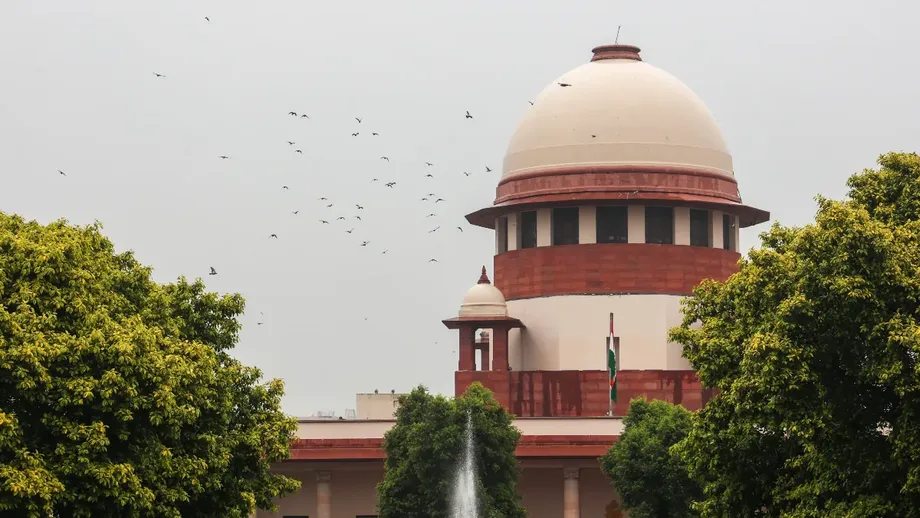
India's Supreme Court has recognised children's right to access and use the internet while ordering a national system to detect and remove child sexual exploitation and abuse material. Its October 15, 2026 order combines constitutional protection for young users with reporting deadlines, shared detection tools and stronger responsibilities for online platforms.
Contents
- Internet freedom and child protection must go together
- What constitutional right did the court recognise?
- Why did the bench reject blanket restrictions?
- Why the court returned to platform failures
- How the national database would work
- Two hours for reporting, immediate removal for known matches
- Complaints must be easier to make and track
- Advertising, subscriptions and financial penalties
- Schools, victim support and the next hearings
- Key Points
The 136-page order in Just Rights for Children Alliance & Anr. v. S. Harish & Ors. directs the Union government to create a National Hash and URL List Database. Confirmed abusive material would be identified across platforms using digital identifiers and internet addresses, with final verification by at least three trained human analysts before an entry is added.
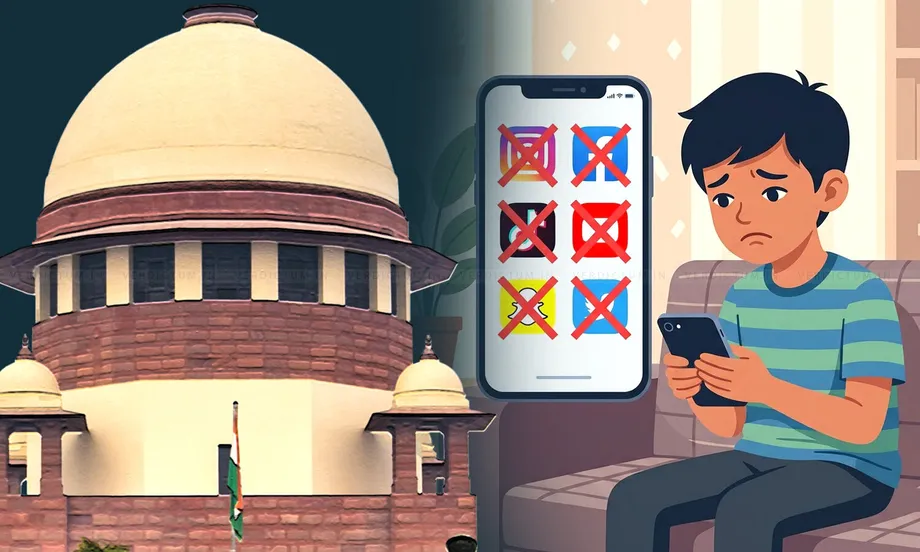
Justices J.B. Pardiwala and K. Vinod Chandran rejected blanket restrictions on children's internet access. They supported safeguards such as parental oversight, private accounts and limits on messages from unknown adults, while placing responsibility for abusive material on those who produce and circulate it and on platforms that fail to act.
The bench explained its position on children's rights and protection:
The safety of our children and their freedom are not at odds with each other. Our children are entitled to both.
The ruling arose from applications alleging serious failures by online intermediaries to tackle child sexual exploitation and abuse material, known as CSEAM. Intermediaries are services that host or transmit information supplied by users, including social media platforms. The government must submit an affidavit explaining its progress before the next hearing on December 10, 2026.
What constitutional right did the court recognise?
The Supreme Court grounded internet access in Article 21 of India's Constitution, which protects life and personal liberty, read together with Article 19(1)(a), which protects freedom of speech and expression. The bench said children enjoy this right regardless of their age.
Freedom of expression includes receiving information and ideas as well as sharing them. For a child, that can mean obtaining lessons, learning about health or communicating with people who understand their circumstances.
The court pointed to children in remote areas, for whom the internet may be the only source of learning and information. It also recognised its importance to children with special needs who find companionship with others like them online.
Two earlier judgments shaped the reasoning. In Anuradha Bhasin v. Union of India, decided on January 10, 2020, the court protected speech and business conducted through the internet but left open whether internet access itself was a fundamental right. In Pragya Prasun & Ors. v. Union of India in April 2025, it recognised digital access as part of the right to life under Article 21.
The October order applies those constitutional protections expressly to children. Its practical approach is to preserve their access while requiring government and platforms to make the services they use safer.
Why did the bench reject blanket restrictions?
The judges warned that children may continue going online even when the law prohibits them from doing so. Some could move to less regulated websites or hide their activity from parents, making dangerous encounters harder to detect.
A child facing threats, manipulation or sexual exploitation might also fear punishment for breaking an age restriction. The court said that fear could discourage the child from telling a parent, guardian or another trusted adult.
The bench described blanket restrictions as "unproven measures of proven disproportionality" and said no jurisdiction had demonstrated to its satisfaction that such measures made children safer. It placed the focus instead on removing harmful material and holding responsible actors to their duties.
Age checks also raised privacy concerns. The court warned that establishing every user's age could require continuing collection and monitoring of sensitive personal information, exposing users to surveillance and misuse of their data.
The proposed alternative includes parental consent, guidance and oversight, alongside a dedicated child mode for social media accounts. Children's accounts could be private by default, restrict contact from unknown adults and filter advertising and content.
For children below their teenage years, the bench envisaged reasonable and proportionate ways to verify parental consent. The Union government will decide the detailed arrangements. Targeted restrictions on inherently harmful services, including adult content websites, remain possible under the court's approach.
Why the court returned to platform failures
The applications followed the Supreme Court's September 23, 2024 judgment concerning child sexual abuse material and the duties of intermediaries. That judgment required platforms to report such material to the Special Juvenile Police Unit or local police under the Protection of Children from Sexual Offences Act, known as POCSO.
Platforms that fail to fulfil those reporting duties risk losing protection under Section 79 of the Information Technology Act. Often called safe harbour, this protection limits an intermediary's legal responsibility for material posted by users when it meets the conditions imposed by law.
The latest proceedings examined allegations that paid advertisements were directing users toward abusive material through external websites and redirect links. Figures placed before the court described 84 advertisements run in India. Of 55 reported through a platform's complaint system, 43 were judged not to violate its advertising standards.
That means roughly 78% of the reported advertisements were accepted under those standards. The figures helped expose the gap between a platform's advertising decisions and its responsibility to address material that enables child exploitation.
The court's intervention developed over several stages:
- September 23, 2024: The Supreme Court delivered its earlier judgment on abuse material and reporting duties.
- August 14, 2026: The court recorded concern about serious lapses in compliance by intermediaries.
- October 15, 2026: The bench issued the new framework for detection, reporting, removal and child protection.
- December 10, 2026: The court is scheduled to review progress on implementation.
More than two years after the earlier judgment, the bench said there had been "no progress worth the name". Its response reaches beyond individual takedowns to address how platforms share information and handle complaints.
How the national database would work
The National Hash and URL List Database is intended to solve a basic weakness: removing abusive material from one service does not automatically alert every other service carrying the same content.
A hash is a digital identifier generated from a file. Platforms can compare identifiers to recognise material already identified as abusive. Perceptual hashing helps identify similar images or videos even when someone has resized or reformatted them. A URL is an internet address, allowing the system to identify links to material hosted elsewhere.
The court directed that the database store only hashes and URLs, never the abusive material itself. Entries must pass several verification stages, with a final independent assessment by at least three trained human analysts. Submissions must travel through encrypted channels.
The database could be built within the government's Sahyog Portal or established separately. Sahyog currently helps route complaints and takedown notices; the proposed system would add a shared reference list for detecting confirmed abusive material across services.
Signed analyst reports, audit trails and independent audits are intended to make decisions traceable. The framework also requires a way to challenge incorrect matches or wrongly flagged addresses and promptly remove mistaken entries. Its use is confined to detecting and removing CSEAM.
The bench also identified a limit in Rule 4(4) of the Information Technology Rules: its wording focuses on material previously removed from the same intermediary's systems. The government was asked to frame guidelines for perceptual hash matching and URL listing, revise them periodically and amend the rules where necessary.
Two hours for reporting, immediate removal for known matches
The framework separates newly identified material from material already confirmed in the shared database. Each category carries a different process.
For material of unknown origin, detected through a platform's tools or a complaint, the intermediary must carry out verification and the required checks. It must report to the relevant police authorities and the body managing the database within two hours of removal or resolution of the complaint.
Material of known origin has already been identified through a database entry. A platform finding a match must immediately disable and remove it without waiting for another verification exercise of its own. These removals must be included in consolidated weekly reports to the database authority.
Removal notices must explain the basis for action so an affected person knows whether to challenge the decision with the intermediary or the database authority. A complaint starts an assessment; database inclusion requires the verification process set out by the court.
The combination is designed to make confirmed matches faster to remove while keeping human checks at the point where material first enters the shared system. Platforms would therefore work from a common verified list rather than repeatedly starting from scratch.
Complaints must be easier to make and track
Online services must provide a distinct, plainly named CSEAM reporting category that users can reach within two steps. Reporting must preserve anonymity and avoid compulsory personal details.
Every report must be acknowledged within 24 hours and receive a reference number. Platforms also need dedicated, trained grievance officers, and a CSEAM complaint cannot be closed without review by such an officer.
The court called for a uniform machine readable reporting format. In everyday terms, platforms should send information in a consistent structure that government and police computer systems can process, rather than in incompatible documents that require repeated manual sorting.
Children and other complainants would gain a clearer route to flag abuse and track a report. Police and the database authority would receive more consistent information, while trained staff would be responsible for reviewing how platforms handle complaints.
Advertising, subscriptions and financial penalties
The Supreme Court said CSEAM under the Information Technology Act and its rules extends beyond visual depictions. For these regulatory duties, it includes electronic material capable of enabling or assisting child exploitation.
Advertisements that redirect users to abusive material, or promote tools for manipulating images into abusive content, fall within that framework. The court referred to Section 67B(d) of the Information Technology Act and Rule 3(1)(b), placing such promotions within platforms' legal responsibilities.
Paywalls and subscriptions also came under scrutiny. The bench directed intermediaries to prevent abusive and prohibited material from being offered or circulated through paid access, including indirectly. Revenue earned from such content should be forfeited and surrendered.
The Union government was asked to consider exemplary monetary penalties based on the seriousness, duration and recurrence of a violation, together with the intermediary's size and turnover. The bench viewed the possible loss of Section 79 protection as too remote and drastic to deter routine failures effectively.
The financial proposals connect enforcement to the business activity surrounding abuse. Advertisements can direct users toward it, subscriptions can generate income from it, and repeated failures to remove it can leave those channels operating.
Schools, victim support and the next hearings
The court directed that digital safety and sex education suited to children's ages form part of the core curricula of the National Council of Educational Research and Training and State Councils of Educational Research and Training.
Lessons should help children recognise safe and unsafe touch, understand consent and respect, protect personal information and identify sexual extortion. Awareness should begin at primary school, with children learning whom they can approach when something goes wrong.
The bench also addressed counselling and psychological assistance for victims. Its framework pairs removal of abusive material with support for children who have experienced harm and education that helps others recognise danger sooner.
A separate case keeps proposed social media age limits before the Supreme Court. On October 16, Chief Justice Surya Kant and Justice Joymalya Bagchi sought government responses to a petition by Emerald Heights International School in Indore and its director.
The petition seeks a graded model: no social media accounts below 13, parental consent and supervision from 13 to 16, and further protections from 16 to 18. The petition on age limits is listed for December 7, 2026, with the proposed restrictions awaiting consideration.
The December hearings concern different proceedings. The school petition seeks rules governing children's accounts; the December 10 hearing in the abuse material case will examine implementation of the detection and protection framework. Together, they put concrete decisions about platform design, privacy and enforcement before the government and court.
Key Points
- The Supreme Court recognised internet access and use as a fundamental right enjoyed by children regardless of age.
- The October 15, 2026 order rejected blanket restrictions while supporting parental oversight and safeguards suited to children's ages.
- A national database must contain verified hashes and URLs, with final assessment by at least three trained human analysts.
- Confirmed database matches require immediate removal; specified reports involving newly identified material carry a two hour deadline.
- Platforms must acknowledge CSEAM complaints within 24 hours and provide trained grievance officers.
- The court addressed paid access to abusive material, possible monetary penalties, school education and victim support.
- The Union government must report implementation progress before the December 10, 2026 hearing.