A smaller project estimate, a much smaller conservation payment
Adani Green Energy's decision to reduce the declared cost of its 1,500 megawatt Tarali pumped storage project from Rs 5,675 crore to Rs 56.75 crore has prompted government inquiries in Maharashtra. The change cuts the wildlife conservation contribution linked to the project from Rs 227 crore to Rs 2.27 crore, a reduction of Rs 224.73 crore.
Contents
- A smaller project estimate, a much smaller conservation payment
- How the 4% condition became the centre of the dispute
- What the environmental clearance actually says
- An environmental budget larger than the revised project cost
- Why private land still requires wildlife scrutiny
- What is at stake for wildlife and nearby communities
- How the complaints led to inquiries
- What Adani Green and the forest department say
- Congress seeks a wider parliamentary investigation
- Key Points
The Maharashtra forest department accepted the revised estimate in October 2026. Sahyadri Tiger Reserve Field Director Tushar Chavan confirmed that the company subsequently deposited Rs 56.75 lakh, the first instalment calculated using the lower figure. The remaining Rs 1.7025 crore would become payable after approval by the National Board for Wildlife.
The Union Ministry of Environment, Forest and Climate Change asked Maharashtra's forest authorities on November 6 to investigate the matter on priority. Its intervention followed complaints by Rohan Bhate, Satara district's honorary wildlife warden, questioning both the revised estimate and the department's acceptance of it.
The ministry's environmental clearance document, dated February 11, 2025, records the project cost as Rs 5,675 crore. It also contains a condition with direct relevance to the dispute: if the project cost changes, the environmental management budget must be updated proportionately.
Adani Group has defended the project's location and environmental credentials. Its spokesperson did not answer the specific question about the revised cost. The detailed calculation behind the lower estimate, the reasoning used to accept it and the outcome of the inquiries have not been disclosed. No date has been given for an inquiry report or national wildlife consideration.
How the 4% condition became the centre of the dispute
The State Board for Wildlife imposed 15 conditions when it considered the Tarali proposal on February 23, 2026. One required a contribution equal to 4% of the project cost for conservation in the Sahyadri Tiger Reserve.
Maharashtra Principal Chief Conservator of Forests (Wildlife) M Srinivas Reddy wrote to Adani Green in March seeking Rs 227 crore. He also sought an affidavit confirming that the company would fulfil the other 14 conditions before its proposal was forwarded for national wildlife consideration.
Adani Green Chief Operating Officer Naresh Telgu submitted a notarised affidavit on September 8, 2026, requesting that the department treat Rs 56.75 crore as the project cost. The explanation referred to an "analogous estimation", meaning an estimate based on a comparison with something similar.
Reddy's office accepted the affidavit on October 12 and sought 1% of the revised cost immediately, with the remaining 3% payable after national wildlife approval. The percentage stayed at 4%; the figure used to calculate it fell by 99%.
The arithmetic is straightforward. Four per cent of Rs 5,675 crore is Rs 227 crore. Four per cent of Rs 56.75 crore is Rs 2.27 crore. The Rs 56.75 lakh already deposited represents one quarter of the revised contribution.
What the environmental clearance actually says
The February 2025 document grants environmental clearance to the Tarali Open Loop Pumped Storage Project over 150.74 hectares in Nivade, Tondoshi, Kalambe and Jalu villages, in Satara's Patan taluka. It records the same 1,500 megawatt capacity involved in the current dispute.
The clearance requires the Environmental Management Plan, or EMP, to be implemented and its allocated money to be used for its stated purposes. An EMP is the project's budget and programme for managing effects such as construction waste, pollution, wildlife disturbance and public health risks.
The environment ministry set out its instruction on cost revisions in the clearance:
In case of revision of the project cost or due to price level change, the cost of EMP shall also be updated proportionately.
The document therefore makes the project estimate relevant to more than the wildlife contribution. A revised estimate also requires attention to the environmental management budget under the clearance conditions.
An environmental budget larger than the revised project cost
The clearance earmarks Rs 3,934.08 lakh, or about Rs 39.34 crore, in capital spending for environmental management and pollution control. It lists another Rs 2,753.20 lakh, or about Rs 27.53 crore, in recurring costs, with allocations spread across five years.
Together, those figures amount to Rs 66.87 crore. That is about Rs 10.12 crore more than the Rs 56.75 crore now declared as the cost of the entire project. Both figures come from the original environmental budget and the subsequently revised project estimate, making their reconciliation a concrete issue for the authorities examining the change.
The environmental plan includes a capital allocation of Rs 966.15 lakh for biodiversity and wildlife conservation and Rs 2,124.12 lakh for local area development. It also budgets for managing excavated material, fisheries, sanitation, environmental monitoring and disaster management.
The 4% payment to the tiger reserve is a condition imposed through the wildlife approval process. The environmental clearance separately sets out the EMP and its spending requirements. Authorities examining the revised project value will need to account for both sets of obligations.
Why private land still requires wildlife scrutiny
Tarali is proposed around the Tarali dam reservoir on 150.74 hectares of land classified as nonforest. The environmental clearance says the land will be purchased directly from owners through mutually agreed negotiations and that no diversion of forest land is required.
The same document places the nearest project components 3.2 kilometres from Koyna Wildlife Sanctuary and outside the Sahyadri Tiger Reserve's buffer zone. Maharashtra forest officials describe the location as falling within the sanctuary's buffer or deemed Eco-Sensitive Zone.
A senior state forest officer explained that, because Koyna's Eco-Sensitive Zone has not been formally notified, an area extending 10 kilometres from the sanctuary is being treated as a deemed zone under Supreme Court directions. Such a zone brings nearby development under environmental scrutiny because activity outside a sanctuary can affect the protected landscape.
The ministry's clearance explicitly says the project will undergo National Board for Wildlife clearance because the Eco-Sensitive Zones have not been notified. Land ownership and proximity to protected wildlife areas therefore feature as separate parts of the approval process.
What is at stake for wildlife and nearby communities
The environmental clearance lists 14 species observed in the study area as Schedule I species under the Wildlife Protection Amendment Act, 2022. Its list includes the common leopard, sloth bear, Indian pangolin, grey wolf, sambar deer and Indian bison.
The ministry requires a wildlife conservation plan approved by the Chief Wildlife Warden and implemented in consultation with the local forest department. It specifically directs the plan to include measures to reduce conflict between people and animals, referring to black bears and leopards.
The clearance also prohibits buying vehicles with money earmarked for the wildlife conservation plan. That restriction gives a practical example of how the conservation money is supposed to be controlled: allocations must support the work for which they were approved.
For communities around the project, these conditions concern encounters with wildlife, construction waste, sanitation and changes around the reservoir. The difference between the original and revised contribution determines the amount payable to the tiger reserve under the 4% condition, while the EMP sets out additional work associated with the project.
How the complaints led to inquiries
Bhate filed complaints on October 30 through the Prime Minister's grievance portal and Maharashtra's Aaple Sarkar platform. His complaint to the chief minister prompted a November 5 direction asking the Koyna Wildlife Sanctuary deputy director to examine the matter.
The Union environment ministry followed on November 6. It said wildlife protection, conservation and management are primarily the responsibility of state and union territory governments. It asked Maharashtra's forest authorities to investigate on priority, take appropriate action and reply directly to the complainant, with a copy to the ministry.
The key steps span nearly two years:
- February 11, 2025: Environmental clearance records a project cost of Rs 5,675 crore.
- February 23, 2026: The State Board for Wildlife imposes 15 conditions, including the 4% conservation contribution.
- March 2026: Reddy seeks a Rs 227 crore deposit and an undertaking on the other conditions.
- September 8, 2026: Adani Green submits its affidavit seeking a revised cost of Rs 56.75 crore.
- October 12, 2026: Reddy's office accepts the affidavit and requests the first instalment.
- October 30, 2026: Bhate submits complaints through central and state grievance platforms.
- November 5 and 6, 2026: State and Union authorities issue inquiry directions.
- November 13, 2026: Congress renews its demand for a parliamentary investigation.
Bhate, whose honorary wildlife warden role concerns Satara district, challenged the scale of the reduction:
Even a layman would understand that such a huge power project cannot happen on such a low budget.
He called for the decision accepting the estimate to be revoked and for an impartial investigation.
What Adani Green and the forest department say
An Adani Group spokesperson said all project elements were on privately owned land in three revenue villages and involved no forest land. The environmental clearance describes the project area across four named villages: Nivade, Tondoshi, Kalambe and Jalu.
The spokesperson said pumped storage operations would have no adverse effect on downstream ecology, the environment, forests or wildlife, and that the water bodies created could support local plants and animals.
Pumped storage works by moving water between reservoirs at different heights. Electricity is used to pump water upwards; when electricity is needed, water flows down through turbines. The project's 1,500 megawatt rating describes its power capacity, while the conservation conditions address its location and environmental effects.
Reddy, the senior wildlife official whose office accepted the revised estimate, directed the question about the affidavit back to the company:
You should ask the company why it submitted an affidavit with a revised project cost.
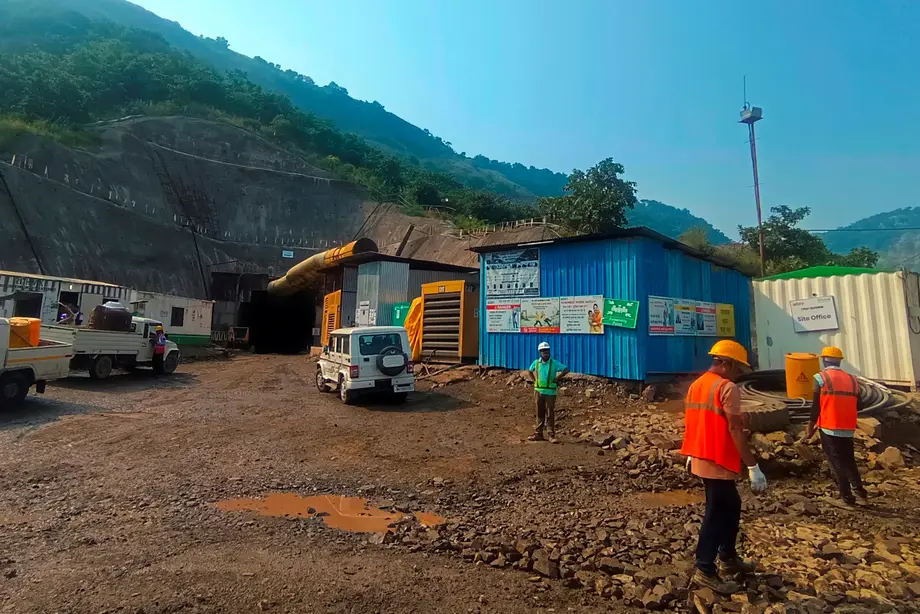
Work has been reported near Tondoshi. The proposal still requires consideration by the National Board for Wildlife, and the first payment has already been received by the tiger reserve.
Congress seeks a wider parliamentary investigation
Congress expanded the political dispute on November 13, 2026, attacking the Modi government over the reported reduction and renewing its demand for a Joint Parliamentary Committee investigation into the Adani Group's operations.
Jairam Ramesh, the party's general secretary responsible for communications, shared the allegations on X. Congress described the matter as a "scandal of gigantic proportions". Ramesh said the party had been seeking a parliamentary inquiry since March 2023.
A Joint Parliamentary Committee is a group of members of Parliament drawn from both houses to examine a specified subject. Congress's demand seeks scrutiny of the group's wider operations, while the inquiries already ordered concern the Tarali cost revision and the resulting conservation payment.
The immediate administrative task is to explain how Rs 56.75 crore was calculated, why the forest department accepted it and how the project will meet the spending conditions recorded in its environmental and wildlife approvals.
Key Points
- Adani Green reduced Tarali's declared cost from Rs 5,675 crore to Rs 56.75 crore, a 99% cut.
- The linked wildlife contribution fell from Rs 227 crore to Rs 2.27 crore.
- The tiger reserve has received Rs 56.75 lakh as the first instalment.
- The original clearance's environmental management budget totals about Rs 66.87 crore, exceeding the revised project estimate.
- Union and Maharashtra authorities have ordered inquiries following Rohan Bhate's complaints.
- National wildlife consideration remains pending, while Congress has renewed its demand for a parliamentary probe.