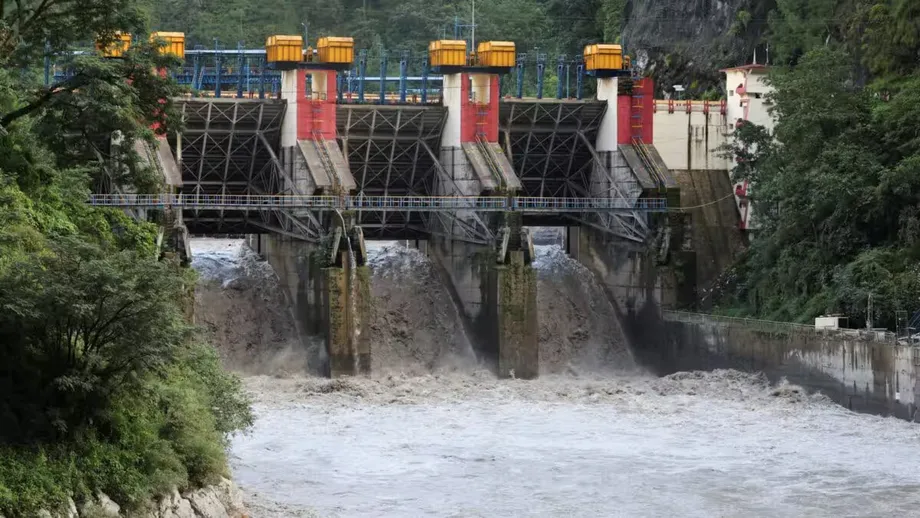
Daporijo shutdown halts a hearing on the Menga dam
A 12-hour shutdown against the proposed 1,605 megawatt Subansiri Upper Hydroelectric Project turned violent in Arunachal Pradesh on October 26, 2026, leaving two security personnel injured and forcing the cancellation of a public hearing. The unrest in Daporijo, the headquarters of Upper Subansiri district, widened an agitation that had already brought arson, arrests and additional security deployments to the neighbouring Siang basin.
Contents
- Daporijo shutdown halts a hearing on the Menga dam
- What happened during the Upper Subansiri bandh?
- Pasighat violence brought arrests and reinforcements
- How the dispute reached this point
- The Siang dam site is still being studied
- Why India wants a large reservoir on the Siang
- Land, farming and safety drive opposition
- Development spending has not settled the dispute
- Talks now hinge on detainees and security forces
- Key Points
Upper Subansiri Superintendent of Police Pawan Kumar Yadav said protesters damaged NHPC equipment, a company vehicle and two police vehicles. Constable-driver Hibu Lasha and a member of the Central Reserve Police Force were injured and taken to Ziro for treatment.
The shutdown, known locally as a bandh, began at 5 a.m. It was called by the All Tagin Students' Union and other student and community organisations opposing the Menga dam, as the Subansiri project is also known. Their concerns centre on land, livelihoods, indigenous rights and the future of communities along the river.
The violence followed unrest in Pasighat over the much larger, proposed 11,200 megawatt Siang Upper Multipurpose Project. Both proposals involve NHPC, the government hydropower developer, but they concern different rivers and communities. Upper Subansiri is home to the Tagin people, while the Siang flows through ancestral Adi territory. The two communities are closely related.
The immediate consequences now extend beyond damaged property. A public hearing has been cancelled, survey work faces resistance, and demands for detained activists' release have become part of the dispute over whether either project should proceed.
What happened during the Upper Subansiri bandh?
The All Tagin Students' Union organised the shutdown with the Dumporijo Students Union, Sinalita Students Union, Taliha Students Union and groups representing residents whose land could be affected. Protesters erected roadblocks and burnt tyres, disrupting movement through Daporijo.
A police patrol vehicle was attacked on the town's main road. Other accounts described a vehicle being overturned, a private vehicle being set on fire and damage to motorcycles. Instruments, surveying equipment and computer peripherals at an office associated with NHPC were allegedly damaged or burnt.
An alleged police attempt to detain union president Tadak Pakba also fuelled anger. The incident was placed either late on October 24 or on October 25; official confirmation of the attempted detention was still awaited. Student organisations demanded an explanation from the administration and police and warned of further protests.
Police conducted a flag march through Daporijo and appealed for peace. Yadav also said property assessment surveys proceeded peacefully in Jarring, Gusar and Lable, showing that activity connected with the project continued in some villages even as the district headquarters experienced violence.
Pasighat violence brought arrests and reinforcements
In Pasighat, unrest extended from Friday night, October 23, into Saturday, October 24. A crowd described as numbering more than 150 youths torched an NHPC office. Allegations also included arson at a police station, burning police vehicles and attacks on political leaders' homes.
Officials identified the affected homes as those of state Bharatiya Janata Party president Kaling Moyong, Pasighat West legislator Ninong Ering and Mariyang-Geku legislator Oni Panyang. Police said more than 40 security personnel were injured in stone throwing and at least nine police vehicles were damaged. One protester was reported injured by a tear gas shell, while four women experienced problems associated with tear gas.
Inspector General of Police Hibu Tamang said at least 15 people had been arrested and six cases registered over violence, arson and alleged attacks on police and central security personnel. Investigations were continuing.
East Siang public relations officer Miding Mod said demonstrators had permission to protest only until 2 p.m., but remained into the evening and blocked the national highway. The organisers' bandh was described as ending at 5 p.m. Mod said a magistrate ordered the crowd to be cleared after traffic queues built up.
District Magistrate Jayanti Pertin imposed restrictions on public gatherings under Section 163 of the Bharatiya Nagarik Suraksha Sanhita in Pasighat, Mebo and Ruksin, effective until further orders. The provision allows magistrates to issue urgent restrictions in situations involving danger or threats to public order. The Centre also ordered two additional companies of the Rapid Action Force to Pasighat.
NHPC suffered disruption beyond the immediate fire damage. About 15 personnel working on the Siang proposal were forced to operate from their homes. An official described one office as completely gutted, another as partly damaged and a generator as destroyed.
How the dispute reached this point
The latest confrontations followed years of planning and resistance. Proposals for dams on the Siang date to 1982, and the Centre designated the Upper Siang proposal a National Project in 2008.
The main steps leading to the present dispute include:
- 2017: NITI Aayog proposed combining two earlier Siang project phases into a single storage project.
- April 2022: The Centre asked NHPC to conduct a study to help select a dam site.
- December 30, 2022: NHPC submitted a draft pre-feasibility report identifying Uggeng, Dite Dime and Parong as potential sites.
- May 21, 2025: Residents of Beging stopped NHPC testing at Parong and damaged drilling equipment.
- October 23–24, 2026: The Pasighat agitation escalated into arson, vandalism and clashes.
- October 26, 2026: The Daporijo bandh turned violent and the Subansiri project's public hearing was cancelled.
The next proposed window for the Siang feasibility survey is November 2026 to January 2027. Whether teams can carry out that work depends partly on resolving resistance to their presence.
The Siang dam site is still being studied
NHPC has been asked to conduct core drilling and geophysical studies at the three candidate sites before selecting a location. Core drilling removes narrow samples of underground rock so engineers can examine the strength and structure of the ground. Geophysical studies use measurements to investigate conditions below the surface.
The Siang proposal remains at the preliminary assessment stage, with its exact site, final design, reservoir boundaries and local impact still to be settled. The original project description places the planned main reservoir near Geku, about 35 kilometres downstream from Yingkiong, but the comparative site investigations remain unfinished.
Chief Minister Pema Khandu has described the pre-feasibility report as an initial assessment of whether the proposal is technically workable. Further stages would include a detailed project report, social and environmental studies, consultations and approvals before construction could begin.
The Siang Indigenous Farmers' Forum opposes allowing surveys to proceed because it fears they will create momentum for a project that residents will find harder to stop later. For the government, collecting technical information is the next step. For opponents, the survey itself has become a decision about the future of their land.
Why India wants a large reservoir on the Siang
The Siang is the name used in Arunachal Pradesh for the Yarlung Tsangpo after it enters India from Tibet. Farther downstream, its waters join the Dibang and Lohit in the Brahmaputra river system, which flows through Assam and Bangladesh.
China began construction of a huge hydropower project in Medog county in July 2025. Its proposed generating capacity is about 60,000 megawatts, roughly 5.4 times the 11,200 megawatts proposed for Siang. Indian officials are concerned about how upstream storage, releases or diversion could affect water reaching India.
Jal Shakti ministry officials put the annual water yield at the Siang project location at around 109 billion cubic metres. They describe storage and flood moderation as its central purposes, with electricity generation as a byproduct. A reservoir can hold some incoming water and release it later, helping manage changes in river flow.
Khandu has cited estimated usable storage of 9.2 billion cubic metres for the Siang proposal, compared with approximately 5.5 billion cubic metres for China's Medog project. Usable storage means the part of a reservoir that operators can draw down and refill. Annual yield measures water passing through over a year, while storage measures how much can be held at a particular time.
Indian government estimates have also raised the possibility of China diverting up to 40 billion cubic metres of water. The effectiveness of India's proposed response would depend on reservoir design, operating rules and the timing and volume of river flows. Local communities, meanwhile, would live with the land and livelihood changes required to create that storage.
Land, farming and safety drive opposition
Adi residents fear the loss of villages, fertile fields, horticulture and cultural ties to the river. The Siang Indigenous Farmers' Forum estimates that 27 villages could be submerged and between 100,000 and 150,000 people displaced. An activist associated with Adi Baane Kebang-United warned that an incident involving the dam could affect 35 villages and more than 150,000 people. These estimates concern different situations: reservoir submergence and a possible emergency.
The announced development programme covers a smaller group, approximately 10,000 people in 26 villages described as partly or fully affected. A final assessment of the project footprint and population affected is needed to determine relocation and compensation requirements.
Arunachal Pradesh lies in Seismic Zone V, India's highest earthquake risk category. In a November 2025 analysis, Manipal University researcher Srotaswini Hazarika discussed seismic risks, climate change, retreating glaciers and floods caused when glacial lakes suddenly release water. Such floods can carry large amounts of sediment as well as water, creating additional demands on a reservoir and its outlets.
The government says geological conditions and safety will be examined through feasibility studies. Opponents want their concerns about land, food security and community survival addressed before those studies advance. In the Subansiri valley, student organisations have raised similar concerns about the rights and interests of people facing the Menga proposal.
Development spending has not settled the dispute
The Centre and Arunachal Pradesh government announced a Rs 350 crore Special Development and Livelihood programme for 26 villages in Siang and Upper Siang districts. It is intended to reach approximately 10,000 people, half of them women.
Planned activities include horticulture, livestock rearing, handicrafts, bamboo crafts, beekeeping and support for turning homes into tourist accommodation. The state government was also expected to help build hospitals and schools in places where villagers would be resettled. Officials said implementation had barely begun when protests resumed.
NHPC also hired Concept Public Relations under a contract worth Rs 8.73 crore awarded in July 2025, with services beginning the following month. An extension through November 6, 2026, brought the stated value to approximately Rs 10.91 crore. Its public relations tender acknowledged concerns about displacement, environmental damage, submergence and land loss.
The spending addresses two different tasks: providing development assistance and communicating the government's case. Protest organisations are seeking decisions about land, surveys, detention and security deployments, making negotiations about those issues central to any agreement.
Talks now hinge on detainees and security forces
Khandu offered dialogue on October 24 and called for calm. The chief minister said concerns about the Siang proposal needed to be addressed through discussion and access to information.
Misinformation and misconceptions surrounding the Siang Upper Multipurpose Project are creating apprehensions among our people. Bridging this information gap through facts, transparency and open dialogue is essential.
Protesters in Upper Siang demanded the release of people arrested over the violence and four activists held under preventive detention. They also sought withdrawal of central security forces and an immediate halt to the pre-feasibility survey. Preventive detention means holding someone under legal powers intended to prevent anticipated actions, rather than as punishment following a conviction.
Upper Siang Deputy Commissioner Ashok Tajo said the government was examining the detainees' cases, but release required further approvals. He said withdrawal of central forces would depend on peace being restored and asked villagers to nominate representatives for talks.
Activists Ebo Mili and Otul Jerang reportedly began a hunger strike in Pasighat police custody on October 26 after surrendering following the Friday night violence. The All Adi Youth Association has sought dialogue through traditional kebang, or village council, institutions and withdrawal of cases against protesters.
The immediate decisions concern detainees, policing and whether surveys can resume. For residents of both river valleys, the larger issue remains concrete: which land would be affected, where families might live and how they could continue earning a livelihood.
Key Points
- The October 26 bandh in Daporijo left two security personnel injured and cancelled a hearing on the proposed 1,605 megawatt Menga project.
- Pasighat violence linked to the Siang proposal brought at least 15 arrests, six police cases and additional Rapid Action Force deployments.
- The proposed 11,200 megawatt Siang project's exact site and final design remain under study.
- India presents the Siang reservoir as a means of managing river flows and risks associated with China's upstream project.
- Community organisations oppose possible displacement, land loss and environmental damage, and are demanding detainees' release and withdrawal of security forces.
- A Siang survey is proposed for November 2026 to January 2027, while officials are seeking village representatives for dialogue.