A funding offer tied to a political agreement
Prime Minister Anwar Ibrahim has offered to use Malaysia's September 2021 political agreement as the basis for providing allocations to opposition MPs, while defending RM123 million approved for 197 projects in Besut as evidence that opposition constituencies continue to receive development funding.
Contents
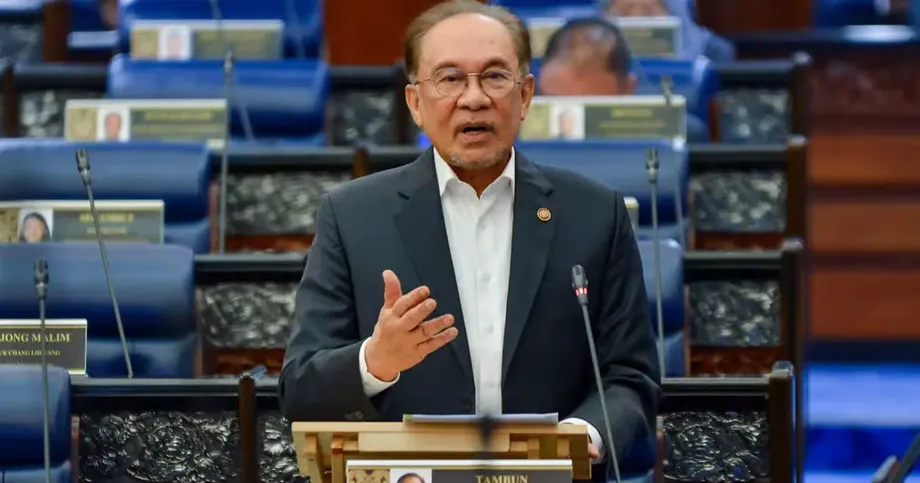
Speaking in the Dewan Rakyat on October 27, Anwar said Deputy Prime Minister Fadillah Yusof had authority to negotiate with the opposition. He proposed using the earlier agreement's format without amendments and said the government could approve an arrangement once it was signed.
The offer followed a challenge from Che Mohamad Zulkifly Jusoh, the Perikatan Nasional MP for Besut, over Pakatan Harapan's election promise to provide equal constituency allocations. Che Mohamad asked whether the government would introduce an Equal Constituency Allocation Act before the next general election.
Anwar's answer focused on negotiations and the way projects receive funding. He did not give a definitive commitment to introduce the legislation or a timetable for doing so.
The disagreement centres on two related issues: how much public money reaches a constituency, and how much authority its elected MP has over selecting or coordinating the work. Anwar says residents receive development projects regardless of their MP's party. Opposition MPs want equal access to constituency funding arrangements, rather than having government representatives administer funds for their areas.
Che Mohamad cited a parliamentary reply stating that government and opposition constituencies were each allocated RM2 million annually, but that money for opposition seats was administered by the government rather than their elected MPs. He questioned whether that amounted to double standards.
What the 2021 agreement required
The September 2021 Memorandum of Understanding on Political Transformation and Stability was negotiated between Ismail Sabri Yaakob's government and Pakatan Harapan, when Anwar was opposition leader. It included equal constituency development allocations for government and opposition MPs covered by the agreement.
Pakatan Harapan, in return, agreed to support or abstain on confidence motions and supply bills, including the 2022 budget. A confidence vote tests whether a government has enough parliamentary support to remain in office. Supply bills authorise government spending, allowing ministries and public services to operate.
The arrangement therefore exchanged agreed parliamentary cooperation for commitments that included constituency funding. Anwar is now proposing that earlier model as a route to an agreement with the current opposition.
Anwar, describing how quickly his government could act after negotiations, said:
If they sign today, it can be approved tomorrow. If they do not want to negotiate, that is not my problem.
Anwar also acknowledged that implementation of the earlier agreement had not fully matched expectations and that allocation amounts differed from what had been assumed. His proposal to reuse its wording brings that earlier experience into the present negotiations.
Perikatan Nasional previously rejected the government's draft memorandum, raising concerns about constitutionality, freedom of speech, discussions involving race, religion and royalty, asset declarations, and unclear funding amounts and procedures. Agreement would require the two sides to settle those objections as well as the amount and administration of the money.
An offer first made in March 2023
Anwar had already accepted equal allocations in principle on March 7, 2023. A Finance Ministry publication records his position that both sides should discuss the method and reach a common understanding.
The prime minister, who is also finance minister, told Parliament:
In principle, I have no objection to giving equal allocation to the opposition as received by the government MPs.
The exchange arose from a question by Shahidan Kassim, the PN MP for Arau, about assistance for flood victims. Muhyiddin Yassin had proposed at least RM300,000 for every MP, including opposition representatives, to help affected residents.
Anwar said then that he would assign the Chief Whip and relevant ministers to negotiate. He also said opposition MPs had received no such allocation during Muhyiddin's administration. The recurring issue, from that exchange to the October 27 debate, is how to turn acceptance in principle into an agreed funding system.
Who controls the money?
Che Mohamad's complaint concerns the role of elected opposition representatives. Funds for opposition constituencies are administered through government arrangements, including appointed coordinating officers, while government MPs have a role in managing or coordinating constituency allocations.
Anwar described development spending in terms of project approval rather than cash handed to politicians. He said even government MPs do not personally receive development funds; they endorse or verify projects, with spending handled through the relevant public bodies.
The prime minister explained his position this way:
Even in constituencies represented by government parties, it is not given directly to MPs. MPs verify the project. Funds for development are not given to MPs.
For residents, the practical issue is who can take a request for a road repair, school improvement or community facility through the approval process. An MP's role in coordinating projects can give voters a direct route through their elected representative. Where government officers administer the allocation instead, the route to approval is different.
Fadillah expressed a similar position on July 4, 2024, saying federal allocations were intended for constituency development rather than for MPs personally. He described the MP's role as coordinating the allocation. At that stage, he said a draft memorandum was being finalised for submission to the supreme councils of government and opposition parties.
Fund management has also reportedly been withdrawn from PKR MPs who did not comply with party requirements. The dispute over control therefore extends beyond whether a constituency has a government or opposition representative.
Terengganu's figures draw a challenge
Anwar cited Terengganu, a state governed by the opposition, to defend the federal government's development record. He said its federal allocation would rise from RM6 billion in 2022 to RM8.2 billion in 2027. Che Mohamad cited a different figure of RM2.1 billion for Terengganu during the exchange, and the difference was left unexplained.
The increase in Anwar's comparison is RM2.2 billion, or about 36.7 percent of the RM6 billion starting amount. He argued that a larger allocation for an opposition state was inconsistent with accusations that his government was treating its residents cruelly.
The figures place a large state development total alongside a debate about annual constituency allocations and MPs' authority. State spending can cover major facilities and infrastructure, while constituency allocations concern a more local stream of projects and assistance. Readers need both scales to understand why Anwar and Che Mohamad focused on different measures.
Anwar said the Cabinet had decided that every parliamentary constituency should be considered for development allocations. He maintained that neither a constituency nor a state was excluded because of the political affiliation of its elected representatives.
What RM123 million means for Besut
Besut was Anwar's most detailed example. He said RM123 million had been approved for 197 projects and smaller works across infrastructure, healthcare, housing, agriculture, education and flood mitigation.
The named projects included RM8 million for rehabilitation and conservation work along Sungai Besut, RM18 million for security work at Gong Kedak Air Base, and RM37 million for a health clinic in the district. He also listed construction of the Jertih integrated bus and taxi terminal, without specifying its cost.
The river, air base and clinic projects together account for RM63 million, just over half of the RM123 million total. That breakdown shows how a few substantial projects can account for much of a constituency's development spending, alongside numerous smaller works.
Anwar said project priorities were determined through engagement with federal ministries, departments, state governments and district offices. Local needs and the government's financial capacity also shaped decisions. He said the government remained open to considering additional development needs.
Across constituencies, he identified repairs to dilapidated schools, religious schools, minor roads and mosques as examples of spending intended to benefit residents regardless of party affiliation. For Besut's residents, the named projects concern access to healthcare, transport, river conditions and security facilities, while the political dispute concerns their MP's role in the process.
How the funding dispute developed
The present disagreement follows several attempts to negotiate funding and earlier changes in the amounts available to MPs. The key stages are:
- September 2021: Ismail Sabri's government and Pakatan Harapan signed their political stability memorandum, including equal constituency allocations for parties covered by the agreement.
- March 7, 2023: Anwar agreed in principle to equal allocations for opposition MPs, subject to discussions about the method.
- July 4, 2024: Fadillah said MPs coordinate constituency allocations and described work to finalise a draft memorandum for party approval.
- September 2, 2024: An academic commentary documented continuing unequal access to constituency funds and called for legislation.
- October 27 parliamentary exchange: Anwar offered the 2021 format again, while Che Mohamad pressed for an equal allocation law before the next general election.
Tricia Yeoh, a Visiting Senior Fellow at the ISEAS – Yusof Ishak Institute and Associate Professor of Practice at the University of Nottingham Malaysia, set out the earlier funding changes in her September 2024 commentary.
Yeoh wrote that some opposition parties covered by the 2021 agreement received RM600,000 in 2021 and RM1.5 million in 2022. She also recorded earlier PH government allocations of RM1 million for its MPs in 2018, rising to RM3.5 million in 2019 and remaining at that level in 2020.
For 2024, her commentary put government MPs' annual allocation at RM4.1 million, including an additional RM2 million for Projek Mesra Rakyat. She attributed those figures to an interview with an MP's officer. Those dated amounts show how allocations have changed across administrations and funding arrangements.
Why calls for a law continue
Che Mohamad's proposed law would address the issue through legislation rather than another negotiated political agreement. Calls for equal constituency funding have also come from DAP secretary general Anthony Loke and party chairperson Gobind Singh Deo, placing pressure on the government from within its own coalition.
Yeoh argued for a federal Constituency Development Act and similar legislation at state level. Her proposal would define responsibilities for distributing the money and make the allocation formula transparent, with equitable terms for MPs regardless of political affiliation.
The academic described the weakness of relying on temporary political agreements:
There is no guarantee that these CDFs will stay in perpetuity.
Perak and Kelantan already provide equal constituency development funding to government and opposition representatives through executive orders. A law would place the rules in legislation, while an executive arrangement depends on decisions made by the administration in office.
Yeoh also connected funding access with political choices. Her commentary described six Bersatu MPs who signalled support for Anwar in exchange for constituency allocations and were subsequently expelled from their party. She argued that predictable funding rules would reduce reliance on political bargaining.
Her proposals also included public funding for political parties through a Political Financing Act. Party funding would help cover organisational operating costs, whereas constituency development funds pay for local projects and assistance. For the immediate parliamentary dispute, the choice remains between another negotiated memorandum and legislation setting common rules.
Key Points
- Anwar is willing to use the September 2021 agreement's format for an opposition funding deal, with Fadillah handling negotiations.
- Che Mohamad sought an equal allocation law before the next general election; Anwar gave no definitive legislative commitment.
- Anwar said RM123 million had been approved for 197 projects and smaller works in Besut.
- The prime minister cited RM8.2 billion for Terengganu in 2027, compared with RM6 billion in 2022. Che Mohamad raised a different RM2.1 billion figure that was left unexplained.
- The central dispute concerns equal access to constituency funding and MPs' authority to coordinate it, alongside continued government spending on local projects.
- Perikatan Nasional's objections to the draft memorandum include constitutional concerns, speech restrictions, asset declarations and unclear funding procedures.