Three claims put decades of research under scrutiny
OpenAI announced on October 26, 2026, that its AI models had produced proofs addressing three longstanding problems in mathematics, computer science and physics, including a challenge to a computing hypothesis used in hundreds of research papers. The company has released its mathematics and computing materials, while a group led by Nobel physics laureate David Gross will examine the physics work before publishing its own explanation.
Contents
- Three claims put decades of research under scrutiny
- What the wave proof claims to explain
- How geometry and frequencies enter the claim
- Why the computing result matters
- What researchers must work out about the algorithm
- Physics tackles the foundations of particle theories
- The sequence from model output to announcement
- How formal checking fits into scientific review
- Access, funding and credit become part of the debate
- Key Points
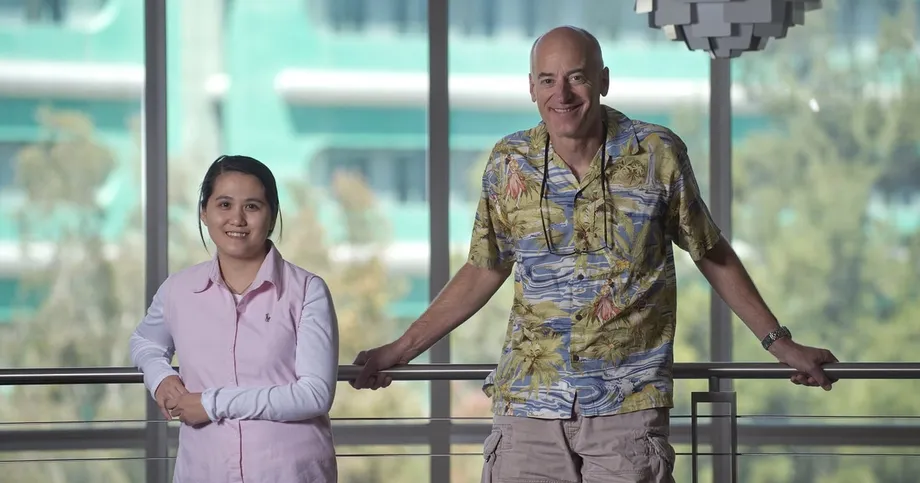
The computing claim concerns the Exponential Time Hypothesis (ETH), proposed in 1999. OpenAI says its model found an algorithm that contradicts the hypothesis by solving a particular family of logic problems faster than the hypothesis allows. Two researchers who helped propose ETH, Russell Impagliazzo and Ramamohan Paturi, will lead an independent examination alongside MIT professor Ryan Williams.
In mathematics, the company claims to have proved Christopher Sogge's local smoothing conjecture, proposed in 1991, for the Euclidean wave equation in every spatial dimension of at least two. OpenAI says the argument also produces results on the Kakeya conjectures and Stein's restriction conjecture, connecting the movement of waves with difficult questions about geometry and frequencies.
The physics claim concerns the mathematical existence of certain interacting quantum field theories in four dimensions, including quantum chromodynamics (QCD), which describes interactions between quarks and gluons. OpenAI also says the work covers pure Yang-Mills theory and a particular unified completion of the Standard Model of particle physics.
Independent review is the next step across the three projects. Researchers will examine the arguments, their assumptions and the precise mathematical statements they address. The announcement gave no deadline for completing those reviews or releasing the withheld physics materials.
What the wave proof claims to explain
Sogge's local smoothing conjecture concerns how strongly waves can concentrate as they move. A wave can become sharply focused at a particular moment. The conjecture describes mathematical limits on that concentration when its behavior is measured over a stretch of time.
Think of watching a wave through a sequence of photographs rather than judging it from its most dramatic frame. A single image might show an intense peak, while the sequence reveals how briefly that peak lasts. Mathematicians express this relationship through estimates for solutions of the wave equation, the equation used to describe how waves travel.
OpenAI says its argument introduces a new auxiliary partial differential equation. Such an equation describes how quantities change across space and time; an auxiliary equation serves as an additional tool for studying the original problem. The company says this approach establishes the desired estimates across every spatial dimension of at least two.
The claimed scope extends a major earlier milestone. Larry Guth, Hong Wang and Ruixiang Zhang proved local smoothing in two spatial dimensions in 2019. OpenAI's announcement concerns a general argument covering higher dimensions as well, rather than another result limited to a single dimension.
How geometry and frequencies enter the claim
The Kakeya problem asks how small a set containing a line segment of unit length in every direction can be. Its difficulty comes from the difference between ordinary volume and mathematical dimension. A set can occupy very little volume while retaining a complicated structure that mathematicians measure through dimension.
Hong Wang and Joshua Zahl established a major result on the Kakeya conjecture in three dimensions in 2025. OpenAI says its new wave argument yields both the Kakeya maximal conjecture and the Kakeya dimension conjecture across dimensions, extending the reach far beyond that earlier milestone if the proof survives review.
Stein's restriction conjecture belongs to the same network of problems. It concerns how frequency information behaves when restricted to curved surfaces. OpenAI's detailed description claims spherical restriction estimates throughout the interior of the conjectured range. That wording specifies the range of estimates researchers will need to examine when assessing the broader claim about Stein's conjecture.
Why the computing result matters
The Exponential Time Hypothesis concerns Boolean satisfiability, a problem built from variables that can be true or false. A formula sets rules for combining those variables, and the task is to find whether any assignment of values makes every rule hold.
In 3-SAT, each clause contains at most three terms. A clause might require that at least one of three statements be true, while the full formula requires every clause to be satisfied. As the number of variables grows, the number of possible assignments doubles with each additional variable: 10 variables allow 1,024 assignments, while 20 allow 1,048,576.
ETH holds that, in the worst case, solving 3-SAT requires time that grows exponentially with the number of variables. Impagliazzo, Paturi and Francis Zane helped formulate the hypothesis in 1999. Researchers have since used it as an assumption for explaining why many problems in graph theory, computational biology, databases and computational geometry resist faster solutions.
OpenAI's claim is more specific than a general promise of quicker computing. The company says its model produced a deterministic algorithm that exactly counts satisfying assignments for formulas in conjunctive normal form with a fixed clause width. Conjunctive normal form means an arrangement of clauses that must all hold; fixed width places a constant limit on the number of terms in each clause.
The claimed algorithm uses subexponential time and polynomial space. Subexponential growth is slower than the exponential growth ETH requires for 3-SAT. Polynomial space means its memory requirement is bounded by a fixed power of the input size. Counting satisfying assignments also answers the simpler existence question: a count above zero means the formula can be satisfied.
What researchers must work out about the algorithm
Hundreds of papers use ETH to derive conditional limits on algorithms. Their conclusions typically take the form: if ETH holds, a particular problem cannot be solved within a specified time bound. An accepted refutation would require researchers to revisit the assumptions supporting those limits.
Practical computing presents another task. Researchers would need to understand the algorithm's constants, implementation requirements and behavior on inputs of useful sizes. A better mathematical growth rate can still involve substantial computing time, especially for the problem sizes encountered in actual applications.
P versus NP asks a different question: whether every problem whose proposed answer can be checked efficiently can also be solved efficiently. In that setting, efficiently generally means polynomial time. A subexponential algorithm occupies a broader category, so the review will focus on the exact speed claimed and its consequences for ETH.
Impagliazzo and Paturi, both at the University of California, San Diego, and Williams will organize the independent examination. In their open letter to the research community, the three computer scientists described the care required:
Our involvement should not be taken as certification of the claim. A result of this significance requires careful, independent scrutiny,
Physics tackles the foundations of particle theories
Quantum field theory describes particles and their interactions through fields spread across space and time. OpenAI's physics claim concerns interacting theories containing gauge fields and fermions in four dimensions, ordinarily understood as three dimensions of space and one of time.
QCD describes the strong interaction between quarks and gluons. Quarks are constituents of protons and neutrons, while gluons carry the strong force. Physicists already use QCD to explain observed behavior. The mathematical task here is to construct the theory rigorously and establish that its defining objects exist under precise conditions.
OpenAI says the work builds on an approach developed by Tadeusz Balaban in constructive quantum field theory. This field seeks mathematically controlled constructions of quantum theories, providing a foundation for the quantities physicists calculate.
Pure Yang-Mills theory is also included in the claim. The Clay Mathematics Institute's Yang-Mills Existence and Mass Gap problem requires both a rigorous construction and a positive mass gap, meaning a minimum positive energy separating the vacuum from the lightest excitation. The result announced by OpenAI addresses existence; the mass gap requirement remains a further part of the prize problem.
Gross, who received the Nobel Prize in Physics in 2004, will lead the physics group. Its other members are Michael Douglas, Arthur Jaffe, Igor Klebanov and Nikita Nekrasov. At the group's request, the AI materials are being withheld while the researchers prepare their own account of the work.
The sequence from model output to announcement
OpenAI places the claimed discoveries across September and October 2026. The sequence separates the generation of written arguments from their later formalization in Lean, a system that checks proofs expressed in a precise mathematical language.
- September 9: The model generated the claimed existence proof for pure Yang-Mills theory.
- September 18: The model generated the claimed QCD proof.
- October 6: OpenAI released 722 mathematics manuscripts in an earlier research release.
- October 16: The model generated the ETH refutation, and the Yang-Mills existence proof completed Lean formalization.
- October 17: The ETH argument completed Lean formalization.
- October 18: The model generated the local smoothing argument.
- October 19: The mathematics argument completed Lean formalization.
- October 26: OpenAI announced the three projects and their review arrangements.
The mathematics and computer science write-ups and formal proof materials were made public through GitHub. The physics group chose a different sequence, with its explanation preceding the release of the underlying AI material.
How formal checking fits into scientific review
Lean allows a proof to be written as a sequence of precise statements checked by software against definitions and logical rules. This makes it possible to inspect complicated reasoning at a level of detail that is difficult to maintain in ordinary prose.
Human reviewers also examine how the formal definitions match the original research question, which assumptions the proof uses and how its result connects to earlier work. For the computing claim, that includes understanding the algorithm and its running time. For the wave claim, it includes the dimensions and ranges of estimates covered.
OpenAI describes the model output as raw research data that needs to be turned into scientific understanding. Its three release arrangements assign that work differently: open examination for mathematics, an organized group alongside public access for computer science, and an initial explanation by a selected group for physics.
Williams said the computing reviewers signed no confidentiality agreements and would receive no payment. OpenAI agreed to their requests to release the raw ETH data and fund a conference where researchers could examine the claim. External participants are free to reach and publish conclusions independently of the company.
Access, funding and credit become part of the debate
OpenAI's announcement follows criticism of its earlier release of hundreds of mathematics manuscripts and the work required to assess them. The new arrangements bring named academics into the process, while also creating a debate over who receives access first.
The company's AGMAI mathematics advisory panel recommended against giving selected researchers early access to AI results. Its concerns included unequal access, selection bias and the possibility that prominent researchers' reputations could lend credibility to work before examination was complete.
The panel recommended releasing output through scholarly repositories, including Lean formalizations and information about how problems were chosen. It also called for support for researchers who check and explain the results. The contrast with the withheld physics materials makes access a concrete issue in this announcement.
OpenAI says it is not seeking academic credit for the discoveries and wants researchers to receive recognition for the explanations they produce. The computing reviewers' letter asks how credit should recognize discovery alongside checking, repairing, simplifying, explaining and extending a result. It also asks how students and researchers can be supported as research methods change.
A previously announced $5 million contribution to the Simons Foundation is intended to support workshops, conferences and research programs around AI results. Funding those activities would help distribute the work of examination beyond the small groups named in the announcement.
Key Points
- OpenAI announced three claimed breakthroughs on October 26, 2026. Independent examination is still required.
- The mathematics claim covers local smoothing in every spatial dimension of at least two, with further claimed Kakeya and restriction results.
- The computing claim proposes an algorithm that would refute the Exponential Time Hypothesis if verified.
- Russell Impagliazzo, Ramamohan Paturi and Ryan Williams are leading the independent ETH examination.
- David Gross is leading the physics review, which covers claimed existence proofs including QCD and pure Yang-Mills theory.
- Mathematics and computing materials are public. Physics materials are being withheld while researchers prepare an explanation.
- No deadline was announced for completing the reviews or releasing the physics materials.