Deep underground heat opens a new energy possibility
Singapore has identified geothermal resources with preliminary potential exceeding 60 times its current annual electricity consumption, prompting a further study into whether heat several kilometres underground can supply electricity, industrial heating and cooling.
Contents
- Deep underground heat opens a new energy possibility
- What the 60 years comparison means
- How the survey mapped resources without drilling
- What researchers have found in Admiralty and Sembawang
- How hot rocks could produce electricity
- Safety and urban space will shape the choices
- Shallower heat could serve factories
- Why a local energy source matters
- What the next study must resolve
- Key Points
The Energy Market Authority (EMA) announced the findings on October 26, 2026, following a nationwide geophysical survey conducted between 2024 and 2026. The survey examined underground resources at depths of up to 10 kilometres without drilling or excavating the ground.
Singapore currently consumes around 60 terawatt-hours of electricity a year. Multiplying that figure by 60 gives 3,600 terawatt-hours, illustrating the scale of the preliminary resource estimate. How much electricity Singapore could actually obtain will depend on further assessments of extraction technology, cost, safety and space for plants.
Tan See Leng, Minister for Energy, Trade and Industry responsible for energy and industry, announced the next study at the opening of Singapore International Energy Week. He described the findings as a promising start, while saying a decision on developing geothermal energy could still take years.
EMA has appointed Surbana Jurong and energy consultancy GLJ Ltd to assess the deployment of next generation geothermal plants. Their study is scheduled to begin by the end of 2026 and take about 15 months.
What the 60 years comparison means
EMA's estimate compares the potential energy resource underground with the electricity Singapore uses in one year. A terawatt-hour measures a quantity of electricity, just as a litre measures a quantity of water. The estimate therefore describes a possible energy total rather than the output of a proposed power station.
A working geothermal system would need to collect underground heat, bring it to the surface and convert it into electricity. Its useful output would depend on how much heat can be recovered and how quickly the system can recover it.
Singapore's current consumption provides the reference point for the comparison. Future electricity demand and the eventual pace of extraction would determine how long a developed resource could contribute to national supply.
The next study will test the preliminary estimates and establish a clearer picture of the usable resource. For households and businesses, the practical issue is how much dependable electricity plants could supply at an acceptable cost.
How the survey mapped resources without drilling
Chevron, Metatek Group and Surbana Jurong formed the consortium behind the nationwide survey. It used two methods involving a special aircraft and ground sensors to investigate Singapore's underground geology.
Metatek collected and processed the survey data. Chevron then used the processed information to build three dimensional models of geological structures and heat resources. These models provide a picture of what may lie beneath the surface and help researchers assess where further investigation would be useful.
EMA said the survey identified resources at high temperatures several kilometres underground that may be suitable for electricity generation. It also found resources at lower temperatures closer to the surface, potentially useful for industrial heating and cooling.
The follow-up work will move from mapping potential resources towards assessing practical development. Surbana Jurong and GLJ will identify areas for further assessment, potentially involving drilling to examine underground conditions more directly.
What researchers have found in Admiralty and Sembawang
Academic research has already identified locations worth investigating. In March 2023, researchers from Nanyang Technological University (NTU) and TUMCREATE found a temperature of 70 degrees Celsius at a depth of 1.12 kilometres in Admiralty.
TUMCREATE is a research platform of the Technical University of Munich. The Admiralty finding gave researchers a measured temperature at a specific depth, providing a local reference point for studying how heat increases farther underground.
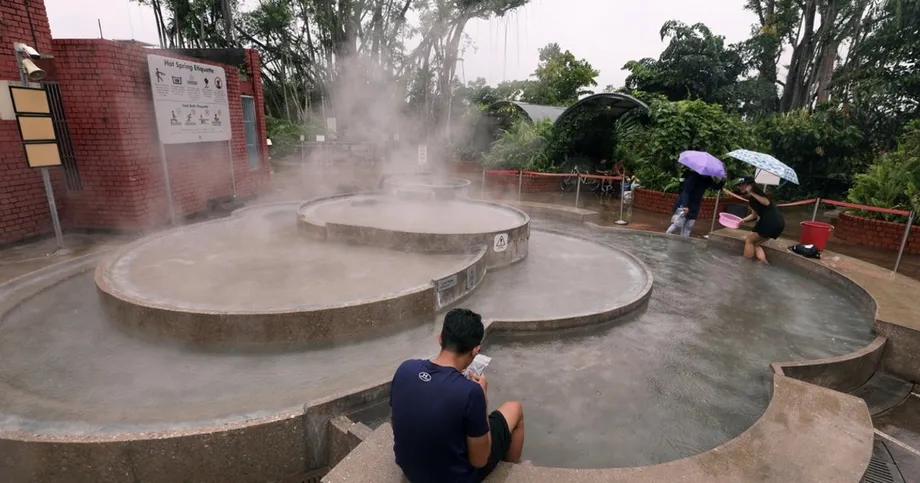
Further findings of high underground temperatures in Sembawang were reported in July 2025. Pulau Tekong is another location of interest, with a known hot spring in its northern Unum region. Admiralty, Sembawang and Pulau Tekong have consequently emerged as possible areas for geothermal investigation.
According to NTU's research announcement, the joint project involved two boreholes in Sembawang and recorded temperatures reaching 122 degrees Celsius at a depth of 1.76 kilometres. The study was conducted by NTU and TUMCREATE in collaboration with Surbana Jurong, with support from the National Research Foundation and EMA. The research team was led by Professor Alessandro Romagnoli from the Energy Research Institute @ NTU and Dr Tobias Massier from TUMCREATE.
The Sembawang measurement was taken about 600 metres from Sembawang Hot Spring. Based on rock core analysis and temperature gradients, the researchers assessed heat flow in northern Singapore to be at least twice the global continental average. Both the Admiralty and Sembawang sites sit on Simpang granite, whose naturally occurring heat-generating elements could contribute up to about 40 percent of the heat flow measured at the surface.
If the measured temperature gradient remains unchanged, the researchers estimate that temperatures could reach 230 degrees Celsius at a depth of 5 kilometres, above the minimum of 150 degrees Celsius typically needed for electricity generation. That projection provides a basis for further investigation, rather than a temperature measurement at that depth.
Singapore's research and policy milestones now span several years:
- 2022: An energy outlook identified emerging technologies, including nuclear and geothermal energy, as possible contributors to supply by 2050.
- March 2023: NTU and TUMCREATE researchers found 70 degrees Celsius at a depth of 1.12 kilometres in Admiralty.
- 2024 to 2026: The nationwide survey mapped geology and heat resources at depths of up to 10 kilometres.
- July 2025: Further findings in Sembawang recorded temperatures reaching 122 degrees Celsius at a depth of 1.76 kilometres.
- October 26, 2026: EMA announced the preliminary national estimate and the next feasibility study.
- By the end of 2026: The study by Surbana Jurong and GLJ is scheduled to begin, lasting about 15 months.
How hot rocks could produce electricity
Traditional geothermal production draws on naturally occurring reservoirs of hot water underground. Such resources are found in volcanically active regions, including Iceland and parts of the United States. Singapore's potential resource could instead involve hot rock deep underground that is dry and has few natural fractures.
Deep geothermal systems offer ways to collect heat from that rock. One approach sends fluid underground, allows it to absorb heat and brings it back to the surface. The recovered heat can then be used to drive equipment that generates electricity.
Mark Lim, an adjunct research scientist at the Energy Research Institute @ NTU, explained that collecting sufficient heat through this approach may involve widening existing fractures or creating new cracks in the rock. Fluid can then move through a larger area of hot rock and absorb more heat.
Lim also described an alternative using a series of closed pipes underground. Fluid circulates inside the pipes, picks up heat and carries it to the surface without mixing directly with the surrounding rock. This is called a closed-loop system.
Safety and urban space will shape the choices
Lim said widening or creating underground fractures carries risks of tremors, earthquakes and other safety problems. The way a geothermal system interacts with the rock is therefore a central engineering choice for Singapore.
Tan said Singapore's dense urban environment would also affect how many geothermal plants could practically be deployed. Even where heat is available underground, development requires suitable locations for drilling and equipment at the surface.
The minister put safety at the centre of the assessment:
"Most importantly, we must keep safety as a top-of-mind consideration," he said.
Surbana Jurong and GLJ will examine safety alongside technical, environmental and commercial feasibility. Their work will consider whether deep geothermal systems can operate in local conditions and what producing useful energy would cost.
Deep drilling is another major factor. Tan said eventual electricity production would depend on the cost and technical feasibility of accessing resources several kilometres underground, as well as the pace of improvements in drilling technology.
Shallower heat could serve factories
EMA's survey identified a second possible use for geothermal resources: supplying industrial heating and cooling from heat at lower temperatures and shallower depths.
Heat pumps move heat from one place to another using electricity. Depending on their design and application, they can raise the temperature of heat collected from the ground or transfer unwanted heat away from a process. Their value depends on matching underground conditions with the temperatures a user needs.
Absorption chillers take a different route. They use heat to drive a cooling cycle, allowing a heat source to help produce chilled water for cooling. This explains why underground heat can be relevant to cooling as well as heating.
The study will assess electricity, heating and cooling together. A useful resource for a factory may have different temperature and operating requirements from a resource intended to generate electricity for the national grid.
Why a local energy source matters
EMA chief executive Puah Kok Keong described geothermal energy as a source of clean energy available within Singapore that could provide continuous power. If viable for electricity generation, he said, it could strengthen energy resilience, diversify supply and support efforts to reduce carbon emissions from the power sector.
Singapore generates about 95 percent of its electricity using natural gas. The importance of dependable fuel supplies was illustrated by the Indonesian gas supply reduction that began on October 24, two days before the geothermal announcement. EMA put that temporary reduction at less than 2 percent of national daily gas demand and said sufficient energy supplies were available.
Geothermal development addresses a longer planning horizon. Heat extracted within Singapore could provide another source of energy alongside supplies dependent on fuel imports. The immediate work is to establish whether local conditions allow that resource to be developed safely and economically.
A 2022 energy outlook estimated that emerging technologies, including nuclear and geothermal energy, could potentially supply around 10 percent of Singapore's energy needs by 2050. That figure grouped emerging technologies together and described a possible contribution to future supply.
What the next study must resolve
Surbana Jurong and GLJ's assessment will connect the geological estimate with the requirements of an operating energy system. Its central tasks include examining suitable technologies, identifying areas for further investigation and assessing production costs and environmental considerations.
Singapore has not decided whether to develop geothermal power. Tan said reaching that decision could take many years, placing the coming study within a longer period of investigation rather than a timetable for plant construction.
The minister nevertheless said Singapore would continue examining the option seriously:
"No option is off the table for us here in Singapore. We will therefore explore this option seriously," he said.
The preliminary survey has given Singapore a substantial resource estimate to investigate. The next stage will determine how closely that underground potential can match the country's needs for dependable electricity, useful industrial heat and cooling.
Key Points
- EMA estimates Singapore's geothermal potential at more than 60 times current annual electricity consumption of about 60 terawatt-hours.
- The nationwide survey conducted from 2024 to 2026 examined resources at depths of up to 10 kilometres without drilling.
- NTU and TUMCREATE research recorded temperatures reaching 122 degrees Celsius at a depth of 1.76 kilometres in Sembawang.
- Surbana Jurong and GLJ will undertake a feasibility study scheduled to start by the end of 2026 and last about 15 months.
- The assessment will cover safety, technology, environmental considerations, commercial feasibility and production costs.
- Resources at lower temperatures may support industrial heating and cooling.
- Singapore has made no decision to develop geothermal power, and a decision could take years.