Eleven runs in one inning send Japan toward another title
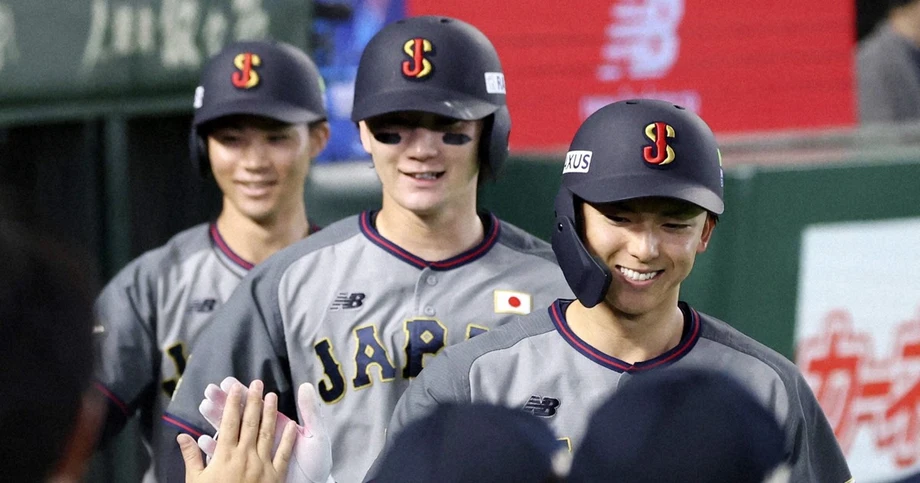
Japan scored 11 runs before Australia recorded its first out on November 14, 2026, turning its final round robin game at Tokyo Dome into a 16-1 victory and securing a place in the Asia Professional Baseball Championship final. South Korea later beat Taiwan 6-4 to claim the other place, setting up a championship game against Japan on November 15 at 7 p.m. local time.
Contents
- Eleven runs in one inning send Japan toward another title
- How Australia lost control of the first inning
- Muneyama and Masaki keep hitting home runs
- Takeuchi stays composed after a long wait
- Japan adds a final run and uses its bench
- South Korea wins the race for second place
- The results that shaped the final
- A young squad faces one last test
- Key Points
The official tournament schedule confirms that the Australia-Japan game was scheduled for noon on November 14, 2026, and records Japan's 16-1 victory. It also lists Japan against South Korea in the final on November 15 at 7 p.m. local time.
Rui Muneyama hit a grand slam during an opening inning that lasted about 40 minutes. Tomoya Masaki and Seiya Watanabe added home runs in the next two innings, while starter Natsuki Takeuchi allowed just one hit over four innings. Japan finished the preliminary stage with three wins from three games and will seek its third consecutive title after winning the tournament in 2017 and 2023.
The Nippon Professional Baseball scorecard records a crowd of 33,711, a start time of 12:02 p.m. and a finish at 2:39 p.m. The contest ended after seven innings under a tournament rule that stops a game when one team leads by at least 10 runs at that point.
Japan's winning margin was 15 runs. Its earlier victories, 5-0 against Taiwan and 9-5 against South Korea, meant it completed the preliminary stage with 30 runs scored and six conceded. Australia alone accounted for more than half of Japan's runs across those three games.
How Australia lost control of the first inning
Masaki opened with a walk, and Muneyama singled to right field to put runners on first and third. Misho Nishikawa then reached on a third baseman's error, allowing the opening run to score. Koki Yamaguchi followed with a run scoring double, and Watanabe added a single that made it 3-0.
Australia changed pitchers, but Japan continued putting runners on base. A walk to catcher Taiga Kojima loaded the bases, and Tai Sasaki's infield hit brought home another run. Shunsuke Sasaki, Yudai Shoji and Masaki then drew three consecutive walks with the bases loaded, pushing the score to 7-0.
A walk normally gives a batter first base. When all three bases are occupied, every runner must move forward, so the runner on third comes home. Australia's loss of pitching control therefore gave Japan three runs without requiring a hit.
Muneyama, batting second in the order, returned to the plate with the bases still full and drove the ball over the fence in right center field. His grand slam scored four runs and made it 11-0. Nishikawa then singled before Australia finally recorded an out against Japan's 13th batter of the inning.
Japan sent 15 batters to the plate and collected six hits and five walks in the inning. Australia used three pitchers just to complete those first three outs. Japan even made an early substitution, bringing on Konosuke Tatsumi to run for Nishikawa.
Muneyama and Masaki keep hitting home runs
Muneyama's grand slam was his fourth home run of the tournament and extended his streak of games with a homer to three. Masaki matched both achievements in the second inning, hitting a home run to left field with a runner aboard to stretch Japan's lead to 13-0.
Muneyama, of the Rakuten Eagles, and Masaki, of the SoftBank Hawks, had each homered in every preliminary game. Together, they supplied eight of Japan's 10 tournament home runs through the Australia game, or 80 percent of the team's total.
Watanabe, of the Seibu Lions, joined them in the third inning. Yamaguchi doubled before Watanabe hit his first home run of the competition, a shot to left center field that made the score 15-0. Japan's three home runs against Australia brought in eight runs, exactly half its total for the game.
Japan also reached at least 10 hits for the third consecutive game, finishing with 11 against Australia. The first inning showed why the attack was difficult to contain: walks, an error and shorter hits had already produced seven runs before Muneyama delivered the biggest swing.
Takeuchi stays composed after a long wait
Takeuchi had to wait through Japan's lengthy opening attack before throwing his first pitch. His first three pitches missed the strike zone, but he recovered to retire Australia's first three batters and then worked two more innings without allowing anyone to reach base.
Brent Iredale broke through with two outs in the fourth, hitting a solo home run to right center field. It was the only hit Takeuchi allowed. The Seibu pitcher finished with four strikeouts, no walks and one run conceded in four innings.
The official game log shows three relievers, Taichi Takahashi, Ryu Kutani and Kengo Matsumoto, following Takeuchi with one scoreless inning each. Australia finished with two hits, its second coming in the seventh inning.
Matsumoto faced Australia's last threat after a walk and a single put runners on first and second with one out. He escaped with a fly ball to right and a foul catch by the catcher, completing the seven innings required for the mercy rule to take effect.
Japan adds a final run and uses its bench
Tai Sasaki drove in Japan's 16th run in the fifth inning after a single by Shu Yamagata and a walk to Yuya Shindo. Samurai Japan's official match report describes Sasaki's hit as a double, while its official play by play records a single to center. Both credit him with the run that completed the scoring.
Japan's large lead gave manager Tsutomu Iguchi room to make changes. Shion Matsuo appeared as a pinch hitter, Shindo entered at catcher, and Yamagata joined the infield. Iguchi said every position player on the roster had now appeared in the tournament.
Iguchi, speaking in comments published in Samurai Japan's match report, described the game as useful preparation for the final. In remarks translated from Japanese, he said:
Today, all the position players were able to appear in games in this tournament, and we were able to prepare well.
Iguchi also praised the team's start after a night game against South Korea on November 13 left limited rest before the afternoon meeting with Australia. His team completed the preliminary stage without needing to extend its starting pitcher beyond four innings in the last game.
South Korea wins the race for second place
South Korea's 6-4 victory over Taiwan later on November 14 settled Japan's opponent. Korea, Taiwan and Australia all finished with one win and two losses, leaving the standings to be decided by Team Quality Balance, usually shortened to TQB.
The official tournament rules rank teams first by winning percentage, then by TQB across all three preliminary games. If teams remain tied, the next measures are ER-TQB, which uses earned runs, then batting average and finally a coin toss.
TQB compares how often a team scores with how often it allows opponents to score. The calculation divides runs scored by innings played on offense, then subtracts runs allowed divided by innings played on defense. Using innings accounts for games of different lengths, including contests shortened by the mercy rule.
After Japan's win over Australia and before the Korea-Taiwan game, Australia's final TQB was -0.640. South Korea stood at -0.333 and Taiwan at -0.167, each with one game remaining. Those figures meant the winner of their meeting would claim the remaining place in the final, regardless of the winning margin.
The tournament applied that measure across the three preliminary games. South Korea finished second, Taiwan third and Australia fourth. Japan's heavy defeat of Australia had reduced Australia's position in that calculation, giving Korea an opening despite its first two losses.
Before the evening game, Taiwan could have secured its place in the final simply by beating Korea. Instead, Korea's victory created the three way tie and earned it a second meeting with Japan. Taiwan and Australia will play for third place on November 15.
The results that shaped the final
Japan's route to the championship game combined a shutout, a closer contest against its eventual final opponent and the tournament's first mercy rule victory. The competition runs from November 12 to 15, with all games at Tokyo Dome.
- November 12: Japan beat Taiwan 5-0 in its opening game.
- November 13: Japan defeated South Korea 9-5 to move to two wins.
- November 14, afternoon: Japan beat Australia 16-1 in seven innings and completed the preliminary stage unbeaten.
- November 14, evening: South Korea defeated Taiwan 6-4 and advanced on TQB after three teams finished with one win and two losses.
- November 15: Japan faces South Korea in the final at 7 p.m. local time. Taiwan meets Australia in the third place game.
Japan scored nine runs against Korea in their first meeting but also conceded five, compared with just one run across its other two games combined. Korea therefore returns to the final having produced the strongest scoring performance against Japan in the preliminary stage.
A young squad faces one last test
The Asia Professional Baseball Championship is built mainly around players aged 24 or younger, or within their first three years as professionals. Each team can also select up to three older players aged 29 or younger. The format gives developing professionals a chance to play international games with a title at stake.
Japan's group began its preparations at a Miyazaki training camp on November 3. Its last assignment is now a final against a Korean side that recovered from two defeats to qualify. Japan has already beaten every other participant, but the title will be decided by one more game.
Watanabe, whose third inning home run helped finish off Australia, said the team needed to carry its approach into a different kind of contest. In comments translated from Japanese, the Seibu infielder said:
I don't think tomorrow will be a game like today's, so I want to value each run and build them up one by one.
Japan enters that game with two hitters on four home runs apiece, three consecutive games with at least 10 hits and a pitching staff that limited Australia to two hits. South Korea arrives with a fresh victory and another opportunity against the team that beat it 9-5 a day earlier.
Key Points
- Japan defeated Australia 16-1 at Tokyo Dome on November 14, ending the game after seven innings under the mercy rule.
- Japan scored 11 runs before Australia's first out, including Rui Muneyama's grand slam.
- Muneyama and Tomoya Masaki each hit their fourth home run of the tournament and homered in three consecutive games.
- Natsuki Takeuchi allowed one hit and one run in four innings, with four strikeouts and no walks.
- South Korea beat Taiwan 6-4 and qualified through Team Quality Balance after three teams finished with one win and two losses.
- Japan will seek its third consecutive title against South Korea on November 15 at 7 p.m. at Tokyo Dome.