Half the workforce sent home as pollution worsens
Delhi Environment Minister Manjinder Singh Sirsa directed 50% of the workforce in his departments to work from home on Friday, November 13, 2026, as the capital's Air Quality Index reached 403 in the morning and stood at 373 by 4 pm. Essential services will continue operating as usual.
Contents
- Half the workforce sent home as pollution worsens
- Which employees will work remotely?
- How Stage III supports the decisions
- From October restrictions to November remote work
- What the monitoring stations recorded
- Why reducing commuting targets a major source
- Smog affects travel and daily life
- Why children face particular risks
- Forecast points to more very poor air
- Key Points
Transport Minister Pankaj Singh also ordered remote working arrangements across departments under his charge, including Health and Family Welfare and Information Technology. The decisions bring changes to government workplaces while residents face thick smog, reduced visibility and complaints of breathing difficulties.
Sirsa's instructions cover departments responsible for Environment, Food and Civil Supplies, Industries, and Forest and Wildlife. Officials described the arrangement as part of the response under Stage III of the Graded Response Action Plan, known as GRAP, which allows authorities to consider operating offices with half their employees present and the remainder working remotely.
The city average concealed much worse conditions in individual neighbourhoods. At 8 am, 33 of the 58 monitoring stations reporting data recorded severe air quality. IIT Delhi registered 488, Chandni Chowk 479 and Delhi University's North Campus 478. By late afternoon, 16 of 59 stations still recorded severe pollution.
Which employees will work remotely?
Department heads have discretion over remote working arrangements under the Commission for Air Quality Management's guidance. A government official explained how that authority applies and identified the exemption for essential services:
Going by CAQM guidelines on air quality, heads of departments are free to take decisions regarding allowing work from home. Essential services will not be covered in this.
Employees therefore need their department's instructions to know whether they should attend the workplace. Sirsa's direction specifies a 50% workforce arrangement; Singh's departments were also told to adopt remote working. The essential service exemption means departments such as Health and Family Welfare must maintain necessary operations while arranging remote work where permitted.
The November 13 decisions concern departments under the two ministers. The revised GRAP schedule also allows the central government to consider remote working for its employees, but no confirmed central government decision or end date for these departmental arrangements was given.
How Stage III supports the decisions
The Commission for Air Quality Management, or CAQM, coordinates pollution controls across Delhi and the National Capital Region. Under Stage III, it asks Delhi and neighbouring state governments to consider allowing public, municipal and private offices to operate with 50% of employees present, with the rest working from home.
GRAP is a series of emergency measures that becomes stricter as pollution worsens. Stage III corresponds to the severe AQI range of 401 to 450, although forecasts can prompt action before the city average reaches that threshold. Delhi and the surrounding region had already entered Stage III on November 6, when authorities introduced vehicle and construction restrictions as a precaution before Diwali.
AQI translates measurements of pollutants into a scale that is easier to understand. The Central Pollution Control Board classifies readings from 301 to 400 as very poor and 401 to 500 as severe. The narrower range of 401 to 450 identifies the Stage III band within that broader severe category.
Delhi has used a wider workplace direction before. An order described in coverage published on November 25, 2025, required government and private offices to operate with half their employees present, taking immediate effect and lasting while Stage III remained in force. That earlier measure applied across offices; the November 2026 instructions described here came from individual ministers for their departments.
From October restrictions to November remote work
Delhi's emergency response has escalated over several weeks. The capital introduced Stage I pollution restrictions on October 21, after its AQI rose from 179 the previous day to 244 at 2 pm. By early November, authorities were responding to substantially worse conditions.
The main dates show how pollution controls and workplace decisions developed:
- October 21, 2026: Stage I took effect across the National Capital Region after Delhi's AQI reached 244.
- November 2: Stage II began as Delhi's daily average AQI reached 324.
- November 6: CAQM invoked Stage III as a precaution; its dashboard showed an AQI of 382 at 4 pm.
- November 13: Sirsa directed half the workforce in his departments to work remotely, and Singh issued similar instructions across his departments.
- November 16: The current forecast period extends through this date, with very poor air also expected during the following six days.
Friday's afternoon average of 373 was nine index points below the 382 recorded a week earlier. Both readings fall in the very poor category, while individual stations recorded much higher values. For residents, the neighbourhood readings help explain why conditions near a home or workplace can feel worse than the city figure suggests.
What the monitoring stations recorded
The CPCB's Sameer app showed Delhi's instantaneous AQI at 403 at 6:05 am on November 13, with the same value recorded at 8 am and 9 am. Another real time reading put AQI at 494 at 7:31 am, although its measurement basis was unspecified. The CPCB city figure was 373 at 4 pm.
At 8 am, 33 of 58 reporting stations were in the severe category, 24 were very poor and one was moderate. Alongside the high readings at IIT Delhi, Chandni Chowk and North Campus, Burari Crossing recorded 456, while ITO and Jawaharlal Nehru University each registered 451.
By 4 pm, IIT Delhi remained the highest reporting location at 452. North Campus recorded 446, Narela and Pusa each registered 437, and Punjabi Bagh recorded 431. Delhi Cantonment was the only station in the moderate category; all other stations outside the severe group were very poor.
The share of reporting stations with severe air fell from about 57%, or 33 of 58, in the morning to about 27%, or 16 of 59, in the afternoon. Pollution eased across parts of the network, but more than a quarter of stations still recorded severe conditions.
Why reducing commuting targets a major source
Vehicles accounted for 31.5% of Delhi's PM2.5 pollution in the real time source estimates attributed to the Air Quality Early Warning System and the Integrated Decision Support System. Transport was the largest contributor in that breakdown, giving the remote working decisions a direct connection to a major source of pollution.
PM2.5 refers to particles measuring 2.5 micrometres or less across. Their tiny size allows them to travel deep into the lungs. Source apportionment is the process of estimating which activities produced the particles in the air, including traffic, burning fuel and chemical reactions in the atmosphere.
Secondary organic aerosols accounted for 24.7% of the estimated pollution mixture. Domestic solid biofuel and dung cake burning, together with biomass and crop residue burning, contributed 20.8%. Secondary inorganic aerosols accounted for 12.7%. Secondary particles form in the atmosphere when gases react, rather than coming out of a source as particles.
The remaining listed contributions were waste burning at 5.6%, firecrackers at 2.2%, industrial emissions at 1.8%, and mineral dust and ash at 0.6%. Remote work can reduce some journeys, while the range of sources explains why the pollution response also includes controls beyond office commuting.
CAQM's earlier assessment before the Supreme Court put transport's contribution at 19% to 24%, drawing together studies conducted between 2015 and 2025. Friday's 31.5% estimate describes a particular pollution mixture; the earlier range combined evidence across a decade. The period, location and calculation method all affect the share assigned to each source.
Smog affects travel and daily life
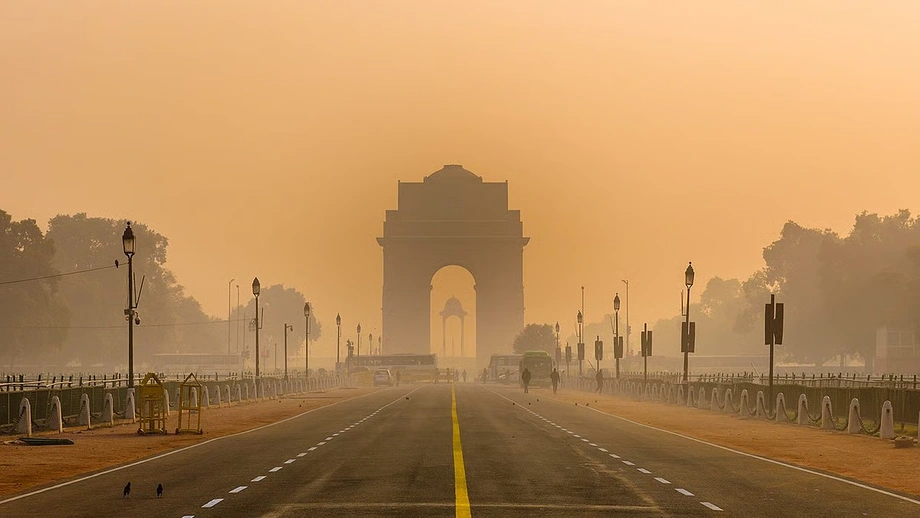
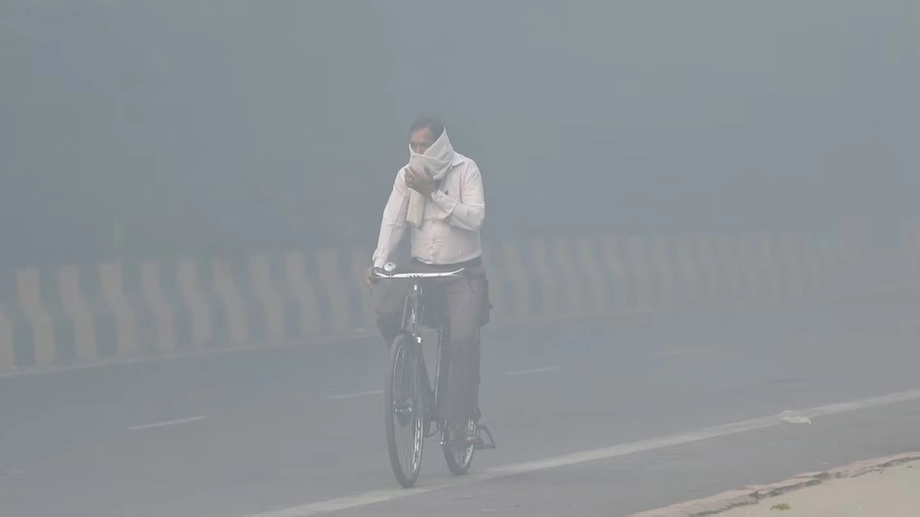
India Gate, Rashtrapati Bhavan and the Central Secretariat were obscured by thick smog on Friday. Reduced visibility complicated road journeys, while residents described throat irritation, persistent coughing, chest discomfort and breathlessness. Some reported respiratory discomfort even indoors.
Weak winds and unfavourable weather allowed pollutants to collect close to the ground during the morning. When air moves slowly, emissions from traffic, burning and other activities can linger around the places where people live and work.
For employees permitted to work remotely, the immediate change is fewer journeys to the office and less time spent travelling through polluted streets. Essential workers and others required to attend their workplaces will continue commuting under the same difficult conditions.
Why children face particular risks
Dr Nikhil Rajvanshi, a consultant paediatric pulmonologist, allergy and sleep specialist at Rainbow Children's Hospital in Delhi, warned that children are especially sensitive to pollution because their lungs, airways and immune systems are still developing.
Children breathe faster than adults and can take in more pollutants relative to their body weight, Rajvanshi explained. PM2.5, nitrogen dioxide and other harmful gases can irritate the airways, causing coughing, wheezing and breathlessness.
Longer exposure can affect lung development, reduce lung function, worsen asthma and increase the risk of respiratory infections, he said. He also pointed to emerging evidence of possible effects on heart health and cognitive development, which includes abilities such as learning and thinking.
Rajvanshi advised parents to watch for persistent coughing, wheezing, unusual tiredness and breathlessness. His advice included limiting outdoor activities during high pollution, avoiding areas with heavy traffic, maintaining better indoor air quality and following prescribed asthma treatment plans.
Forecast points to more very poor air
The Air Quality Early Warning System forecast very poor air through November 16, with the same category expected during the following six days. Friday afternoon's improvement therefore came within a forecast of continuing unhealthy conditions.
Average wind speeds were expected to remain below 10 kilometres per hour, while the ventilation index was forecast to stay below 6,000 square metres per second. The index combines wind speed with the depth of the air layer available to spread pollutants. Lower values mean pollution has less room and movement to disperse.
Delhi also recorded temperatures above the seasonal average despite the smog. The India Meteorological Department put the maximum at 31.4 degrees Celsius, 2.9 degrees above normal, and the minimum at 16.2 degrees, 2.7 degrees above normal. Lodhi Road's minimum of 17.2 degrees was 5.2 degrees above normal.
The forecast keeps attention on department instructions, local air readings and continuing pollution controls. Employees covered by remote working arrangements will have fewer compulsory journeys, while essential services remain operational and residents continue facing very poor or severe air.
Key Points
- Sirsa directed 50% of staff in his departments to work from home on November 13, 2026.
- Singh also ordered remote working arrangements across his departments, including health and information technology.
- Essential services will continue operating as usual.
- Delhi's AQI stood at 373 at 4 pm, while 16 of 59 monitoring stations still recorded severe air.
- Vehicles contributed 31.5% of PM2.5 pollution in the real time source estimates.
- Very poor air was forecast through November 16 and during the following six days.