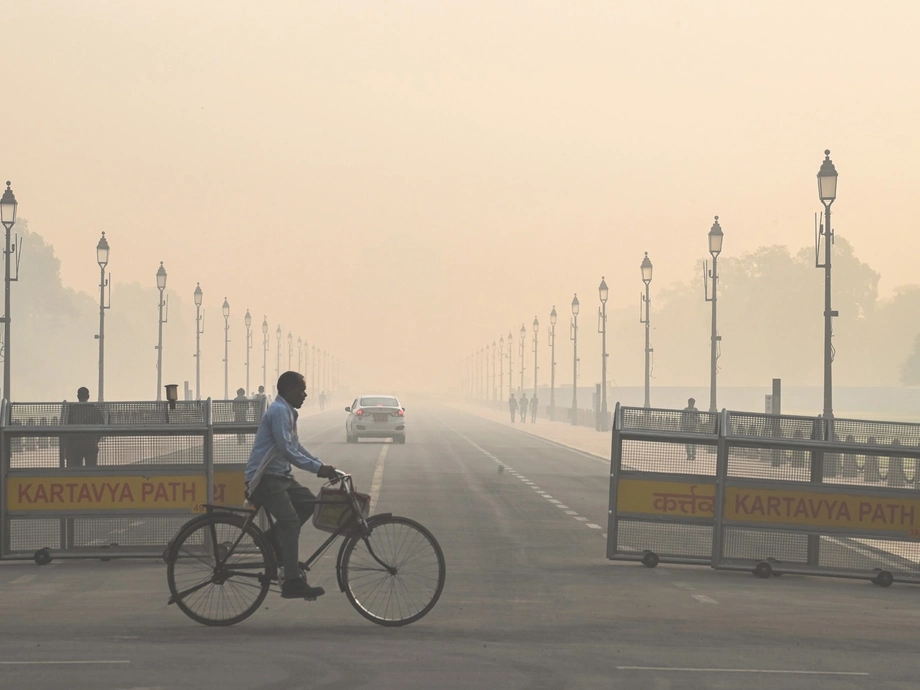
Restrictions arrive before the city average reaches severe levels
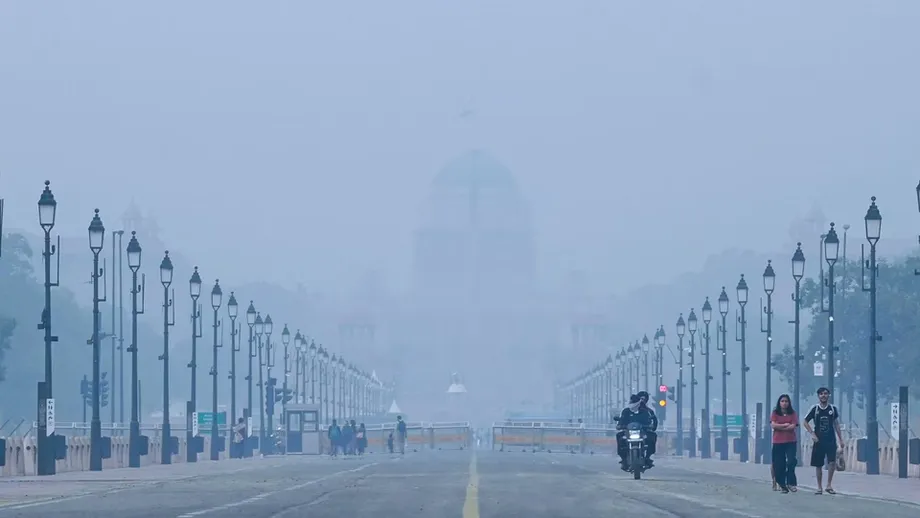
Delhi and the National Capital Region entered Stage III of the Graded Response Action Plan on Friday, November 6, 2026, two days before Diwali, bringing tighter restrictions on older vehicles, construction and other activities that pollute the air. Delhi's Air Quality Index stood at 382 at 4 pm on the Commission for Air Quality Management's live dashboard, while readings at IIT Delhi and Rohini reached 474 each.
Contents
- Restrictions arrive before the city average reaches severe levels
- How quickly did the air deteriorate?
- Why Stage III can begin before AQI reaches 401
- Which vehicles face restrictions?
- Construction curbs target more than demolition
- Schools and offices face different arrangements
- Factories, heating and generators also come under scrutiny
- The Supreme Court turns attention to traffic and crop waste
- Why local pollution and transport options still matter
- Key Points
The city average was in the very poor category, but several neighbourhoods were already recording severe pollution. Punjabi Bagh registered 465, RK Puram 443, ITO 422 and India Gate 403. The gap matters for residents: a city average can conceal much worse conditions around an individual home, school or workplace.
The Commission for Air Quality Management, or CAQM, coordinates the emergency pollution response across Delhi and adjoining parts of Haryana, Uttar Pradesh and Rajasthan. Its GRAP subcommittee announced the decision as a preventive step:
CAQM Sub-Committee on GRAP decides to invoke GRAP III in Delhi NCR as a precautionary measure.
Stage I and Stage II measures remain in force alongside the new restrictions. The decision affects daily journeys between Delhi and its surrounding cities, work at construction sites, deliveries by older diesel vehicles and arrangements for children in primary school.
The immediate aim is to reduce emissions before the holiday brings further pressure. The Indian Institute of Tropical Meteorology forecast severe air quality around November 7 to 9, covering the Diwali weekend. Its subsequent outlook also pointed to conditions ranging from severe to very poor.
How quickly did the air deteriorate?
Delhi's pollution rose sharply during the first week of November. The Central Pollution Control Board's figures put the daily average AQI at 324 on November 2, when Stage II restrictions began. By Friday morning, the average was 389, compared with 367 on Thursday.
The early November sequence shows why authorities escalated the response:
- October 31: Delhi's AQI was reported at 117.
- November 1: The reading rose to 261, entering the poor category.
- November 2: The daily average reached 324, and Stage II was imposed.
- November 6: CAQM invoked Stage III; its dashboard showed 382 at 4 pm.
- November 7 to 9: IITM forecast severe air quality around Diwali on November 8.
The increase from 324 on November 2 to 382 on Friday afternoon was 58 index points. AQI is a scale that translates pollutant concentrations into a public health warning, so a change in index points is different from an equivalent percentage change in the amount of pollution.
Accounts of whether the city average had already crossed 400 conflict. The time specific dashboard reading was 382, while another account placed Delhi above 400 for a second consecutive day. Monitoring stations across several neighbourhoods nevertheless recorded severe conditions.
Why Stage III can begin before AQI reaches 401
GRAP is an emergency framework with four stages. Each stage adds measures as pollution worsens, while forecasts allow authorities to act before the next threshold is reached. CAQM reviews predictions from the India Meteorological Department and IITM when deciding whether to tighten restrictions.
The framework uses these thresholds:
- Stage I: AQI from 201 to 300, classified as poor.
- Stage II: AQI from 301 to 400, classified as very poor.
- Stage III: AQI from 401 to 450, classified as severe.
- Stage IV: AQI above 450, described in the response plan as severe plus.
CPCB's broader public AQI classification calls readings from 401 to 500 severe. GRAP divides that dangerous range further to determine when stronger emergency measures should begin. The regional decision also takes account of Delhi's wider air quality situation and forecast, rather than automatically following the highest reading at any single station.
Which vehicles face restrictions?
BS-III petrol and BS-IV diesel light motor vehicles face restrictions in Delhi and the NCR districts of Gurugram, Faridabad, Sonipat, Ghaziabad and Gautam Buddha Nagar, which includes Noida. Bharat Stage standards set limits on pollutants emitted by vehicles. The relevant standard is recorded in the vehicle's registration documents.
The restrictions also reach commercial transport. Delhi registered diesel medium goods vehicles meeting BS-IV or older standards are covered by movement restrictions, while comparable diesel light and medium goods vehicles registered outside Delhi face entry restrictions. Essential services and goods have exemptions under the applicable directions. An exemption for persons with disabilities is also described for the specified petrol and diesel car restrictions.
Drivers of prohibited vehicles face a reported penalty of Rs 20,000. A valid Pollution Under Control certificate remains a separate requirement, with reported penalties of up to Rs 10,000 or possible impoundment for certificate violations. A current certificate records an emissions check; the Stage III vehicle restrictions depend on the vehicle's fuel and Bharat Stage category.
Bus passengers may also encounter changes. Entry rules described for buses from other states permit electric buses, buses using compressed natural gas and diesel buses meeting BS-VI standards. Increased checks at entry points such as Singhu, DND and the Gurugram border could lengthen journeys.
Delhi Metro was reported to be adding 20 weekday trips to the 40 extra trips introduced under Stage II. That would make 60 additional weekday trips across the two stages. Authorities also plan additional bus services to help commuters who leave restricted vehicles at home.
Construction curbs target more than demolition
Construction restrictions extend across NCR and cover activities that release dust or other pollutants. Excavation, filling, boring, drilling, piling and demolition are included, along with open trench work for sewers, water pipes, drainage and electricity cables.
Ready mix concrete batching plants, brickwork, masonry, major welding and gas cutting, painting, polishing and stone cutting are also among the listed restricted activities. Major road construction and repairs are covered, although pothole repairs are permitted.
Moving materials is another target. Loading or unloading dusty supplies, and transporting construction materials or waste over unpaved roads, can throw particles back into the air. Restrictions therefore extend beyond the machinery working inside a building site to the movement of sand, cement and debris around it.
Essential projects have exemptions subject to strict pollution controls. The listed categories include railways, Metro services, hospitals, national security and defence works, airports, bus terminals and specified transport, power, pipeline, telecommunications and sanitation projects. Exempt sites must continue to manage dust and waste.
Some smaller tasks can continue, including minor indoor repairs and maintenance and limited welding for mechanical, electrical and plumbing work. The practical dividing line is the type of activity and the exemption that applies, rather than a simple halt to every form of building work.
Schools and offices face different arrangements
Children up to Class V in Delhi, Gurugram, Faridabad, Ghaziabad and Gautam Buddha Nagar are covered by hybrid learning directions. Hybrid teaching combines classroom instruction with an online option where available, allowing families to reduce children's travel and outdoor exposure.
Descriptions of implementation vary between mandatory hybrid teaching, a possible shift to hybrid classes and a complete move online. The specific operating notices for every school and district were not established at the time of the announcement. Parents therefore need the notice issued by their school or education authority to know whether classrooms remain open and how online lessons will work.
Office attendance is a separate decision. Delhi and NCR governments may allow public, municipal and private offices to operate with 50% of staff attending in person and the remainder working from home. That provision gives governments the power to act; employers need the relevant direction before changing attendance arrangements.
Staggered hours for public offices and municipal bodies are also part of the response, with the Centre able to consider similar arrangements for its offices. Spreading arrivals across different times is intended to reduce traffic concentrated into the morning and evening rush.
Factories, heating and generators also come under scrutiny
Stone crushers and mining operations across NCR are required to close under the listed measures. These activities create large amounts of dust, and their regional coverage matters because pollution travels across administrative boundaries.
The restrictions also include hot mix plants that are not using clean fuel. Such plants prepare material for road surfacing. Coal and wood heating is prohibited, while diesel generators face tight controls, with exceptions described for emergency and essential services.
Earlier measures continue alongside Stage III. They include road dust control, mechanical sweeping, water sprinkling, enforcement against open waste burning and higher parking charges. Stopping a dusty construction operation while allowing debris to spill onto nearby roads would leave another source of airborne particles in place, which is why enforcement covers several connected activities.
The Supreme Court turns attention to traffic and crop waste
The Supreme Court considered Delhi-NCR pollution earlier on Friday before a bench comprising Chief Justice of India Surya Kant and Justices Joymalya Bagchi and V Mohana. The court focused on traffic between Delhi and surrounding cities, including Ghaziabad, Greater Noida, Gurugram and Faridabad.
Chief Justice Surya Kant pointed to the volume and type of vehicles using the region's roads:
Look at the roads in Delhi and the roads connecting Delhi with the NCR. Take a look at any road and the kind of vehicles moving on them. That is the major problem,
The Centre told the bench that restrictions on the entry of vehicles below BS-VI standards were being implemented. It also described action against visibly polluting vehicles and measures linking pollution certificates to their place of issuance.
The court also called for advance announcements of procurement prices for crop stubble and collection systems through gram panchayats, or village councils. Giving farmers a buyer and a way to move crop residue would provide an alternative to burning it in fields.
Estimates of the contribution from seasonal farm fires varied: one put their share at roughly 22% of Delhi's PM2.5 load, while another put stubble burning at up to 14% of pollution as of November 5. The figures used different descriptions of the pollution being measured, making their basis important when assessing the role of farm fires alongside local emissions.
Why local pollution and transport options still matter
Mohan D George of the Centre for Science and Environment said monitoring equipment measures pollutant concentrations, from which AQI is calculated. He also warned that poorly located stations can understate the pollution people experience and pointed to biomass burning, vehicle emissions and road dust as substantial contributors.
PM2.5 refers to particles no more than 2.5 micrometres wide, small enough to travel deep into the lungs. PM10 includes larger particles, such as much construction and road dust. Reducing these particles matters especially for children, older people and people with existing breathing or heart conditions.
Environmental expert Priti criticised treating pollution as a seasonal concern. She pointed to rising vehicle numbers and weak connections between public transport stops and people's final destinations. Extra Metro trips help on the rail network, but commuters still need a workable journey between the station and their home or office.
The Stage III package addresses several parts of that problem at once: fewer polluting vehicles, more public transport, less construction dust and reduced travel for some pupils and office workers. Its immediate test is whether those measures are enforced across the region during the forecast period of severe air.
Key Points
- CAQM invoked GRAP Stage III across Delhi-NCR on November 6, two days before Diwali.
- Delhi's dashboard AQI was 382 at 4 pm; IIT Delhi and Rohini recorded 474 each.
- Restrictions cover specified older petrol and diesel vehicles, dusty construction, stone crushers and mining.
- Essential projects and services have specified exemptions, subject to pollution controls.
- Primary pupils face hybrid learning arrangements; governments may order 50% office attendance.
- IITM forecast severe air quality around November 7 to 9.
- Stage I and Stage II measures continue alongside the new curbs.