Two million deaths put clean air on the healthcare agenda
Air pollution was responsible for more than two million deaths in India in 2023, while economic losses were estimated at 9% to 9.5% of gross domestic product using 2022 figures, according to Clean Air, Healthy India, a knowledge paper by the Federation of Indian Chambers of Commerce and Industry (FICCI) and EY. Its central recommendation is to judge pollution control by improvements in people's health, rather than by the number of measures announced.
Contents
- Two million deaths put clean air on the healthcare agenda
- Why fine particles require closer attention
- What the economic estimates measure
- Pollution hotspots extend beyond the capital
- NCAP has made progress, with gaps in what it measures
- Delhi needs action beyond its borders
- Practical changes at construction sites, factories and farms
- How smaller projects could attract investment
- Hospitals and workers need preparation throughout the year
- Key Points
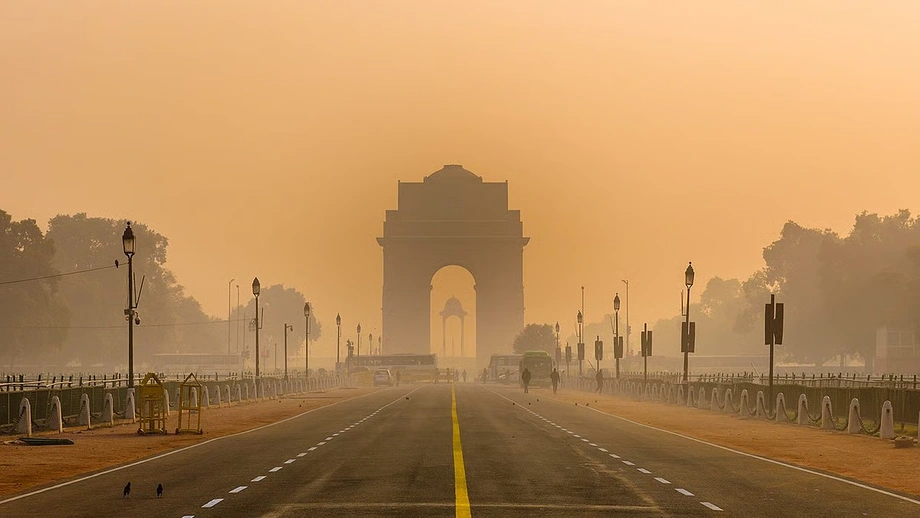
The paper estimates that more than 660 million people live in areas exceeding India's national annual standard for fine particulate pollution. It also cites an estimated reduction of 3.5 years in average life expectancy associated with air pollution. Together, those figures describe a problem extending far beyond Delhi's winter smog and into everyday life across urban and rural India.
Businesses face annual losses estimated at around $95 billion, or nearly 3% of GDP, through lower productivity, absence from work and operational inefficiencies. Pollution related health problems are estimated to cost India 1.3 billion working days each year. Families face hospital bills and lost earnings, while employers lose working time and output.
Ashutosh Raghuvanshi, chair of the FICCI Health Services Committee and managing director and chief executive of Fortis Healthcare, called for a change in how the country approaches the problem:
Clean air must be central to India's healthcare agenda, not treated solely as an environmental objective. Healthcare institutions have an important role to play in strengthening public awareness, tracking pollution-related illness and improving preparedness.
The paper calls for hospitals, governments and industry to work together throughout the year. Its proposals combine cleaner infrastructure, stronger monitoring and disease surveillance, so that action begins before pollution reaches levels that trigger emergency restrictions.
Why fine particles require closer attention
PM2.5 consists of airborne particles measuring 2.5 micrometres or less across. Their small size allows them to travel deep into the lungs and enter the bloodstream. Prolonged exposure is associated with respiratory illness, heart disease, stroke and cognitive impairment.
India's National Clean Air Programme (NCAP) primarily measures progress through PM10, a category covering particles up to 10 micrometres across. Reducing dust is useful, but the FICCI and EY paper argues that explicit PM2.5 targets are needed to address the finer particles that can reach deeper into the body.
The paper also recommends controlling precursor gases, which can react in the atmosphere to form particles. This requires attention to emissions from vehicles, factories, power generation and other sources, alongside visible dust from roads and construction.
Earlier research on India's wider health burden examined mortality and estimated pollution exposure from 2009 to 2019. It linked each increase of 10 micrograms per cubic metre in PM2.5 to an 8.6% rise in annual mortality. That evidence helps explain why the new paper wants health outcomes placed alongside air quality readings when assessing progress.
What the economic estimates measure
The paper's estimate of losses equivalent to 9% to 9.5% of GDP uses 2022 figures and covers a broad economic burden. Its estimate of business losses, around $95 billion annually, focuses on productivity, absenteeism and operational disruption. Those figures describe overlapping costs and should be considered separately rather than added together.
Anumita Roychowdhury, executive director of research and advocacy at the Centre for Science and Environment, points to other estimates: around 6% of GDP from the World Bank and business losses of about 3% of GDP from consultancy Dalberg. Different assessments place different values on lost health, working time and economic activity.
A Lancet study using Global Burden of Disease 2019 data estimated 1.67 million deaths attributable to air pollution, nearly 18% of deaths in India that year. It calculated lost output from premature deaths and illness at $36.8 billion, or about 1.36% of GDP. That output measure covers a narrower set of costs than the broader economic estimates.
For workers, the effects can be immediate. The FICCI and EY paper says efficiency can decline by 8% to 10% on days with high pollution. Households may also face emergency treatment, hospitalisation and continuing medication costs, while illness interrupts education and training.
Pollution hotspots extend beyond the capital
Loni in Uttar Pradesh recorded annual PM2.5 of 112.5 micrograms per cubic metre in the paper's assessment of 2025 readings. Byrnihat, on the Meghalaya and Assam border, recorded 101.1, followed by Delhi at 99.6. India's national annual standard is 40 micrograms per cubic metre.
Loni's reading was therefore about 2.8 times the national standard, while Delhi's was about 2.5 times the standard. The earlier coverage gave Delhi's 2025 average as 96.4 micrograms per cubic metre; the new assessment uses 99.6. Both place the capital well above the national limit.
West Bengal's Ula, also known as Birnagar, recorded 86.8 micrograms per cubic metre, and Madhyamgram recorded 83.3. Both were more than twice the national standard. These smaller places show why concentrating attention and resources on major metropolitan centres leaves substantial exposure elsewhere.
Monitoring remains uneven in smaller cities, areas on the edges of cities and rural regions. The paper recommends expanding PM2.5 measurement and building networks within cities to locate hotspots near traffic corridors, factories, construction sites and places where waste is burned. More detailed measurements would help authorities choose interventions suited to each location.
NCAP has made progress, with gaps in what it measures
Under NCAP, 103 of 130 cities recorded reductions in PM10 between 2017-18 and the financial year 2024-25. Of those cities, 64 achieved reductions greater than 20%. In proportional terms, about 79% of the 130 cities improved, while about 49% cut PM10 by more than a fifth.
The FICCI and EY paper recognises progress under NCAP, the Graded Response Action Plan (GRAP), Bharat Stage VI vehicle emission standards and the Pradhan Mantri Ujjwala Yojana cooking fuel programme. It nevertheless identifies uneven implementation, differences in enforcement capacity and gaps in monitoring.
Amit Goyal, partner in Strategy and Transactions at EY India, described the change needed in performance assessment:
Progress should be measured by sustained reductions in people's exposure to air pollution, rather than the number of interventions implemented.
The main dates behind the paper's health, economic and programme figures are:
- 2017-18: The starting period for the cited comparison of PM10 reductions under NCAP.
- 2019: The year covered by the Lancet estimate of 1.67 million deaths and $36.8 billion in lost output.
- 2022: The reference year for the paper's economic loss estimate of 9% to 9.5% of GDP.
- 2023: The year in which the paper attributes more than two million deaths to air pollution.
- 2024-25 and 2025: The endpoint for the NCAP progress comparison and the year of the cited annual PM2.5 readings, respectively.
Delhi needs action beyond its borders
Sources within Delhi accounted for approximately 36% of its PM2.5 pollution in winter and 26% in summer in the source assessment cited by the paper. The corresponding shares attributed to sources outside Delhi were about 64% and 74%.
An airshed is an area connected by the movement of air and pollution. Planning around an airshed means neighbouring authorities address the sources affecting the same air, even when those sources lie across municipal or state boundaries.
Delhi's figures give that approach a concrete purpose: local action needs to operate alongside reductions in surrounding areas. Roychowdhury similarly calls for coordinated action across the Indo-Gangetic Plain, rather than expecting the capital to achieve clean air while the wider region remains heavily polluted.
The paper identifies vehicle and industrial emissions, thermal power generation, construction and road dust, crop residue burning, waste burning and polluting household fuels as major sources. Their contributions vary by place and season, requiring local plans within a shared regional strategy.
Practical changes at construction sites, factories and farms
The paper sets out 10 practical solutions spanning urban emissions, industry, agriculture, waste, finance and healthcare preparedness. Large construction sites would use closed loop dust management, including barriers, covered materials and wheel washing, to contain dust and limit its movement onto surrounding roads.
Smart traffic signals could reduce congestion, engine idling and repeated stopping and starting. Monitoring within cities would help authorities identify where traffic or other activities create concentrated exposure and assess whether interventions bring readings down.
Industrial proposals include continuous stack emission data, stronger compliance tracking and pollution markets built around reliable measurements. Stack monitoring measures pollutants leaving industrial chimneys. The proposed markets would use verified emissions information to support pollution control.
Traditional brick kilns would move to zig-zag firing technology, which changes the path of air and heat through the kiln to improve combustion. Battery and hybrid systems would replace diesel generators where feasible, including in facilities that need dependable backup electricity.
Farmers would need collection systems and assured buyers to turn crop residue into fuel or other saleable products instead of burning it. The paper also proposes using recovered plastic, industrial residue and construction waste in building materials and infrastructure. These measures connect pollution reduction with functioning supply chains and demand for recovered materials.
How smaller projects could attract investment
A hospital replacing a diesel generator or a brick kiln upgrading its equipment may need a relatively small loan. The paper argues that grouping similar projects into one financing package could make them more attractive to banks and nonbank financial companies.
Government support could cover part of the initial investment risk, while financial assistance could depend on independently verified results. Suggested measures include diesel saved, crop residue processed, waste recycled and industrial emissions reduced.
The paper cites PM-eBus Sewa as an example of combining demand across cities to support electric bus procurement and financing. A similar approach could connect many smaller clean air investments with lenders able to fund them at greater scale.
Predictable standards and regulations would help businesses plan investments. The paper presents clean air spending as productive infrastructure: healthier workers, fewer interruptions and more efficient equipment can bring economic benefits alongside lower pollution.
Hospitals and workers need preparation throughout the year
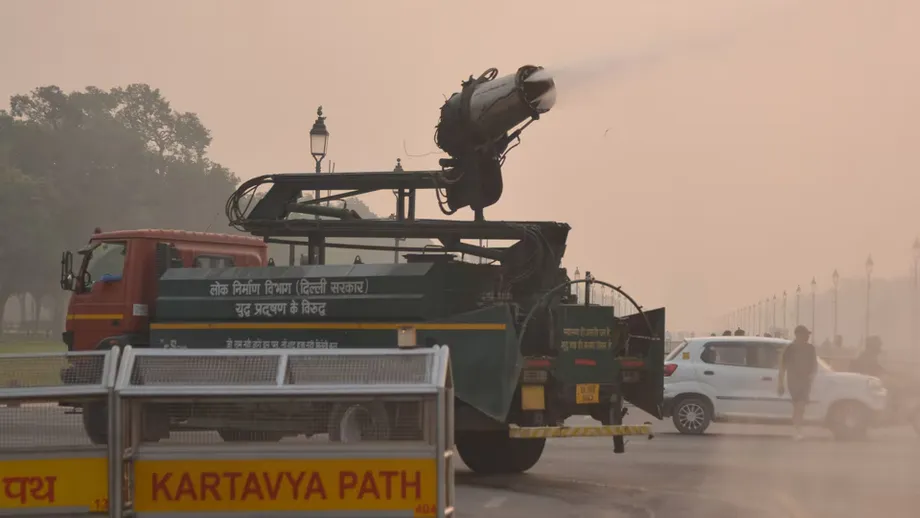
GRAP provides emergency restrictions when pollution becomes severe, including limits on construction, truck entry and certain industrial activities. Roychowdhury says those restrictions also disrupt daily wage workers, informal employment, business activity and consumer footfall.
She argues for sustained changes in transport, energy, waste management and industry so that severe episodes become less frequent. Workers would benefit from lower exposure as well as fewer interruptions to their earnings when emergency controls are imposed.
Arun Agarwal, chair of the FICCI Working Group on Air Pollution (Healthcare Perspective), called for linking pollution measurements with disease tracking and adapting preventive action to local sources. Hospitals could use that connection to improve preparedness and public advisories, while schools and communities receive reliable information before peak pollution periods.
The paper proposes stronger PM2.5 targets and changes to monitoring, finance and coordination, but no adoption date or implementation deadline is given. Its test for future action is concrete: sustained reductions in exposure, accompanied by better health.
Key Points
- FICCI and EY attribute more than two million deaths in India in 2023 to air pollution.
- The paper estimates economic losses equivalent to 9% to 9.5% of GDP using 2022 figures, alongside annual business losses of around $95 billion.
- More than 660 million people are estimated to live in areas exceeding India's annual PM2.5 standard.
- Under NCAP, 103 of 130 cities reduced PM10 between 2017-18 and 2024-25; the paper calls for explicit PM2.5 targets and health measures.
- Delhi's local sources accounted for about 36% of winter PM2.5 and 26% in summer in the cited assessment, supporting coordinated regional action.
- Recommendations include cleaner industrial equipment, construction dust controls, crop residue markets, pooled financing and stronger hospital surveillance.