Rain relief gives way to another pollution surge
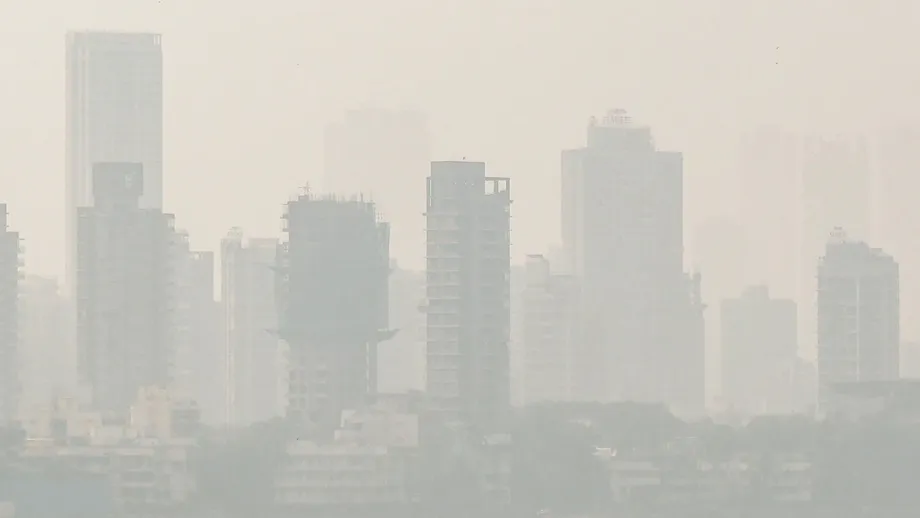
Delhi's air quality index reached 307 at 7.05 am on Monday, November 2, 2026, entering the very poor category for the first time this season just six days before Diwali. Across the capital, 37 of 58 reporting monitoring stations recorded very poor or severe air, with Jahangirpuri reaching 417.
Contents
- Rain relief gives way to another pollution surge
- How the weekend deterioration unfolded
- Neighbourhood readings reveal a wider problem
- Why fine particles matter
- Farm smoke rose as satellite counts fell
- Calm weather leaves emissions lingering
- Vehicle checks bring restrictions and queues
- Office attendance, parking and construction also change
- Firecracker controls face an enforcement test
- Key Points
The Central Pollution Control Board's readings showed how quickly last week's improvement had disappeared. Rain brought Delhi's AQI down to 60 on Friday, its cleanest October day in four years. The daily average then rose to 117 on Saturday and 261 on Sunday, before Monday morning's reading crossed 300.
Additional winter pollution controls had begun on November 1, bringing vehicle inspections, construction restrictions and changes to office attendance. Delhi authorities reported Rs 68.4 lakh in penalties and environmental compensation on the first day, while enforcement teams turned back more than 1,500 vehicles at the capital's borders.
Fine particles dominated the pollution readings as calm weather slowed the dispersal of emissions. A government forecasting system estimated that crop residue burning contributed 18.57% of Delhi's pollution on Sunday, compared with 5.33% on Saturday. Transport accounted for another 16.4% in Sunday's estimates.
The immediate concern is the combination: pollution already accumulating across Delhi and its neighbouring cities, weather offering little relief, and firecracker smoke potentially adding to the burden around Diwali on November 8. Residents face worsening air while commuters and employers adjust to restrictions intended to reduce emissions.
How the weekend deterioration unfolded
Delhi's Sunday evening readings traced a steady climb. After the CPCB's 4 pm daily bulletin put the city average at 261, the index reached 272 at 6 pm, 287 at 10 pm and 290 at 11 pm. By 8 am on Monday, it had risen to 310.
The sequence shows the change from rain washed air to the return of winter smog:
- October 30: AQI fell to 60 after rain, placing Delhi in the satisfactory category.
- October 31: The daily average rose to 117, classified as moderate.
- November 1: The daily average reached 261, classified as poor, as additional winter restrictions began.
- November 2: AQI reached 307 at 7.05 am and 310 by 8 am, both in the very poor category.
- November 5 to 20: A regional requirement for 50% of office employees to work from home is scheduled to apply in Delhi and five adjoining regions.
- November 8: Diwali celebrations could add firecracker emissions to the existing pollution.
Sunday's daily average of 261 was Delhi's highest since April 17, when it recorded 263. The capital last recorded a very poor daily average on February 11, at 305, following a reading of 339 on February 4.
October had nevertheless been cleaner than the same month a year earlier. Its monthly average AQI was 166, compared with 223 in October 2025, a reduction of 57 index points. Monday's deterioration shows how a better monthly average can coexist with a rapid worsening over a few days.
Neighbourhood readings reveal a wider problem
Jahangirpuri was the only reporting Delhi station in the severe category on Monday morning. Another 36 stations recorded very poor air, 16 were poor and five were moderate. Readings were available from 58 of the city's 59 monitoring stations.
Punjabi Bagh recorded 398 and Rohini 397, both close to the severe threshold. Alipur registered 379, Mundka 376, R K Puram 368, Sonia Vihar 367 and Bawana 361. ITO recorded 349 during the morning.
Delhi's city average therefore concealed substantial differences between neighbourhoods. Of the 58 reporting stations, 53 had AQI above 200. Roughly 64% were above 300, meaning very poor or severe conditions covered much of the monitoring network rather than a few isolated locations.
Neighbouring cities also experienced polluted air, although conditions varied. Noida recorded 308, in the very poor category. Greater Noida stood at 267, Ghaziabad at 276 and Gurugram at 225, all poor. Faridabad's reading of 118 placed it in the moderate category.
Why fine particles matter
PM2.5 was the main pollutant at 51 of Delhi's 58 reporting stations at 6 am on Monday. PM10 dominated at the remaining seven. At the same hour on Sunday, PM2.5 had led at 46 of 57 stations, while PM10 led at 11.
PM2.5 means particles measuring 2.5 micrometres or less across, small enough to travel deep into the lungs. PM10 includes larger particles measuring up to 10 micrometres. Smoke, combustion emissions and dust can all contribute to particulate pollution, although their particle sizes and chemical contents vary.
The AQI translates pollution measurements into a scale that is easier to follow. CPCB classifies 0 to 50 as good, 51 to 100 as satisfactory, 101 to 200 as moderate, 201 to 300 as poor, 301 to 400 as very poor and 401 to 500 as severe. Higher numbers indicate worse air quality.
Children, older people and residents with heart or respiratory conditions face greater health risks during polluted periods. Authorities have advised limiting prolonged outdoor activity and strenuous exercise when pollution is high, and using N95 masks outdoors during peak pollution hours. Local station readings can help residents track conditions near their homes, schools and workplaces.
Farm smoke rose as satellite counts fell
The Decision Support System for air quality management estimated that stubble burning's contribution rose from 5.33% on Saturday to 18.57% on Sunday. That was an increase of 13.24 percentage points in one day. Its Sunday estimate put transport's contribution at 16.4%, showing that farm smoke and road emissions were both substantial contributors.
NASA satellite observations detected 1,394 farm fires in Punjab and Haryana between October 1 and November 1. Punjab accounted for 1,249 detections and Haryana for 145. Across the two states, 171 fires were detected on November 1 alone.
The total was 467 lower than the 1,861 detections during the corresponding period a year earlier, a decline of about 25%. Satellite timing complicates that comparison: much of the burning now occurs after the satellite's pass at around 1.30 pm, leaving later fires outside that observation window.
Meteosat measurements illustrate the timing problem. About 98% of recorded fire heat in 2025 occurred after 3 pm, compared with 94% in 2024. Those figures describe when heat was detected; estimating how much smoke reaches Delhi also requires information about wind, fire intensity and atmospheric conditions.
Jinitha Varghese, programme manager at EnviroCatalysts, described another part of the pollution burden: particles can form in the atmosphere when gases from fuels, coal and crop residue react. Varghese said roughly two thirds of Delhi's fine particles came from outside the city and about 40% formed in the air from gases. This helps explain why action across the surrounding region matters alongside controls inside Delhi.
Calm weather leaves emissions lingering
Delhi recorded a minimum temperature of 18 degrees Celsius on November 1, which the weather department said was 1.9 degrees below the seasonal average. The maximum was 29 degrees. For Monday, the India Meteorological Department forecast mainly clear skies, with temperatures ranging from 17 to 29 degrees.
Cooler weather and weak winds can leave pollutants concentrated near the ground. Rain had briefly removed particles from the air, but emissions continued after that weather system passed. With less air movement, smoke and other pollutants can accumulate faster than they disperse.
Meteorologist Navdeep Dahiya warned in a post on X that calm conditions and winds from the northwest would allow pollution to linger across Delhi, the National Capital Region and the northern plains. He said:
All emissions will persist in the atmosphere for longer duration.
Dahiya expected no favourable meteorological conditions over the following seven to 10 days. The government's Air Quality Early Warning System had forecast poor air for November 2 and 3, followed by very poor conditions on November 4, with the subsequent outlook ranging between poor and very poor through November 10. Monday morning's very poor reading arrived before the forecast date.
Vehicle checks bring restrictions and queues
Delhi's winter measures restrict entry by certain vehicles registered outside the capital that fall below Bharat Stage VI emission standards. These standards, commonly written as BS6, set limits on pollutants released by vehicle engines. Restrictions cover specified private vehicles and light commercial vehicles, with exemptions for essential commodities.
Authorities intensified checks at 13 entry points, including the DND Flyway, Rajokri on NH 48, Ghazipur, Singhu and Badarpur. Nearly 250 personnel working in 39 teams used cameras that automatically read number plates alongside manual inspections.
Delhi minister Manjinder Singh Sirsa reported 14,930 vehicle checks, 566 penalty notices for Pollution Under Control Certificate violations and inspections of 300 sites on November 1. Enforcement figures put the number of vehicles turned back at 1,539. Penalties and environmental compensation totalled Rs 68.4 lakh, equivalent to Rs 6.84 million.
Drivers encountered long queues at border crossings, particularly on routes connecting Delhi with Gurugram and Noida. The vehicle entry restrictions run from November 1 to January 31. Delhi also planned to deny fuel to vehicles registered in the capital without valid pollution certificates.
Office attendance, parking and construction also change
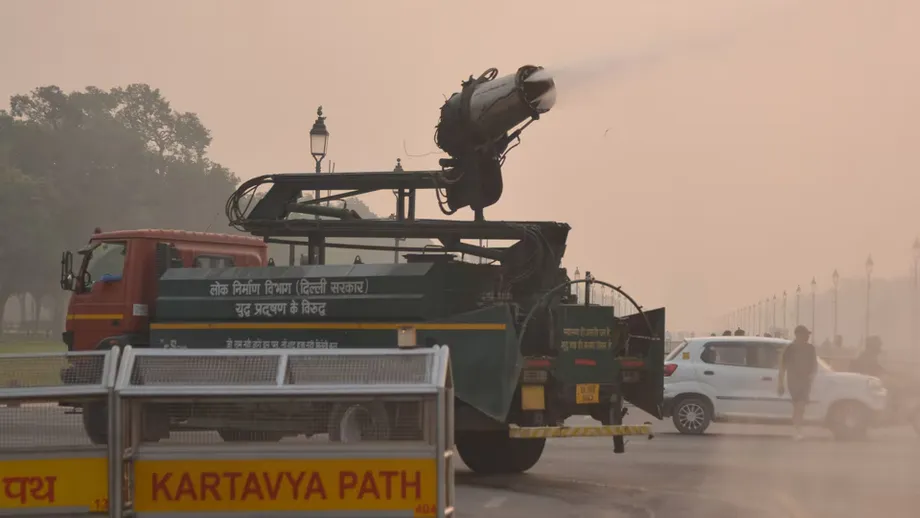
Stage 1 of the Graded Response Action Plan, or GRAP, had been in force since October 21. GRAP is a system of progressively tighter pollution controls, with stages corresponding to poor, very poor, severe and severe plus conditions. Its first stage includes road sweeping, water sprinkling to suppress dust and restrictions on specified construction activities.
Delhi's additional winter measures began on November 1 and operate for different periods extending as far as February 28. They include suspending construction and demolition activities that generate dust, doubling charges at authorised municipal parking lots and limiting physical attendance in offices.
The Commission for Air Quality Management directed government and private offices in Delhi and five adjoining regions, including Gurugram and Noida, to arrange for 50% of employees to work from home from November 5 to 20. Delhi's own attendance requirement had already taken effect on November 1.
Government office hours were also staggered. Municipal Corporation of Delhi offices were scheduled to operate from 8.30 am to 5 pm, while Delhi government offices followed a 10 am to 6.30 pm schedule. Together, attendance limits, parking charges and staggered hours aim to reduce traffic and emissions during the busiest periods.
Firecracker controls face an enforcement test
Diwali approaches with fine particle pollution already widespread. Firecrackers add particles and gases to that existing burden, making the enforcement of product restrictions and permitted hours a practical concern for neighbourhoods already recording very poor air.
The Supreme Court's limited green cracker trial in October 2025 permitted certified products in designated spaces during restricted hours. Conventional fireworks, products containing barium, joined strings known as laris, online sales and stocks brought from outside the National Capital Region remained prohibited under that temporary framework.
Green crackers use altered formulations intended to reduce emissions, but still release particles. Certification relies partly on QR codes associated with the National Environmental Engineering Research Institute. Allegations of banned ingredients, incorrect labels and fake codes in Delhi markets point to weaknesses in checking what customers actually buy.
A 2021 survey submitted to the Supreme Court found banned chemicals in tested products sold as green crackers and identified fake QR codes. Violations were also reported during the relaxation for October 19 and 20, 2025. The precise firecracker permissions for the approaching 2026 festival are not specified in the accounts of the current measures.
Delhi's immediate challenge spans several sources of pollution at once: vehicle exhaust, construction dust, smoke arriving from outside the city and possible festival emissions. Border inspections and office changes address parts of that burden, while the weather forecast points to several days in which pollutants may continue to accumulate.
Key Points
- Delhi's AQI reached 307 at 7.05 am on November 2, entering the very poor category before Diwali on November 8.
- Jahangirpuri recorded severe air at 417; 36 other stations were very poor.
- PM2.5 was the main pollutant at 51 of 58 reporting stations.
- The Decision Support System estimated stubble burning contributed 18.57% of Sunday's pollution and transport 16.4%.
- Authorities reported Rs 68.4 lakh in penalties and environmental compensation, with 1,539 vehicles turned back at Delhi's borders.
- Vehicle, construction, office attendance and parking restrictions are taking effect on different schedules.
- Forecasts point to poor or very poor air through the period surrounding Diwali, with little immediate weather relief expected.