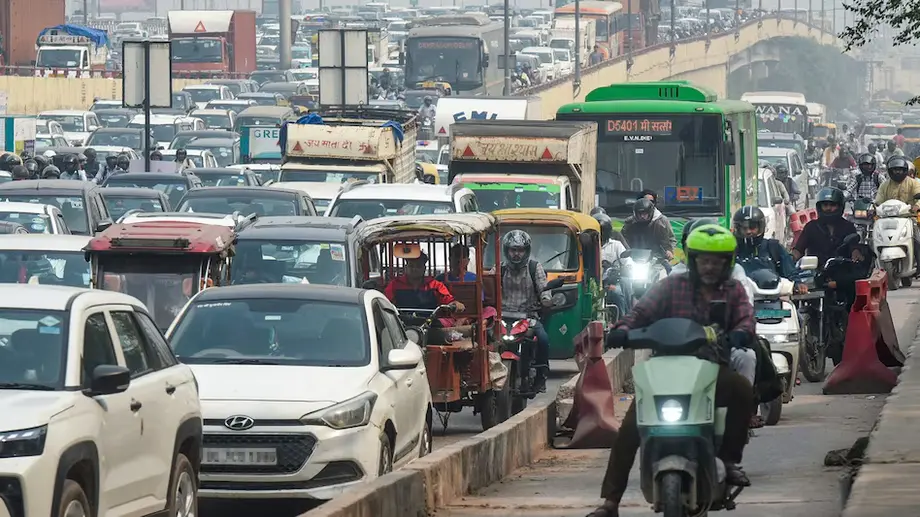
A decade of studies puts transport under scrutiny
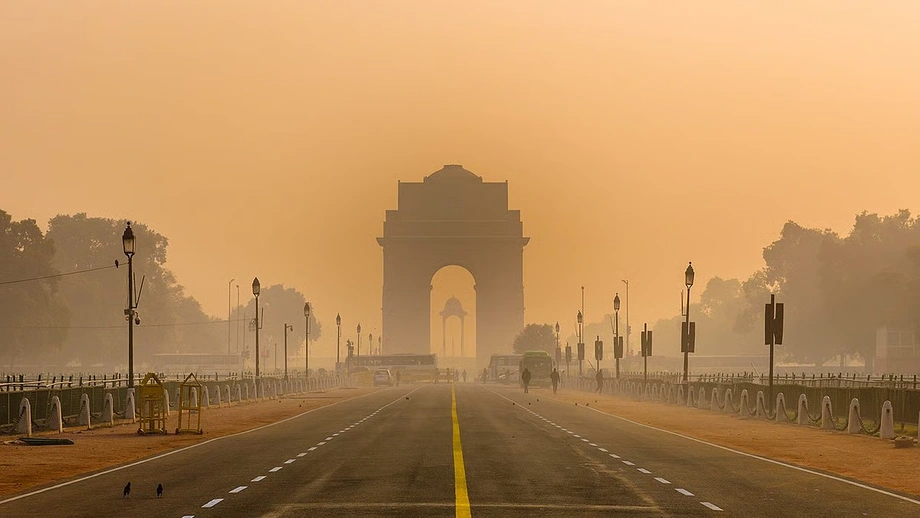
Transport accounts for 19–24% of Delhi's air pollution and biomass burning for 17–23%, according to a Commission for Air Quality Management (CAQM) assessment presented to India's Supreme Court. The commission combined findings from studies conducted between 2015 and 2025, bringing a decade of evidence into the debate over how to clean the capital's air.
Contents
- A decade of studies puts transport under scrutiny
- What the detailed pollution study found
- Why winter changes the mixture
- Some particles form after gases leave the source
- Delhi's air crosses administrative boundaries
- Fewer farm fires, with other burning still in focus
- What would change for vehicles and passengers?
- The court's concern reaches schools and outdoor workers
- Local studies are still catching up
- Key Points
CAQM identified PM2.5 as the main pollutant affecting Delhi's Air Quality Index (AQI). These particles measure 2.5 micrometres or less across, small enough to travel deep into the lungs. They come from vehicle exhaust, burning fuel and other activities, while some form in the atmosphere when gases react.
The commission also recorded steep reductions in crop residue fires. Compared with 2021, recorded incidents between September 15 and November 4 fell by 91.9% in Punjab and 98.4% in Haryana. Delhi nevertheless faces pollution from traffic, factories, power plants, dust, waste burning and pollutants carried into the city by wind.
Additional Solicitor General Aishwarya Bhati presented the analysis before a bench comprising Chief Justice Surya Kant and Justices Joymalya Bagchi and Vipul M. Pancholi. CAQM proposed 15 measures for lasting improvements, including stronger vehicle testing, expanded public transport, cleaner buses and better traffic management.
The figures point to a practical challenge: Delhi needs action on its roads, but neighbouring districts also shape the air its residents breathe. An earlier detailed study helps explain why source estimates change with the season, location and method used to calculate them.
What the detailed pollution study found
The Automotive Research Association of India (ARAI) and The Energy and Resources Institute (TERI), in their 2018 source apportionment study, analysed measurements collected across the National Capital Region from April 2016 to February 2017. Source apportionment means estimating how much each activity contributes to the particles measured in the air.
Its findings put the primary contribution from vehicles to PM2.5 at 20–23% in winter and 18–20% in summer across Delhi and the NCR towns studied. Biomass burning contributed 22% in winter and 15% in summer. Biomass includes material such as wood and crop residues burned in homes or fields.
The same study's sector estimates for Delhi placed transport at 28% of winter PM2.5, industry at 30%, dust at 17% and residential and agricultural fuel burning together at 14%. In summer, transport's share fell to 17%, while dust rose to 38% and industry accounted for 22%.
Those Delhi winter estimates put industry slightly above transport, whereas CAQM's broader synthesis identifies transport as the largest contributor. The calculations cover different periods and geographical areas, and allocate pollution using different methods. Readers therefore need the place, season and method alongside each percentage.
ARAI and TERI used two approaches. Receptor modelling works backwards from the chemical composition of collected particles. Dispersion modelling estimates how emissions move through the atmosphere. Their transport estimates were broadly comparable: 20–30% using receptor modelling and 17–28% using dispersion modelling across the seasons examined.
Why winter changes the mixture
Winter weather makes Delhi's pollution harder to disperse. The ARAI–TERI study explains that slower winds and a lower atmospheric boundary layer leave less space for pollutants to spread. The boundary layer is the lower part of the atmosphere in which air mixes, so a lower ceiling allows pollution to accumulate nearer the ground.
Dust follows a different seasonal pattern. Across Delhi and the NCR towns studied, dusty sources contributed 31–34% of summer PM2.5, compared with 15% in winter. Delhi's sector estimates also showed dust accounting for 42% of summer PM10, compared with 25% in winter. PM10 includes particles up to 10 micrometres across, a larger size range than PM2.5.
Vehicles and biomass burning become more prominent in the winter mixture, while dust takes a larger share in summer. Authorities consequently need different combinations of controls through the year, rather than relying on the same seasonal restrictions to address every source.
CAQM's winter source list includes transport, industrial facilities and thermal power plants, road and construction dust, biomass burning, and particles formed through chemical reactions. Waste burning and household fuel use sit alongside agricultural burning in that wider picture.
Some particles form after gases leave the source
Vehicles, industrial plants and burning biomass release gases that can react in the air to form fine particles. Sulphur dioxide and nitrogen oxides are among the gases involved. Scientists call the resulting pollution secondary particulate matter, meaning particles created in the atmosphere rather than emitted directly as particles.
The ARAI–TERI study found that secondary ions, components of these particles, contributed 26% of winter PM2.5 and 17–18% in summer across Delhi and the NCR towns studied. Their winter share was eight to nine percentage points higher than in summer.
Sector estimates and chemical estimates describe the pollution in different ways. A calculation organised by sector assigns pollution to activities such as transport or industry. A chemical analysis identifies what the particles contain. Gas emissions from several activities can contribute to the same group of secondary particles.
Controls therefore have to reach beyond visible smoke and dust. Reducing the gases released by engines, power generation and other fuel burning is part of reducing the fine particles that eventually enter people's lungs.
Delhi's air crosses administrative boundaries
Delhi's own emissions accounted for an estimated 36% of its winter PM2.5 and 26% in summer in the ARAI–TERI study. On those estimates, sources outside Delhi accounted for the remaining 64% and 74%, respectively.
The study identified residential cooking, agricultural waste burning, industrial stacks and dust outside the city among the sources whose pollution can arrive with incoming winds. CAQM's synthesis similarly describes Delhi's air as the product of both local emissions and pollution transported across the region.
Regional coordination matters for everyday journeys as well. The Supreme Court has focused on heavy traffic between Delhi and Ghaziabad, Greater Noida, Gurugram and Faridabad. Vehicles move across these boundaries throughout the day, while the resulting emissions spread according to weather rather than jurisdiction.
Delhi's agencies can act on local traffic, waste burning and dust. Neighbouring administrations also control roads, industrial areas, households and agricultural activity that contribute to the same regional air. The study's figures show why both levels of action are needed.
Fewer farm fires, with other burning still in focus
Punjab's 91.9% reduction and Haryana's 98.4% reduction concern recorded crop residue fire incidents during the September 15–November 4 comparison window against 2021. CAQM's broader biomass estimate of 17–23% covers more activities, including household burning, waste and crop residues.
At another Supreme Court hearing, Bhati said farm fires contributed 14% of Delhi's pollution on the preceding Thursday. Aparajita Singh, the senior advocate assisting the court as amicus curiae, also drew attention to that contribution and urged action against pollution within Delhi, especially waste burning.
The 14% figure describes a particular day's farm fire contribution. CAQM's biomass range summarises a wider group of burning activities across studies. Weather, the timing of fires and the activities included all affect the resulting shares.
The Supreme Court urged farmers to use machinery to manage crop residues instead of setting fields alight. It also discussed announcing procurement prices for stubble in advance and equipping village councils with management systems. Those proposals address the practical work of collecting and handling residues between harvest and the next sowing season.
What would change for vehicles and passengers?
CAQM's transport proposals combine cleaner vehicles with alternatives to driving. They include a stronger Pollution Under Control testing system, described as PUC 2.0, and remote sensing to monitor vehicle emissions on roads. Remote sensing uses equipment to assess exhaust as vehicles pass.
Bhati described measures already introduced, including restrictions on certain vehicle categories, location tagging of PUC certificates and action on complaints about visibly polluting vehicles received through applications and social media. Location tagging records where a certificate was issued, giving authorities another way to check testing activity.
The longer term recommendations include removing polluting vehicles, incentives for scrapping older vehicles, more electric vehicle charging and battery swapping facilities, and expanded electric and compressed natural gas bus fleets. CAQM also proposed better parking management, integrated traffic control and higher environmental protection charges.
Passengers would be affected by proposals to expand metro, regional rail and Regional Rapid Transit System services. Transport hubs connecting different services and passenger information showing current service conditions are also part of the plan. Their practical purpose is to make journeys involving more than one form of public transport easier to complete.
The 2018 ARAI–TERI study provides a useful planning comparison. Its projection for winter 2030 put transport at 16% of NCR PM2.5 and industry at 44%. It estimated that greater use of electric vehicles could reduce PM2.5 and PM10 concentrations by 5–6% during 2025–2030. Those were modelled outcomes based on the study's assumptions; the proposed transport changes sit alongside a continuing need for industrial controls.
The court's concern reaches schools and outdoor workers
In the hearing dated November 6, a bench comprising Chief Justice Surya Kant and Justices Joymalya Bagchi and V. Mohana examined the regulatory framework for Delhi's air pollution. The Chief Justice stressed the gap between discussion and conditions already being experienced by residents.
We keep talking, sometimes make statements and suggestions, but the point is that AQI is already touching 400.
Central Pollution Control Board figures cited around that hearing put Friday's citywide AQI at 391, in the very poor category. At 9 a.m., 30 of 59 monitoring stations recorded severe air quality, including Rohini at 475 and IIT Delhi at 472. A citywide figure combines conditions across locations, so neighbourhood readings can be much higher.
The preceding Thursday, 18 stations had recorded AQI above 400, including Jahangirpuri at 459, IIT Delhi at 447 and Delhi Technological University at 436. These readings show the spread of serious pollution across different parts of the capital.
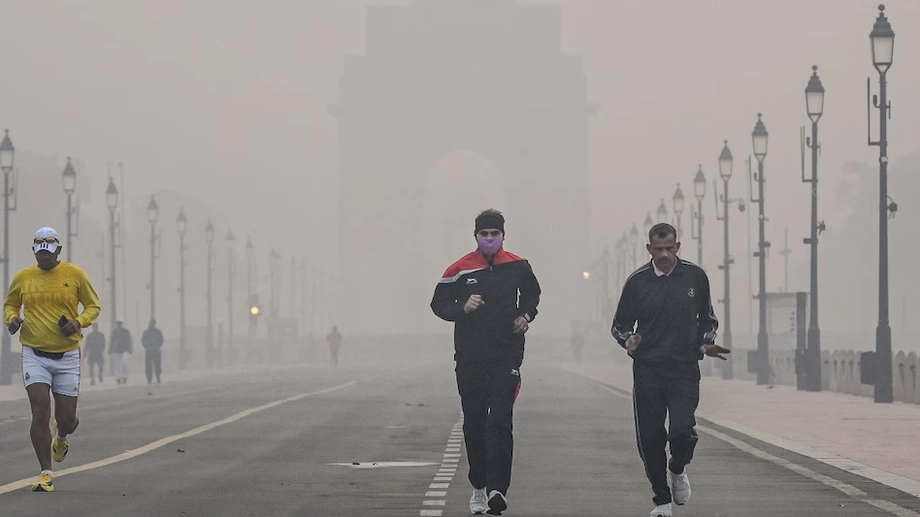
The court highlighted daily wage earners and other people who must work outdoors. It was also considering a request for school closures or classes combining online and classroom attendance above a specified AQI threshold, with a decision to be guided by expert opinion. The next hearing was listed for November 16; the year and a decision on that school request were not specified.
Local studies are still catching up
A CPCB review found source studies completed in 107 of 130 cities covered by the National Clean Air Programme, with work continuing in 23 cities across eight states. Noida, Faridabad, Meerut and Khurja accounted for four of those unfinished studies, or 17.4% of the pending total. CPCB had set November 15, 2025, as the expected completion deadline.
Faridabad's work was commissioned in 2022 and assigned to TERI through the Municipal Corporation of Faridabad, but its final report was still awaited. Studies awarded to ARAI in January 2023 for Gurugram, Sonipat and Panipat had been completed and were being analysed by the Haryana State Pollution Control Board. Across the national programme, another 53 completed city reports awaited peer review.
CAQM's April 2025 framework calls for a common approach, mapping pollution sources in squares measuring 500 metres on each side. An updated regional inventory and source apportionment study, using 2026 as its base year, was awarded to a consortium led by ARAI with IIT Delhi, TERI and the Indian Institute of Tropical Meteorology in Pune.
The main milestones show how the evidence has developed:
- April 2016–February 2017: Field measurements were collected for the ARAI–TERI assessment.
- August 2018: ARAI and TERI published their study of Delhi and NCR pollution sources.
- 2022 and January 2023: Faridabad and three other Haryana cities commissioned further studies.
- April 2025: CAQM issued its common regional assessment framework.
- November 15, 2025: CPCB's expected deadline for completing city source studies.
- 2026: Base year selected for the updated regional assessment.
More consistent local measurements would help authorities identify where vehicle checks, industrial controls, dust management and alternatives to burning can achieve the greatest reductions. CAQM's synthesis already places transport near the centre of the response, while the regional evidence gives industry, burning and pollution arriving from outside Delhi substantial roles.
Key Points
- CAQM estimates transport contributes 19–24% of Delhi's pollution and biomass burning 17–23%, drawing on studies from 2015–2025.
- Recorded crop residue fires fell by 91.9% in Punjab and 98.4% in Haryana during the stated comparison window against 2021.
- The ARAI–TERI study estimated that Delhi's own emissions supplied 36% of its winter PM2.5 and 26% in summer.
- CAQM proposed stronger vehicle testing, cleaner fleets, expanded public transport and improved traffic management.
- Noida, Faridabad, Meerut and Khurja were among 23 programme cities with unfinished source studies.
- An updated regional assessment will use 2026 as its base year and map sources on a grid of 500 metres by 500 metres.