A fresh 99 years with every approved sale
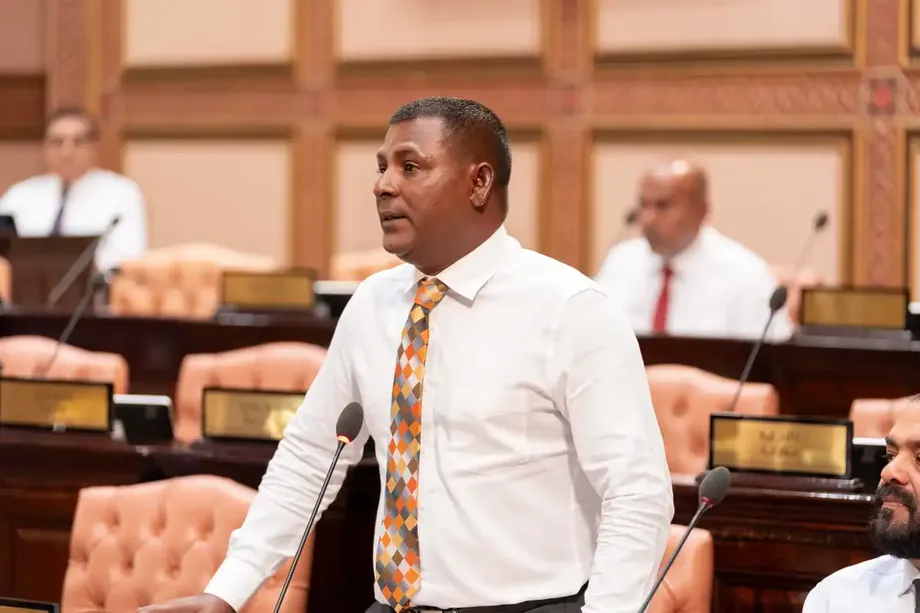
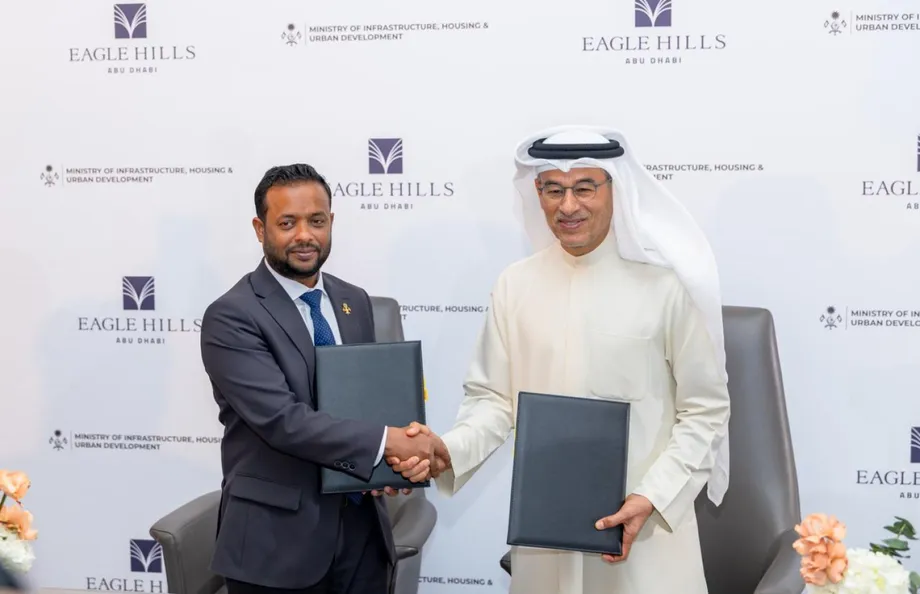
Property leases at Rasmalé would restart at 99 years whenever an approved buyer purchases a property, Infrastructure Minister Dr Abdulla Muththalib said in a leaked recording of a meeting with religious scholars in late September. His explanation puts the government's role in each sale at the centre of the dispute over the Maldives Waterfront and Marina development with Eagle Hills.
Contents
- A fresh 99 years with every approved sale
- How the lease reset would work
- Religious objections enter the contract debate
- Debt pressure shapes the government's defence
- Arson allegations bring further detention
- A hammock protest stops tree cutting
- Who can buy the 48 small plots?
- Key dates behind the land decisions
- Money changers move to online reporting
- Health services, a bravery award and a holiday
- Key Points
Under the arrangement he described, the government would cancel the existing lease, collect a fee and issue a new lease lasting 99 years. Each transfer would require government approval. A buyer would therefore receive a fresh term rather than simply inherit the years remaining on the seller's lease.
Muththalib explained the purpose of the arrangement in the recording:
a mechanism that doesn't depreciate
The minister said investors needed confidence that a property would retain its value as time passed. His explanation sits alongside earlier public statements: Muththalib had said nobody could renew a lease or hold property forever, while President Mohamed Muizzu has said leases would not automatically renew.
The debate comes as decisions about land elsewhere in Greater Malé bring immediate consequences for residents. An activist stopped work to fell a banyan tree in Villimalé by climbing into it, while the housing ministry prepared to sell 48 small state plots to eligible neighbouring owners and co-owners.
How the lease reset would work
A lease gives someone the right to use property for a set period. Normally, the time remaining becomes shorter each year. Under Muththalib's proposed mechanism, a government approved sale would start that clock again, giving the next buyer 99 years.
For investors, the attraction is straightforward: a later buyer could receive the same length of tenure as an earlier buyer. For the government, the approval requirement would preserve a decision over who could acquire the property, while the transfer fee would make each sale a transaction involving the state.
Muththalib also discussed what could happen when a lease reaches its end. Drawing on tourism arrangements, he described options involving the government taking back a property and compensating for its assets, or arranging a bidding process through which another operator would provide compensation and receive a new lease.
The legal wording that would put the proposed reset into effect, the size of the transfer fee and the criteria for approving buyers were not specified in the account of the meeting. Those details matter to both purchasers planning a future sale and citizens seeking to understand how the state would exercise control.
Religious objections enter the contract debate
Muththalib said the master developer agreement would expressly prohibit celebrations of festivals belonging to other religions, including Christmas, at Rasmalé. A master developer agreement sets out the principal responsibilities and conditions for the company overseeing a development.
The minister also defended Eagle Hills chairman Mohamed Alabbar against allegations about ties to Zionists. He described the alleged connections as belonging to an earlier period. Muththalib said negotiations had been conducted confidentially and directly with Alabbar to keep corruption and middlemen out of the process.
Abdullah Rasheed Hassan, a National Council member of the opposition Maldivian Democratic Party, called for the project to be stopped. He alleged that foreign interests intended to undermine the country's Islamic identity and unity, and claimed that foreign Zionist governments were working to change an Islamic state he described as more than 900 years old.
Rasheed also questioned why billionaires would commit millions or billions of rufiyaa to a small country, alleging hidden motives. His objections put religion and national control at the centre of his campaign against the development. Muththalib's response focused on proposed contractual restrictions, government approval of transfers and the commercial reasons for the lease arrangement.
Debt pressure shapes the government's defence
State Minister for Housing Ahmed Nazim Mohamed offered a different defence of Rasmalé in the leaked discussions. He alleged that opposition to the agreement came from the Indian government and from tourism businesses that feared the Maldives would become less dependent on their industry.
Nazim said India had left a Maldivian request to roll over a US$50 million debt payment unanswered until the final day, bringing the country close to default. Rolling over debt means extending or replacing an obligation so that the borrower does not have to repay the full amount at its original deadline.
The state minister described the government's efforts to secure assistance:
We are the leaders of the state, begging the Indian ambassador here, begging an employee of a small bank here,
Nazim argued that a successful Rasmalé development could free the Maldives from Indian debt. His argument connects the property project to a larger government ambition: attracting investment that could reduce dependence on existing creditors and on tourism.
Eagle Hills has promoted the project's economic scale. In the earlier Rasmalé dispute, former president Abdulla Yameen Abdul Gayoom challenged safeguards surrounding a development covering 500 hectares, while Alabbar promoted projections of US$20 billion in investment, 15,000 construction workers and at least 1,500 shops. Those projections describe the scale being promoted; the lease proposal explains how property transactions within that development could operate.
Arson allegations bring further detention
The Criminal Court extended the detention of Ali Jumaan, 25, from Haa Alifu Baarah, by 15 days following his arrest on terrorism charges linked to social media posts. Police alleged that the posts encouraged people to burn buildings and vessels and loot a well-known shop.
Police said the posts called for street protests and arson in opposition to the Eagle Hills Rasmalé agreement. The material presented to the court included a police intelligence report, a report about a post on X and letters from interested parties requesting his continued detention.
The court said releasing Jumaan could endanger public safety. He remains an accused person, with the detention decision governing his custody while the case proceeds.
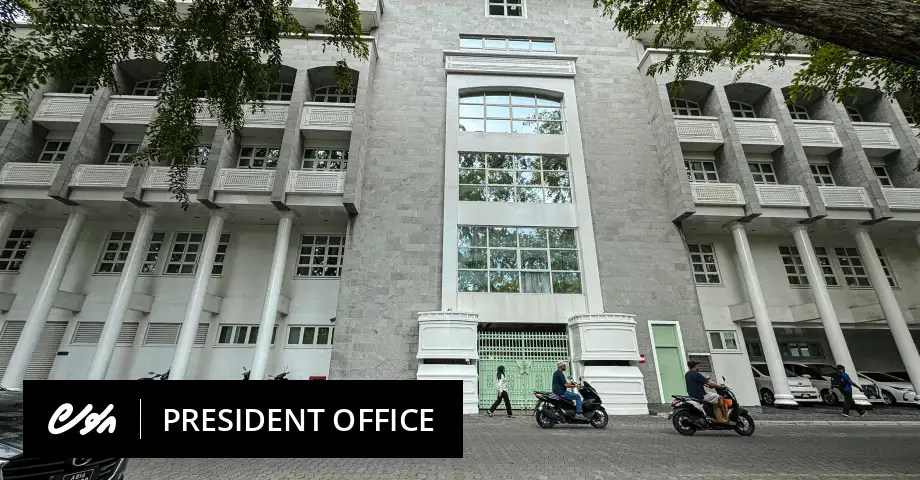
Former deputy minister Hassan Zihan is also in custody over Facebook posts urging arson attacks on the Supreme Court, the President's Office and parliament. The allegations concern calls for violence against buildings and institutions, adding a criminal justice dimension to the political dispute surrounding the project.
A hammock protest stops tree cutting
In Villimalé, environmental activist Ahmed Niyaz climbed about 25 feet into a large banyan tree and lay in a hammock, halting work to cut it down. After a lengthy discussion with police, he climbed down voluntarily and officers took him away.
The tree is one of two banyans that Muizzu decided should be felled after putting their removal to a vote at a meeting with Villimalé residents in November 2025. Some residents had sought their removal because they said the roots were damaging houses.
Opponents argued that the homes could be protected without cutting down the trees. The disagreement concerns a concrete choice for the neighbourhood: removing mature trees to address damage, or finding a way to protect nearby buildings while retaining them.
Niyaz's action stopped the cutting operation at that point. The account gives no subsequent decision on the trees or explanation of whether he faced a charge.
Who can buy the 48 small plots?
The housing ministry plans to open sales on Sunday for 48 small plots acquired by the state through the Veshi Fahi Malé programme. Applications are due by 2pm on 8 December. Eligibility is limited to co-owners of the property containing a plot and owners of adjacent plots.
The price is MVR2,000 per square foot, approximately US$130. The plots range from 28 to 180 square feet, meaning the stated price produces purchase costs ranging from MVR56,000 for the smallest plot to MVR360,000 for the largest.
Maafannu accounts for 21 plots, Machchangolhi for 10, Henveiru for nine, Galolhu for seven and Villimalé for one. Maafannu therefore has 21 of the 48 plots, almost 44 percent of the total. The smallest pieces are better suited to joining existing properties than to providing separate building sites, which helps explain the restricted pool of eligible buyers.
Former president Mohamed Nasheed launched Veshi Fahi Malé in 2011. Owners of small plots in Malé received land or flats in Hulhumalé in exchange for transferring their original land to the state. The proposed sales would now transfer some of those small state holdings to eligible nearby owners.
Key dates behind the land decisions
The latest announcements connect policies and disputes that developed over several years. The small plot sales originate in an exchange programme launched in 2011, while the banyan protest follows a presidential decision made in November 2025.
- 2011: Veshi Fahi Malé begins under Nasheed, exchanging small Malé properties for land or flats in Hulhumalé.
- November 2025: Muizzu puts the removal of two Villimalé banyan trees to a vote at a residents' meeting and decides they should be felled.
- Late September: Muththalib discusses the proposed Rasmalé lease reset with religious scholars in the meeting captured in the leaked recording.
- 12 October 2026: Yameen's objections and Alabbar's investment and employment projections feature in the earlier public dispute over Rasmalé.
- 8 December, 2pm: Applications close for the 48 small state plots.
For prospective buyers, the application deadline is the immediate practical date. For Villimalé residents, the unresolved issue is how the earlier removal decision will be carried out after the protest interrupted work.
Money changers move to online reporting
The Maldives Monetary Authority launched an online system through which licensed money changers can submit regulatory information and report their currency exchange transactions. The authority said digitising administrative work would make the sector easier to supervise and strengthen the financial system.
Money changers exchange one currency for another. Their transaction reports give the regulator information about activity in that market. The new system changes how licensed businesses submit those records, bringing their reporting into an online process.
The announcement accompanies a period in which foreign currency obligations have become part of the political argument over Rasmalé. Nazim's account concerns the government's ability to meet an external debt payment, while the monetary authority's system concerns supervision of businesses handling currency exchanges.
Health services, a bravery award and a holiday
Muizzu opened the Health and Family Expo at Hulhumalé Central Park. More than 60 health organisations, including hospitals from Greater Malé and the atolls, are showcasing their services during the event, which runs for three days until Saturday.
Italy also honoured MNDF Sergeant First Class Mohamed Mahudhee, who died in May while searching for five Italian divers lost in a cave in Vaavu Atoll. Ambassador Damiano Francovigh presented the Gold Medal for Civil Valour to Mahudhee's family at a ceremony in Malé on Wednesday marking 60 years of diplomatic relations between Italy and the Maldives.
The posthumous award is the Italian Republic's highest honour for civilian bravery. The Italian embassy in Colombo, which also covers the Maldives, has opened a fundraiser for Mahudhee's family until 31 December.
Muizzu separately declared Thursday 12 November a government holiday. With Republic Day on Wednesday and the weekend following, the decision gives government employees a break lasting four days.
Key Points
- Muththalib described a Rasmalé arrangement that would issue a fresh lease of 99 years whenever the government approves a property sale.
- The proposed transfer mechanism includes cancellation of the old lease and payment of a fee.
- Government ministers defended the project on investment, debt and religious grounds, while opposition figures challenged its safeguards and purpose.
- The Criminal Court extended Ali Jumaan's detention by 15 days over alleged social media calls for arson and looting.
- Ahmed Niyaz's protest temporarily halted work to fell a Villimalé banyan tree.
- The housing ministry plans to sell 48 small plots at MVR2,000 per square foot, with applications closing at 2pm on 8 December.
- The monetary authority launched online reporting for licensed money changers, and Italy honoured Mahudhee for his fatal rescue mission.