A Rs 1.86 trillion plan to move clean electricity
India has tied its goal of reaching 900 gigawatts of clean electricity capacity by 2035 to a major investment in the networks and batteries needed to deliver that power. On September 30, 2026, the Union Cabinet approved Green Energy Corridor Phase III, a programme intended to connect up to 135 GW of renewable generation and deploy 50 gigawatt hours of battery storage by the financial year 2032-33.
Contents
- A Rs 1.86 trillion plan to move clean electricity
- What does the 900 GW target measure?
- Where will the grid money go?
- Why is solar electricity being held back?
- Batteries must be measured in power and time
- A second storage scheme expands the effort
- Coal planning points in a different direction
- Cheap afternoons, expensive evenings and missing buyers
- Energy security extends beyond battery cells
- Key Points
The Cabinet's Green Energy Corridor approval sets the total project outlay at Rs 1,86,405 crore, about Rs 1.86 trillion. Central financial support will cover Rs 54,082 crore, with the government saying this assistance should reduce transmission charges and help contain costs for consumers.
India already had 304.33 GW of capacity from sources other than fossil fuels on August 31, 2026, according to Ministry of New and Renewable Energy figures. Reaching 900 GW would mean adding almost 596 GW, nearly tripling that base. The goal includes solar, wind, hydropower and nuclear energy.
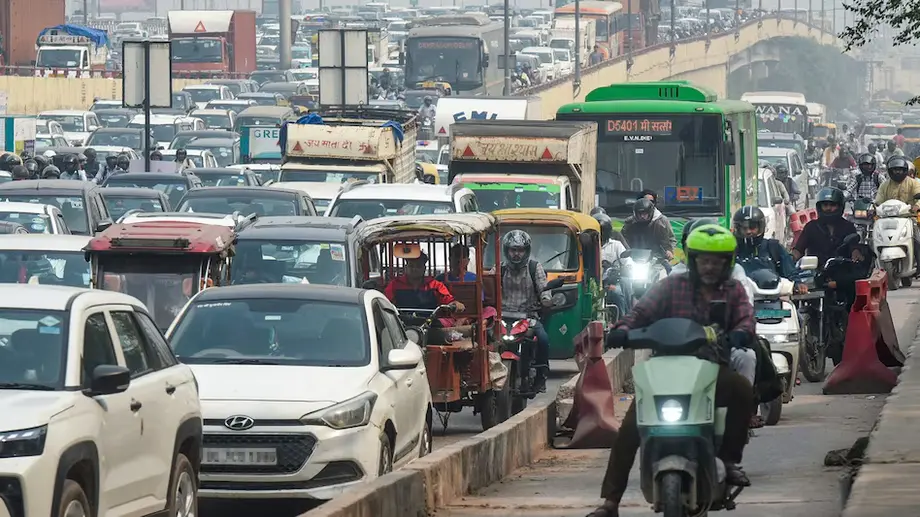
Electricity networks are already struggling to keep pace. Around 6,900 gigawatt hours of renewable electricity faced restrictions on delivery during 2025-26 because generating projects and their associated transmission systems were completed at different times.
Nikit Abhyankar, a faculty director at the India Energy and Climate Center at the University of California, Berkeley, said the network is essential to the target:
If the grid doesn't catch up, then there is no way India can meet this target.
For households and businesses, the practical challenge is getting affordable electricity when they need it, including after sunset. India must expand generation, delivery networks and storage together to turn its capacity target into dependable power.
What does the 900 GW target measure?
A gigawatt measures how much electrical power a generating plant can produce at a particular moment. Installed capacity adds together the rated output of power plants. Actual electricity production depends on how long those plants operate and how much power they deliver.
Solar panels generate during daylight, while wind turbines depend on wind conditions. Nuclear stations and hydropower have different operating patterns. A national target combining these technologies therefore requires planning for their different contributions throughout the day and across seasons.
Government figures put clean power at 55% of installed capacity by September, while it supplied about one third of electricity in the preceding three months. Coal supplied most of the country's electricity because its plants operated for more hours.
India's existing target is 500 GW of capacity from sources other than fossil fuels by 2030. The 900 GW goal adds another 400 GW to that ambition, an increase of 80%, with five additional years to deliver it. The August 2026 total included 168.04 GW of solar and 58.52 GW of wind.
The main planning milestones are:
- January 2022: Green Energy Corridor Phase II was approved, with an original completion target of financial year 2025-26.
- March 2026: The Central Electricity Authority published a transmission plan for integrating more than 900 GW of capacity from sources other than fossil fuels by 2035-36.
- September 30, 2026: The Cabinet approved Green Energy Corridor Phase III.
- 2030: India's existing 500 GW target falls due.
- Financial year 2032-33: Phase III is scheduled for completion.
- 2035: India aims to reach 900 GW.
Where will the grid money go?
Green Energy Corridor Phase III focuses on transmission within states and Union Territories. Its purpose is to move electricity away from generating plants and into networks that can carry it to consumers, a process the electricity industry calls evacuation.
The Cabinet allocated Rs 1,36,378 crore to transmission and Rs 50,000 crore to battery storage. These published components add up to Rs 1,86,378 crore, Rs 27 crore below the stated total project outlay; the announcement gives no explanation for that small difference.
The Cabinet specifies support for up to 135 GW of renewable generation by financial year 2032-33, rather than the 180 GW by 2032 described in the initial announcement coverage. The official scope is equivalent to 15% of the 900 GW target, making Phase III one part of the wider network expansion needed.
State Transmission Utilities will oversee implementation. Companies competing for new transmission projects will bid on the tariffs they charge, then build, own, operate and maintain the assets. Upgrades to existing networks will use a different approach, under which approved costs form the basis of payment.
Central financial assistance represents about 29% of the stated project outlay. The government says this support will offset some transmission charges. The full project outlay and the central contribution are therefore different amounts, with the scheme relying on a broader financing structure.
Why is solar electricity being held back?
India's renewable expansion is encountering both physical congestion and a timing problem. A solar plant can be ready before the lines and substations needed to carry its electricity, leaving some generation unable to reach customers.
Power Minister of State Shripad Yesso Naik gave Parliament figures illustrating the problem in a written reply on July 29. About 21 GW of variable renewable capacity was using temporary network access as of July 25, and around 12 GW of that capacity faced delivery restrictions during peak solar production.
Binit Das, programme manager for renewable energy at the Centre for Science and Environment, identified land acquisition, rights of way, forest clearances and court cases as reasons transmission projects can take longer. He said solar projects can be commissioned in roughly 12 to 18 months, while transmission can require 12 to 24 months or more.
Phase II shows the scale of the construction task. It was designed to add about 10,750 circuit kilometres of transmission lines and 27,500 megavolt amperes of substation capacity across seven states, supporting roughly 20 GW of renewable generation. It remained under implementation after its original completion target.
Government data and Ember estimates also describe curtailed solar generation equivalent to the electricity needs of about 10 million homes over 16 months. The initial figure used 12 months for the same household comparison. The measured 6,900 GWh restriction during 2025-26 provides a more specific period and quantity for understanding the congestion problem.
Batteries must be measured in power and time
The Cabinet's 50 GWh battery target measures stored energy. A gigawatt hour is enough energy to supply one gigawatt for one hour. A battery's GW rating measures how quickly it can release electricity, while its GWh rating measures how much it can hold.
For example, 50 GWh could theoretically supply 10 GW for five hours before accounting for operating limits and energy losses. The Cabinet announcement gives the programme's energy storage target but does not specify an aggregate discharge power rating.
Berkeley estimates cited for India's wider needs reach up to 250 GW of storage over the next decade, compared with 140 GW in the initial estimate. Abhyankar and fellow Berkeley faculty director Amol Phadke put the requirement at around 200 GW in their November 12 analysis, alongside more transmission and flexible electricity demand. These estimates concern storage power, while Phase III specifies energy capacity in GWh.
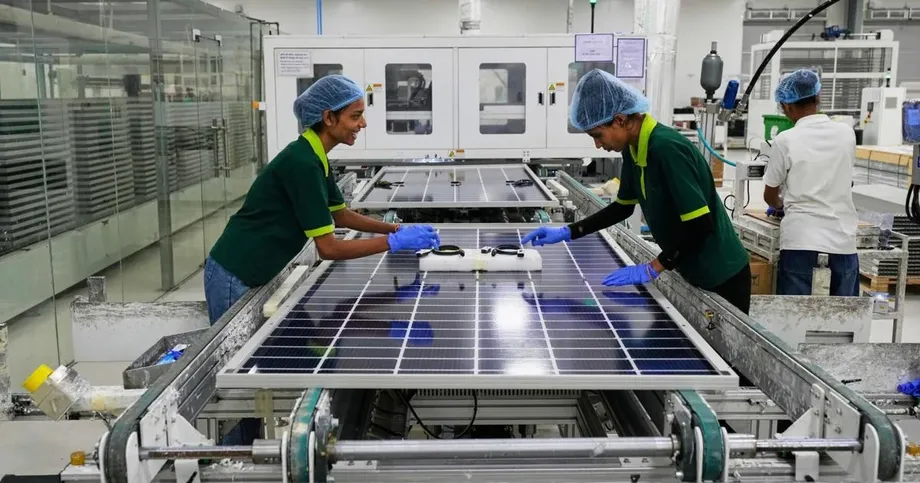
India's operational battery storage was estimated at 8.5 to 9.3 GWh by the middle of 2026, against a cumulative tender pipeline of 281 GWh. Phase III's planned 50 GWh is more than five times that operational base, showing the construction effort required.
Location will matter as much as volume. Batteries near a congested solar project can absorb electricity at midday and release it when a transmission line has spare capacity. A network that remains congested throughout the day may still require additional lines.
Vineet Mittal, chairman and founder of Avaada Group, said the programme brings together the three tasks required for reliable clean electricity:
By bringing transmission and battery storage into one programme, it recognises that generation, delivery and availability must advance together,
A second storage scheme expands the effort
The Cabinet also approved a Rs 14,500 crore funding scheme in early November 2026 to support 92 GWh of storage. Financial assistance is scheduled between financial years 2026-27 and 2030-31, with projects carrying an estimated investment requirement of Rs 97,600 crore.
The programme covers 30 GWh of batteries, 60 GWh of pumped storage and 2 GWh of emerging technologies. Pumped storage uses electricity to move water uphill into a reservoir, then releases it through turbines when power is needed.
Projects will be allocated through competitive bidding on tariffs, and electricity distribution companies in both the public and private sectors are eligible for financial support. Battery developers must source at least 40% of components from Indian manufacturers.
The funding is described as viability gap support: public money helps bridge the difference between a project's costs and the revenue needed to make it financially workable. Its storage mix also spreads investment across batteries, water reservoirs and newer technologies, rather than relying on batteries alone.
Coal planning points in a different direction
Coal supplied about 71% of India's electricity in 2025, according to figures attributed to energy research organisation Ember; the initial estimate attributed to Ember was about 75%. Either figure shows how much daily electricity supply still depends on coal even as clean generating capacity expands.
Ghanshyam Prasad, chair of the Central Electricity Authority, has said India could require up to 150 GW of additional coal capacity by 2035, compared with 240 GW in the initial account of his remarks. Power planners are concerned about rising demand and maintaining supply when solar and wind production falls.
Berkeley researchers reach a different economic conclusion. They estimate that additional coal plants would be unnecessary under the clean power goal beyond roughly 35 GW already under construction, initially put at about 30 GW. Their argument depends on delivering the clean generation, storage and network investment needed to meet demand reliably.
Existing coal plants create another operational difficulty: many cannot quickly reduce output when renewable electricity becomes abundant. The grid then has less room for solar and wind, even during hours when their generation is cheap.
Abhyankar warned that newly built coal plants could become stranded assets if India meets its clean energy targets. That means expensive facilities could operate too little to recover their investment. Utilities therefore face decisions about how much supply to contract from new coal plants while also investing in renewable electricity and storage.
Cheap afternoons, expensive evenings and missing buyers
India's electricity market already shows why more solar capacity alone will not resolve shortages. Abhyankar and Phadke estimate that about 40 GW of auctioned solar projects remain without buyers, while around 8 GW of solar serving customers through direct grid access began operating in 2025.
Solar production can push daytime exchange prices close to zero. After sunset, Indian Energy Exchange prices have repeatedly reached Rs 10 per unit, while Tamil Nadu has paid up to Rs 37. One unit of electricity is one kilowatt hour.
The Solar Energy Corporation of India's auction for 1,000 megawatts of renewable electricity and storage offers a different purchasing model. It secured a supply pattern designed to resemble conventional thermal generation, including high availability outside solar hours, at Rs 5.25 to Rs 5.26 per unit, fixed for 25 years.
Abhyankar and Phadke estimate that a clean power pathway designed around the lowest total cost could reduce average electricity procurement costs by about 15% after adjusting for inflation, saving more than Rs 2 lakh crore annually by 2035. Those are projected savings from their analysis, with delivery depending on storage, networks and changes in demand.
Consumers could help absorb cheap daytime electricity by moving water pumping, vehicle charging, cooling or some factory operations into solar hours. Lower daytime tariffs would give them a financial reason to make that shift.
Ajay Shah, an economist at the Mumbai based XKDR Forum, argues that restrictions on direct electricity sales and higher industrial tariffs used to subsidise other customers can discourage investment. His proposed changes include easier access for private buyers and foreign investors. Household bills would still reflect network charges and other utility costs alongside the cost of generation.
Energy security extends beyond battery cells
India depends heavily on imported battery cells, mainly from China. Expanding storage therefore brings a supply chain challenge alongside the opportunity to replace purchases of imported fossil fuels with electricity produced domestically.
Kishor Nair, chief executive and director of Avaada Energy, says India imports close to 90% of its crude oil requirement. He advocates wider electrification of transport, buildings, agriculture and industrial processes, supported by renewable generation and storage.
Abhyankar and Phadke estimate that more than 70% of a battery project's lifetime economic value could potentially remain in India even when cells are imported. Pack assembly, power electronics, software, construction, operations, financing and ownership can all generate domestic income. They also call for recycling facilities to recover valuable materials and for expanded domestic manufacturing.
India's challenge is now broader than installing enough panels and turbines. Projects need buyers, transmission lines need to be ready, storage must be placed where it is useful, and utilities must secure reliable supply at affordable prices. The 2030 capacity milestone and Phase III's deadline in financial year 2032-33 will show whether those parts are advancing together before the 900 GW goal falls due.
Key Points
- India aims for 900 GW of capacity from sources other than fossil fuels by 2035, against 304.33 GW recorded in August 2026.
- Green Energy Corridor Phase III has a stated outlay of Rs 1,86,405 crore and targets completion by financial year 2032-33.
- The scheme supports transmission for up to 135 GW of renewable generation and deployment of 50 GWh of battery storage.
- About 6,900 GWh of renewable electricity faced delivery restrictions during 2025-26 because generation and transmission completion did not match.
- A further funding programme supports 92 GWh of batteries, pumped storage and emerging technologies.
- Coal expansion, electricity purchasing rules, storage construction and dependence on imported battery cells remain central planning challenges.