Eight days to a milestone, nine days to Rs 1,110 crore
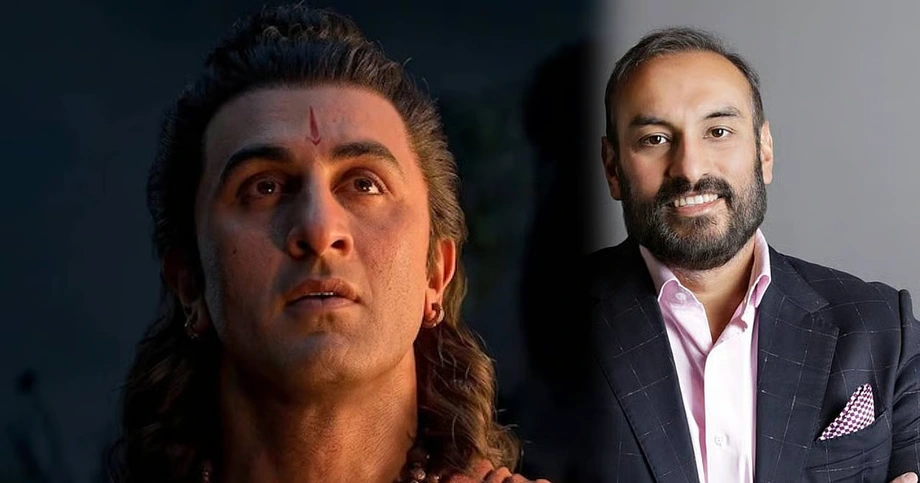
Ranbir Kapoor's Ramayana: Rise of a Legend crossed Rs 1,000 crore in worldwide ticket sales on November 12, 2026, eight days after its release, before reaching an estimated Rs 1,110.70 crore on November 13. The opening has made the Nitesh Tiwari film Kapoor's biggest commercial success, while leaving a substantial distance to the Indian box office record held by Dangal.
Contents
- Eight days to a milestone, nine days to Rs 1,110 crore
- What the ticket totals mean
- Diwali changed the film's opening trajectory
- Where Ramayana stands in the record race
- Dangal remains nearly Rs 960 crore ahead
- Overseas strength changes the comparison with Dhurandhar 2
- Asian markets bring audiences beyond India
- Kannada becomes a substantial part of the Indian run
- A costly first chapter with a second still to come
- Key Points
Sacnilk tracking estimates put Ramayana's worldwide gross at Rs 1,033.55 crore after eight days, comprising Rs 675.05 crore from India and Rs 358.50 crore from overseas markets. After nine days, the totals stood at Rs 732.20 crore in India and Rs 378.50 crore overseas.
The film's next challenge is sustaining demand after the Diwali holidays. Its daily Indian earnings peaked at Rs 107.50 crore net on Monday, November 9, then declined for four consecutive days to Rs 47.85 crore on Friday, November 13.
Those numbers capture the two forces shaping its opening: a powerful holiday surge and a release reaching audiences across several Indian languages and Asian markets. Overseas ticket sales supplied about 34.1% of the worldwide total after nine days, giving the production a substantial source of income beyond India.
For readers unfamiliar with Indian financial units, one crore equals 10 million. The Rs 1,000 crore milestone therefore represents Rs 10 billion in ticket sales. Ramayana reached that threshold faster than most of the Indian films that have crossed it, although published rankings disagree about the precise order.
What the ticket totals mean
India's box office figures use two measures. Gross includes ticket taxes, while net removes those taxes. Worldwide totals combine India's gross receipts with overseas gross receipts, allowing the two markets to be added on the same basis.
Ramayana's Indian net collection reached Rs 564.60 crore after eight days and Rs 612.45 crore after nine. The corresponding Indian gross figures were Rs 675.05 crore and Rs 732.20 crore. The worldwide total of Rs 1,110.70 crore comes from adding the latter figure to Rs 378.50 crore overseas.
Sacnilk identifies its collections as tracking estimates, with overseas figures subject to revision. Its detailed running ledger gives Rs 353.50 crore overseas through day eight, compared with Rs 358.50 crore in the widely circulated milestone total, a difference of Rs 5 crore. Both sets of figures place the film above Rs 1,000 crore on its eighth day.
The November 14 live tracker also displayed Rs 6.90 crore in Indian net earnings at 10:03 a.m. IST. The completed ninth day provides the more useful comparison here, because the Saturday figure covered only part of the day's trading.
Diwali changed the film's opening trajectory
Ramayana opened worldwide on Thursday, November 5, earning Rs 64.85 crore net in India. Friday brought a decline to Rs 48.05 crore, followed by a Saturday recovery to Rs 69.80 crore and another fall to Rs 56.15 crore on Sunday.
Monday's Rs 107.50 crore was the turning point. Indian net receipts rose 91.5% from Sunday as the Diwali holiday period brought more people into cinemas. The daily tracking table places Monday as the strongest day of the run, followed by Rs 94.10 crore on Tuesday and Rs 70.65 crore on Wednesday.
Trade analyst Taran Adarsh linked Wednesday's business to another festival during the holiday period, Bhai Dooj. In a public post about the film's performance, he wrote:
The #BhaiDooj celebrations certainly provided an added boost on Wednesday
Thursday's Indian net collection fell 24.3% to Rs 53.50 crore across 24,042 screenings. Friday brought a further 10.6% decline to Rs 47.85 crore across 22,993 screenings. The next phase of the run therefore began with fewer screenings and lower revenue than the holiday peak.
The main dates show how quickly the release expanded:
- October 27: The makers held a special screening in Los Angeles.
- November 5: The film opened worldwide.
- November 9: Indian net earnings reached their highest daily total, Rs 107.50 crore.
- November 11: An Indonesian premiere extended the release into another Asian market.
- November 12: Hong Kong screenings began and worldwide receipts crossed Rs 1,000 crore.
- November 13: Estimated worldwide receipts reached Rs 1,110.70 crore.
Where Ramayana stands in the record race
Ramayana is widely listed as the 11th Indian film to cross Rs 1,000 crore worldwide and the third fastest to do so. The main comparison places Pushpa 2: The Rule and Dhurandhar: The Revenge, also called Dhurandhar 2, at seven days each, ahead of Ramayana's eight.
Published milestone tables contain disagreements: an alternative ranking puts Pushpa 2 at six days and Dhurandhar 2 at 10 or 11, while another list calls Ramayana the 10th entrant by omitting the first Dhurandhar. The broader list includes both Dhurandhar films, producing a total of 11.
Baahubali 2 reached the threshold in approximately 10 to 11 days. Jawan took 18 days and Pathaan 27, according to the milestone comparisons. Ramayana's opening therefore places it among the quickest Indian releases to reach this level of business.
Kapoor also gained a personal record. His previous highest worldwide earner, Animal, is listed at about Rs 915 crore. Ramayana passed that total during its opening week. Its Indian net collection of Rs 564.60 crore after eight days also exceeded the listed lifetime Indian net totals of Animal, Rs 556.36 crore, and Pathaan, Rs 544.28 crore.
Dangal remains nearly Rs 960 crore ahead
Dangal leads the worldwide comparison at approximately Rs 2,070 crore, helped by its major success in China. Using that rounded benchmark, Ramayana's ninth day total of Rs 1,110.70 crore leaves a gap of roughly Rs 959.30 crore. It has collected about 53.7% of Dangal's total.
Tiwari directed both films, creating an unusual connection between the current challenger and the record holder. Ramayana's rapid start has already made it a major release, while Dangal's position reflects the full course of its international theatrical run.
The nearer targets are smaller. Ramayana has passed Kalki 2898 AD at Rs 1,042.25 crore and Pathaan at Rs 1,055 crore. It would need another Rs 49.30 crore to reach Jawan's listed Rs 1,160 crore, followed by KGF Chapter 2 at Rs 1,215 crore and RRR at Rs 1,230 crore.
Further ahead are Dhurandhar at roughly Rs 1,307 crore, Pushpa 2 at Rs 1,742.10 crore, Baahubali 2 at Rs 1,788.06 crore and Dhurandhar 2 at Rs 1,813.39 crore. Each provides a closer measure of progress before the film can challenge Dangal.
Overseas strength changes the comparison with Dhurandhar 2
Dhurandhar: The Revenge earned Rs 1,078.29 crore worldwide during its first eight days, including Rs 807.29 crore in India and Rs 271 crore overseas. Against Ramayana's widely reported eighth day total of Rs 1,033.55 crore, its worldwide lead was Rs 44.74 crore.
The two films reached those totals through different market balances. Ramayana's Rs 358.50 crore overseas was Rs 87.50 crore ahead of Dhurandhar 2 at the same point. Inside India, Ramayana's gross receipts were Rs 132.24 crore lower.
International audiences supplied about 34.7% of Ramayana's eighth day worldwide total, compared with about 25.1% for Dhurandhar 2. The figures show why overseas performance matters so much to Ramayana: foreign markets narrowed a much larger gap in Indian ticket sales.
Sony Pictures handled international distribution, with the release described as reaching 59,000 screens worldwide. Overseas earnings were put at roughly $38 million after eight days, following an opening weekend below $25 million. The film's expansion into additional Asian markets continued during that period.
Asian markets bring audiences beyond India
Thailand generated just under $1 million in a week, while Malaysia contributed about $900,000 in less than a week. Cambodia delivered approximately $150,000 over its opening weekend, and Indonesia's November 11 premiere generated about $100,000.
Vietnam's estimated $350,000 was especially striking beside the usual $20,000 threshold described for Indian releases there. Ramayana passed that benchmark on its first day, and its cumulative receipts were about 17.5 times that amount.
Nepal contributed NPR 12.80 crore during the extended opening week, placing the film sixth among Indian releases in that market. Baahubali 2's stated record of NPR 25.20 crore was still nearly twice as large. Ramayana had earned just over half that benchmark.
The story has established local forms across several of these countries, including Thailand's Ramakien, Cambodia's Reamker and Indonesia's Kakawin Ramayana. Familiar characters and narratives give audiences a connection to the film even when Hindi is not their language.
Hong Kong added a later opening on November 12, exclusively at Broadway Cinemas. The film screens there in Hindi with Chinese and English subtitles. Its running time is 208 minutes, or three hours and 28 minutes, making language access and screening schedules practical parts of its international release.
Kannada becomes a substantial part of the Indian run
Hindi remained Ramayana's largest source of Indian revenue, contributing Rs 473.25 crore net after nine days, or 77.3% of the total. The other four language versions together supplied Rs 139.20 crore, nearly 23%.
Kannada led those versions at Rs 51.95 crore net, followed by Telugu at Rs 40.65 crore, Tamil at Rs 24.90 crore and Malayalam at Rs 21.70 crore. The Kannada version crossed Rs 50 crore on its ninth day, a reported first for a Bollywood production dubbed into that language.
The scale of that result stands out beside the listed Kannada net totals for Dhurandhar 2, Rs 3.87 crore, and Animal, approximately Rs 64 lakh. Yash, who plays Ravana and is closely associated with Kannada cinema through the KGF films, gives the production a prominent local star.
Karnataka's gross collection across all language versions reached a reported Rs 101.35 crore. That state total includes audiences watching Hindi and other versions as well as Kannada. The Kannada total, by contrast, measures the language version wherever it was screened.
Friday's language figures also show different patterns within the release. Hindi supplied Rs 36.25 crore, while Malayalam contributed Rs 3.25 crore, Kannada Rs 3 crore, Tamil Rs 2.75 crore and Telugu Rs 2.60 crore.
A costly first chapter with a second still to come
Producer Namit Malhotra has put the combined budget for the two films at around $500 million, reportedly including marketing. The first production's cost has been described as exceeding $200 million, while other budget accounts cite Rs 4,000 crore without consistently separating spending on the first film from the wider project.
Ticket receipts are shared among cinemas, distributors and producers. A worldwide gross total therefore translates into a smaller return to the production companies. A precise measure of cost recovery is unavailable because the detailed spending allocation, distribution terms and income from other rights have not been disclosed.
Prime Focus Studios, DNEG and Yash's Monster Mind Creations are behind the production. DNEG supplies the visual effects, while Hans Zimmer and A.R. Rahman composed the score. Kapoor plays Rama, Sai Pallavi plays Sita, Ravie Dubey plays Lakshman and Sunny Deol plays Hanuman.
The adaptation follows Rama's exile and the conflict arising from Sita's abduction by Ravana. The first film ends before the larger story is complete, making the second instalment part of the audience's continuing investment in the project.
The current release plan places part two at Diwali 2028, following a reported delay of two years because of the scale and complexity of the visual effects. An older release description still lists Diwali 2027. The newer schedule points to 2028, with no exact calendar date announced.
For the film now in cinemas, the immediate measure is the second weekend: whether Indian collections recover after Friday's decline and whether the growing overseas release continues to supply roughly a third of worldwide business. Those receipts will determine how quickly Ramayana moves through the remaining box office rankings.
Key Points
- Ramayana crossed Rs 1,000 crore worldwide on November 12, its eighth day in cinemas.
- Estimated worldwide receipts reached Rs 1,110.70 crore after nine days, including Rs 378.50 crore overseas.
- Indian net earnings peaked at Rs 107.50 crore on November 9 and fell to Rs 47.85 crore on November 13.
- The film overtook Animal to become Ranbir Kapoor's highest worldwide earner.
- The Kannada version collected Rs 51.95 crore net in nine days.
- Dangal's approximately Rs 2,070 crore worldwide record remains about Rs 959 crore ahead.
- The second instalment is currently scheduled for Diwali 2028.