A Kai Tak surprise becomes a streaming release
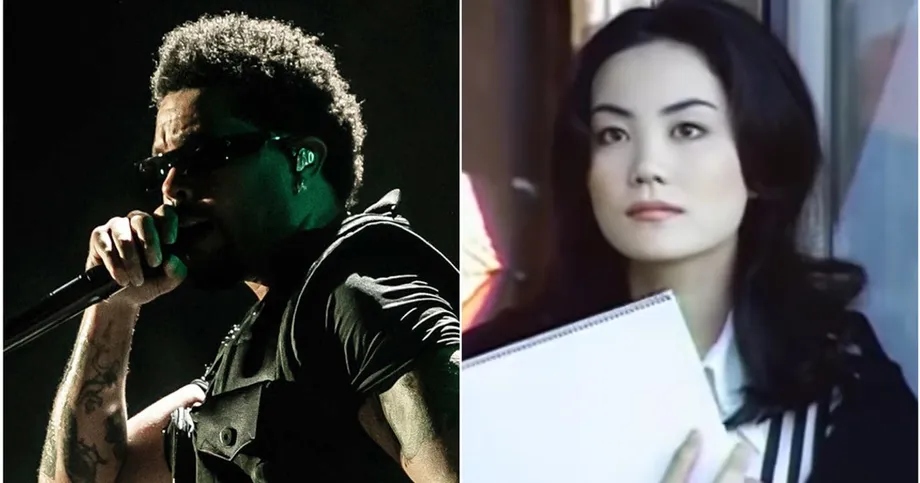
The Weeknd's Hong Kong tribute has moved from a stadium screen to streaming platforms. Released on NetEase Cloud Music on November 1, 2026, Hong Kong builds its chorus around Faye Wong's 1993 Cantonese recording Seasonal Wind, also known in English as Monsoon. The single arrived after the Canadian singer completed four concerts at Kai Tak Stadium, where more than 40,000 people attended the opening show on October 24.
Contents
- A Kai Tak surprise becomes a streaming release
- What listeners hear in the Faye Wong sample
- The melody's journey began in Taiwan
- How the four concert nights unfolded
- A film tribute made around the city
- Why Christopher Doyle's photograph matters
- The invitation that almost brought Wong onstage
- Millions of views sent listeners back to the original
- A local release within a much larger tour
- Key Points
The recording runs three minutes and 37 seconds and comes through Republic Records and The Weeknd's XO label. Its featured artist credit, 王菲季候風, joins Wong's Chinese name to the title of the sampled song. That unusual wording puts both the singer and her older recording prominently alongside the new release.
November 1 at midnight was the release time given for Hong Kong and other Asian streaming services, while the single's streaming release date was also listed as October 31. NetEase Cloud Music's page gives November 1 as the single's launch date. The launch followed the final Kai Tak concert on October 31, turning a song introduced especially for the city into something listeners elsewhere could play.
Abel Tesfaye, the singer behind The Weeknd, had already signalled his interest in Wong by sharing her 1996 album Fuzao, also known as Impatience, on social media in late September. The finished project brings that musical interest together with Hong Kong film locations, a photograph from cinematographer Christopher Doyle's collection and a personal connection with actors Tony Leung and Carina Lau.
What listeners hear in the Faye Wong sample
Wong's Seasonal Wind appeared on her 1993 Cantonese album No Regrets. Her voice and the song's melody form a central part of Hong Kong, set against Tesfaye's English verses, synthesizers and deep rhythm. The result connects his dark R&B sound with a ballad familiar to listeners who grew up with Hong Kong pop.
Sampling means taking part of an existing recording and placing it inside a new song. Here, listeners hear Wong's recorded singing, giving her original performance a continuing role in the music more than three decades later.
Tesfaye's verses describe an intense relationship that is already slipping away. Wong's Cantonese chorus compares an uncontrollable relationship to a seasonal wind, carrying images of emptiness and lasting heartache. The emotional connection helps the two recordings fit together: each voice describes affection that cannot make someone stay.
Hong Kong also appears in Tesfaye's lyrics as the place where the narrator remains and waits. The city therefore serves two purposes. It is the real place being celebrated by the release and the setting for the song's story of separation.
The melody's journey began in Taiwan
Seasonal Wind has a history that reaches back further than Wong's recording. It was adapted from the Mandarin song You Yi Tian Wo Hui, sung by Taiwanese singer Zhang Qiongyao in 1991. Chen Xiaoxia composed the music, and Yang Lide wrote the Mandarin lyrics.
For Wong's Cantonese version, lyricist Pan Yuen-leung wrote a different set of words around that melody. Wong later acknowledged the connection in performance: during a 1994 concert rendition, she sang the Mandarin version in the latter part of the song.
The melody has now travelled through three distinct settings: a Mandarin song in Taiwan in 1991, a Cantonese recording in Hong Kong in 1993, and an English language single incorporating Wong's voice in 2026. Wong's version arrived two years after Zhang's; The Weeknd's use comes 33 years after Wong's release.
That history gives the new single a wider meaning than a meeting between two famous singers. Its central melody had already crossed a language boundary before Tesfaye used it. Hong Kong carries that process into another musical style while keeping Wong's Cantonese voice at its centre.
How the four concert nights unfolded
The Weeknd introduced Hong Kong midway through his October 24 opening concert at Kai Tak Stadium. The song's title appeared on the venue's giant screens, accompanied by a video filmed in the city. Wong's familiar voice became the surprise inside an evening otherwise built around his established catalogue.
The opening performance included more than 30 songs across roughly two hours, with hits including The Hills, Starboy, Die For You and Blinding Lights. Hong Kong added something specific to the place hosting the show, rather than another familiar track from the tour.
The release followed a short sequence of concerts and online milestones:
- October 24: Hong Kong premiered with its city video at the first Kai Tak concert.
- October 25: The Weeknd shared performance footage on Instagram and played the second Hong Kong show.
- October 28: By noon, the Instagram clip had passed 16.6 million views.
- October 30 and 31: The remaining two Kai Tak concerts completed the Hong Kong engagement.
- November 1: The studio recording became available on NetEase Cloud Music and other streaming platforms in Asia.
The October 24 premiere had introduced the song before a commercial release date was announced. Its arrival on streaming services gives audiences access beyond concert footage and clips shared by fans.
Kai Tak's engagement had also grown before the singer arrived. The expansion to four nights added October 24 and 25 to the originally scheduled October 30 and 31 concerts, doubling the number of Hong Kong performances.
A film tribute made around the city
Director Evan Larsen made the Hong Kong video in about a week, filming in Central, on The Peak and along the Tsim Sha Tsui waterfront. Those locations give the project a recognisable physical setting, from dense streets to elevated views and Victoria Harbour.
In an interview about the video, Larsen, who directed it, described Tesfaye's interest in the films that shaped its appearance:
The Weeknd is a massive movie fan and loves Hong Kong cinema from the late '80s and the early '90s,
Tesfaye sent Larsen a list of films to watch before arriving. The main references included Wong Kar-wai's Chungking Express and Fallen Angels, alongside John Woo's A Better Tomorrow and Hard-Boiled. The choices connect the video to both intimate city dramas and Hong Kong action cinema.
Blue tones, neon streets, reflections in mirrors and images that appear to skip or repeat frames help give the video its period feel. The frame effect, often called step printing, changes how movement appears, making parts of an image seem blurred or broken into beats. Together with the harbour views, it places the new song inside a visual language associated with Hong Kong films of the 1990s.
Why Christopher Doyle's photograph matters
The single's cover uses a Hong Kong photograph from Christopher Doyle's private collection, featuring Victoria Harbour and the Star Ferry. A black title block carries the Chinese characters for Hong Kong and the credit naming Wong and Seasonal Wind.
Doyle was the cinematographer on Chungking Express, the 1994 film starring Wong and Tony Leung. A cinematographer shapes how a film looks through choices about lighting, lenses and camera movement. Using his photograph gives the cover a direct connection with one of the films behind the video's style.
Carina Lau said Tesfaye asked her to help contact Doyle. Her account adds a personal link to the visual choices: the singer's interest extended from watching Hong Kong films to seeking contact with someone who helped create their images.
The music, cover and video consequently draw on related parts of the city's culture. Wong supplies the sampled voice, Doyle supplies the cover image, and Hong Kong streets and film references shape the moving pictures.
The invitation that almost brought Wong onstage
Lau also said she helped contact Wong about a possible appearance as a concert guest. Wong was in Beijing and unavailable, so the hoped for appearance did not happen. Her presence in the song comes through the sampled recording.
Tesfaye met Lau and her husband, Tony Leung, for dinner before the concerts. Lau said their managers helped arrange the meeting after Tesfaye's team mentioned that he was a fan of Leung. Their conversation included his interest in Hong Kong cinema and Leung's acting experience.
The singer later shared a photograph of the meeting with Wong's Dream Person, also translated as Dream Lover, as its background music. That song featured in Chungking Express, linking the dinner photograph to the same film that connects Wong, Leung and Doyle.
Lau and Leung subsequently attended a Kai Tak concert and visited Tesfaye backstage. Lau said she was moved by the song. Her account ties together several parts of the project, from the dinner and the attempt to invite Wong to the contact with Doyle.
Millions of views sent listeners back to the original
The Weeknd's Instagram performance clip drew more than 13.9 million views and 800,000 likes within two days. By noon on October 28, views had passed 16.6 million. Around the November 1 release, the total exceeded 19 million views and 1.14 million likes.
Attention also returned to Wong's older recording. Listeners revisited the original video on her official YouTube channel, adding comments and sharing memories. Seasonal Wind climbed music charts, reaching No. 1 on the rising charts of both QQ Music and NetEase Cloud Music. Rising charts track songs gaining attention quickly, giving an older recording another route into current listening habits.
Hong Kong Tourism Board and Cathay Pacific used Seasonal Wind in social media promotional videos. On Douyin, users paired it with their own Hong Kong travel photographs and clips, including harbour views, older streets and restaurant signs.
The response moved through several stages: a stadium audience recognised Wong's voice, a global singer's account spread the performance, and listeners returned to the older track. Tourism organisations and travellers then used that familiar sound to accompany their own images of the city. The song became a shared soundtrack across the concert, music platforms and travel posts.
A local release within a much larger tour
Hong Kong belongs to a wider pattern of songs associated with places on The Weeknd's tour. He has also introduced material linked to Brazil and Japan, with tracks appearing under the names Rio and Tokyo. His album Hurry Up Tomorrow already includes the place names São Paulo and Niagara Falls.
The Hong Kong project has a particularly close connection between its setting and its construction. Its title names the city, its chorus uses a Cantonese classic, its video was filmed locally, and its artwork comes from a cinematographer associated with Hong Kong cinema.
The After Hours Til Dawn tour began in 2022 and had sold more than 7.5 million tickets worldwide by the end of the Hong Kong run. The Asian schedule expanded from 11 shows to 17, an increase of six concerts, or about 55%. Hong Kong's four nights formed a substantial part of that regional schedule.
The next scheduled performances were November 4 and 5 at TM Stadium Nasional in Bukit Jalil, Kuala Lumpur. Tesfaye also told Hong Kong audiences that he regretted leaving the city off earlier tours and intended to return on future visits.
For Hong Kong listeners, the release leaves something lasting after the stadium shows: a new recording that carries the city's name and a familiar Cantonese voice to audiences around the world. For listeners discovering Wong through The Weeknd, it also opens a route back to a 1993 album and a melody first recorded in Taiwan two years earlier.
Key Points
- Hong Kong reached NetEase Cloud Music on November 1 after The Weeknd completed four Kai Tak Stadium concerts.
- The single samples Faye Wong's Seasonal Wind, also known as Monsoon, from her 1993 album No Regrets.
- The melody originated in Zhang Qiongyao's 1991 Mandarin song You Yi Tian Wo Hui.
- Evan Larsen directed the city video, while the cover uses a Hong Kong photograph from Christopher Doyle's collection.
- Carina Lau said Wong was invited to appear as a concert guest but was unavailable in Beijing.
- The performance clip exceeded 19 million views, while Wong's recording reached No. 1 on QQ Music and NetEase Cloud Music rising charts.