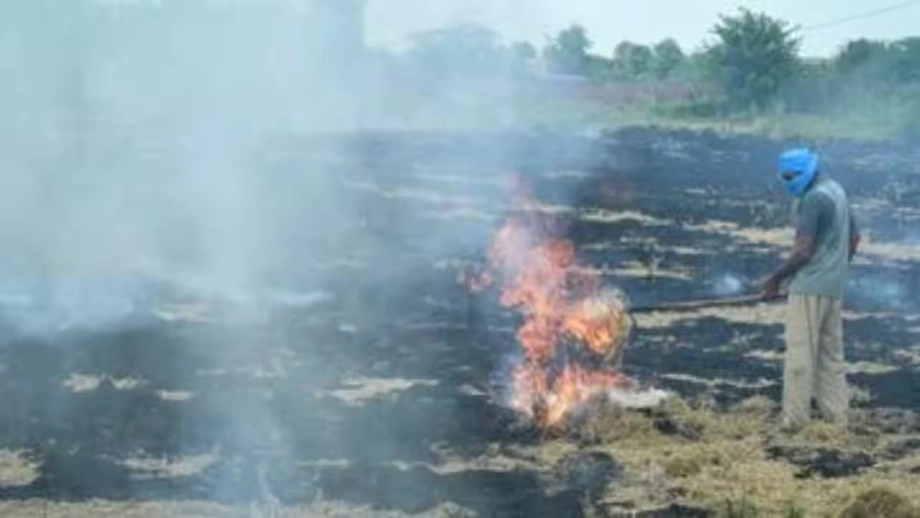
A sharp pollution rise puts Punjab under pressure
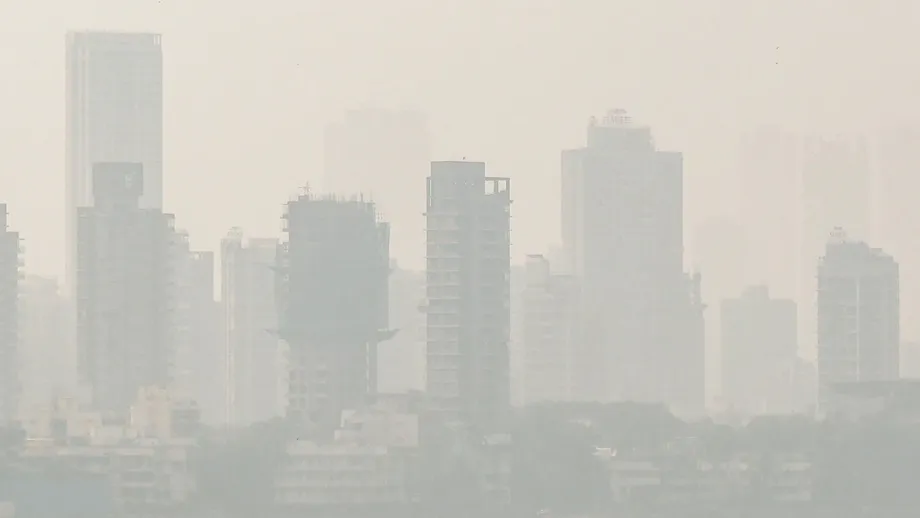
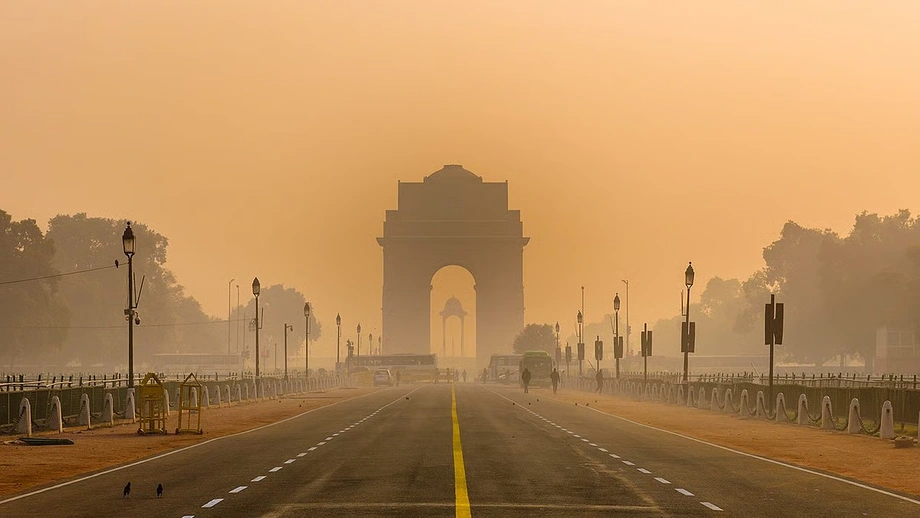
Delhi's Air Quality Index climbed from 117 on October 31 to 377 on November 4, 2026, as a burst of farm fires in Punjab intensified a dispute over responsibility for the capital's polluted air. Delhi Environment Minister Manjinder Singh Sirsa said Punjab recorded 584 fires on November 3, almost six times the 98 recorded the previous day.
Contents
- A sharp pollution rise puts Punjab under pressure
- What the pollution estimate tells residents
- How the fire season developed
- Why police records and satellite counts are contested
- Who faces action over the fires?
- Machinery funding becomes another point of dispute
- Earlier progress shows why daily spikes still matter
- AAP rejects Delhi's accusations
- What Delhi is doing while the dispute continues
- Key Points
Speaking at the Integrated Command and Control Centre in Shastri Park on November 5, Sirsa accused the Aam Aadmi Party government in Punjab of understating the burning and failing to get machinery to farmers in time. He cited the Decision Support System, or DSS, which estimated that stubble burning contributed 20.2 per cent of Delhi's pollution on November 4.
Punjab Pollution Control Board figures covering enforcement through November 5 recorded 2,787 fire incidents, 710 police cases and environmental compensation charges totalling Rs 46.10 lakh. They also recorded proceedings against officials in 18 cases, adding another layer to Sirsa's criticism that administrative accountability was lacking.
AAP rejected his allegations and accused Delhi's BJP government of using Punjab's farmers to deflect attention from pollution within the capital. The dispute brings together three different issues: how many fires occurred, how much smoke reached Delhi, and whether farmers received practical alternatives to burning.
Delhi's AQI of 377 falls in India's very poor category, below the severe category that begins at 401. A reading of 391 reported on November 6 placed the city close to that boundary. For residents, the immediate concern was worsening air while governments argued over its causes.
What the pollution estimate tells residents
The DSS estimate put stubble burning's contribution at about one fifth of Delhi's pollution on November 4. The remaining share, about four fifths, came from other sources represented in the estimate. Sirsa himself acknowledged that vehicle emissions from neighbouring areas also added to the capital's pollution.
Stubble is the straw and stalks left after a crop is harvested. Burning it releases smoke and fine particles that can travel beyond the field. The amount reaching Delhi depends on the fires, wind direction and weather conditions that either disperse pollution or keep it near the ground.
Sirsa attributed part of the deterioration to smoke carried from Punjab by winds associated with western disturbances, weather systems that pass across northern India. He argued that no major increase in construction, industrial activity or polluting vehicles entering Delhi explained the sudden rise.
Weather also affects pollution already being produced by roads, vehicles, industry and waste burning. When air disperses slowly, emissions can accumulate even without a large increase in activity. Delhi therefore faces both incoming smoke and pollution generated within the wider urban region.
Barnala was reported to have a reading labelled AQI of 1,104 on the Friday morning. India's standard national AQI scale runs from zero to 500; the monitoring platform and calculation behind the Barnala figure were not identified. Delhi's readings and the attributed DSS estimate provide the clearer measures for understanding the change described by the minister.
How the fire season developed
Punjab's early harvest figures showed a small number of fires concentrated in a few districts. By September 21, 2025, the pollution board had recorded 46 incidents: 32 in Amritsar, six in Patiala, four in Tarn Taran and one each in Bathinda, Firozpur, Hoshiarpur and Sangrur.
Authorities had imposed Rs 50,000 in fines and collected Rs 15,000 at that point, with no police cases or adverse entries in land revenue records reported. Satellite reporting and village teams were being used to watch fields following Supreme Court directions for strict action.
The later figures describe the following developments across distinct reporting periods:
- September 15 to November 1, 2026: Punjab recorded 1,514 fires, compared with 2,084 during the corresponding period a year earlier.
- October 26 to November 1: Sirsa cited ICAR-IARI satellite monitoring that recorded 933 fires in Punjab, averaging about 133 daily.
- November 2 and 3: Sirsa said daily fires rose from 98 to 584.
- November 4: Satellite monitoring detected 467 fires across six study states, including 151 in Punjab; DSS estimated a 20.2 per cent contribution from stubble burning to Delhi's pollution.
- November 5: Punjab's pollution board recorded a seasonal total of 2,787 incidents and 710 police cases.
Punjab's count through November 1 was about 27 per cent lower than the comparable 2,084 a year earlier. The subsequent daily surge helps explain how a season showing improvement could still produce a serious pollution episode.
Why police records and satellite counts are contested
Sirsa accused the Punjab Pollution Control Board of publishing figures inconsistent with police records. He said Tarn Taran registered 90 cases concerning stubble burning on October 28, while the reported fire count for all of Punjab that day was 96.
For October 24 to 31, he cited 271 police cases in Tarn Taran, including 189 concerning stubble burning. In another statement, he referred to more than 1,000 known burning incidents and 271 cases filed against farmers across Punjab. The descriptions gave different scopes for the figure of 271 and left the relationship between those counts unexplained.
Sirsa, Delhi's environment minister, used the claimed mismatch to challenge the regulator's figures:
"Either the FIRs are false or PPCB's data is," Sirsa said.
A satellite fire detection, a field inspection and a first information report, or FIR, count different stages of monitoring and enforcement. An FIR formally records an alleged offence and starts a police investigation. To compare police and satellite records accurately, authorities need to match the location, date of burning and date of registration for each incident.
Punjab's enforcement figures show why that matching matters. Officials inspected 2,194 locations out of 2,787 reported incidents and confirmed burning at 994 locations. About 79 per cent of reported locations had therefore been inspected, while confirmation was recorded at about 45 per cent of inspected locations. The figures leave a substantial gap between initial detections and confirmed field findings.
Who faces action over the fires?
Punjab's pollution board recorded 710 FIRs under Section 223 of the Bharatiya Nyaya Sanhita, the criminal law provision concerning disobedience of an order issued by a public servant. Its figures also listed 829 adverse entries in land revenue records and 786 warning or show cause notices through November 5.
Environmental compensation charges totalled Rs 46.10 lakh, equivalent to Rs 4.61 million. A show cause notice asks the recipient to explain an alleged failure before the authority decides on further action.
Sirsa cited 494 FIRs in connection with 2,196 fires between October 29 and November 3. He said no chargesheets or suspension orders against nodal or supervisory officials had been reported in the figures he used. The board's record through November 5, meanwhile, listed prosecution proceedings against officials in 18 cases, a different stage of action from a suspension or chargesheet.
The Commission for Air Quality Management, which coordinates pollution measures across Delhi and surrounding areas, had issued notices to the deputy commissioners of Bathinda, Faridkot, Fazilka and Jalandhar, and Barnala's senior superintendent of police, according to Sirsa. He also said the commission reviewed the sudden rise in fires with senior administrative and police officials from 12 Punjab districts.
Machinery funding becomes another point of dispute
Sirsa said the Centre had released Rs 5,000 crore for equipment such as Happy Seeders and balers, but accused Punjab of failing to ensure farmers could obtain machines when needed. A Happy Seeder plants the next crop through retained straw, while a baler gathers straw into bundles for removal and use elsewhere.
In a more specific funding statement, he cited Rs 2,056.50 crore released to Punjab under the crop residue management scheme from the financial year 2018-19 through 2025-26. He also said Rs 430.87 crore had been released against a Rs 592.57 crore allocation for 2026-27, about 73 per cent of that allocation. He did not explain the scope of the broader Rs 5,000 crore figure.
Sirsa said the Union agriculture minister had sought utilisation certificates from Punjab. Such certificates account for how public funds have been spent. For farmers, the practical issue is whether equipment is available locally, at an affordable cost and during the short interval between harvesting one crop and planting the next.
The Delhi minister linked his demand for enforcement to the need for equipment:
"Punjab's farmers need machines, not FIRs. Delhi needs clean air, not AAP's revenge," Sirsa said.
Punjab was estimated to generate 18.80 million tonnes of paddy straw during the harvest season, compared with 7.97 million tonnes in Haryana and 0.85 million tonnes in the Uttar Pradesh portion of the National Capital Region. Punjab's estimated volume was about 2.4 times Haryana's, showing the scale of collection, transport and processing required.
Earlier progress shows why daily spikes still matter
Punjab's experience in October 2024 offers a useful comparison. By October 22 that year, the state had recorded 1,581 fires, against 1,794 by the same date in 2023, 3,696 in 2022 and 5,438 in 2021. The 2024 total was about 12 per cent below 2023 and 71 per cent below 2021.
Yet October 22 alone recorded 71 fires in 2024, compared with 30 on that date in 2023. Another 945 incidents occurred between October 10 and 16, nearly 60 per cent of the total recorded through October 22. Falling seasonal totals can therefore coexist with concentrated periods of burning.
Authorities had registered cases against 920 farmers in 22 days during that 2024 period, imposed Rs 11 lakh in fines, collected Rs 9.72 lakh and made 437 adverse revenue entries. Those figures describe an earlier enforcement drive, separate from the November 2026 dispute.
Punjab also reported managing about 1.952 million tonnes of straw in 2024, up from 1.586 million tonnes in 2023. Plans called for 21 plants producing briquettes and pellets to begin operating by December 2024. These products compress straw into fuel; the announcement described the intended opening schedule rather than confirmed operation of all 21 plants.
AAP rejects Delhi's accusations
AAP's response went beyond disputing fire totals. The party accused Sirsa of misrepresenting a photograph of officials extinguishing a stubble fire as evidence that Punjab Police was enabling burning. It also accused the BJP government in Delhi of failing to control the capital's own pollution.
Responding online, AAP challenged Sirsa's account of the photograph and the conduct of Punjab's officials:
A photograph showing officials extinguishing a stubble fire is being twisted to make it appear that Punjab Police was enabling it.
AAP MP Sanjay Singh cited annual Punjab fire totals falling from about 71,000 in 2021 to 49,922 in 2022, 36,663 in 2023, 10,909 in 2024 and 5,114 in 2025. Those annual figures describe a longer decline, while the November dispute centres on a recent surge and its effect on Delhi.
Sirsa also alleged Punjab spent Rs 20 crore to Rs 25 crore on advertisements claiming there was no stubble burning that year. He questioned the appointment of Reena Gupta, an AAP spokesperson and former adviser to Delhi's environment minister, as Punjab Pollution Control Board chairperson. Gupta's response to that allegation was not recorded.
Sirsa said Punjab's own figures showed 77.38 per cent of its paddy area had been harvested by November 2, challenging Chief Minister Bhagwant Mann's claim that harvesting had not gathered pace. He also recalled Mann taking responsibility for addressing stubble burning at a November 4, 2022, press conference.
What Delhi is doing while the dispute continues
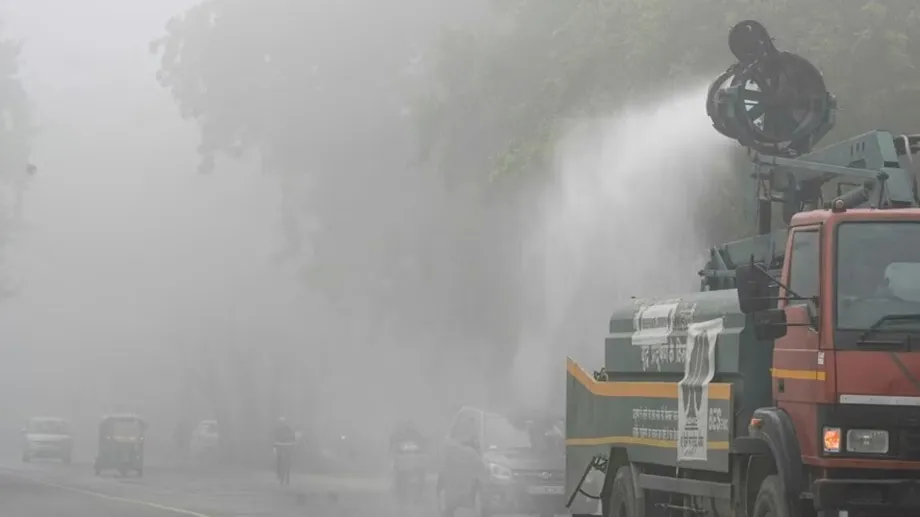
Delhi's government said it had increased mechanised road sweeping, water sprinkling, deployment of anti-smog guns, construction inspections and action against open burning. Sirsa said officials at the Shastri Park command centre were monitoring pollution hotspots, road dust, construction and waste management around the clock.
Sirsa apologised to residents of the National Capital Region affected by restrictions on vehicles below BS-VI emission standards entering Delhi. BS-VI standards limit pollutants released by vehicles. He asked residents to cooperate, use public transport and comply with emission requirements.
Sirsa also urged residents to report pollution violations through the Green Delhi app. His claim that Delhi's average AQI was about 10 per cent lower than corresponding levels in previous years came without a specified comparison period, leaving the recent daily readings as the more precise measure of the immediate deterioration.
Punjab's enforcement figures, the machinery dispute and Delhi's local measures point to work required on both sides of the border: preventing field burning, making straw management usable for farmers and reducing pollution from traffic, dust and waste. Residents face the combined result of those emissions and the weather that carries or traps them.
Key Points
- Delhi's AQI rose from 117 on October 31 to 377 on November 4, according to Environment Minister Manjinder Singh Sirsa.
- DSS estimated that stubble burning contributed 20.2 per cent of Delhi's pollution on November 4.
- Punjab's pollution board recorded 2,787 fire incidents and 710 FIRs through November 5.
- Sirsa alleged failures in fire reporting, machinery access and official accountability; AAP rejected his accusations.
- Punjab's fire count through November 1 was lower than a year earlier, before a sharp daily increase.
- Delhi announced stronger dust and burning controls while urging public transport use and compliance with vehicle emission rules.