A Historic Gathering in Shenzhen
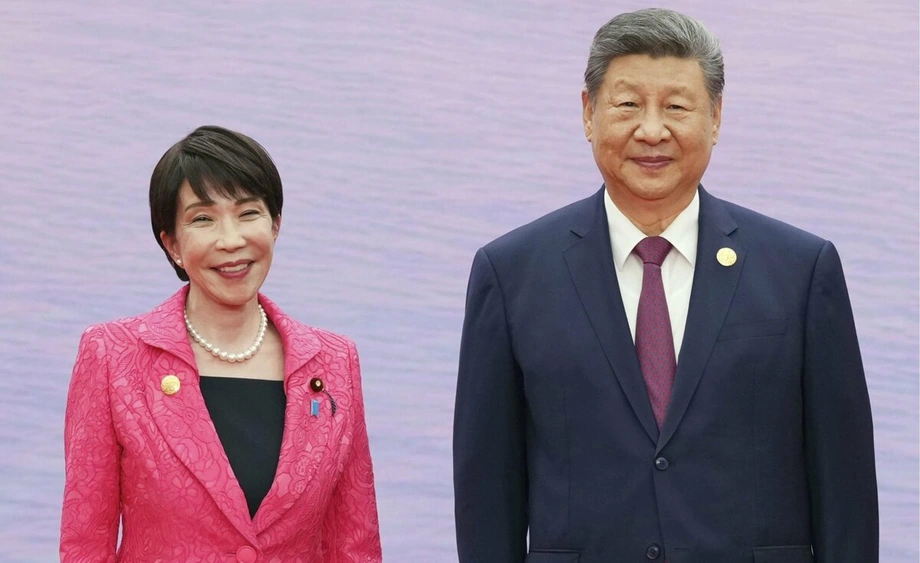
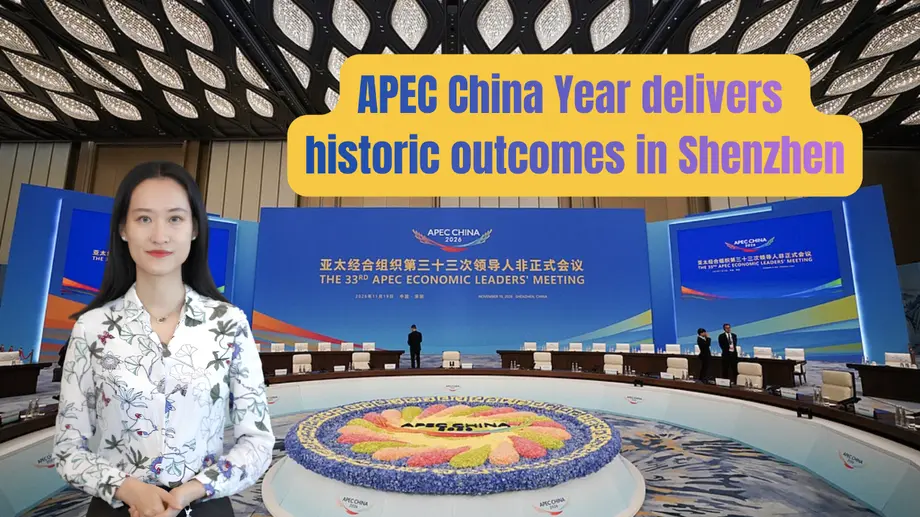
United States President Donald Trump, Chinese President Xi Jinping and Russian President Vladimir Putin met on November 19, 2026, at Kylin Villa in Shenzhen, China, on the sidelines of the Asia-Pacific Economic Cooperation summit. The gathering brought together the leaders of three permanent members of the United Nations Security Council for a 90-minute discussion. The meeting resulted in a four-point document titled the Declaration Toward Peace, which outlined commitments to global security and institutional reforms.
Contents
Chinese President Xi Jinping described the gathering as a milestone event and a groundbreaking move, invoking the shared history of the three nations as World War II allies. United States President Donald Trump stated that the leaders were making history and defended the decision to engage directly rather than avoid countries with competing interests. Russian President Vladimir Putin noted the unique nature of the diplomatic encounter, which marked the first time the top leaders of the three major nuclear powers convened in such a trilateral format.
The meeting addressed several pressing global challenges. The four-point declaration focused on United Nations reform, increasing the production and supply of refined petroleum products, curbing the jurisdiction of international bodies, and reducing nuclear risks. While the agenda covered broad strategic stability, the commitment to reform the United Nations immediately drew international attention, particularly from nations seeking changes to the global governance architecture established in 1945.
Commitments to UN Reform and Global Security
The first point of the Declaration Toward Peace addresses the structure and function of the United Nations. As permanent members of the United Nations Security Council, China, Russia and the United States committed to reforming the world body so that it can respond more effectively to global challenges and conform to its fundamental mission of international peace and security.
The United Nations Security Council is the most powerful body within the global organization, responsible for maintaining international peace and security. It consists of 15 members, including 10 elected countries that serve two-year terms and five permanent members with veto power over resolutions. Critics often point out that this five-member structure reflects the geopolitical realities of 1945 rather than the modern world, leading to frequent gridlock when major powers disagree.
Despite the stated commitment to reform, the declaration stops short of detailing specific institutional changes. It does not clarify whether the three powers envision expanding the permanent membership of the Security Council or altering the veto power held by the original five members. This vagueness leaves open the question of whether the existing power structure will remain untouched while broader administrative adjustments are pursued.
Beyond institutional reform, the three leaders agreed to address global energy markets. The declaration stated that the countries plan to increase the production and supply of refined petroleum products for the benefit of all nations while reaffirming the importance of stable energy flows. This agreement offers potential relief for major energy importers such as China and India, which have faced economic pressures and the threat of secondary sanctions for purchasing Russian petroleum products.
The third point of the declaration focuses on international legal institutions. The leaders asserted that the principle of state consent and respect for the immunities of state officials are of paramount importance. They concurred that the International Criminal Court and other similar bodies must not abuse their jurisdiction. The International Criminal Court is a permanent tribunal established by the Rome Statute in 1998 to prosecute individuals for international crimes such as genocide, war crimes and crimes against humanity. None of the three countries participating in the Shenzhen summit are signatories to the Rome Statute, and the court previously issued an arrest warrant for Russian President Vladimir Putin in 2023.
The fourth point of the declaration centers on nuclear weapons. The leaders reaffirmed that a nuclear war cannot be won and must never be fought, committing to conduct dialogue on reducing nuclear risks and preventing the proliferation of nuclear weapons. However, the joint statement contained no concrete pledges to reduce their existing nuclear arsenals, focusing instead on crisis management and stability frameworks.
India Presses for Permanent Representation
The trilateral commitment to UN reform has renewed focus on New Delhi's longstanding bid for a permanent seat on the United Nations Security Council. India argues that an international body created in the aftermath of World War II cannot adequately represent the modern world without including the most populous nation, a major economy, a leading democracy and a significant contributor to United Nations peacekeeping operations.
India formally announced its candidature for permanent membership in 1994 at the 49th session of the United Nations General Assembly. Securing a permanent seat requires an amendment to the United Nations Charter under Article 108. This process demands approval by a two-thirds majority in the 193-member General Assembly and ratification by two-thirds of member states, including all five existing permanent members of the Security Council. Because the United States, the United Kingdom, France, Russia and China each hold veto power over Charter amendments, any expansion of permanent membership requires their explicit consent.
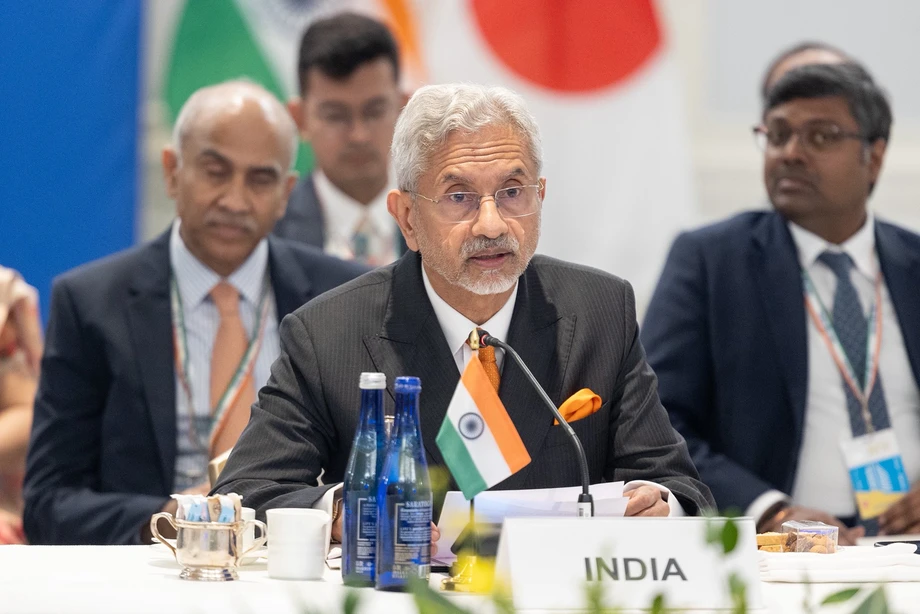
India's pursuit of institutional reform is closely coordinated with other major developing economies through multilateral groups. External Affairs Minister S Jaishankar has consistently argued that India's exclusion undermines the credibility and effectiveness of the United Nations. Speaking in 2022, Jaishankar noted that the absence of a country of India's scale from key global councils is detrimental to the international organization as a whole.
Diplomatic efforts by New Delhi are frequently pursued through the G4 grouping, which brings together India, Brazil, Germany and Japan. These four nations support each other's bids for permanent seats and advocate for broader representation for developing regions and unrepresented groups, including Africa, the Asia-Pacific, and Latin America and the Caribbean. Similar priorities are emphasized through the IBSA Dialogue Forum alongside Brazil and South Africa.
The G4 Push for Comprehensive Reform
The foreign ministers of the G4 countries have maintained a persistent campaign for comprehensive reform of the United Nations Security Council, holding high-level consultations on the sidelines of consecutive United Nations General Assembly sessions.
On September 27, during the 80th session of the United Nations General Assembly, G4 foreign ministers including Mauro Vieira of Brazil, Johann Wadephul of Germany, S Jaishankar of India and Iwaya Takeshi of Japan met in New York to assess the state of negotiations. They issued a joint statement emphasizing that the global body was increasingly incapable of fulfilling its role amid rising international instability.
The ministers reiterated that expansion of the Security Council in both permanent and non-permanent categories is essential. They also expressed strong support for the Common African Position enshrined in the Ezulwini Consensus and the Sirte Declaration, advocating for enhanced representation for African nations in both membership categories.
During the 81st session of the United Nations General Assembly, the G4 foreign ministers reconvened in New York on September 22 and September 23. The meeting included India's External Affairs Minister S Jaishankar, Brazil's Foreign Minister Mauro Vieira, Germany's Federal Foreign Minister Johann David Wadephul and Japan's Foreign Minister Motegi Toshimitsu.
In their joint statement, the ministers criticized the Intergovernmental Negotiations framework for failing to produce substantive outcomes after nearly 18 years of discussions. They expressed reservations regarding a proposed bridging proposal introduced before the commencement of text-based negotiations, arguing that it did not reflect the views of the clear majority of member states. The four ministers stressed that consensus should not be treated as a mandatory decision-making benchmark under the United Nations Charter and committed to developing a consolidated model leading to text-based negotiations.
Geopolitical Obstacles and Regional Dynamics
Despite growing international momentum from reform-oriented coalitions, significant obstacles remain in the path of permanent representation for emerging economies. Chief among these challenges is opposition from China, which has consistently resisted expanding the Security Council in a manner that elevates individual competitor nations.
While Beijing supports United Nations reform in principle, its representatives have argued that restructuring should prioritize the representation of developing countries and African nations rather than adding a small number of new permanent members. In November 2022, China's then Permanent Representative to the United Nations, Zhang Jun, opposed adopting a negotiating text or a timetable for reform, warning that such measures could cause conflict and derail the process. He also criticized countries seeking permanent membership to enhance their international standing, in remarks widely interpreted as an indirect reference to India and the G4.
Regional rivalries also influence the diplomatic landscape. Pakistan plays a leading role in the Uniting for Consensus group, also known as the Coffee Club, which opposes the creation of new permanent seats and advocates exclusively for expanding the elected, non-permanent category of membership. While Pakistan is not a permanent member and cannot unilaterally veto a Charter amendment, it utilizes diplomatic alliances within the General Assembly to counter India's candidature.
Academic analysts suggest that the trilateral declarations signed by major powers are often more symbolic than substantive. Jawaharlal Nehru University professor Rajan Kumar described the Shenzhen summit as a diplomatic gesture rather than a serious commitment to altering global governance structures. He noted that competing geopolitical interests among the United States, Russia and China make consensus on expanding permanent membership unlikely, particularly when the existing framework preserves their exclusive influence over international decision-making.
India Awaits Clarity as Regional Reactions Unfold
Official reaction in New Delhi to the Shenzhen summit remained cautious in the immediate aftermath of the meeting. Addressing a media briefing, Ministry of External Affairs spokesperson Randhir Jaiswal stated that India had taken note of the trilateral gathering but would wait for a fuller account of its concrete outcomes before offering a formal assessment.
The summit also triggered domestic political discussions in India. Opposition leaders questioned the country's absence from the high-level dialogue, pointing out that India's strategic positioning requires active engagement in major diplomatic forums where global rules are discussed.
The broader implications of the Shenzhen agreement for international governance remain uncertain. While the joint declaration places the topic of United Nations reform back into high-level diplomatic conversations, it contains no specific proposals for Security Council expansion. Without concrete backing from the existing permanent members for structural enlargement, India's decades-long pursuit of a permanent seat at the high table faces persistent diplomatic barriers.
At a Glance
- United States President Donald Trump, Chinese President Xi Jinping and Russian President Vladimir Putin held a 90-minute trilateral summit in Shenzhen on November 19, 2026.
- The three leaders issued a four-point Declaration Toward Peace covering United Nations reform, energy production, international court jurisdiction and nuclear risk reduction.
- The G4 foreign ministers of India, Brazil, Germany and Japan met during the United Nations General Assembly sessions to push for early text-based negotiations and comprehensive Security Council expansion.
- China and members of the Uniting for Consensus group continue to oppose the creation of new permanent seats, complicating India's long-term diplomatic objectives.
- New Delhi has adopted a wait-and-see approach, stating it requires a fuller account of the Shenzhen outcomes before evaluating their impact on global governance.