A New Congressional Assessment on Beijing and New Delhi
China is actively deploying military pressure, economic coercion, and maritime surveillance to suppress the rise of India as a major global power. This assessment comes directly from the US-China Economic and Security Review Commission, which published its 2026 annual report titled China's Other Front: India and the Future of US Strategy in the Indo-Pacific. The congressional panel warned that Beijing views India as a primary strategic challenge because of its massive population, status as the world's largest democracy, and critical geographical position along vital maritime trade routes in the Indian Ocean.
Contents
- A New Congressional Assessment on Beijing and New Delhi
- The May 2025 Conflict and Direct Support for Pakistan
- Economic Coercion and Industrial Pressures
- Cyberattacks and Online Disinformation Campaigns
- Maritime Surveillance in the Indian Ocean
- Border Disputes and Territorial Claims in Arunachal Pradesh
- Strategic Recommendations for Washington and New Delhi
- The Bottom Line
The findings offer a detailed look at how geopolitical tensions between the two Asian giants manifest across different arenas. While Prime Minister Narendra Modi and Chinese President Xi Jinping engaged in diplomatic talks in October 2024 and August 2025 to normalise border patrolling along the Line of Actual Control, underlying strategic distrust remains high. The congressional report highlights that Beijing is systematically working to constrain New Delhi's economic independence and limit its emergence as a manufacturing alternative.
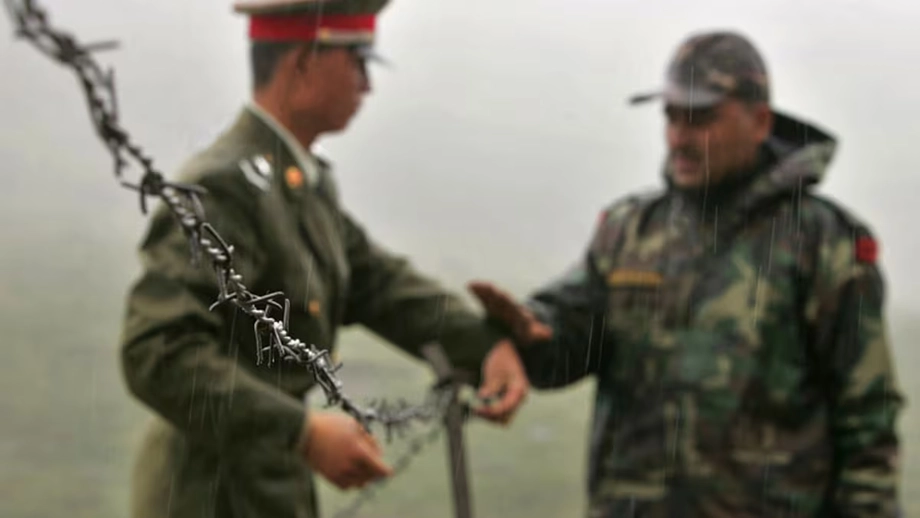
India shares a contested border spanning approximately 2,100 miles with China, much of it running across high-altitude terrain in the Himalayas. The panel noted that China continues to expand dual-use infrastructure such as airfields, railways, and logistics hubs across the Tibetan Plateau. These transport networks allow the People's Liberation Army to rapidly mobilize troops and equipment during a crisis, forcing India to continuously divert financial and military resources away from domestic development just to maintain border readiness.
The May 2025 Conflict and Direct Support for Pakistan
Military cooperation between Beijing and Islamabad forms a central pillar of the congressional findings regarding regional security concerns. The report examines the four-day military conflict that erupted between India and Pakistan in May 2025, which followed a deadly terrorist attack in Pahalgam on April 21, 2025, that left 26 people dead. In response to that violence, the Indian military launched Operation Sindoor, targeting militant infrastructure in Pakistan and Pakistan-occupied Kashmir.
During the subsequent hostilities, Pakistan utilized advanced military hardware procured from China, demonstrating how Beijing can bolster an ally during a crisis without directly engaging in combat. Stockholm International Peace Research Institute data cited in the document shows that China supplied 81 per cent of Pakistan's total arms imports between 2020 and 2024, making Beijing the primary defense supplier to Islamabad.
Indian military officials claimed during the conflict that Pakistan received real-time satellite imagery and intelligence support from Chinese assets. While Beijing neither confirmed nor denied those specific intelligence-sharing allegations, concrete proof of on-the-ground collaboration emerged later. In May 2026, state broadcaster China Central Television aired an interview featuring Zhang Heng, an engineer from the Aviation Industry Corporation of China, who confirmed that he and other corporate personnel provided technical support to the Pakistan Air Force during the fighting.
Lieutenant General Rahul Singh, an official with the Indian Army, noted that these Chinese contributions helped maximize the combat potential of Pakistan's military equipment during the confrontation. Security analysts quoted in the research point out that this dynamic creates the persistent threat of a two-front war for New Delhi, where any future conflict with Pakistan could quickly escalate into a broader confrontation involving Chinese logistical and technical backing.
Economic Coercion and Industrial Pressures
Economic leverage represents the sharpest instrument in Beijing's campaign to keep India in check, according to the congressional findings. China utilizes its dominance over global supply chains, critical industrial raw materials, and advanced technical expertise to protect its own manufacturing advantages and stall India's industrial ambitions.
Manufacturing initiatives inside India faced immediate setbacks when Chinese suppliers restricted exports of key industrial components, recalled specialized engineers, and withheld heavy machinery. For instance, Apple supplier Foxconn had to recall hundreds of Chinese engineers from its Indian facilities by July 2025, replacing them with technical workers from Taiwan to keep assembly lines running.
The pharmaceutical sector also experienced targeted economic pressure when Chinese producers slashed prices by 40 to 50 percent across 41 active pharmaceutical ingredients and key starting materials in 2025. This steep price drop threatened to undercut newly established Indian manufacturing plants that rely on government production incentives.
- China restricted the export of rare earth magnets, specialized fertilizers, and tunnel-boring machines to Indian buyers.
- Beijing imposed export controls on advanced battery technology to hinder the growth of India's clean energy sector.
- Chinese authorities required Indian companies in 2025 to certify that imported inputs would not be re-exported to the United States before temporarily suspending the rule amid broader trade negotiations between Donald Trump and Xi Jinping.
Cyberattacks and Online Disinformation Campaigns
Beyond conventional military friction and economic restrictions, the congressional commission documented a campaign of cyber operations and digital disinformation targeting India. The period following the May 2025 conflict saw a notable surge in coordinated cyberattacks directed against Indian critical infrastructure, including government digital services, telecommunications networks, and utility controls.
Security expert Sameer Lalwani provided testimony indicating that many of the most sophisticated distributed denial-of-service attacks aimed at Indian infrastructure traced directly back to Chinese digital infrastructure. Although the commission stated that it could not independently verify official state attribution for every individual cyber incident, the pattern aligns with broader state-backed digital espionage.
French intelligence sources uncovered another dimension of the information war, revealing that China orchestrated a social media disinformation campaign following Operation Sindoor. The operation utilized automated accounts and artificial intelligence to circulate fabricated images of debris from French-built Rafale fighter jets supposedly shot down by Chinese weaponry. According to the findings, these deceptive campaigns successfully convinced Indonesian officials to pause an active procurement process for Rafale aircraft.
Maritime Surveillance in the Indian Ocean
Maritime security in the Indian Ocean represents another arena where Chinese expansion challenges India's traditional strategic advantages. Approximately 80 per cent of China's total oil imports must cross the Indian Ocean and travel through the Strait of Malacca to reach domestic ports, creating a severe logistical vulnerability that Beijing has spent decades trying to mitigate.
To secure these critical sea lanes, China has established commercial and military infrastructure projects in friendly coastal nations across South Asia and East Africa, including facilities in Pakistan, Sri Lanka, and Djibouti. During the May 2025 conflict, Indian authorities noted the presence of an advanced Chinese survey vessel equipped with specialized sensors operating within India's exclusive economic zone, alongside a separate research ship entering the Bay of Bengal.
The congressional panel warned that Beijing is increasingly applying maritime tactics in the Indian Ocean similar to those used in the South China Sea. These methods include invoking disputed historical rights and formally renaming underwater geographical features, actions designed to establish legal precedents for future naval dominance close to India's coastline.
Border Disputes and Territorial Claims in Arunachal Pradesh
Diplomatic agreements signed in late 2024 aimed at easing eastern Ladakh border tensions failed to eliminate friction along other sectors of the 2,100-mile frontier. China continues to assert sweeping territorial claims over the Indian state of Arunachal Pradesh, referring to the region as South Tibet or Zangnan while refusing to recognize the McMahon Line as a legitimate international boundary.
To solidify these claims, Beijing has constructed dual-use villages, military outposts, and all-weather roads near sensitive locations such as Tawang. Chinese authorities also routinely publish standardized Mandarin names for locations inside Arunachal Pradesh and deny the validity of Indian citizenship documents issued to residents of the state.
The Indo-Tibetan Border Police reported ongoing low-level confrontations with Chinese troops at multiple remote mountain positions throughout late 2026. These persistent border frictions force New Delhi to maintain a high level of military deployment along the Himalayan frontier, consuming fiscal resources that could otherwise support national infrastructure development.
Strategic Recommendations for Washington and New Delhi
To counter Beijing's multi-domain pressure, the congressional commission outlined several specific policy recommendations for the United States government and its legislative branch. The panel emphasized that while India fiercely guards its strategic autonomy and refuses to join formal military alliances, its demographic, economic, and military scale makes it an indispensable partner for maintaining an open Indo-Pacific region.
- Direct the US Secretary of Defense and the Chairman of the Joint Chiefs of Staff to establish regular operational coordination with Indian counterparts regarding undersea and maritime domain awareness.
- Institute shared tracking systems for Chinese naval surface ships and submarine movements across the Indian Ocean.
- Create an Indo-American Strategic Leadership Exchange Programme to foster long-term professional relationships among emerging defense, governmental, and academic leaders.
- Launch a Comprehensive Critical Drug Diversification program to insulate pharmaceutical supply chains through joint manufacturing investments and long-term purchase commitments.
- Formally recognize the Gaden Phodrang Trust as the sole legitimate authority for the succession of the Dalai Lama while rejecting any successor appointed by the Chinese government.
These proposals reflect a growing consensus in Washington that closer cooperation with New Delhi is vital for checking Chinese regional ambitions. However, implementation faces ongoing hurdles, including complex US export control regulations, India's historical defense procurement ties with Russia, and strict domestic manufacturing mandates that complicate bilateral defense projects like the stalled GE Aerospace and Hindustan Aeronautics Limited F414 fighter engine partnership.
The Bottom Line
- A US congressional report states China utilized military, economic, and maritime pressure to suppress India's rise during and after the May 2025 conflict.
- China supplied 81 per cent of Pakistan's arms imports between 2020 and 2024 and provided on-site technical engineering support during Operation Sindoor.
- Beijing deployed advanced survey vessels near India's exclusive economic zone and executed economic restrictions on critical manufacturing inputs, rare earths, and pharmaceuticals.
- The report recommends deep bilateral defense integration, joint maritime surveillance in the Indian Ocean, and supply chain diversification programs between Washington and New Delhi.