Strategic Defense Expansion in Tokyo
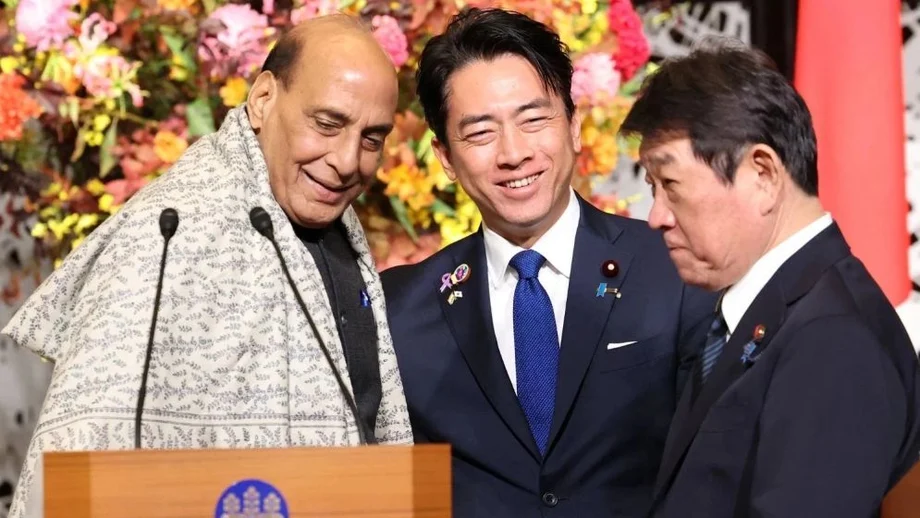
Defense Minister Shinjiro Koizumi and Foreign Minister Toshimitsu Motegi met with Indian counterparts Rajnath Singh and S. Jaishankar in Tokyo on Thursday, November 19, 2026, for the fourth India-Japan Foreign and Defence Ministers Dialogue, known as the two-plus-two meeting. The talks marked a significant step in bilateral security ties as the two nations signed a Letter of Intent that will, for the first time, allow Japan's Self-Defence Forces to use Indian test ranges for "live-fire training..., including those involving surface-to-ship missiles". General Masayoshi Arai, Chief of Staff of the Ground Self-Defense Force, previously confirmed that Japanese officials visited India to inspect potential sites, with the Chandipur Integrated Test Range in Odisha identified as a likely venue.
Contents
The agreement addresses a severe geographical constraint for Japan. Domestic testing grounds are limited in size, making it difficult to practice with long-range weapons safely. Japan's Type-25 surface-to-ship missile, an upgraded version of the Type-12 weapon, has a range of approximately 1,000 kilometers. Testing a weapon of this distance requires a large, controlled area where authorities can monitor its flight path and keep commercial shipping and civilian populations safe. India's coastal firing ranges facing the Bay of Bengal offer extensive safety zones and tracking infrastructure. The arrangement gives Tokyo vital testing options as it develops advanced standoff capabilities to deter regional threats, following a similar push for access to Australian military testing facilities earlier in the year.
Concerns Over Economic Coercion and Regional Stability
The ministers used the Tokyo meeting to address broader geopolitical tensions, expressing grave concerns regarding economic coercion, arbitrary export restrictions, and non-market policies that disrupt global supply chains. While the joint statement did not mention specific nations, Beijing has placed Japanese companies on export blacklists, restricted shipments of dual-use goods, and halted critical rare earth exports following remarks by Japanese Prime Minister Sanae Takaichi regarding potential military intervention in a Taiwan crisis. External Affairs Minister S. Jaishankar highlighted the weaponization of connectivity, resources, and supply chains during his remarks to the press, noting that ongoing global conflicts and economic volatility demand trusted partnerships. He described the overarching goal of the cooperation as supporting a multipolar Asia and a multipolar world.
Jaishankar spoke alongside his counterparts just days after Quad leaders met in Manila, where representatives from India, Japan, the United States, and Australia reinforced commitments to a free and open Indo-Pacific region. Both India and Japan also agreed to align their respective regional frameworks, including India's Indo-Pacific Oceans Initiative and MAHASAGAR vision, with Japan's updated Free and Open Indo-Pacific policy. The ministers condemned terrorism in all forms, called for action against UN-listed terrorist organizations, and stressed the importance of resilient supply chains in strategic sectors such as semiconductors, critical minerals, and clean energy.
Naval Technology and the UNICORN Antenna Project
Defense cooperation between New Delhi and Tokyo extends well beyond missile testing into joint industrial development under the framework of design with Japan and make in India. Discussions during the Tokyo meetings included the anticipated Acceptance of Necessity for the UNICORN naval radio antenna project, with formal arrangements expected by February 2027. The UNICORN system, which stands for Unified Complex Radio antenna, is an integrated stealth mast system designed for naval warships. By combining multiple antenna functions into a single structure, the technology reduces the need for separate exterior installations and lowers a vessel's radar signature. A day before the formal dialogue, Singh and Koizumi toured the Maritime Self-Defense Force base in Yokosuka, Kanagawa Prefecture, where they inspected the Mogami-class frigate JS Natori, which is equipped with the UNICORN system.
India is evaluating Japan's Mogami-class frigate for potential construction at Indian shipyards, building on a landmark defense export agreement previously established between Tokyo and Canberra. The bilateral talks also advanced plans for reciprocal naval ship repair arrangements, enhanced mine countermeasure capabilities, and joint research and development in advanced missile and underwater technologies through cooperation between India's Defence Research and Development Organisation and Japan's Acquisition, Technology and Logistics Agency. Additionally, the ministers welcomed the growing complexity of bilateral military exercises, noting the participation of Japanese fighter aircraft in the Veer Guardian 26 air exercise and upcoming trilateral naval drills.
Broader Military Exercises and Strategic Evolution
The expanding defense partnership builds on a network of regular bilateral exercises designed to improve interoperability between the armed forces of both countries. These drills include the Dharma Guardian exercise between their armies, the JIMEX naval exercise, and the Shinyuu Maitri air exercise. Japan's participation in multilateral exercises such as the Malabar naval drills further cements the operational alignment of the two nations. The ministers agreed to integrate unmanned systems into future drills and conduct exercises at shorter notice, reflecting an evolving security environment that requires rapid response capabilities.
The defense ties also encompass maritime security cooperation under a recently signed Memorandum of Arrangement, focusing on maritime and air domain awareness, search and rescue, information sharing, and humanitarian assistance and disaster relief. Coast guard cooperation is slated to grow as well, with India set to host the fifth Coast Guard Global Summit in February 2027, an initiative originally launched by the Japan Coast Guard. Furthermore, the two nations marked the upcoming 75th anniversary of diplomatic relations, scheduled to be celebrated in 2027, by launching a commemorative logo during the ministerial visit.
Timeline of Key Developments
- November 2025: Japan and Australia announce efforts to provide Japan with access to Australian missile testing ranges.
- November 2026: General Masayoshi Arai confirms that Japanese Ground Self-Defense Force officials visited India to inspect potential long-range missile test sites.
- November 18, 2026: Indian Defence Minister Rajnath Singh arrives in Tokyo and inspects the Mogami-class frigate JS Natori at Yokosuka.
- November 19, 2026: The fourth India-Japan two-plus-two ministerial meeting takes place in Tokyo, resulting in the signing of a Letter of Intent for firing range usage.
- February 2027: Target period for India's Acceptance of Necessity regarding the UNICORN naval antenna project and the expected start window for Japanese live-fire missile training in India.
The Essentials
- Japan and India signed a Letter of Intent allowing the Japan Self-Defense Forces to conduct live-fire missile testing at Indian ranges starting next year.
- The training will include surface-to-ship missile drills using weapons such as the 1,000-kilometer range Type-25 missile due to domestic Japanese space constraints.
- Ministers expressed grave concerns over economic coercion and the weaponization of global supply chains.
- Both nations are advancing defense industrial cooperation, including negotiations for the UNICORN naval antenna project and potential joint construction of Mogami-class frigates.
- The agreement follows earlier defense site discussions with Australia and supports a shared vision for a free and open Indo-Pacific region.