Donald Trump Lauds Shenzhen Following Historic APEC Summit Visit
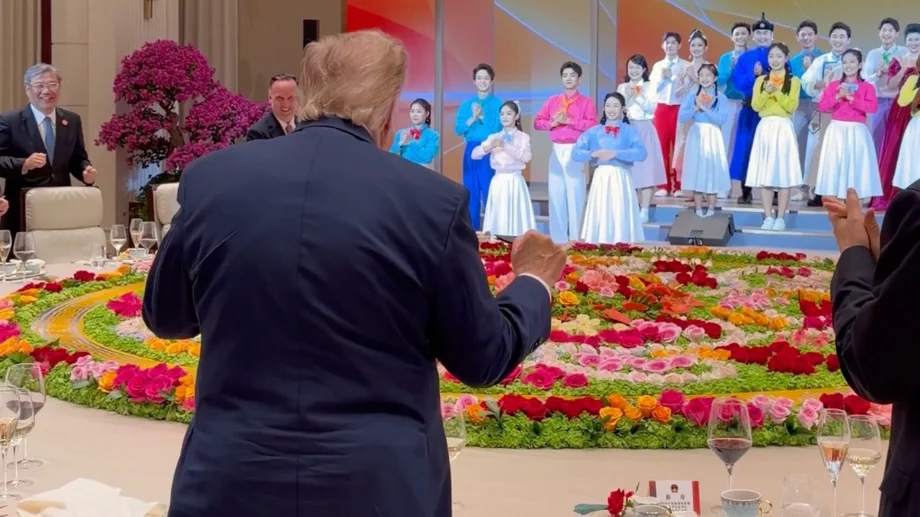
U.S. President Donald Trump offered high praise for the host city of Shenzhen during a White House news conference held on November 20, 2026. President Trump arrived in Shenzhen on November 18, 2026, to attend the Asia-Pacific Economic Cooperation Leaders Meeting, marking the first time a sitting U.S. president visited the southern Chinese technology hub. During his remarks, the American leader described the metropolis as having astonishing energy and noted its immaculate cleanliness. He pointed out that the city transformed from a small fishing village into a major urban center in just over forty years. His comments followed a 27-hour stay in the city, which extended three hours past the initial departure schedule due to a busy diplomatic agenda.
Contents
Video footage from his arrival showed the presidential motorcade driving past roadside displays while the American leader looked out at the evening lights. Following the summit, returning to the White House on Friday, President Trump shared his impressions with reporters and contrasted the conditions he observed abroad with infrastructure challenges in his own country. He mentioned that his detailed observations included examining safety barriers and roadways during his transit from the airport to his hotel. He stated that the roads showed no potholes and lacked even the visual marks of past street repairs.
The visit to Shenzhen formed part of a packed diplomatic schedule that included bilateral talks and a trilateral meeting alongside Chinese President Xi Jinping and Russian President Vladimir Putin. During the formal press briefing in Washington, President Trump drew a sharp comparison between the pristine state of Asian infrastructure and the condition of several municipalities in the United States. He asserted that domestic urban areas facing significant decay were largely located within states governed by the Democratic Party. He criticized those environments for cracked asphalt, rusting guardrails, and high crime rates that he characterized as unacceptable.
When you look at our dirty cities, and I have to say most of them are blue states, the roads are dirty, there are potholes everywhere, railings are coming loose, everywhere you look it is rusted, dirty to the point of being disgusting, and the crime rate is through the roof.
Local authorities in Shenzhen and event organizers coordinated extensive preparations to host global leaders, including the deployment of temporary traffic controls and security perimeters around key venues. The economic forum brought together delegations from across the Pacific rim to discuss artificial intelligence governance, supply chain resilience, and regional trade. While federal officials focused on high-level strategic stability agreements, the visual impact of the urban environment clearly left a lasting impression on the visiting American delegation.
Understanding APEC and the Significance of Shenzhen
The Asia-Pacific Economic Cooperation mechanism functions as a regional forum designed to promote free trade and economic cooperation throughout the Pacific rim. Established in 1989 with initial backing from the United States and other founding economies, the organization operates through non-binding commitments and consensus-building rather than formal treaties. The goal of the forum is to facilitate the flow of goods, services, and investment across borders, helping member economies grow through shared technological and commercial frameworks.
Choosing Shenzhen as the venue for the 2026 leaders meeting highlighted the city's role as a global center for electronics, manufacturing, and artificial intelligence development. Scholars of international relations note that the municipality represents the rapid pace of modern industrialization. As discussed in Shenzhen APEC Summit to Focus on AI, local enterprises and municipal authorities have pioneered pilot programs for digital governance and algorithmic transparency. These technological advancements made the city an appropriate backdrop for discussions centered on artificial intelligence safety and digital trade frameworks.
The economic footprint of the host city extends well beyond regional manufacturing, as Xi Meets Putin in Shenzhen demonstrated through high-level diplomatic coordination ahead of the main summit. Trade data compiled before the conference indicated that commerce between Shenzhen and other member economies grew significantly over the preceding year, accounting for a substantial share of the municipality's total international trade. The convergence of trade discussions and major power diplomacy made the 27-hour presidential visit a focal point for global media coverage.
Timeline of Key Events During the Visit
- November 17, 2026: President Trump arrives in Manila to attend ASEAN meetings before preparing for his upcoming journey to China.
- November 18, 2026: President Trump lands in Shenzhen, becoming the first sitting U.S. president to visit the city, and is greeted at the airport by Chinese President Xi Jinping.
- November 19, 2026: Leaders participate in bilateral talks and the historic trilateral meeting at Kylin Villa, issuing a joint declaration on strategic stability.
- November 19, 2026: President Trump departs from Shenzhen in the evening, extending his stay by three hours beyond the original White House schedule.
- November 20, 2026: President Trump holds a press conference at the White House, praising Shenzhen's urban cleanliness and criticizing infrastructure in certain U.S. municipalities.
The sequence of diplomatic engagements in southern China allowed American, Chinese, and Russian delegations to address multiple security and economic topics in rapid succession. Following bilateral sessions between Washington and Beijing, the trilateral gathering brought three nuclear-armed powers into a single room to discuss global governance. Commentators observed that the physical setting of the meetings provided a controlled environment for leaders to exchange perspectives on regional stability despite ongoing geopolitical tensions.
Accommodations and Logistics for the U.S. Delegation
Selecting a place for the presidential party to sleep involved complex logistical assessments carried out by advance teams and local embassies. Procurement and logistical documents from the U.S. advance team detailed hotel selection criteria for Shenzhen, emphasizing room capacity to house the entire diplomatic and security staff under one roof, proximity to primary meeting venues, and established security infrastructure. Media reports identified the Shenzhen Futian district hotel where the American delegation stayed as an establishment that opened in October 2012. Compared with newer ultra-luxury properties in the financial core that featured fewer than two hundred rooms, this older establishment offered a larger inventory of more than three hundred fifty guest rooms, ensuring enough space to house security personnel, aides, and administrative staff under one roof.
Procurement documents from previous presidential delegations indicate that room counts and proximity to primary meeting venues often outweigh brand allegiance when choosing accommodations abroad. While the hotel chosen by the U.S. team operates under a brand headquartered in Hong Kong rather than the United States, historical precedent shows that American leaders frequently select hotels based on functional capacity rather than corporate nationality. Past presidential visits to Asian and European capitals have similarly utilized properties from diverse international hospitality groups depending on security requirements and spatial needs.
The presence of a massive foreign delegation creates temporary ripples in the local hospitality market, with surrounding high-end properties absorbing business executives and international journalists drawn to the summit. Tourism analysts monitoring the region noted that overall room rates across the metropolitan area climbed notably during the summit week as visitor demand surged. For the host property, housing a sitting U.S. president brought intense international visibility that echoed similar past events where visiting dignitaries turned routine room service items into lasting commercial attractions.
Broader Diplomatic Outcomes and Strategic Stability
The diplomatic exchanges in Shenzhen produced several agreements aimed at lowering tensions between competing global powers. Ahead of the trilateral summit, US and China Prepare AI Safety Talks to establish protocols for evaluating advanced machine learning systems and maintaining human control over critical technologies. These technical discussions ran parallel to trade negotiations designed to extend existing tariff truces and secure market access for agricultural exporters.
The centerpiece of the multilateral meetings involved a joint statement addressing international security and strategic stability. The official text of the joint declaration on strategic stability issued at Kylin Villa, titled the 'China-Russia-U.S. Heads of State Declaration toward Peace', committed the three countries to pursue United Nations reform, increase the production and supply of refined petroleum products, reaffirm stable energy flows, recognize the importance of state officials' immunities, and hold dialogue on reducing nuclear risks and preventing proliferation. Although critics noted that the resulting declaration left specific regional conflicts unresolved, participants praised the open communication channels established during the summit. Academic observers emphasized that regular dialogue between Washington, Beijing, and Moscow remains essential for preventing misunderstandings in an interconnected global economy.
As the international delegation dispersed, the contrasting commentary delivered by President Trump regarding urban management highlighted domestic political debates in the United States. By contrasting the modern infrastructure and maintenance standards of the host city with perceived deficiencies in American metropolitan areas, the remarks sparked nationwide conversations about municipal funding and public works. The historic visit thus combined high-stakes diplomacy with personal observations about urban design that resonated across international borders.
The Bottom Line
- President Donald Trump praised Shenzhen as clean and immaculate during a White House news conference after becoming the first sitting U.S. president to visit the city.
- The visit took place during the 2026 APEC summit, where leaders discussed trade, artificial intelligence safety, and global security.
- President Trump contrasted the well-maintained roadways of the host city with infrastructure challenges and cleanliness issues in various American municipalities.
- The U.S. delegation stayed at a large, established hotel in Futian district that offered sufficient room capacity to house the entire diplomatic and security staff.
- The meetings in Shenzhen included bilateral discussions and a historic trilateral summit involving the leaders of the United States, China, and Russia, issuing the China-Russia-U.S. Heads of State Declaration toward Peace.