A meeting before the bigger summit
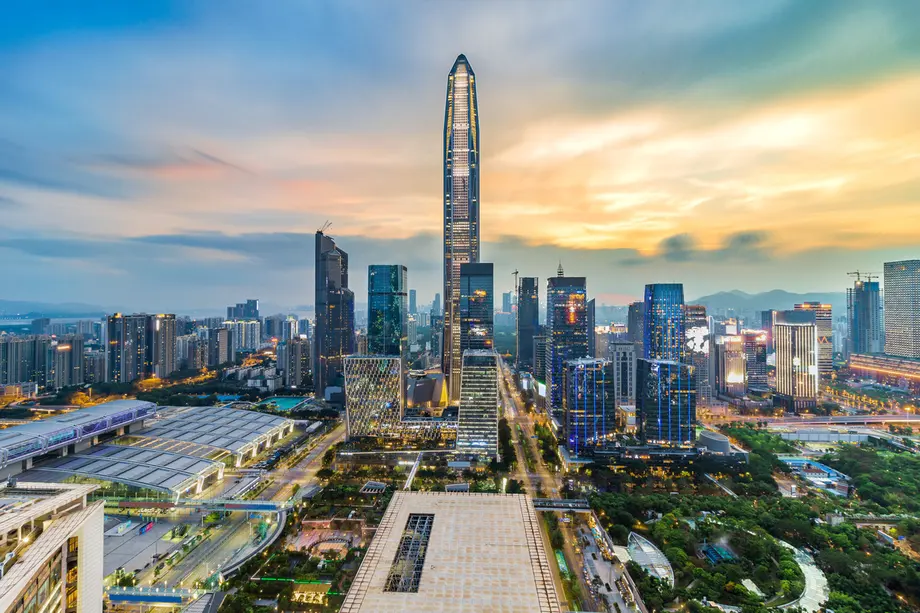
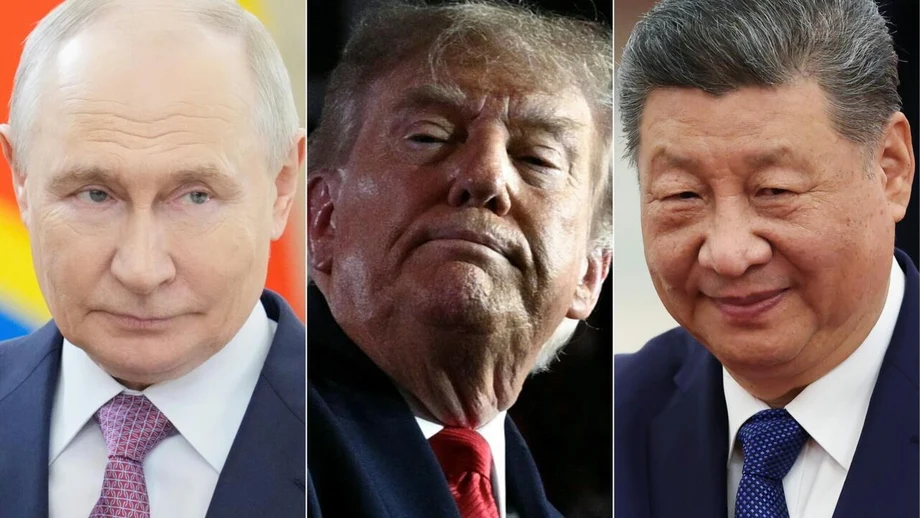
Chinese President Xi Jinping met Russian President Vladimir Putin at noon on November 18, 2026, in Shenzhen, a day before their planned summit with US President Donald Trump. Energy, economic cooperation and the war in Ukraine were among the issues expected to shape their discussions as leaders gathered for the Asia-Pacific Economic Cooperation meeting.
Contents
- A meeting before the bigger summit
- What Xi and Putin planned to discuss
- Ukraine moves back onto the agenda
- Energy and trade give the partnership substance
- A tightly managed stage for China's diplomacy
- Nuclear weapons and Iran widen the discussion
- North Korea and other Asian partners are also in view
- Trade tensions follow Trump to Shenzhen
- The dates and decisions to watch
- Key Points
The encounter gave Xi and Putin time to coordinate before a meeting bringing together the leaders of China, Russia and the United States. Russian presidential aide Yuri Ushakov said Moscow and Beijing had already submitted suggestions for a possible joint communique, a written statement of shared positions, and were waiting for Washington's response.
Expectations for Thursday's summit were different in Moscow and Washington. The Kremlin hoped for a concluding document, while US officials described the meeting as a starting point for further discussion and said they did not expect agreements.
Putin described the partnership with China as operating steadily despite international tensions. Speaking to Xi, the Russian president set out their shared position in these terms:
"Amid a challenging geopolitical environment, we are taking a constructive approach to forming a fairer multi-polar world order," Putin said.
A multipolar world means one in which several countries or groups of countries exercise substantial power, rather than one country dominating. For Moscow and Beijing, the phrase expresses their ambition to reduce US influence over international affairs.
What Xi and Putin planned to discuss
Russian officials described a programme beginning with economic cooperation, including energy and finance, before moving to a smaller discussion of foreign policy. Ukraine, the Korean Peninsula and strategic cooperation in the Asia-Pacific region were among the planned subjects.
The meeting was confirmed around noon. Advance Russian descriptions referred to a working breakfast, while another schedule described a business lunch. Both placed a more restricted conversation between the leaders alongside broader talks involving their delegations.
Ushakov said Putin planned to brief Xi on recent contacts with the United States, including talks in Abu Dhabi. Kremlin spokesman Dmitry Peskov also said Putin would bring the Chinese leader up to date on discussions concerning Ukraine.
The format matters because economic talks and security talks involve different choices. Buying more energy or expanding financial cooperation can be negotiated between Russia and China. A settlement of the war in Ukraine would involve the territory, security and political choices of a country absent from their meeting.
Ukraine moves back onto the agenda
Trump said on November 16 that he would discuss Ukraine with Xi and Putin. That followed a November 13 White House statement saying Russia's war against Ukraine would be excluded from the three leaders' agenda, with nuclear weapons and the war in Iran expected to take priority.
China has described its position on Ukraine as neutral. Its purchases of Russian oil and gas have nevertheless helped sustain Russia's economy under Western sanctions, and Beijing has faced accusations that Chinese supplies of military components support Moscow's war effort.
Ukraine and European governments face the prospect of discussions about the war without seats at the table. Their concern is concrete: decisions about territory, military support or security arrangements would directly affect Ukrainians and the countries supporting them.
On November 17, Ukrainian President Volodymyr Zelensky addressed a meeting of Ukraine's partners in Brussels and appealed for air defence interceptors. He urged governments to transfer missiles from existing stocks in exchange for newer weapons that Kyiv had ordered but had not yet received. The request came as Russian ballistic missile attacks threatened critical infrastructure during the winter campaign.
John E. Herbst, a former US ambassador to Ukraine and senior director of the Atlantic Council's Eurasia Center, argued that Putin wanted a setting in which major powers would determine the choices of smaller nations. Peskov presented a different account of Moscow's purpose, saying the leaders wanted dialogue rather than to decide other countries' futures.
Energy and trade give the partnership substance
China and Russia recorded trade worth $245 billion in 2024. Russian officials suggested that the total could reach another record in 2026, although no full year figure was given. The earlier total provides a measure of the commercial relationship behind the leaders' diplomatic language.
Oil and gas are central to that relationship. Western sanctions have increased Russia's dependence on Chinese purchases, giving Moscow a strong reason to secure reliable demand and giving Beijing an important position in negotiations over future supplies.
A proposed gas pipeline through Mongolia was among the projects expected to receive attention in Shenzhen. Such a route would connect Russian supplies with Chinese consumers through a third country, making agreement among the governments essential. Prices, construction commitments and the terms of supply would determine its practical value.
No pipeline agreement or new energy purchase commitment was announced in the initial account of the meeting. The immediate development was the leaders' discussion, with the economic agenda providing an opportunity to advance projects that require further negotiation.
A tightly managed stage for China's diplomacy
Xi's role as host puts China at the centre of a gathering involving two other major military powers. Beijing described the planned three country discussions as exchanges on world peace and strategic stability, meaning efforts to keep competition between powerful states from turning into conflict.
Melanie Hart, senior director of the Atlantic Council's Global China Hub and a former US State Department adviser on China, identified two priorities for Xi: demonstrating his ability to bring leaders together and avoiding surprises. Her assessment was that Beijing wanted a carefully controlled event with a strong diplomatic image.
Peskov said opening remarks at the Thursday summit might be accessible to journalists, but that the final decision rested with China as host. He said the agenda had been agreed while leaving room for a broader exchange of views.
Xi also used the APEC gathering to call for more international cooperation on artificial intelligence and free trade. His economic message focused on lowering tariffs, widening access and examining rules and management standards, placing China's trade agenda alongside the security discussions.
Nuclear weapons and Iran widen the discussion
Washington identified nuclear arms reduction and the war in Iran as subjects for the summit. Trump also said he intended to discuss nuclear weapons, Iran and Ukraine, creating a broad agenda for a meeting scheduled on short notice.
The nuclear discussion comes after the expiry in February of the US-Russia New START treaty. That agreement limited certain strategic nuclear weapons, the weapons and delivery systems designed to strike over great distances. Its expiry left the two countries without that treaty's framework for limits and verification.
China has resisted joining a similar arrangement with Washington and Moscow, arguing that their much larger arsenals should be reduced first. A Chinese Foreign Ministry spokesperson stated the government's position the previous month:
it is neither fair, reasonable nor realistic to ask China to join the so-called trilateral nuclear disarmament negotiations at this stage.
Andrew L. Peek, a former senior director for European and Russian affairs at the US National Security Council and an Atlantic Council director, argued that even discussing strategic weapons together could create an opening for later negotiations. He also identified Iran and access through the Strait of Hormuz as possible areas of overlapping interest, since disruption to that shipping route affects energy supplies and prices.
North Korea and other Asian partners are also in view
Russian officials included the Korean Peninsula in the smaller Xi-Putin discussion. Trump, meanwhile, said he was interested in meeting North Korean leader Kim Jong Un in China, although US Secretary of State Marco Rubio stopped short of confirming that such a meeting would take place.
Rubio, speaking in Manila, described engagement as necessary to address problems with North Korea:
"If we have a problem with North Korea, the only way we're ever going to solve it is if we engage with them," he said.
Putin's programme also included planned meetings with Vietnamese President Tô Lâm and Thai Prime Minister Anutin Charnvirakul. Russia and Vietnam had previously signed a framework agreement on establishing a strategic oil reserve in Vietnam, giving their discussion a specific economic project to build on.
The Russian president was also expected to attend business and summit sessions and visit a university. Advance descriptions named Shenzhen University and Shenzhen MSU-BIT University, the latter a joint institution of Moscow State University and the Beijing Institute of Technology.
Trade tensions follow Trump to Shenzhen
Trump was in the Philippines before his expected arrival in China. There, he met the leaders of Australia, Japan and India in the Quad grouping, which seeks to counterbalance China's regional influence, and attended a summit of the Association of Southeast Asian Nations.
Trade disputes formed another part of the diplomatic setting. Trump said the United States would catch China in rare earths production within 10 months. These minerals are used in products including electronics and powerful magnets, making their supply important to both civilian industry and defence manufacturing.
Washington also announced new licensing requirements for companies shipping advanced artificial intelligence chips to Singapore, Malaysia, Thailand and Indonesia, citing a heightened risk that the technology could be diverted elsewhere. Singapore said it was examining ways to secure trusted access for firms based there.
Chinese Premier Li Qiang criticised unilateralism and protectionism earlier in the week while promoting China's expanding trade with Southeast Asia. The competing messages show what regional governments must manage: access to Chinese and American markets, reliable technology supplies and pressure arising from the rivalry between the two powers.
The dates and decisions to watch
November 19 was the next scheduled point for decisions, when Trump was expected to meet Xi before Putin joined them. The proposed joint communique remained under negotiation, and a separate Trump-Putin meeting had been described by Russian officials but had not been confirmed by the US side.
- November 13: The White House said Ukraine would be excluded from the three country summit's agenda.
- November 16: Trump said he would discuss Ukraine, nuclear arms and Iran with Xi and Putin.
- November 17: Putin arrived at Shenzhen's Bao'an International Airport; Zelensky appealed to Ukraine's partners for air defence interceptors.
- November 18: Xi and Putin met around noon during the APEC gathering.
- November 19: Trump, Xi and Putin were scheduled to hold their three country summit in Shenzhen.
Ushakov said Russia and China were awaiting an American response to their proposed language for a joint statement. US officials' expectation of further discussion rather than immediate agreements placed the focus on whether the leaders could identify common positions on any of the major disputes before them.
Key Points
- Xi and Putin met in Shenzhen on November 18, ahead of planned talks with Trump the following day.
- Their expected agenda included energy, finance, Ukraine and the Korean Peninsula.
- Russia and China proposed language for a joint communique and were awaiting Washington's response.
- Trump said Ukraine would be discussed after the White House had earlier excluded it.
- Nuclear arms, Iran and trade tensions added to the diplomatic agenda.
- No new pipeline agreement was announced in the initial account of the Xi-Putin meeting.