Three leaders make a historic appearance, with a short list of commitments
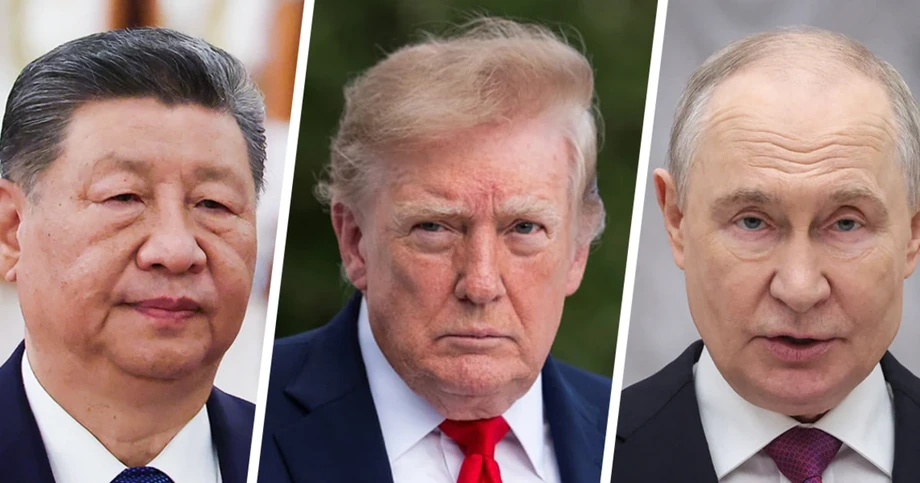
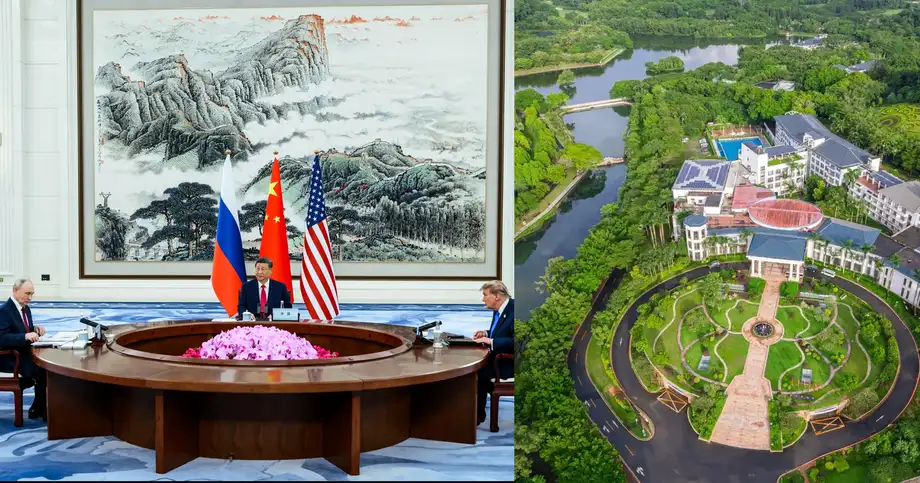
On November 19, 2026, U.S. President Donald Trump, Chinese President Xi Jinping and Russian President Vladimir Putin met at Kylin Villa in Shenzhen for their first formal summit as a trio. The meeting, held alongside the Asia-Pacific Economic Cooperation summit, lasted somewhere between about 70 and 90 minutes, according to accounts of the event.
Contents
- Three leaders make a historic appearance, with a short list of commitments
- How did the summit come together?
- What did the three countries actually agree to?
- Why is the absence of Ukraine and Iran important?
- What does nuclear risk reduction mean for Pakistan?
- What did Trump bring back from the rest of his Asia trip?
- Who gained from the meeting?
- Key Points
The leaders issued a joint statement with four main subjects: United Nations reform, refined petroleum supplies, the International Criminal Court and nuclear risk. It made no reference to the wars in Ukraine or Iran, although Trump said before the meeting that the leaders would discuss both conflicts. No agreement to reduce nuclear stockpiles, conduct inspections or end either war was announced.
Returning to the White House on Friday, Trump described the gathering as "one of the most momentous international summits in many years." He said the three leaders had enjoyed a strong personal rapport.
"It's the first time ever, United States, Russia, and China, and it was big. It was big. It was great, great electricity," Trump said.
The meeting produced the declaration toward peace, which says the three countries will maintain strategic stability and international security. The document is dated November 19 and says the U.S. and Russian presidents thanked China for hosting.
The summit was striking because it put the leaders of the United States, China and Russia together in a room, even as their governments disagree over security, trade and the shape of the international order. The statement shows where they could agree on broad principles. Its brief wording leaves the practical steps, and the harder disputes, unsettled.
How did the summit come together?
The Shenzhen gathering followed weeks of public discussion about whether the three leaders would meet and what they would address. On November 4, Beijing acknowledged contacts about a possible summit. The question of whether Ukraine would be represented had already become central to the debate.
On October 21, a proposed meeting of Trump, Putin and Xi was taking shape alongside separate plans for negotiations involving Ukraine and the United States. The account of the competing summit proposals described the divide over whether Ukraine's future could be discussed without its government taking part.
Xi and Putin met in Shenzhen on November 18, the day before the three leaders' summit. Their meeting gave them time for direct talks before Trump arrived at the trilateral gathering, as described in the earlier account of Xi's pre summit meeting.
The main events then unfolded over several days:
- November 18: Xi and Putin meet in Shenzhen ahead of the trilateral summit.
- November 19: Trump, Xi and Putin meet at Kylin Villa and issue their joint declaration.
- November 20: Trump discusses the Asia trip at the White House and calls the summit momentous.
The meeting took place at Kylin Villa, a state owned compound in Shenzhen's Nanshan district. Established in 1997, it covers 38 hectares, roughly the area of 53 standard football fields. It includes separate villas, conference rooms, banquet halls and gardens near Xili Lake.
The site had a role in preparations for Hong Kong's 1997 handover to China and later hosted closed discussions between Chinese officials and representatives of the Dalai Lama in 2008. It was reportedly open to the public until the end of 2025. China has not publicly explained why it chose the villa for the summit, but its secluded grounds and meeting facilities allow officials to control access to visiting delegations.
What did the three countries actually agree to?
The declaration opens by saying the presidents held an in depth exchange about the international situation and committed to maintaining strategic stability and international security. Its four points then set out areas of agreement, without a timetable or detailed plan for carrying them out.
On the United Nations, the three permanent Security Council members said reform should help the organization respond more effectively to global challenges and fulfill its mission of peace and security. They did not specify which reforms they support. The Security Council has 15 members, five of them permanent, including the United States, China and Russia.
On energy, the countries said they plan to increase the production and supply of refined petroleum products and reaffirmed the importance of stable energy flows. Refined products include fuels such as gasoline and diesel, made from crude oil. The statement did not set production targets or name a schedule.
The declaration also says state consent and respect for the immunity of government officials are of paramount importance. It adds that the International Criminal Court and similar bodies must not abuse their jurisdiction. The ICC prosecutes individuals accused of serious crimes, and Putin is subject to an arrest warrant issued by the court in 2023 over alleged war crimes in Ukraine.
On nuclear weapons, the leaders repeated a familiar warning and promised to keep talking about risks and proliferation. The declaration does not set limits on the countries' arsenals or lay out a process for checking compliance.
The White House document gives the shared position in its own words:
A nuclear war cannot be won and must never be fought.
The pledge to conduct dialogue is the summit's clearest nuclear commitment. The last U.S.-Russia nuclear arms treaty, New START, expired in February 2026. Trump has said he would like a future agreement to include China, while Beijing has been reluctant to accept limits on its smaller arsenal compared with those of Washington and Moscow.
Why is the absence of Ukraine and Iran important?
Trump said the leaders discussed Ukraine and the Korean Peninsula, and that they spoke at length about preventing Iran from obtaining a nuclear weapon. The joint declaration does not mention Ukraine or Iran. It sets out no ceasefire, peace plan or steps to settle either conflict.
Before the summit, Ukrainian Foreign Minister Andrii Sybiha said no decisions about Ukraine should be made without Ukrainians. Ukraine and several European governments were concerned that a meeting among the three major powers could shape their security without their participation. The concerns were sharpened by the separate meeting between Trump and Putin, which Kremlin aide Yury Ushakov said focused mainly on Ukraine.
Putin said after the talks that Russia had invited European representatives to Moscow to discuss their possible participation in Ukraine negotiations. He also threatened a "far more painful" response to Ukrainian strikes on the Crimean Bridge. The summit declaration did not mention the bridge or those threats.
The war was also continuing during the leaders' meeting. Russian drones attacked Kyiv, and Ukrainian officials reported casualties and damage. The contrast between discussions of peace in Shenzhen and fighting on the ground made clear that the three leaders' statement had not paused the conflict.
Trump's separate bilateral meeting with Xi included discussion of artificial intelligence, according to the U.S. president. Trump said the two agreed that "guardrails," or rules intended to manage risks, were desirable. He later acknowledged that they had not defined what a minimum set of rules would mean. No timetable or details for the proposed cooperation were announced.
Trump also said he and Xi discussed oil moving through the Strait of Hormuz, a key route for global oil shipments. That subject did not appear in the trilateral declaration, which instead referred generally to stable energy flows and greater supplies of refined petroleum products.
What does nuclear risk reduction mean for Pakistan?
Pakistan's officials have repeatedly warned that conflict between nuclear armed countries can escalate with catastrophic consequences. For Islamabad, the declaration's wording against nuclear war aligns with that position, especially amid long running tensions with India, another nuclear power.
Lt. Gen. Ahmed Sharif Chaudhry, director general of the Inter Services Public Relations office, which handles media relations for Pakistan's armed forces, has argued against the idea of seeking a military confrontation with a nuclear state. He described such a course this way:
Seeking military space or conflict space with an established nuclear power for elusive objectives is absurd, sheer stupidity, and inconceivable.
Retired Lt. Gen. Mazhar Jamil, an adviser to Pakistan's National Command Authority, has warned that India may be moving toward an offensive nuclear first strike posture. That is Jamil's assessment, and he has said the fighting between India and Pakistan in May 2025 made future crises more dangerous.
Pakistan also has a stake in the declaration's call for UN reform. At a United Nations debate in October 2026, Ambassador Usman Jadoon said Pakistan opposed creating more permanent Security Council seats. He backed expanding the elected, non permanent category instead. Pakistan could use the three powers' shared support for reform to argue for its preferred approach, including as India seeks a greater role at the UN.
The declaration does not endorse Pakistan's specific position on Council membership. It does give Islamabad a statement from all three permanent members that reform is on the agenda, while leaving the form of that reform undecided.
What did Trump bring back from the rest of his Asia trip?
The Shenzhen summit was one part of Trump's wider Asia trip. In Manila, he signed a trade agreement with Thailand. The signed document described negotiations as having reached a "substantial conclusion," while details of the deal were still being finalized.
Trump also said Xi had agreed to work with him on AI guardrails. The proposal remains at an early stage: the leaders did not publicly define the rules, say when they would negotiate them or explain how they would apply to companies in either country.
On technology trade, Trump said he wanted China to receive older U.S. chips rather than the most advanced processors, while also saying he could accept a ban on chip sales. He argued that if U.S. firms did not sell chips, China would make more of its own. Those comments reflect a continuing policy choice between restricting access to advanced technology and maintaining U.S. sales to a major market.
At the White House, Trump presented the trip as a success, while the concrete outcomes were mainly statements of intent and negotiations still underway. The summit declaration itself does not settle the wars Trump discussed or create a nuclear arms agreement.
Who gained from the meeting?
For Xi, hosting the summit put China at the center of a high profile diplomatic event during APEC. The choice of Shenzhen, a city known for its technology industry, also gave China a prominent setting for the gathering. Xi described the meeting as positive and constructive, while Chinese Foreign Minister Wang Yi called it a peace summit.
Putin gained an opportunity to appear alongside the leaders of the United States and China despite Russia's isolation from many Western governments since its full scale invasion of Ukraine in 2022. The joint statement's language on official immunity and the ICC also aligns with Moscow's criticism of the court. Putin's presence and public exchanges with Trump and Xi gave the meeting importance beyond its limited written commitments.
Trump can point to the first formal summit among the three leaders and to their pledge to discuss nuclear risks. He told reporters the relationship among the three was "fantastic." Yet the statement does not set a nuclear reduction target, and the leaders did not announce progress toward an end to the wars in Ukraine or Iran.
The declaration's strongest immediate result is a shared public commitment to keep communicating on nuclear risks and to discuss UN reform, energy and the ICC. Whether the dialogue leads to formal talks or practical changes remains undecided.
Key Points
- Trump, Xi and Putin met in Shenzhen on November 19, 2026, for their first formal trilateral summit.
- The declaration calls for UN reform, increased refined petroleum supplies, respect for official immunity and dialogue on nuclear risks.
- The statement does not mention the wars in Ukraine or Iran and sets no limits on nuclear stockpiles.
- Pakistan welcomed the nuclear non use language and supports expanding elected UN Security Council seats rather than adding permanent members.
- Trump said he and Xi discussed AI guardrails, but gave no details or timetable.