Stocks and bonds moved in opposite directions
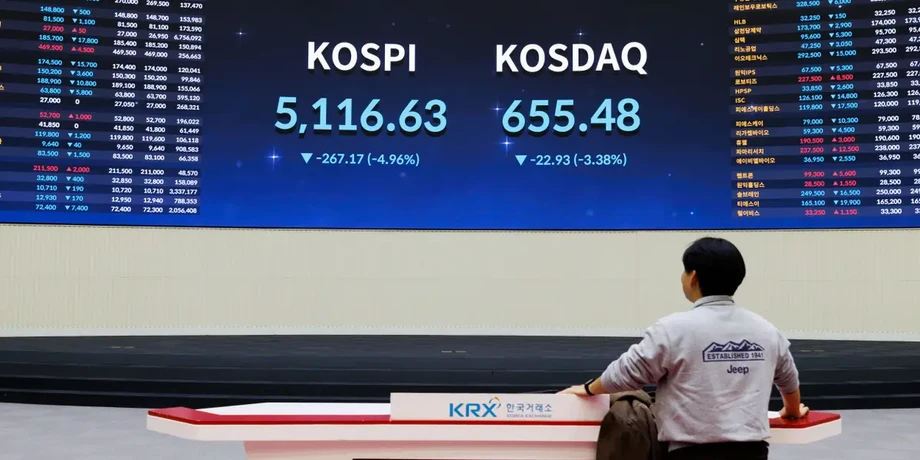
Foreign investors withdrew a net 18.603 trillion won from South Korea's listed stock and bond markets in October, as heavy stock selling outweighed fresh purchases of government and other bonds. The Financial Supervisory Service said foreign investors sold 25.978 trillion won more in listed shares than they bought, while investing a net 7.375 trillion won in listed bonds.
Contents
The contrast shows that the October outflow was not a uniform retreat from every part of South Korea's financial market. Investors reduced their stock exposure while adding to bond holdings. From January through October, the total net withdrawal from stocks and bonds reached 228.735 trillion won.
In this tally, a net withdrawal combines net selling of shares and bonds with bond payments received when debt reaches its maturity date. It is a measure of money leaving the securities market, rather than a count of every foreign investment in the country.
Stock selling rose from 19.116 trillion won in September to 25.978 trillion won in October. Apart from a small net purchase in August, foreign investors had been net sellers of South Korean listed shares each month through October.
- August: foreign investors made a small net purchase of shares worth 344 billion won.
- September: stock net selling reached 19.116 trillion won; stocks and bonds together recorded 12.305 trillion won in net withdrawals.
- October: stock net selling increased to 25.978 trillion won, while bonds recorded 7.375 trillion won in net investment.
Which markets and investors drove the selling?
The selling was concentrated in the main board, where many of South Korea's largest companies are listed. Foreign investors sold a net 25.015 trillion won of shares on the Korea Exchange's main market and 963 billion won on the KOSDAQ, a market with many smaller companies.
Investors based in the Americas sold a net 15.944 trillion won, the largest regional total. Asian investors sold 5.598 trillion won and European investors sold 2.148 trillion won. The detailed country breakdown put US investors' net selling at 13.854 trillion won, about 53 percent of foreign investors' total stock selling. Another published account put US selling at 15.9 trillion won. Singaporean and Canadian investors were also net sellers, while investors from Ireland and France bought shares on balance.
By the end of October, foreign investors held 1,899.048 trillion won in listed South Korean shares, equal to 34 percent of the market's total value. Their share of the market had been 34.8 percent at the end of September. The value of their holdings fell by about 396.9 trillion won in a month, a change that reflects the fall in share prices as well as the shares investors bought and sold.
Why did bond investment turn positive?
Foreign investors bought 7.625 trillion won of listed bonds in October and received 250 billion won as bonds matured. After subtracting those repayments, net bond investment was 7.375 trillion won. It was the first positive month in two months, following net withdrawals of 4.736 trillion won in August and 7.569 trillion won in September.
Government bonds accounted for nearly all the October net investment, at 7.359 trillion won. European investors put in 4.922 trillion won, while Asian and Middle Eastern investors invested 1.652 trillion won and 1.544 trillion won, respectively. By the end of the month, foreign investors held 330.341 trillion won of listed bonds, or 11.3 percent of the total outstanding.
The different stock and bond flows matter because the 18.603 trillion won net withdrawal is the combined result. It is smaller than the stock outflow because bond buying partly offset it, but still shows that the stock market was the main source of money leaving in October.
What did the third quarter reveal about foreign holdings?
Bank of Korea data show that the value of foreign investment in South Korea stood at US$2.87 trillion at the end of September, down US$142.9 billion from the end of June. Foreign securities holdings fell by US$164.3 billion to US$2.16 trillion, while direct investment rose by US$38 billion to US$359 billion. The KOSPI, South Korea's main share index, fell 19.3 percent in the third quarter.
A fall in the value of foreign holdings does not mean that the same amount of money was sold and taken out of the country. The Bank of Korea's international investment position data show that foreign investors' net selling of Korean shares was US$8.2 billion in the third quarter, down from US$63.9 billion in the second quarter. At the same time, the recorded value of foreign held equity securities dropped US$188.8 billion as share prices fell.
That distinction helps explain the scale of the quarterly change: market losses cut the value of shares already owned by foreign investors, while actual net selling was much smaller. Foreign holdings of debt securities, by contrast, rose US$24.5 billion through currency translation effects.
South Korea's net external financial assets, the value of residents' overseas financial assets minus foreign financial assets in South Korea, rose by a record US$280.7 billion in the third quarter to US$344.8 billion. Residents' overseas assets increased by US$137.9 billion to US$3.22 trillion, including a US$40.1 billion rise in portfolio investment. Falling values of Korean assets held abroad and more overseas investment by South Korean residents both contributed to the net increase.
How did the selling affect currency demand?
Share sales can also affect the foreign exchange market. When overseas investors sell Korean shares and convert the proceeds into dollars, that creates demand for dollars and can put downward pressure on the won. South Korean residents buying shares overseas also need to exchange won for foreign currency.
Across 52 trading days from September through November 17, foreign investors net sold 54.4 trillion won in domestic equities, including shares and exchange traded products. If those sales are treated as converted into dollars, they represent average demand of about US$780 million per trading day, 2.4 times the daily average in July and August.
Adding South Korean residents' purchases of overseas stocks brings estimated equity related dollar demand to US$970 million a day in September through November, compared with US$480 million a day in July and August. Foreign investors made up 81 percent of that demand, up from 68 percent in the earlier period.
Why did the won stop strengthening?
The won had strengthened from a weekly closing peak of 1,528 per US dollar in June, reaching a monthly average of 1,336.4 in October. Its decline slowed as stock market related demand for dollars increased. The exchange rate moved mostly sideways in the mid 1,300s from September through November, even as export earnings brought dollars into the market.
South Korea's current account surplus for the first nine months of the year was US$340.66 billion, compared with US$83.89 billion in the same period a year earlier. Semiconductor exports were among the sources of export dollars. Higher dollar demand from investors, alongside payments for imported oil and the US Federal Reserve's policy stance, helped counter that supply.
Lee Min hyuk, an economist at KB Kookmin Bank, described the role of investment flows in short term currency movements. He said:
Among short term volatility drivers, the flow of foreign capital in and out of domestic financial markets is becoming increasingly important.
Bank of Korea Governor Shin Hyun song said at a monetary policy briefing in October that "the won remains weaker than in previous years when measured on an effective exchange rate basis." The Bank of Korea's Monetary Policy Board was due to hold its next rate setting meeting on November 26. Any decision on the benchmark rate could affect the gap between Korean and US interest rates and, in turn, currency trading.
What remains unsettled?
October's figures show the direction of foreign investors' trades, but they do not say how much of the stock selling came from each company or what investors plan to buy next. The third quarter data also show why changes in the value of foreign holdings need to be separated from actual cash leaving the country: share price declines can lower recorded holdings even when investors do not sell the same amount.
The near term currency picture depends on competing flows. Exporters have been bringing in dollars, while investors' purchases and sales have increased demand for them. The November 26 policy meeting was the next dated decision that could affect the interest rate gap, while the scale of foreign stock selling after October had yet to be reported in the October figures.
Key Points
- Foreign investors withdrew a net 18.603 trillion won from South Korean listed stocks and bonds in October.
- They net sold 25.978 trillion won in shares and invested a net 7.375 trillion won in bonds.
- Foreign investors held 34 percent of the listed stock market and 11.3 percent of listed bonds at October's end.
- In the third quarter, falling share prices cut the value of foreign held equities far more than net selling did.
- Equity related demand for dollars rose as foreign investors sold Korean stocks and South Korean residents bought overseas shares.