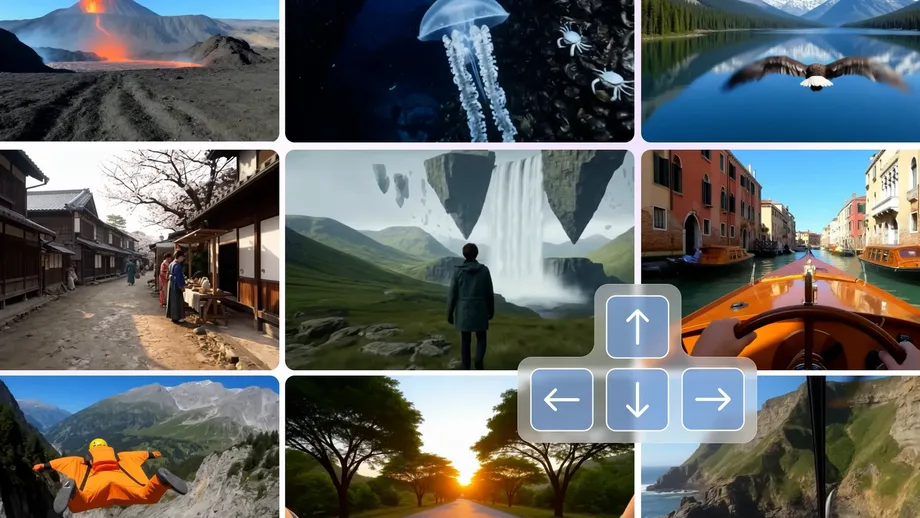
A world you can change while exploring
Google's Project Genie lets people describe an interactive world in everyday language, then explore and edit what the system creates. On November 18, 2026, Google began rolling out an updated version to eligible Google AI Ultra subscribers aged 18 and older. The next day, developers gained access to its Genie 4 model through the Gemini API and Google AI Studio.
Contents
The release brings text prompts, images, moving visuals and sound together in one experiment. A user can ask for a setting, move through it, then type instructions to change the weather, add a character or alter an event. Google says Genie 4 can generate 720p visuals at 24 frames per second with synchronized audio, including background sounds and character speech.
The product is called Project Genie, not Playground. Google describes it as an experimental research prototype powered by Google DeepMind's Genie 4. AI Pro members can join a waitlist, while access is rolling out to eligible Ultra subscribers. Google has not given a date for wider access or a Genie 4 session limit for the subscriber experience.
Google's Project Genie page shows examples ranging from exploring a world as an ant to searching a haunted villa for clues. Users can also turn photos into explorable places and remix worlds shared in a community gallery. These examples make the product easier to picture: it is a way to create and explore a changing scene, rather than simply watch a finished video.
Google DeepMind introduced Genie 3 in August 2025 as an earlier world model. Its Genie 3 announcement described navigable environments generated from text, with consistency lasting several minutes. Genie 4 is the newer model in Project Genie, while Google has also updated Genie 3 with longer sessions and other features.
What changed on November 18 and 19?
The November 18 update added Genie 4 to Project Genie, along with a conversational creative agent and a gallery for sharing and remixing worlds. The agent helps turn a description into a more developed setting through conversation. The gallery lets users explore creations and adapt their environments, characters or audio.
Google said early testers wanted more control over what happened inside generated worlds and easier ways to build and share them. Diego Rivas, a group product manager at Google DeepMind, and Pavan Kumar, a group product manager at Google Labs, wrote in the company's November 18 announcement:
Early testers told us they wanted deeper control over what happens inside those worlds, and easier ways to build and share them.
On November 19, Google opened Genie 4 to developers through the Gemini API and Google AI Studio. They can start with a text description, a reference image or both, then use keyboard controls and live prompts to change a scene. Google lists prototyping interactive experiences, visualizing spatial designs, and training robotics and AI agents as possible uses. Its developer announcement says every output includes an imperceptible SynthID watermark.
Technical details reported for the developer service put its cost at about 10 cents per second of streamed output, with sessions capped at 120 seconds. At that rate, a full two minute session would cost about $12. That limit and price concern the developer API; Google did not publish a matching session limit for Genie 4 in Project Genie.
How a world model differs from a video
A video generator usually creates a sequence for someone to watch. A world model instead produces what comes next as a person moves or changes the scene. If a user turns toward a doorway or asks for rain, the system must generate new images that respond to that action and fit the setting.
That makes continuity a central challenge. A convincing world should keep track of where objects and characters are, and how the environment has changed. Google says Genie 4 supports live edits and adaptive audio. The company also lists camera delay, complex physical interactions, precise real time audio and keeping scenes stable over long periods as areas it is still working on.
Genie 3 gives useful context for how far this technology has come. When Google DeepMind announced it in 2025, the model could generate worlds at up to 24 frames per second and 720p, with consistency lasting several minutes. Its stated limits included imperfect geographic accuracy, difficulty rendering clear text, a narrow range of direct actions and short interaction periods. Google initially offered Genie 3 as a limited research preview to a small group of academics and creators.
Google's current update extends Genie 3 sessions to as long as three minutes per generation, up from 60 seconds, and allows users to connect worlds or start from a 360 degree panorama. Those details apply to Genie 3. They should not be mistaken for a published Genie 4 session length in the consumer product.
Where might this fit in game making?
For a game developer, a generated world could help test an idea before a team builds a complete environment in a conventional game engine. A designer might explore different lighting, backgrounds or character appearances, or show a rough concept to colleagues. The developer API also gives teams a way to experiment with interactive scenes without first creating every visual element by hand.
That is different from making a finished commercial game. A game engine is software used to build and run a game with defined assets, rules and controls. A world model generates a changing scene in response to prompts and actions. The two technologies could support each other, but a generated simulation does not automatically provide the tested systems, stable performance or complete production tools that a finished game needs.
Google's earlier October preview described Genie 4 as a model for interactive environments with movement, sound and changing events. The later releases added access for subscribers and developers, plus tools for building and sharing worlds. Together, the announcements show a shift from a limited research preview toward practical experimentation, not a claim that Google has released a complete game development system.
What this means for Mahjong Ways
Mahjong Ways, a game from PG Soft, has a different structure from an open world that changes as a player explores. It uses spinning reels, mahjong themed symbols, animations and set features such as Wild Transformation and Free Spins. Its gameplay depends on rules and outcomes designed for that particular game.
In principle, generative AI could help a studio explore visual ideas, create rough animation tests, or see how a design appears on different screen sizes. These are possible uses of AI in game production, not confirmed uses by PG Soft. There is no evidence that the company uses Project Genie or Genie 4 to develop Mahjong Ways.
Any game with defined rules also needs careful technical checks. Designers and engineers must make sure the features behave as intended, the interface is readable and the game performs reliably. Where outcomes involve chance, the system's rules and mathematical behavior need separate testing. A model that creates a plausible scene does not, by itself, verify those parts of a game.
The difference is simple: Genie can generate an interactive environment from instructions, while a fixed game is built to follow a specified design. A studio could use AI to speed up early visual experiments, then rely on its own production and testing process to complete the game.
Where the technology still falls short
Generated scenes can lose consistency as they continue. Objects may shift or look different after the camera moves, and complicated physical interactions remain difficult to reproduce reliably. Speech and text can also be inaccurate. These problems matter in games, where players expect an object, character or rule to remain consistent from one moment to the next.
Google describes Genie 3 as supporting interaction for a few minutes, rather than for hours. For Genie 4, Google has named long term scene permanence and precise audio as ongoing challenges, but has not published a session limit for the consumer version. Developers also need to consider that visual quality and coherent sound do not amount to a full game's logic or quality control.
Google says Project Genie screens model inputs and outputs for safety and adds SynthID watermarks to generated video and audio. The watermark is intended to identify material made by Google's AI tools. These measures sit alongside the product's technical limits, rather than removing the need for users and developers to check what a generated scene contains.
The key dates
August 5, 2025: Google DeepMind announces Genie 3 as an interactive world model and begins a limited research preview.
October 27, 2026: Google DeepMind introduces Genie 4 to a limited group of trusted testers.
November 18, 2026: Genie 4 begins rolling out in Project Genie to eligible Google AI Ultra subscribers; AI Pro members can join a waitlist.
November 19, 2026: Google makes Genie 4 available to developers through the Gemini API and Google AI Studio.
What to Know
Project Genie uses Google DeepMind's Genie 4 to create interactive worlds from text prompts, images and user actions.
Genie 4 became available to eligible Google AI Ultra subscribers on November 18, 2026; developers gained API access the next day.
Google says the model can generate 720p visuals at 24 frames per second with synchronized audio.
Genie 3 sessions can run for up to three minutes, while Google has not published a consumer session limit for Genie 4.
AI may help game teams test concepts, but there is no evidence PG Soft uses Genie 4 for Mahjong Ways.
Scene stability, complex interactions, audio precision and longer sessions remain technical challenges.