Trump presses Nvidia to bring its former chief back
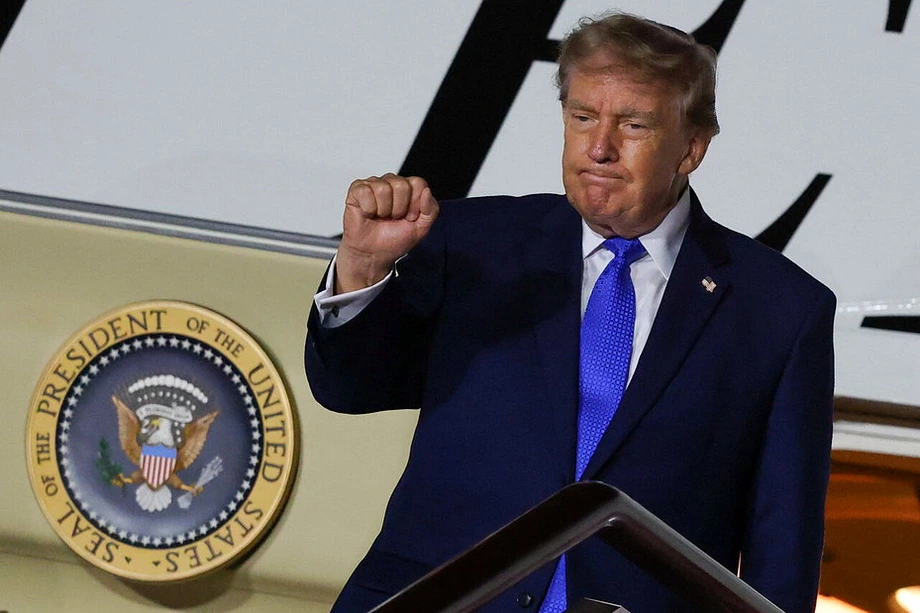
President Donald Trump urged Nvidia on Friday to accept Jensen Huang's apology and let him return to work, making his support for the former chief executive more direct even though the company's board has said it does not intend to reinstate him. Trump spoke at a White House news conference after returning from an Asia trip that included meetings in China.
Contents
- Trump presses Nvidia to bring its former chief back
- How did the leadership crisis unfold?
- Why is Trump emphasizing Huang's value?
- Supporters and critics disagree about what Nvidia needs
- What is at stake in the China chip debate?
- Data centres link export policy to the AI race
- What remains unresolved?
- Key Points
"He made some bad decisions but he's a brilliant person," Trump said of Huang. "I think I would love for Jensen to be given a second chance." He praised Huang's role in developing Nvidia's Blackwell chips and said few people at the company had comparable ability.
Trump did not specify which decisions he considered wrong. His comments came amid scrutiny of Huang's personal conduct, Nvidia's leadership transition and allegations about possible routes by which advanced US chips could reach Chinese users. Those are connected in the political debate, but they are separate questions: one concerns Huang's conduct, another concerns the company's governance, and a third concerns export controls.
The board's position is a major obstacle to Trump's appeal. Nvidia chair Harvey C. Jones said on November 17 that directors had unanimously accepted Huang's resignation and did not plan to restore him as chief executive. The board's decision came after Huang offered to return if directors judged that to be in the company's interests. The company has appointed Chief Financial Officer Colette Kress as interim chief executive while it considers a permanent successor. The board's rejection followed Huang's departure after 33 years leading the company he co-founded.
How did the leadership crisis unfold?
Huang left Nvidia on November 12 as president, chief executive and a board member. The company's leadership change followed public allegations about relationships outside his marriage and a review of claims involving a businesswoman associated with Megaspeed, a Singapore based computing company that buys Nvidia chips.
US officials reportedly suspect the businesswoman, Alice Huang, also known as Huang Le, of having links to Chinese intelligence. She and Jensen Huang are not related. Beijing has denied the espionage allegations, and the intelligence claims have not been publicly established. Nvidia previously said it had no reason to believe company secrets or national security information had been compromised. The company opened an independent review before Huang resigned. The board's investigation is examining claims involving the alleged intelligence effort.
Huang acknowledged infidelity in a message to Nvidia employees and later said he had made serious mistakes. On November 17, he said he would be willing to return if the board asked him. That same day, directors publicly ruled out bringing him back as chief executive.
The sequence helps explain why Trump's call is more than a general compliment to a technology executive. Huang is asking for a possible route back, the president is urging the company to accept him, and the board has publicly chosen a different course.
- November 8: Nvidia announced an independent review of allegations involving Huang and a suspected foreign intelligence effort.
- November 12: Huang resigned from his executive and board positions.
- November 17: Huang said he would return if asked, while Nvidia's chair said the board did not intend to reinstate him.
- November 20: Trump urged Nvidia to accept Huang's apology and give him a second chance.
Why is Trump emphasizing Huang's value?
Trump described Nvidia as important to the United States and credited Huang with helping build the Blackwell chip line, a generation of processors used in advanced artificial intelligence systems. Such chips can perform the large number of calculations needed to train and run powerful AI software. Trump argued that keeping talent like Huang in the United States serves the country's interests.
"I think the company, if they were smart, they'd take that brilliant man, accept his apology and let him go back to work," Trump said. He also referred to the United States as a country that gives people second chances and compared his support for Huang with his past backing of Elon Musk, praising Musk's work on Starlink.
Trump said he had discussed Huang with Chinese President Xi Jinping during the trip and that Xi had described Huang as a highly capable person. Trump also said he had seen other people discussing Nvidia's future direction, but still wanted Huang back. His remarks expressed confidence in Huang's abilities while signalling doubt about whether another leader could take his place.
That view is shared by some technology executives and investors, although support for Huang does not settle the board's decision. An online campaign called Stand With Jensen had collected more than 185,000 signatures by Monday afternoon, including more than 9,300 from people who identified themselves as Nvidia employees. The campaign also listed Musk, Epic Games chief executive Tim Sweeney and Replit chief executive Amjad Masad among its signers. Earlier, Musk had joined a much smaller petition calling for Huang's return. The campaign's earlier push had about 36,000 signatures on November 14.
Supporters and critics disagree about what Nvidia needs
OpenAI chief executive Sam Altman said he did not know enough to judge whether Huang should regain his job, while describing the Nvidia founder as central to the development of artificial intelligence. "It's hard to imagine the AI revolution without Jensen Huang," Altman said. Nvidia supplies chips used by many companies building AI systems, giving its leadership decisions importance beyond its own workforce and shareholders.
Other voices have argued that a celebrated founder should not be treated as indispensable. Economist Paul Krugman criticized technology billionaires who publicly backed Huang, saying they were defending what he called the interests of the wealthy. His broader concern was that decisions involving national security should not rest in the hands of one corporate leader, however successful that person may be.
The governance debate is sharpened by allegations of relationships involving a company employee and questions about whether board rules were applied consistently. Those are matters for Nvidia's investigation and board oversight. The separate intelligence allegations and the possible movement of restricted chips are matters for government investigators and export control authorities.
There is also a financial reason for scrutiny of chip flows through Singapore. One analysis cited Nvidia's 2025 revenue, saying 18 percent came from customers whose billing addresses were in Singapore, while Singapore accounted for about 0.5 percent of global gross domestic product. The difference has drawn attention to where chips bought through Singapore may ultimately be used. A billing address alone does not identify the final user, which is why investigators are examining sales channels and computing services.
What is at stake in the China chip debate?
Trump said he would allow older chips to be sold to China, while saying he could accept a complete halt to chip exports there. He also acknowledged that China is making its own chips and argued that if the United States refuses to sell, Chinese companies will try to build alternatives themselves.
At the same time, Trump said the United States was working to keep China from obtaining Blackwell and other advanced processors. He claimed the United States was 10 years ahead of China in chip manufacturing. The Blackwell line matters because access to large numbers of advanced chips can help companies build data centres and train more capable AI systems.
Access does not always require a chip to be shipped directly into China. A company based in China can rent computing power from a data centre in another country and use the processors remotely. The user receives computing capacity through a network, while the physical chips remain overseas. US authorities have raised concerns that this kind of access, as well as shipments routed through other buyers, can make restrictions harder to enforce.
US measures announced on November 16 require special licences for overseas data centres that provide large amounts of computing power to China and tighten rules for advanced chip shipments to five countries, including Singapore and Malaysia. The new controls respond to concerns about remote access and possible diversion. A criminal investigation into Megaspeed has also been reported, though the outcome and the specific evidence remain unknown.
Data centres link export policy to the AI race
Trump's comments about chips sit alongside his support for building more data centres in the United States. These facilities house computer servers and the chips that power AI services. They also use large amounts of electricity, leading to concerns in communities about power costs, the strain on electricity networks, noise and environmental effects.
Trump said the United States should not let China pass it in AI and vowed to support data centres. He also said his administration would prevent companies from building data centres in other countries and impose major penalties on those that tried. The announcement points to a broader effort to keep computing capacity within US reach, though the details and legal basis for any penalties were not given in the remarks.
The Senate has passed the Bipartisan American Affordability and Jobs Act by 62 votes to 33. The bill would speed up permits for energy projects while putting pressure on data centre operators to pay for the electricity they use. It still needs approval from the House of Representatives before it can become law.
Nvidia's role in financing infrastructure adds another link between the chipmaker and the wider AI buildout. The company has agreed to guarantee up to $105 billion in certain lease and power payments connected to an Ohio data centre campus used by an OpenAI affiliate, if the tenant defaults under conditions in the agreement. That arrangement helps show why customers, investors and policymakers closely watch Nvidia's leadership and business commitments.
What remains unresolved?
Nvidia's board has made clear that Kress is leading the company on an interim basis and that it is searching for a permanent chief executive. The board has not announced a final successor or a public timetable for completing the independent review. Huang has agreed to testify before Congress, according to reports, while government scrutiny of possible chip diversion and the Megaspeed case continues.
The political argument over Huang's future also reflects a wider disagreement about how to manage the China technology competition. Trump has stressed that China should not receive Nvidia's most advanced chips, while also repeating Huang's argument that cutting off sales can push Chinese firms to develop domestic alternatives. The administration's licensing rules seek to limit access through overseas data centres, an approach that reaches beyond direct shipments.
For now, Trump's endorsement has not changed Nvidia's stated position. The board controls the chief executive appointment, Kress remains in charge temporarily, and the investigations into conduct and chip access have yet to produce public conclusions. Those decisions will determine whether the debate remains about Huang's return or shifts toward the company's next leader and how Nvidia's technology is sold and used.
Key Points
- Trump urged Nvidia to accept Jensen Huang's apology and give him a second chance.
- Nvidia's board has said it does not intend to reinstate Huang; Colette Kress is interim chief executive.
- US officials' suspicions about Alice Huang and possible chip diversion remain allegations, and China denies the espionage claims.
- New US rules require licences for some overseas data centres serving China and tighten chip shipment controls.
- The Senate passed a data centre and energy permitting bill by 62 votes to 33, but the House must still act.