Board rejects comeback after Huang offers to return
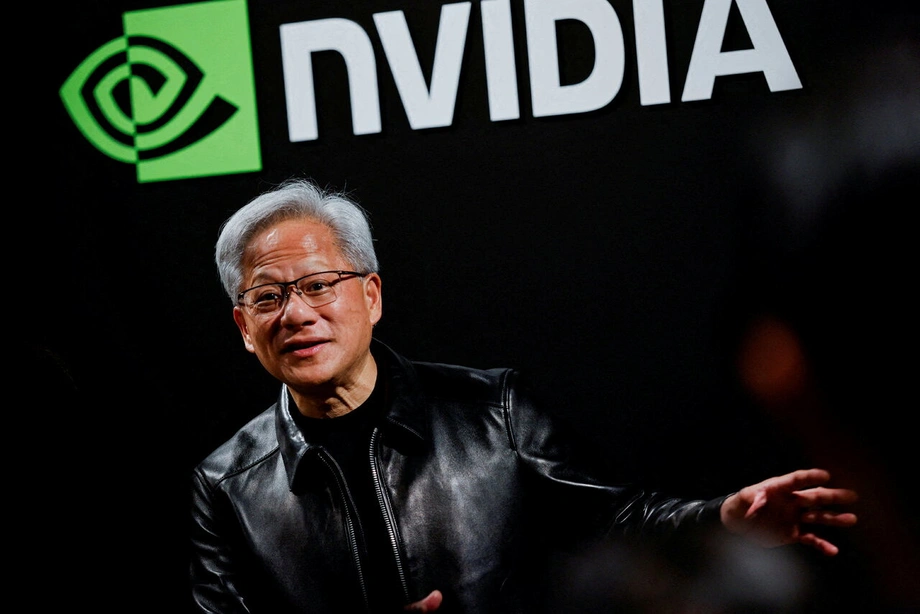
Nvidia's board does not intend to reinstate cofounder Jensen Huang as chief executive, chairman Harvey C. Jones said during the company's November 17 quarterly earnings call, hours after Huang publicly offered to return. The decision keeps finance chief Colette Kress in charge as interim CEO while the company investigates Huang's conduct and faces scrutiny over advanced chip sales involving Singapore company Megaspeed.
Contents
- Board rejects comeback after Huang offers to return
- What Huang said in his first public response
- Kress takes charge as oversight changes
- Megaspeed inquiry began before the resignation
- Megaspeed and China contest the allegations
- Supporters press for a return despite board decision
- Supply commitments explain the commercial anxiety
- Trump and Bessent take different positions
- Congressional interviews set for December
- Key Points
Jones said directors had unanimously accepted Huang's resignation, announced on November 12, ending his 33 years as CEO. His statement went further than earlier indications that directors were concentrating on their investigation rather than discussing a comeback.
Jones, a director since 1993 and now the company's first board chairman, stated the board's position at the start of the call:
The Nvidia board unanimously accepted his resignation and does not intend to reinstate Jensen as CEO.
Huang's departure followed his admission of marital infidelity and allegations involving employees and Alice Huang, a former Megaspeed executive suspected by some US officials of having Chinese intelligence connections. Alice Huang and Jensen Huang are not related. The allegations concerning her intelligence role remain under investigation, and China has denied them.
The leadership decision now sits alongside several distinct proceedings: Nvidia's independent investigation, a US criminal investigation into Megaspeed, congressional interviews scheduled for December, and a reported securities inquiry. Each addresses a different issue, from workplace conduct and company disclosures to whether restricted chips reached Chinese customers.
What Huang said in his first public response
Huang's first public statement since leaving combined an apology, a promise to cooperate with investigators and a conditional offer to return. He said employees, investors, business partners and customers had contacted him seeking his reinstatement.
The former CEO accepted responsibility for his personal conduct:
I created problems for the Board that I deeply regret. I own my mistakes completely, and I am committed to cooperating with the Board's independent investigation.
Huang said he had arrived in the United States 53 years earlier and described becoming an American citizen as one of his greatest gifts and proudest moments. He called Nvidia his life's work and expressed love for both the company and the country.
He placed the decision about a return with directors:
If the Board of Directors decides that my return is in the best interest of our shareholders, our employees, the company, and America, I would be honored to answer these calls and return as CEO.
Nvidia has retained Wachtell, Lipton, Rosen & Katz to investigate his conduct, including whether company secrets or national security were compromised. Former federal prosecutor Joon H. Kim is also involved. Directors declined to answer questions about Huang's resignation or the investigation during the earnings call.
Kress takes charge as oversight changes
Colette Kress is serving as interim CEO while retaining her chief financial officer responsibilities. Directors have been selecting a search firm and considering internal and external candidates for a permanent appointment.
Nvidia also announced a National Security and Export Control Oversight Committee, chaired by director Suzanne Nora Johnson, a retired Goldman Sachs vice chairman. The standing committee will oversee national security policies, compliance with export restrictions and risks arising from international trade.
The company's existing National Security Team and Global Trade Compliance Team will report directly to Kress on daily operations. This creates a direct route from staff responsible for checking sensitive transactions to the interim chief executive, with a separate board committee supervising those responsibilities.
Huang's management style makes the transition especially demanding. He has described having about 60 direct reports, and the company entered the crisis without an obvious successor. Allegations of relationships with subordinates have also brought workplace authority into the investigation. Huang, Nvidia and healthcare vice president Kimberly Powell have not confirmed reporting alleging a relationship between Huang and Powell.
Megaspeed inquiry began before the resignation
The US Commerce and Justice departments said in a joint statement that the investigation into Megaspeed's chip purchases began in 2024. The inquiry concerns possible violations of US export controls, rules restricting where sensitive American technology can be sold or transferred.
The departments described a sequence extending well before Huang's departure:
- 2024: Commerce began investigating possible export violations involving Megaspeed.
- May 2025: Commerce requested Nvidia's records of direct or indirect sales to Megaspeed.
- June 2025: Nvidia placed Megaspeed on its own list of customers barred from purchases. Federal investigators inspected Megaspeed's headquarters and interviewed Alice Huang.
- August 30, 2025: Alice Huang left her executive role, according to Megaspeed.
- November 8, 2026: Jensen Huang apologized to employees for being unfaithful, and the board launched an independent investigation.
- November 12: Nvidia announced Huang's resignation and Kress's interim appointment.
- November 17: The board rejected reinstatement and announced its new oversight committee.
The Justice Department subsequently took the lead in the criminal investigation into Megaspeed. Investigators are examining concerns that chips acquired by the Singapore company were diverted to Chinese entities, potentially through operations elsewhere in Southeast Asia.
Nvidia's internal restriction on selling to Megaspeed is separate from the Commerce Department's entity list. The latter is a government trade restriction, and the timing of any decision to add Megaspeed to it has become a dispute within President Donald Trump's administration.
Megaspeed and China contest the allegations
Megaspeed denies wrongdoing and says it has retained outside lawyers for an internal investigation. The company says its operations follow applicable laws, including US export requirements and local rules in the markets where it operates.
Nvidia has also disputed allegations of illegal diversion, saying they were "thoroughly investigated and debunked last year." The Justice and Commerce departments, meanwhile, say their investigation is continuing.
Alice Huang's connection to Chinese intelligence remains unresolved. US intelligence officials are still assessing her relationship with the Chinese government. Chinese Foreign Ministry spokesperson Guo Jiakun rejected the allegation that she was an intelligence asset:
The claim regarding a so-called Chinese spy is completely groundless and pure slander.
Megaspeed says Alice Huang has had no company role since August 30, 2025. Washington security research group C4ADS has described an earlier departure from a director position near the end of 2023 while saying she remained practically in control. A directorship and an executive role are different positions, making the company's actual control arrangements part of the scrutiny.
The purchases under examination were substantial. Megaspeed reportedly acquired $4.8 billion in Nvidia chips over two years. Shanghai Century Litong, another company linked in reporting to Alice Huang and her family, reportedly helped arrange $7.5 billion in purchases. Those figures describe different purchasing activity and cannot simply be added into a single total.
Supporters press for a return despite board decision
A petition seeking Huang's reinstatement attracted more than 190,000 signatures as support grew. Prominent supporters included Tesla and SpaceX CEO Elon Musk, Epic Games CEO Tim Sweeney, Y Combinator leader Garry Tan, Uber cofounder Travis Kalanick and Replit CEO Amjad Masad.
At an earlier stage, more than 7,500 signatories identified themselves as Nvidia employees, a figure described as equivalent to about 18% of its workforce. Those were the signatories' own descriptions of their employment.
Supporters argue that Huang's relationships with customers, suppliers and staff are difficult to replace. A senior Nvidia developer technology director warned company leaders that keeping him out could lead to the loss of talent. Musk has also argued that some important business arrangements rest on personal commitments made with Huang.
The campaign included reported efforts by Silicon Valley allies to coordinate lobbying of directors and seek White House support. Altimeter Capital investor Brad Gerstner, however, said Huang had not discussed a comeback with him. The board's subsequent public statement leaves supporters seeking a reversal of an announced decision.
Supply commitments explain the commercial anxiety
Nvidia's reported supply and manufacturing capacity commitments total $279 billion, with about $267 billion falling due within the following two and a half years. On those figures, roughly 96% of the total is concentrated in that period. Some arrangements can reportedly be adjusted or cancelled before final orders.
The company's next systems require coordination across a large manufacturing network. A Vera Rubin rack reportedly contains 1.3 million parts, with a supply chain twice the scale of Blackwell's and more than 150 manufacturing partners in Taiwan.
Supporters of Huang's return have pointed to his description of a relationship with Taiwan Semiconductor Manufacturing Company built over 30 years without a formal contract. That claim, alongside Musk's comments about verbal commitments, has made personal trust a central argument in the reinstatement campaign.
Nvidia's financial results nevertheless showed continuing demand. The company reported quarterly revenue of $115.8 billion and adjusted earnings of $2.68 a share, compared with expectations of roughly $109 billion and $2.48. Its forecast of about $130 billion in fourth quarter sales was approximately 12% above the quarter just reported.
The leadership change also comes amid major financing commitments. Nvidia has partnered with six financial institutions on about $500 billion intended for US AI infrastructure and agreed to buy $10 billion in Anthropic shares alongside a separate $10 billion funding promise. Kress and the board must manage these relationships while handling the investigations.
Trump and Bessent take different positions
President Trump said he would be open to Huang returning and maintained that US national security had not been put at risk. He also said he did not know whether Alice Huang was a spy.
Treasury Secretary Scott Bessent has pressed for an outside successor and a more searching examination of Nvidia's compliance culture. He requested answers within 10 days about whether advanced chips had reached China in breach of restrictions.
Bessent said the Treasury, Defense and State departments and the Office of the US Trade Representative had supported placing Megaspeed on the entity list for months. He blamed delays on Commerce, which administers that process.
Trump defended Commerce Secretary Howard Lutnick, saying a delay could have been intended to avoid a diplomatic confrontation with China. The president said he had no plans to replace him.
The disagreement concerns both enforcement and diplomacy. Export controls limit access to particular technology; decisions about individual companies determine how those restrictions operate in practice. Nvidia's sales to China, and Washington's handling of them, are now drawing congressional scrutiny alongside Huang's conduct.
Congressional interviews set for December
Huang is scheduled for a closed interview on December 1 before the House Foreign Affairs Committee, the Select Committee on the Chinese Communist Party and the House Intelligence Committee. Nvidia general counsel Tim Teter is scheduled to appear before the same panels on December 2.
Earlier expectations placed Huang's appearance before Thanksgiving on November 26; the subsequently announced schedule gives December 1. The interviews will be transcribed, with transcripts expected to be released publicly.
Committee chairmen Brian Mast, John Moolenaar and Rick Crawford want answers about access to advanced chips, possible exposure of privileged information and whether outside influence affected Nvidia's approach to export restrictions. Huang agreed to appear voluntarily after lawmakers threatened subpoenas. Lutnick has also agreed to testify before the Senate Banking Committee.
A reported Securities and Exchange Commission inquiry would examine whether Nvidia's disclosures misled investors, including an earlier denial concerning an alleged relationship. The SEC declined to confirm or deny a possible investigation. Nvidia's spending on lobbying, reported at $5 million in 2025 and $4.7 million so far in 2026, adds to the attention on its dealings with Washington.
The immediate tasks are concrete: Kress must run Nvidia and maintain its commercial commitments; directors must appoint a permanent CEO and supervise the independent inquiry; federal investigators and lawmakers must examine the transactions and decisions at issue.
Key Points
- Nvidia's board says it does not intend to reinstate Jensen Huang after unanimously accepting his resignation.
- Huang offered to return if asked and pledged to cooperate with the board's independent investigation.
- Colette Kress is interim CEO, and a new board committee will oversee national security and export compliance.
- The US investigation into Megaspeed began in 2024. Megaspeed denies wrongdoing, and China rejects allegations concerning Alice Huang.
- Nvidia reported quarterly revenue of $115.8 billion and forecast approximately $130 billion for the next quarter.
- Huang and general counsel Tim Teter are scheduled for congressional interviews on December 1 and 2.