A cautious return to a nuclear option
Singapore is preparing to assess its readiness to make an informed decision about nuclear energy in 2027, as officials examine small modular reactors and other advanced designs. The country has not decided whether to build a nuclear power plant. The work now is about understanding whether any design could meet Singapore's needs and how it might be regulated safely.
Contents
- A cautious return to a nuclear option
- What has Singapore decided so far?
- How would an international review help?
- Why are smaller reactors attracting attention?
- How could nuclear fit into Singapore's future power mix?
- What happens to radioactive waste?
- Can the technology be delivered at a workable cost?
- What comes next for Singapore?
- Key Points
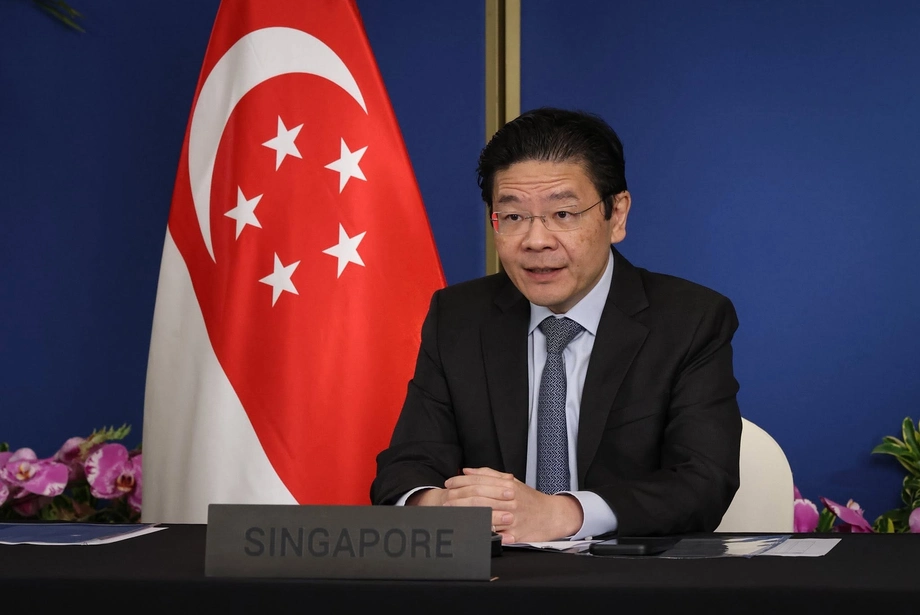
At the SIEW Summit on 27 October 2026, Minister for Energy, Trade and Industry (Energy and Industry) Tan See Leng said Singapore was studying advances in nuclear technology carefully. He announced that the first phase of an Integrated Nuclear Infrastructure Review by the International Atomic Energy Agency (IAEA), the United Nations' nuclear watchdog, would take place the following year. The review is intended to examine the capabilities a country needs to make a sound decision about nuclear energy.
Tan presented the review as part of a wider regional discussion, not as an announcement that Singapore had chosen nuclear power. The inaugural IAEA@SIEW Forum, held alongside the summit, was intended to support cooperation and informed decisions about safe and secure use of nuclear technology. His summit remarks place nuclear alongside two other priorities: stronger electricity links between Southeast Asian countries and faster development of renewable energy.
That combination reflects Singapore's energy challenge. Natural gas currently generates about 95 per cent of its electricity, while the country has limited land for solar farms and few domestic energy resources. Nuclear power could provide steady electricity with low emissions while reducing reliance on imported gas, but cost, waste, safety and public confidence all need careful examination.
What has Singapore decided so far?
The answer is that Singapore is studying the option, not committing to build a plant. A 2012 government study found that conventional nuclear technologies available at the time were unsuitable for Singapore's small size and dense population. Since then, newer designs have prompted renewed interest, but officials have repeatedly said that a decision will depend on further assessment.
In November 2024, Deputy Prime Minister and then Minister for Trade and Industry Gan Kim Yong said the Government had made no decision either to deploy nuclear energy or to conduct another pre-feasibility study. He said small modular reactors remained at an early stage and had not been used commercially at scale. Singapore's focus, he said, was to build the skills needed to judge whether such technologies could suit the country. His 2024 written reply set out that position.
In November 2025, Tan said Singapore had still not decided whether to adopt nuclear energy. He noted that several countries in the region had announced plans to pursue it within the following decade. The Government's 2025 oral reply said public education should cover both potential benefits and risks, and explain what capabilities Singapore is building.
Singapore's preparation has also grown through dedicated government teams. The Energy Market Authority (EMA) set up a Nuclear Energy Office, which is assessing potential technologies, while the National Environment Agency is responsible for radiation and nuclear safety oversight. The nuclear assessment office is one part of the effort to develop local expertise before any deployment decision.
How would an international review help?
The IAEA review is known as an Integrated Nuclear Infrastructure Review, or INIR. It examines whether a country has the people, laws, regulators and emergency arrangements needed to consider nuclear power responsibly. The first phase planned for 2027 is expected to look across 19 areas, including safety, radioactive waste management and emergency planning.
A review does not choose a reactor or grant approval to build one. It gives Singapore an outside assessment of the preparations and gaps that would matter before a decision. That is especially useful for a country without a nuclear power industry, where technical knowledge has to be built before officials can judge vendors' claims or oversee a project.
Singapore has been developing that knowledge for years. The National Research Foundation established the Nuclear Safety Research and Education Programme in 2014 and supported the Singapore Nuclear Research and Safety Initiative. In a 2022 parliamentary reply, Tan said the programme had awarded 24 postgraduate scholarships over the previous five years. The next funding tranche was intended to develop talent in nuclear policy, science and safety, and support study of new reactor designs. His 2022 written reply also described laboratory capabilities for identifying radioactive material in the environment.
Singapore is also building public understanding. In the 2025 reply, Tan said education would explain how nuclear energy might strengthen energy security and cut greenhouse gas emissions, while also setting out the risks and the safeguards needed to manage them. That matters because any future decision would affect residents, emergency services and the institutions responsible for safety, not just electricity suppliers.
Why are smaller reactors attracting attention?
Small modular reactors, usually shortened to SMRs, are designed to produce less electricity per unit than conventional large reactors. Some designs can generate up to about 300 megawatts, roughly one-third of a large reactor's output. Their components may be manufactured in factories and assembled at a site, although the details differ from one design to another.
Their smaller size and newer safety systems are among the reasons Singapore is studying them. Some designs use passive safety features, which rely on physical forces such as gravity or natural circulation to help cool a reactor if normal power or equipment fails. Smaller reactors may also contain less radioactive material in the core. Those features could help reduce certain risks, but the safety case has to be assessed for each specific design.
EMA engineers David Toh and Tiang Zi Hua have explained why nuclear fuel is attractive in a land constrained country. The agency says uranium fuel is about 37 million times more energy dense by volume than natural gas. In practical terms, a small volume of fuel can produce a large amount of electricity, so less fuel needs to be stored and transported than would be needed for the same output from gas.
EMA's explanation also compares radiation exposure near an operating nuclear plant with everyday background radiation. It gives an estimated additional annual exposure of 0.001 millisieverts for someone living near a plant, compared with about 0.9 millisieverts from natural background sources. A millisievert is a unit used to measure radiation dose. Such comparisons can help explain routine exposure, while emergency planning and accident risks require their own detailed assessment. The agency's technology explainer describes both the potential advantages and the questions that remain.
Singapore's earlier SMR assessment coverage also described how the technology fits into a wider search for electricity sources. A reactor, if found suitable, would be one part of a mix that could also include solar power, electricity imports and other low carbon options.
How could nuclear fit into Singapore's future power mix?
Tan has described diversification as a way to protect Singapore from disruption and avoid depending too heavily on one fuel or supplier. In a possible 2050 mix, imported electricity could provide around 25 to 30 per cent of supply, domestic solar about 10 per cent, and natural gas 50 per cent or less. Other possible contributors include hydrogen, ammonia, geothermal energy and, if Singapore eventually chooses it, nuclear power.
Those figures are planning possibilities, not guaranteed outcomes. Solar output changes with weather and daylight, while imported electricity depends on infrastructure and agreements with neighbouring countries. Natural gas can provide steady power, but its price and availability are affected by global markets and supply routes. A nuclear plant could also provide steady electricity, though it would require major investment, a long development period and a strong safety system.
Energy Studies Institute executive director Lee Poh Seng has estimated that advanced nuclear could supply up to 10 per cent of Singapore's electricity by 2050 if the technology becomes viable. That is an expert estimate, not a government target. The Government's stated approach is to compare technologies against safety and reliability, affordability and environmental sustainability.
The stakes include both household bills and the reliability needed by businesses. Power shortages or sharp price increases can affect daily life and economic activity. Nuclear fuel's high energy density and the smaller role fuel costs play in total plant costs could help with some pressures, while construction costs, financing, operating performance and waste arrangements would all shape the final price of electricity.
What happens to radioactive waste?
Waste is among the hardest questions for a country with little spare land. Used nuclear fuel remains highly radioactive and needs controlled handling and secure storage. Some waste can be stored in water filled pools for several years to cool before being moved to robust dry containers. A longer term option discussed by energy specialists is deep underground disposal, but that requires suitable geology, safety rules and public agreement.
Alvin Chew, a senior fellow at the S. Rajaratnam School of International Studies, has described waste management as both a technical and political issue. One route he outlined is to keep spent fuel in a pool for about five to 15 years, then send it for processing overseas and place the remaining material in dry storage. Another would be to dispose of waste in a deep borehole. Each option would require agreements and safeguards extending far beyond the operating life of a plant.
National University of Singapore Associate Professor of Political Science Chong Ja Ian has pointed to the difficulty of relying on another country to take the waste. He said:
No country is currently taking another country's nuclear waste.
That leaves Singapore needing to understand what storage and disposal options could actually be secured, and what responsibilities would remain at home. Regional cooperation may help with knowledge and emergency preparation, but a regional waste facility would require countries to agree on its location, rules and long term oversight.
Can the technology be delivered at a workable cost?
SMRs are often promoted as quicker and cheaper to build than large reactors because they can be produced in standard units. Those savings depend on repeated factory production and a large enough market. With more than 80 designs under development and only two designs operating, in Russia and China, the industry has yet to show that many proposed models can be built at scale and on schedule.
One estimate for first units puts construction costs at about US$18,000 to US$19,700 per kilowatt. First projects can be especially expensive because they pay for design work, licensing and construction methods that later projects might reuse. Forecasts for meaningful deployment have placed it after 2040, making timing a major issue for Singapore's planning toward 2050.
Choosing a design can also create long lasting ties to its supplier. A reactor depends on specialised fuel, maintenance, training and safety rules over decades. Singapore would need enough independent technical expertise to compare claims, understand the limits of different designs and oversee a supplier relationship. That is one reason the government's current work focuses on building capabilities rather than selecting a reactor.
There are also regional legal questions. Nuclear accidents could affect people across borders, so countries need rules about who pays compensation and how claims are handled. Only the Philippines in Southeast Asia has joined the Vienna Convention on Civil Liability for Nuclear Damage, which sets international standards for compensation after a nuclear accident. A plant's safety arrangements would therefore sit alongside broader questions about liability and cooperation with neighbours.
What comes next for Singapore?
Singapore's next stated milestone is the first phase of the IAEA infrastructure review in 2027. The assessment will add to work on technology, safety rules, expertise and public education. It will help officials identify what must be in place before the country can make an informed choice.
The timeline shows how the policy has developed:
2012: A government study found conventional reactor technology then available unsuitable for Singapore.
2014: The National Research Foundation established the Nuclear Safety Research and Education Programme.
2024: Gan Kim Yong said there was no decision to deploy nuclear energy or conduct another pre-feasibility study.
2025: Tan See Leng said Singapore had not decided whether to adopt nuclear power and described plans for public education.
27 October 2026: Tan announced that the first phase of the IAEA review would take place in 2027.
The Government has not given a date for a final decision on nuclear energy. The near term task is to build the ability to judge whether advanced reactors are safe, reliable and affordable in Singapore's particular circumstances, while addressing waste and emergency planning. A decision to proceed would require much more than a working reactor design: it would also need capable regulators, trained staff, public understanding and clear arrangements with other countries.
Key Points
Singapore has not decided whether to adopt nuclear energy or build a plant.
The first phase of an IAEA review of Singapore's readiness is planned for 2027.
Small modular reactors are being studied for their size and potential safety features, but most designs have limited operating experience.
Waste storage, costs, regulation, public confidence and cross border liability remain central questions.
Singapore is building expertise so it can assess the technology before making a decision.