A regional classroom for a growing threat
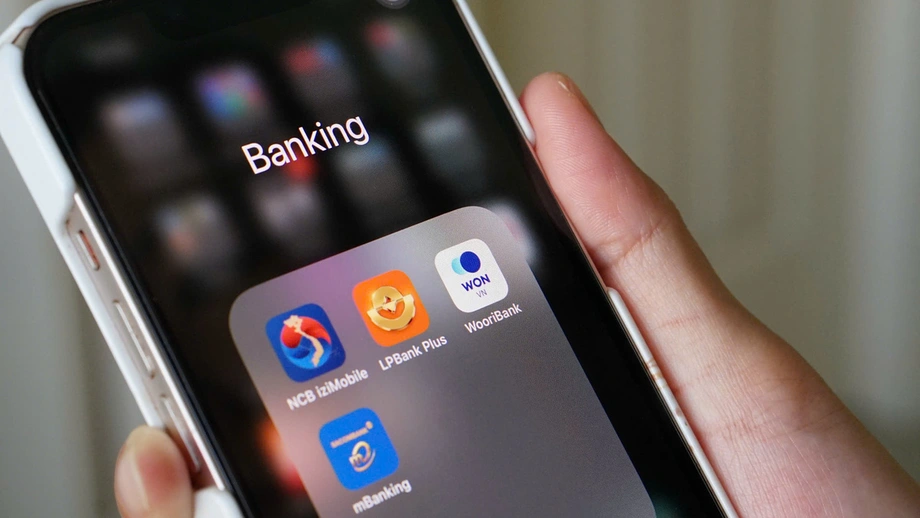
The ASEAN Foundation has launched a free online scam prevention hub as Southeast Asia confronts an estimated $23.6 billion in losses from online fraud in 2024. Unveiled in Manila on November 10, 2026, the Scam Ready ASEAN Resource Hub combines lessons, an interactive game and a directory of reporting hotlines and help centres across all 11 ASEAN member states.
Contents
- A regional classroom for a growing threat
- What people can learn on the hub
- Training reaches beyond the screen
- How the programme reached Manila
- Why confidence does not always lead to safety
- The tactics behind the losses
- Protection must follow the whole scam
- Reporting channels and regional coordination
- The cost also reaches daily digital life
- Key Points
The platform is part of a programme running from 2025 to 2027 with $5 million in support from Google.org. Its ambition is to reach three million people, while a network of community trainers delivers more detailed instruction to at least 550,000 learners.
The launch came during the first Scam Ready ASEAN Public-Private Partnership Dialogue, held on November 10 and 11. Governments, technology companies, banks and telecommunications providers discussed a problem that crosses their separate responsibilities: a scam can begin with a message, develop into a conversation on another platform and end with a payment through a financial service.
The Philippines illustrates the urgency. The Global Anti-Scam Alliance's State of Scams Philippines Report 2026, produced with Mastercard and Gogolook, estimated annual losses of P121.8 billion. It found that 84% of Filipino adults had encountered a scam attempt in the preceding year, compared with 77% in 2025, an increase of seven percentage points.
The hub aims to make help easier to find before and after those encounters. Alongside lessons on recognising deception, it includes courses on responding to scams and supporting victims, with material adapted for different ages and national settings.
What people can learn on the hub
The curriculum was developed with experts from the Internet Society and the Global Cyber Alliance, together with local implementing partners. Courses cover young people, working adults and older people, while resources are translated into ASEAN languages and adapted to the scams people encounter in their own countries.
The learning modules are free, although users need an account to access them. The hub also gives the programme's 20 local implementing partners a shared resource for lessons delivered in classrooms, workplaces and communities.
Google's Be Scam Ready game lets users practise spotting suspicious behaviour in simulated situations. It supports six Southeast Asian languages, including Tagalog, and has added Bahasa Malaysia through collaboration with the #JanganKenaScam campaign.
The ASEAN Foundation's alliance membership announcement, dated March 13, 2026, explains that the game uses inoculation theory. In plain language, this means giving people a safe encounter with manipulative tactics so they can practise recognising them before facing a real attempt.
The game uses characters at different ages and stages of life. That approach gives learners an opportunity to make decisions in realistic situations, rather than simply memorising a list of warning signs. The resource hub also lets them return to lessons after a training session ends.
Training reaches beyond the screen
Scam Ready ASEAN has recruited 2,332 master trainers, exceeding its original target of 2,000 by 332, or 16.6%. These trainers are intended to pass practical skills to others, including young people, parents, caregivers and older adults.
The ASEAN Foundation's programme outline sets a target of 550,000 people receiving detailed training through this model. The wider ambition to reach three million people includes interactive learning and awareness activities, giving the initiative both broad public visibility and more sustained community instruction.
Digital awareness efforts have generated more than eight million online impressions. An impression counts an appearance of content on a screen, so the same person can account for several impressions. The training target measures a different activity: people receiving instruction through the programme.
ASEAN Foundation Executive Director Dr. Piti Srisangnam said the hub would allow learning and cooperation to continue after the Manila dialogue. Its practical role is to keep the curriculum, exercises and reporting information available when trainers and learners return to their communities.
How the programme reached Manila
The November unveiling followed funding commitments, regional meetings and an earlier programme launch in Malaysia. The sequence shows how the initiative developed from an announcement into a network of partners, trainers and shared learning resources.
- 2025: At the Global Anti-Scam Summit Asia, Singapore Senior Minister of State Tan Kiat How announced Google.org's $5 million commitment. Google Vice President for Global Affairs Wilson White introduced Scam Ready ASEAN at the summit.
- January 2026: The ASEAN Foundation participated in the Global Anti-Scam Alliance's Indonesia chapter meeting in Jakarta and engaged online with its Philippines chapter.
- March 13, 2026: The foundation published its announcement that it had formally joined the Global Anti-Scam Alliance.
- April 2026: The programme launched in Malaysia.
- November 10 and 11, 2026: The Manila dialogue brought regional partners together, with the resource hub unveiled on its first day.
- 2027: The programme's stated implementation period ends.
Nine regional and national policy meetings are planned under the initiative. Recommendations from those discussions are intended for the ASEAN Secretariat, the ASEAN Anti-Scam Working Group and other relevant bodies, connecting community experience with regional decisions.
Why confidence does not always lead to safety
The Philippine findings show how often an encounter turns into engagement. Although 58% of respondents expressed confidence in identifying scams, 60% of those who encountered an attempt still interacted with a scammer. Only 4% reported the incident to authorities.
A separate Tech for Good Institute study, supported by the Mastercard Center for Inclusive Growth, surveyed 6,000 people in Indonesia, Malaysia, the Philippines, Singapore, Thailand and Vietnam. It found that Filipinos correctly identified 80% of scam scenarios, compared with 71% regionally, yet only 39% of Filipino respondents felt confident spotting scams. The confidence figures of 39% and 58% come from separate surveys with different questions and participants.
The institute's findings also exposed a gap between recognising danger and choosing a safe response. Only 29% of Filipino respondents selected the safest action when faced with a fake government or police message, such as checking through an official website or hotline.
Across the six countries, 42% felt confident identifying scams and 53% knew where to report them. Some 43% felt left to manage scam risks alone. These findings help explain why the new hub includes response guidance and a reporting directory alongside awareness lessons.
Younger adults also faced substantial losses. Among respondents aged 18 to 34, 46% reported losing money, personal information or account access to a scam, compared with 21% among those over 50. The younger group's share was more than twice as high, making working adults and young people important audiences for training.
The tactics behind the losses
The ASEAN Foundation identifies deception generated with artificial intelligence, instant payments and criminal networks operating across borders as major regional risks. Its programme page cites a 40% increase in document fraud in Malaysia and Indonesia, without specifying the comparison period, and highlights QR payment scams and phishing in Singapore, Thailand and Vietnam.
Phishing uses deceptive messages or websites to persuade someone to reveal information or take an unsafe action. Artificial intelligence can make those messages more convincing, including by producing fluent text or imitating a familiar voice. Fast payments can then move money quickly after someone has been persuaded to send it.
Coins.ph identified four common schemes affecting users of digital financial services: phishing and impersonation, fake customer support, fraudulent investment offers, and task or employment scams that demand a deposit before releasing supposed earnings.
Amira Alawi, global marketing director at Coins.ph, described how scammers manipulate account owners into granting access:
Most scams don't break into an account. They convince the account owner to open the door.
The Philippine scam survey found that reported use of electronic wallets to move stolen money rose from 34% to 73% within a year. That increase of 39 percentage points makes the step between a persuasive conversation and a payment a central concern for financial services.
A TransUnion study covering August to December 2025 found that 45% of Filipino respondents reported phishing incidents and 38% encountered fraudulent text messages. Separately, 6.1% of login attempts in the Philippines were flagged as suspected fraud during 2025.
Protection must follow the whole scam
Companies at the Manila dialogue described responsibilities that extend beyond teaching consumers to be careful. Telecommunications providers can intercept harmful messages, messaging services can address manipulation on their platforms, and financial institutions can respond when suspicious payments occur.
Beaver Chua, OCBC's head of anti-fraud and a representative of the Association of Banks in Singapore, explained where scammers develop their relationship with a target:
The hook can come from telco, the hook can come from social media, the hook can come from Google. But the grooming actually takes place on the messaging platform.
Grooming in this setting means gradually building trust or applying pressure until someone is willing to follow instructions. A person may first receive a brief message, then spend days talking to someone posing as a recruiter, investment adviser or trusted official.
Derick Adil, Globe Telecom's head of AI and privacy governance, advocated safety by design. His proposal was to build protection into services before they reach customers, including blocking harmful messages without requiring people to install an extra application or understand every scam technique.
David Weller, Google's senior director for government affairs and public policy, said cooperation among banks, technology companies, governments, consumer brands and telecommunications operators could help identify patterns across services. Each organisation sees a different part of the activity, making information sharing a practical part of prevention.
Reporting channels and regional coordination
The hub's directory of hotlines and help centres addresses a concrete problem: people need to know whom to contact when a suspicious message arrives or money has already moved. The low reporting rate in the Philippine findings shows how large that gap remains.
The Philippines is strengthening its anti-scam hotline, 1326. At the Manila dialogue, Cybercrime Investigation and Coordinating Center Deputy Executive Director Alvin Navarro said the proposed National Anti-Scam Hub was awaiting the president's signature. The planned body would coordinate scam reporting; no date for approval was given.
Singapore's ScamShield and Malaysia's National Scam Response Centre offer other regional response models. ScamShield provides a central place to seek help and report scams, while Malaysia's centre brings police, the central bank and regulators into a coordinated response.
ASEAN established its Anti-Scam Working Group at the fifth ASEAN Digital Ministers Meeting in 2025. According to the foundation's programme description, the group is working toward national anti-scam centres across ASEANAPOL member countries and closer cooperation among them.
The foundation's membership in the Global Anti-Scam Alliance adds connections with governments, law enforcement, financial institutions, technology companies and civil society organisations. Those relationships matter when the victim, communication service, payment provider and criminal network are in different jurisdictions.
The cost also reaches daily digital life
The Global Anti-Scam Alliance's 2026 State of Scams in Asia report estimated $136.5 billion in losses across Asia over the preceding year and found that more than seven in ten adults had encountered a scam. The $23.6 billion estimate for Southeast Asia covers 2024 and a smaller geographic area.
Malaysia recorded RM2.97 billion in scam losses in 2025. Alongside the Philippine estimate of P121.8 billion, the national figures show why the regional programme combines shared learning tools with information adapted to each country.
The Tech for Good Institute study found that nearly one in five respondents had reduced online banking or electronic wallet use because of scam concerns. Among scam victims, the share approached one in four. In the Philippines, nearly three in ten said they were using cash more often than digital payments.
Ambassador Sara Al-Bakri Debedesan, chair of the ASEAN Foundation's board of trustees, described the role of public confidence in her opening remarks at the dialogue:
A safer digital ASEAN cannot be built through technology alone or by any single institution. It depends on the trust we build, the knowledge we share and, most importantly, the people we empower.
The hub brings prevention lessons, practice and help information into one place. Through 2027, the programme's stated goals remain reaching three million people and delivering detailed instruction to at least 550,000 learners, with trainers and local partners carrying that work into communities.
Key Points
- The free Scam Ready ASEAN Resource Hub launched in Manila on November 10, 2026.
- Google.org is supporting the programme with $5 million for its 2025 to 2027 implementation period.
- The initiative aims to reach three million people, including at least 550,000 through detailed training.
- Its 2,332 master trainers exceed the original target of 2,000.
- The hub includes learning modules, a practice game and reporting contacts across all 11 ASEAN member states.
- Philippine findings put scam exposure at 84% of adults and estimated annual losses at P121.8 billion.
- The proposed Philippine National Anti-Scam Hub was awaiting presidential approval at the Manila dialogue.