A citywide tourism plan built around heritage, coast and countryside
Quanzhou, the southeastern Chinese city in Fujian province, has set out a cultural and tourism plan for the 15th Five-Year Plan period, setting a goal of becoming a world-renowned destination linked to the Maritime Silk Road. The city government says the plan is intended to connect culture and tourism more closely and strengthen tourism as a major part of the local economy. The city's 15th Five-Year Plan outline was approved on Jan. 16, 2026, by the fifth session of the 17th Quanzhou Municipal People's Congress. It sets a 2030 target of 2.2 trillion yuan in cultural and tourism added value, an expected rather than mandatory indicator.
Contents
- A citywide tourism plan built around heritage, coast and countryside
- What does one core, one bay, three belts and four circles mean?
- What does Quanzhou want to achieve by 2030?
- How will the plan protect heritage and keep traditions alive?
- How does tourism connect with jobs, services and technology?
- How will Quanzhou attract visitors from abroad?
- What is set, and what remains to be specified?
- Key Points
The plan organizes development across the whole city rather than concentrating it in one attraction. Its framework is described as one core, one bay, three belts and four circles: a heritage focus in the old city, an urban leisure area around the bay, three themed travel belts and four connected tourism circles. The design is meant to link the city's historic sites with coastal, mountain and county attractions.
The official plan groups cultural and tourism development into four areas: World Heritage tourism, coastal leisure, mountain ecology and integrated development. Its listed carriers include the Minnan Culture Expo Park, Quanzhou's old city and Quanzhou Bay Coastal Tourism Resort. It calls for the resort to seek national-level tourism-resort status, plans a "See Quanzhou from the Sea" project and proposes studying an international cruise terminal. It also sets out a "Quanzhou: World Heritage City · City of Fashion" initiative, including five key projects and the recruitment of three to five internationally leading designers each year.
Quanzhou's government says the plan contains 27 priority tasks across eight areas. They include protecting heritage, supporting local arts, improving public services, building tourism businesses and products, using digital technology, promoting the destination and expanding cultural exchange. The official outline's approval date was Jan. 16, 2026; the source does not give a separate publication date for the cultural and tourism plan.
The framework follows a planning process that began before the final document was issued. On Nov. 5, 2025, Quanzhou's culture and tourism bureau held a planning meeting chaired by bureau chief Lü Xiujia. The bureau's planning meeting statement says China Tourism Research Institute deputy head Tang Xiaoyun brought 10 researchers to join officials, businesses and tourism representatives in discussing the city's goals.
What does one core, one bay, three belts and four circles mean?
The core is Quanzhou's old city and its World Heritage tourism area. The bay is planned as a center for urban leisure and culture. The three belts are a blue coastal holiday belt, a green mountain and wellness belt, and a red culture belt, a reference to tourism built around revolutionary history and related cultural sites.
The four circles add more specific themes: Qingyuan Mountain; fashionable coastal leisure; ocean culture; and a good life inspired by tea, porcelain and incense. The plan presents them as connected parts of one tourism network, with county level destinations playing a larger role. In practical terms, the strategy aims to give visitors reasons to travel beyond the historic center and spend time in different parts of the city.
That spread is central to the plan's idea of coordinated development. Rather than treat heritage, seaside trips and mountain visits as separate products, Quanzhou wants them to form a broader itinerary. The plan does not specify visitor numbers or a construction timetable for each area.
What does Quanzhou want to achieve by 2030?
A development vision presented at Quanzhou's 2026 cultural and tourism economy conference sets out targets for 2030. It calls for major progress in building a culturally strong and tourism strong city, solid steps in high-quality cultural and tourism development, and a more complete mechanism for integrated development. It also sets goals to fully establish the World Heritage City and World Cuisine Capital brands, create a national-level tourism industry demonstration zone, deepen Quanzhou's development as a national key city for inbound tourism, and further develop it as a model city for World Heritage protection and use and a world-renowned Maritime Silk Road cultural tourism destination known for its everyday atmosphere.
The vision also calls for the city to make progress as a cultural and tourism center with a strong local character. It describes the desired destination as one with the everyday atmosphere of a lived in city, rather than a place defined only by visitor attractions. This connects the tourism goal to the plan's focus on local food, traditional crafts and culture that residents continue to practice.
At the 2026 conference, Song Ziqian, chief planner at the China Tourism Research Institute's Data Center under the Ministry of Culture and Tourism, presented the vision on behalf of a research team. Song described a change in how visitors encounter Quanzhou's old city.
Quanzhou's old city has moved from having its resources discovered to having its culture experienced and its brand recognized.
The vision groups its approach into a 1, 2, 3, 5, 8 strategy. "1" means citywide planning as a whole, with one core, one bay, three belts and four circles. "2" means promoting the World Heritage City and World Cuisine Capital as two global brands. "3" refers to three strengths: World Heritage and Minnan culture; the private economy; and connections with Hong Kong, Macao, Taiwan, overseas Chinese communities and Quanzhou businesspeople living elsewhere. "5" means improving World Heritage protection and use, the quality of leisure and resort offerings, the role of tourism as a pillar industry, digital technology applications and development as an international destination. "8" means strengthening eight systems: heritage protection, transmission and use; protection of the Minnan cultural ecology; new popular arts creation; public cultural and tourism services; a modern cultural and tourism industry; digital-intelligence applications in tourism; brand marketing; and international cooperation.
The official plan gives a measurable economic target alongside those aspirations: cultural and tourism added value is expected to reach 2.2 trillion yuan by 2030. The plan does not give a numeric visitor target.
How will the plan protect heritage and keep traditions alive?
Heritage protection is one of the plan's central tasks. Quanzhou aims to become a model city for protecting and using World Heritage sites, improve its system for safeguarding cultural relics and strengthen monitoring of World Heritage properties. Monitoring means keeping track of the condition of sites so that damage or other changes can be identified.
The official plan also calls for a system covering the full chain of cultural heritage protection and transmission, preventive protection and digital records for cultural relics, and regular monitoring and inspection of World Heritage sites. It proposes pursuing a national demonstration zone for the protection and use of cultural relics in the Song-Yuan ancient city, improving historic buildings and traditional homes, and developing cultural courtyards and visitor spaces that present maritime history, Nanyin music, Minnan tea culture and local festivals.
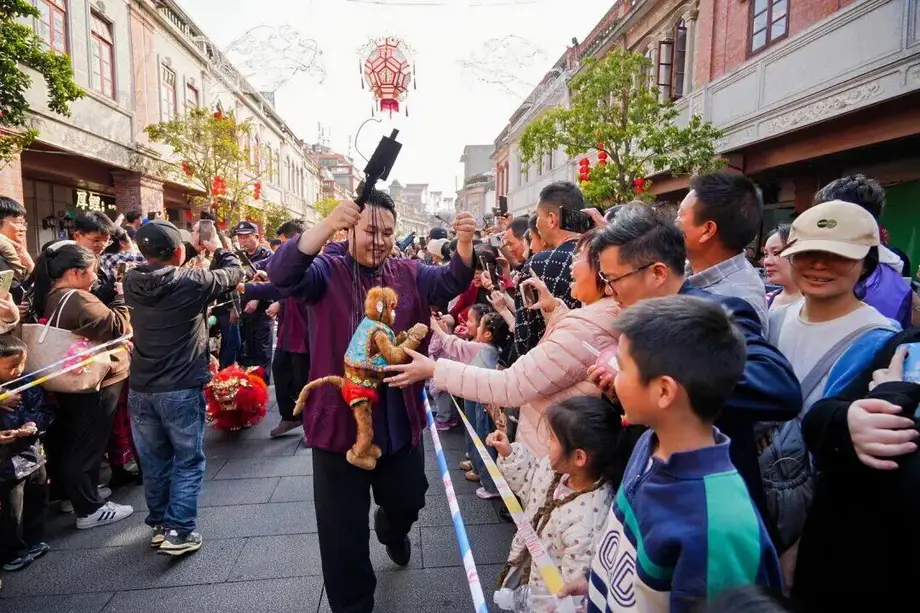
The plan also calls for stronger work in the Minnan Cultural Ecology Protection Zone in Quanzhou. Minnan culture refers to traditions associated with southern Fujian, including local speech, customs and performing arts. A planned heritage transmission initiative is intended to help pass intangible cultural heritage from one generation to the next. The official outline also proposes a digital archive for intangible heritage, support for heritage practices in need of protection, new heritage streets and experience sites, and ways to bring traditional culture into modern life.
Alongside preservation, the city wants more contemporary creative work rooted in local life. Its tasks include supporting popular arts made for broad audiences and carrying out a program for creating and improving high quality artistic works. Together, these measures link the protection of older traditions with new cultural production. The plan also calls for a 15-minute cultural life circle, improved public cultural facilities and more flexible opening hours at some venues.
How does tourism connect with jobs, services and technology?
The plan treats tourism as a pillar industry and calls for a wider range of travel products. It encourages projects that combine tourism with other sectors, and also asks businesses in other industries to add tourism experiences to what they do. The aim is to create more places and activities where people can spend money, while giving local businesses room to develop new ideas.
The official plan calls for stronger cultural and tourism businesses, a digital tourism development alliance linking universities, technology companies and creative organizations, and new tourism experiences that combine industry, sports, rural travel, study trips and other activities. It also proposes improving transport links, visitor services, hotels and tourism homestays, developing an integrated inbound tourism service platform and improving the quality of the full visitor experience.
Public services are another part of the plan. Quanzhou intends to improve cultural and tourism services used by both residents and visitors, with the stated goal of making the experience more welcoming and convenient. The document also calls for a digital tourism industry system, or a network of businesses and services that use digital tools in tourism. Its proposals include digital displays and tours, immersive performances, digital archives and more convenient services for inbound visitors.
The plan treats fashion as another part of cultural and tourism development. Its "Five Projects" under "Quanzhou: World Heritage City · City of Fashion" include building an international fashion identity, decoding the city's cultural heritage for fashion, recruiting three to five internationally leading designers each year, creating fashion venues and promoting brands through product launches and international exchange.
The plan does not set out specific digital products, spending levels or employment targets. It does, however, place technology alongside heritage, service quality and business development as one of the areas in which the city wants to make progress.
How will Quanzhou attract visitors from abroad?
Quanzhou wants to raise the profile of its Song-Yuan China and Maritime Silk Road brand, expand its reach among domestic travelers and strengthen its position as a destination for international visitors. Inbound tourism means travel into China from other countries or regions. The 2030 vision calls for deeper development as a national key city for that market.
The official plan calls for a "1+N" Maritime Silk Road brand system, stronger international communication in multiple languages and promotion of the "Song-Yuan China, See Quanzhou" brand. It also proposes developing landmark cultural projects, improving performances and immersive experiences, and holding international cultural and tourism exchanges. The plan seeks to combine tourism with overseas Chinese culture and connections, and to make Quanzhou a world center for Minnan cultural exchange.
The city's plans also extend beyond visitor promotion. They call for more cultural exchange and cooperation with Hong Kong, Macao, Taiwan and overseas partners, and for Quanzhou to become a world center for Minnan cultural exchange. The plan also seeks to combine tourism with overseas Chinese culture and connections.
During the 2025 planning process, participants discussed destination positioning, inbound tourism, marketing, talent and policy support. The bureau said it had formed a dedicated leadership group and working team, carried out three focused research projects and 12 industry surveys, and invited public views through online notices and questionnaires.
What is set, and what remains to be specified?
The city has established the broad direction, the geographic framework and a list of 27 priority tasks. Its goals combine heritage care with tourism growth, and connect the old city to the coast, mountains and county destinations. The targets for 2030 add a stronger focus on global branding, inbound travel, a national tourism industry demonstration zone and cultural and tourism added value of 2.2 trillion yuan.
The official outline provides an implementation framework: the city government is responsible for organizing delivery, assigning lead departments and responsibilities, setting progress measures and incorporating objectives and major projects into annual development plans. It calls for coordination among development, fiscal and financial policies, and says municipal fiscal funds should prioritize the plan's major tasks, programs and projects. Major projects are to be managed on a rolling basis and included in annual priority project lists, with support for land, environmental review, sea use and funding needs. The outline also calls for a midterm assessment organized by the city government, a report to the municipal People's Congress Standing Committee, ongoing monitoring and public oversight. It does not specify budgets or completion dates for the tourism projects.
Key Points
- Quanzhou's cultural and tourism plan aims to make the Fujian city a world-renowned Maritime Silk Road destination; the official 15th Five-Year Plan outline was approved on Jan. 16, 2026.
- Its citywide layout links the old city, the bay, three themed belts and four tourism circles.
- The plan sets 27 priority tasks across eight areas, including heritage protection, public services, business development and digital tourism.
- The 2030 goals include fully establishing the World Heritage City and World Cuisine Capital brands, creating a national-level tourism industry demonstration zone, deepening inbound tourism development and reaching 2.2 trillion yuan in cultural and tourism added value.
- The official outline sets out annual planning, project management, funding priorities and monitoring arrangements, but gives no specific budgets or completion dates for tourism projects.