Singapore seeks trusted access as US tightens chip controls
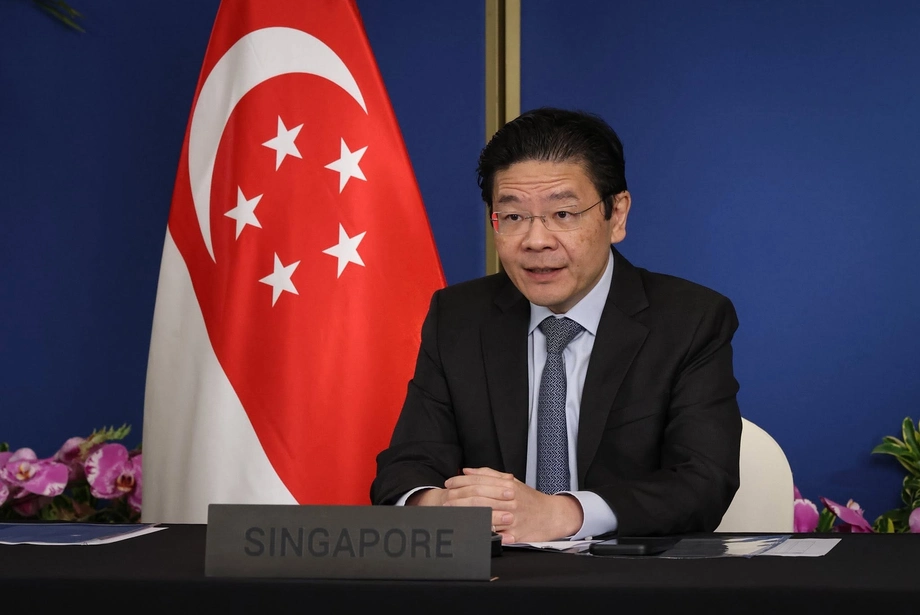
Singapore is offering to help US authorities inspect how advanced artificial intelligence chips are used in the country, while pursuing arrangements to keep legitimate businesses supplied with American technology. Prime Minister Lawrence Wong outlined the approach in Manila on Nov 17, a day after Washington announced new licensing requirements covering Singapore, Malaysia, Thailand, Indonesia and Brazil.
Contents
- Singapore seeks trusted access as US tightens chip controls
- What the new licences cover
- Why Singapore's sales figures need context
- Megaspeed inspections already provide a precedent
- What Singapore investigated and what Megaspeed says
- A regional investigation meets a regional construction boom
- Singapore's enforcement position predates the new rules
- How the policy changed over time
- Access talks run alongside wider AI cooperation
- Key Points
The US measures reach beyond shipments of physical chips. Data centres worldwide that provide substantial computing power to companies headquartered in China or other countries covered by US arms embargoes will also need licences. Existing operators serving those customers have a 90 day window from the rule's effective date to obtain approval, with a deadline expected in mid-February.
Wong said Singapore was studying the impact and could help arrange American checks on chips brought into the country. He also warned that businesses using Singapore to evade controls or break local laws would face action.
Wong, who is also finance minister, said protecting Singapore's standing as a business centre was central to its response:
We want to uphold the rule of law, and we want to uphold Singapore's reputation as a trusted business hub,
The immediate challenge is to connect three things that often happen in different places: where a chip sale is recorded, where the hardware is installed, and who ultimately uses its computing power. Singapore's response combines inspections, enforcement under domestic law and talks with Washington about continued access for legitimate users.
What the new licences cover
The US rules require approval to export, re-export or transfer certain advanced semiconductors within the five named countries. Re-export means sending a product onward from one foreign country to another. A transfer within a country can involve changing its user or use without crossing a border.
Qualifying companies headquartered in the United States, including those whose ultimate parent is based there, are exempt from the new chip licensing requirement if reporting conditions are met. That gives American cloud providers a different route to obtaining hardware from regional companies seeking to own their chips.
The remote computing provision addresses another route to advanced technology. A company can train an AI model by renting access to processors in an overseas data centre, sending instructions and receiving results over a network while the chips remain abroad.
The Bureau of Industry and Security, the Commerce Department agency responsible for export controls, said the measure aims to prevent existing restrictions from being bypassed through those arrangements. Washington has described the five countries as presenting an elevated risk of chip diversion, but has not published a detailed explanation for each country's inclusion.
For data centre operators, checking the delivery address is therefore only part of the task. They must also understand the businesses renting their machines and who ultimately owns or controls those customers.
Why Singapore's sales figures need context
Nvidia figures cited for 2025 put Singapore at 22% of global revenue from chip sales, while only 1% of the chips were used in the country. Revenue attribution and physical chip use measure different things: one records business activity, while the other concerns where processors are deployed.
Wong said much of the hardware recorded as sales to Singapore either passes through the country on its way elsewhere or moves directly to another destination. Only a small volume enters Singapore itself.
Singapore therefore faces two practical issues. Traders and logistics businesses may experience changes in shipments passing through the country. Companies operating local data centres must address questions about the chips installed there and the customers using them.
Wong said the effect on transit business should be manageable. His government's greater concern was the hardware actually brought into Singapore, where it can help US authorities carry out checks if concerns arise.
Megaspeed inspections already provide a precedent
US and Singaporean officials conducted an inspection at Singapore cloud computing company Megaspeed International in June 2025. The visit examined goods, records and compliance with restrictions on their final use, and included an interview with then chief executive Alice Huang.
The US Commerce and Justice departments said their investigation into possible export control violations began in 2024, after monitoring identified suspicious activity involving potential semiconductor diversion. Commerce investigators requested Nvidia records concerning direct or indirect sales to Megaspeed in May 2025. Nvidia placed the company on its list of customers barred from further sales the following month.
The Justice Department took the lead in the criminal investigation after the June enforcement action. Singapore's Ministry of Home Affairs said local authorities first learned of US interest in Megaspeed and Huang that June, while Singapore's own investigation had begun independently in February 2025.
The two timelines describe investigations started by different authorities. They also show that the inspection mechanism Wong is offering has already been used: American officials can examine hardware and documents with Singaporean cooperation.
What Singapore investigated and what Megaspeed says
Singapore police and customs authorities investigated possible false declarations related to server purchases and other suspected offences involving several companies. Megaspeed and six other individuals remained under investigation.
Police concluded in February 2026, after consulting the Attorney-General's Chambers, that there was insufficient evidence that Alice Huang had committed offences concerning the suspected inaccurate declarations under investigation. She received a stern warning over knowingly providing inaccurate information that played down her role at Megaspeed and was barred from re-entering Singapore. Singapore authorities said she was not investigated for espionage.
Megaspeed has defended its operations and said it cooperated with inspections. Its chief executive and chairman, James Tan Yong Pong, described the company's approach in a statement on Nov 12:
Compliance is a fundamental priority for the company, and Megaspeed is committed to working constructively and transparently with the US government.
The company retained an American law firm to conduct a comprehensive inventory of its graphics processing units, or GPUs, and independently check its compliance practices. GPUs are processors capable of handling many calculations at once, making them useful for training AI systems.
Megaspeed also said reviews by US and Malaysian authorities and Nvidia had found no evidence of illicit chip transfers. That is the company's account of those reviews; Singapore police said their investigation continued.
A regional investigation meets a regional construction boom
Megaspeed has subsidiaries in Thailand, Malaysia, Indonesia, the United States and Australia. Its Indonesian subsidiary was searched earlier in 2026 at the FBI's request, according to an unnamed senior Indonesian government official. The official said officers found server racks but no GPUs. Indonesian police officials did not publicly confirm the findings when asked.
Indonesia also has substantial AI infrastructure projects in preparation. Raia Grid plans to assemble 140 to 150 Nvidia GPUs in Purwakarta in December. Firmus and DayOne plan a campus in Batam with 360 megawatts of capacity, intended to accommodate up to 170,000 GPUs across 2027 and 2028, with initial operations targeted for 2027.
Thailand attracted US$9 billion in data centre investment in the first three quarters of 2025, compared with Malaysia's US$4 billion, according to UN Trade and Development figures. Together, the two countries drew US$13 billion during that period.
Those investments help explain why the rules matter beyond chip trading. A data centre needs buildings, electricity, cooling and processors. Developers arranging loans and construction schedules need confidence that the chips will arrive and that customers can lawfully use them.
Matthias Hendrichs, a Singapore based adviser to AI companies, said some new projects could face delays lasting months. He described how uncertain deliveries can affect financing:
Near term, the bigger problem is uncertainty. If you can't tell a lender when the chips arrive, the financing waits,
Singapore's enforcement position predates the new rules
Singapore had already set out expectations for companies handling controlled technology. A WilmerHale legal briefing published on April 28, 2025, traces government statements and enforcement steps earlier that year.
On Feb 1, Singapore's Ministry of Trade and Industry said it expected US companies such as Nvidia to comply with American export controls and Singapore law. On Feb 18, Second Minister for Trade and Industry Tan See Leng told Parliament that deceptive or dishonest efforts to evade applicable controls would be investigated under Singapore law.
Singapore charged three people on Feb 27 over suspected customs fraud involving servers declared as bound for Malaysia. Minister for Home Affairs and Law K Shanmugam described that case as unrelated to allegations concerning Chinese AI developer DeepSeek.
An April 4 joint advisory from the trade ministry and Singapore Customs recommended internal compliance programmes, customer screening, checks on final users and legal advice where needed. Deputy Prime Minister Gan Kim Yong repeated the government's enforcement message at the Singapore FinTech Festival on Nov 18:
We will act against those who flout our laws,
Companies consequently face obligations from more than one direction. Singapore applies its domestic laws to matters such as dishonest declarations, while US export rules govern access to covered American technology.
How the policy changed over time
The November restrictions follow an earlier change in Washington's approach. On May 14, 2025, the Commerce Department rescinded the Biden administration's AI Diffusion framework before its planned enforcement date of May 15. That framework would have divided more than 100 countries into tiers with different levels of access.
Microsoft president Brad Smith had told a Senate hearing that the earlier policy sent a message to 120 nations that they could not necessarily count on American AI technology. The European Commission also welcomed its withdrawal. Commerce officials said a replacement approach would follow.
The main steps in Singapore's enforcement and access discussions are:
- 2024: US authorities began investigating Megaspeed for potential export control violations.
- February 2025: Singapore began an independent investigation into suspected offences involving server purchases.
- April 4, 2025: Singapore issued business guidance on compliance and customer screening.
- May 14, 2025: Washington withdrew the earlier AI Diffusion framework.
- June 2025: US and Singaporean officials inspected Megaspeed; Nvidia stopped further sales to the company.
- February 2026: Singapore concluded its assessment of Alice Huang's suspected involvement in inaccurate declarations and barred her re-entry.
- Nov 16 to 18: Washington announced new restrictions, and Singapore offered inspections while pursuing continued trusted access.
Access talks run alongside wider AI cooperation
Minister for Digital Development and Information Josephine Teo and US Undersecretary of Commerce for Industry and Security Jeffrey Kessler agreed on Nov 17 to pursue practical arrangements for continued trusted access to advanced US technologies. Singapore's digital ministry said the next day that both sides wanted consistent, clear rules supporting legitimate commerce and would remain in close communication. No completion date for those arrangements was announced.
Teo pointed to continuing activity by OpenAI, Anthropic and Google DeepMind in Singapore. Anthropic opened an office and signed an agreement for technical exchanges on AI safety in October, while OpenAI opened an applied AI laboratory in May. She also identified a gap between productivity gains people experience using generative AI personally and its use at work.
Singapore's regional agenda includes cooperation with China as well. ASEAN agreed to designate 2027 the Year of ASEAN-China AI Cooperation, with autonomous vehicles, industrial AI and advanced manufacturing among possible project areas. Wong said cybersecurity, data privacy and benefits for workers and businesses would need to shape those projects.
ASEAN members also signed the Digital Economy Framework Agreement the previous week, setting common rules for digital trade, international data flows and online payments. Singapore received the ceremonial gavel for its 2027 ASEAN chairmanship in Manila, with Thailand due to take over in 2028. Wong said Singapore would help smaller businesses use digital and AI tools to compete.
For Singapore, the immediate task is concrete: help legitimate operators obtain chips, establish who uses their computing capacity, and preserve the confidence that supports its role as a regional technology centre.
Key Points
- Singapore has offered to help US authorities inspect advanced AI chip use within the country.
- New US licensing rules cover certain chip shipments to five countries and substantial remote computing services for restricted customers.
- Qualifying companies headquartered in the US have an exemption from the chip licensing requirement, subject to reporting conditions.
- US and Singaporean officials inspected Megaspeed in June 2025; investigations into the company continue.
- Singapore and Washington are pursuing practical arrangements for legitimate businesses to retain trusted access to advanced technology.
- Existing data centres serving affected customers face a 90 day licensing window, with a deadline expected in mid-February.